How Do I Import A Car In 2026?
Here is full guide includes, laws, taxes and fees if you are thinking of importing a car in India
By Salil Kumar
Published February 11, 2026
Table of Contents
- The Law of Imports
- Tax and Duty Terminology
- 2026 Duty Calculation Example
- How to Import & How Much Time Will It Take?
- What Documents Do I Need?
- What Can Go Wrong?
1. The Law of Imports
The most non-negotiable law is the Right-Hand Drive (RHD) mandate. India plays on the left side of the road, and the law (under the Central Motor Vehicles Rules) strictly prohibits the registration of Left-Hand Drive (LHD) vehicles for civilian use.
If you’re eyeing an American muscle car, it must be converted to RHD at a certified facility before it even touches an Indian port.
Furthermore, the vehicle must be "Type Approved"—meaning its global specs must match India's BS-VI Phase 3 (or the new WLTP testing standards introduced in 2025).
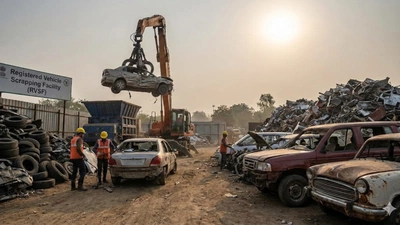
Next the vehicle cannot be older than three years from its date of manufacture. If it’s even a day over, Customs will seize it, and you'll be paying daily "demurrage" (parking fees) until you ship it back or scrap it. Lastly, the car must be imported only from the country where it was manufactured.
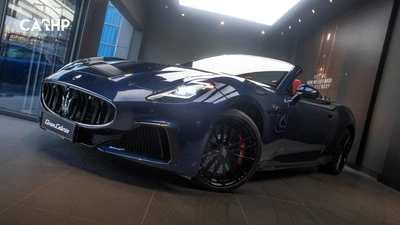
You can't buy a German BMW in Dubai and ship it to India; it must come from Germany to qualify for the new FTA (Free Trade Agreement) benefits.
- RHD Exclusivity: No LHD vehicles allowed. Period.
- The 3-Year Rule: Used cars must be manufactured within the last 36 months.
- Port Restrictions: You can only land your vehicle at Mumbai (Nhava Sheva), Chennai, or Kolkata.
- KM/H Speedometer: The dash must display speed in kilometers, not miles.
- Direct Origin: Must ship from the country of original manufacture for tax breaks.
| Requirement | New Vehicles | Used Vehicles |
|---|---|---|
| Max Age | Brand New (0 km) | Under 3 Years |
| Drive Side | Right-Hand Drive Only | Right-Hand Drive Only |
| Emission Norms | BS-VI Phase 3 / WLTP | Must match current BS-VI |
| Primary Port | Mumbai, Chennai, Kolkata | Mumbai, Chennai, Kolkata |
| Roadworthiness | Manufacturer Certified | 5-Year Certified Fitness |
2. Tax and Duty Terminology
In 2026, the tax structure is no longer a single flat rate; it’s a "layer cake" of charges. The Basic Customs Duty (BCD) is the first slice, which has dropped significantly for UK and EU cars under the 2026 quotas
Then comes the AIDC (Agri-Infrastructure Development Cess), a tax meant to fund Indian farmers. After that, you hit the IGST (Integrated GST), which is usually 28%, and finally the Compensation Cess
The 2026 trade deals are the "cheat codes" here. If you’re importing a UK-made car within the 10,000-unit annual quota, your BCD drops to a measly 10%.
American ICE (Internal Combustion Engine) cars above 3000cc now sit at 30% BCD. However, if you don't fit into these quotas, you’re looking at the standard rate of 70% BCD + 40% AIDC.
- CIF Value: Cost of the car + Insurance + Freight. This is the base for all taxes.
- BCD (Basic Customs Duty): The primary import tax based on trade agreements.
- AIDC: A 40% surcharge on high-end vehicles (often waived in FTAs).
- GST 2.0: The 28% integrated tax applied on the (CIF + BCD + AIDC) total.
- Type Approval Fee: A fee paid to ARAI if the model is already sold in India.
3. 2026 Duty Calculation Example
Total Duty = BCD + AIDC + IGST + Cess
| Component | Rate (2026 FTA) | Amount (INR) |
|---|---|---|
| CIF Value | Base | ₹1,00,00,000 |
| BCD | 10% | ₹10,00,000 |
| AIDC | 0% (Exempt) | ₹0 |
| IGST | 28% of (CIF+BCD) | ₹30,80,000 |
| Compensatory Cess | 22% of (CIF+BCD) | ₹24,20,000 |
| Final Landed Cost | (Value + Taxes) | ₹1,65,00,000 |
How to Import & How Much Time Will It Take?
First, you must secure a Customs House Agent (CHA). The CHA will file your Bill of Entry electronically through the ICEGATE 2.0 system. Before the car even leaves the foreign port, you need a Pre-Shipment Inspection (PSI) certificate to prove the car isn't a junker and that it meets RHD standards.
Once the ship docks in Mumbai or Chennai, the "Customs Clearance" phase begins. This involves a physical examination where an officer checks the engine and chassis numbers against your paperwork.
If anything is off by a single digit, the car goes into "Bonded Warehouse" (essentially car jail) where the meter starts running at thousands of rupees per day.
After clearance, the car is sent for Homologation (unless it has a Type Approval exemption), where technical agencies like ARAI verify it won't explode or pollute Indian air excessively.
- Sourcing: Buy the car and ensure it is RHD and BS-VI compliant.
- PSI Testing: Get the Pre-Shipment Inspection certificate at the origin port.
- Shipping: Book a RoRo (Roll-on/Roll-off) vessel to Mumbai, Chennai, or Kolkata.
- Bill of Entry: Have your CHA file the BoE on the ICEGATE portal.
- Duty Payment: Pay the calculated taxes via an e-challan.
- Homologation: Submit the car to ARAI/ICAT for roadworthiness testing.
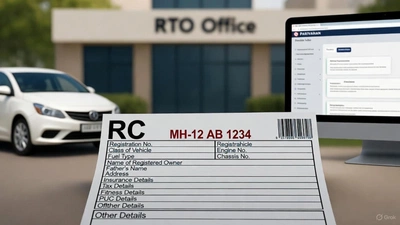
- Registration: Pay local Road Tax at your RTO and get your HSRP plates.
| Phase | Duration | Responsible Party |
|---|---|---|
| Document Prep | 2 Weeks | You & CHA |
| Ocean Transit | 4–6 Weeks | Shipping Line |
| Customs Clearing | 10 Days | Customs Department |
| ARAI Testing | 30–60 Days | ARAI / ICAT |
| RTO Registration | 15 Days | Local RTO |
4. What Documents Do I Need?
Documentation is where 90% of imports get stuck. You need the Bill of Lading (your title to the shipment) and the Commercial Invoice, which must clearly state the car's VIN (Vehicle Identification Number) and engine number.
If you are an NRI using the Transfer of Residence (TR) clause, you also need your old passport, employment termination letters from abroad, and proof that you lived outside India for at least two years.
In 2026, the Certificate of Origin is the most important document for your wallet. Without it, you cannot claim the 10% or 30% duty rates under the UK or US trade deals; Customs will default you to the 110% "Rest of World" rate. You also need a GATT Declaration, which is a legal statement that you haven't lied about the price of the car to evade taxes.
- Bill of Lading: The "receipt" from the shipping company.
- Commercial Invoice: Must show the actual price paid (no "gifts").
- Certificate of Origin: Vital for claiming FTA tax discounts.
- PSI Certificate: Proves RHD and technical compliance.
- IEC (Import Export Code): You must apply for this from the DGFT before starting.
| Document | Issued By | Why You Need It |
|---|---|---|
| Bill of Entry | Your Agent (CHA) | To officially declare the import to the Govt. |
| GATT Declaration | You / Importer | To swear the value of the car is true. |
| IEC Code | DGFT | To be legally allowed to import anything. |
| Type Approval | Manufacturer | To skip 2 months of ARAI testing. |
| Insurance Policy | Indian Insurer | Mandatory before the car leaves the dock. |
5. What Can Go Wrong?
The biggest risk is Under-Invoicing. If you try to tell Customs your $100k Porsche only cost $40k, their AI-driven "Valuation Database" will flag it instantly. They will then "re-assess" the value based on local Indian market prices (which are much higher), and you’ll be hit with a 200% penalty on the difference. You could end up paying more in fines than the car is worth.
Then there’s the Homologation Trap. If your car is a "niche" model that hasn't been sold in India before, ARAI might take 4 months to test it. If it fails the new 2026 WLTP emission test even by a fraction, the car cannot be registered. You are then stuck with a very expensive paperweight that you have to pay to ship back to Europe or the US.
Lastly, never underestimate Demurrage. If your paperwork is delayed by two weeks, the port storage fees can easily exceed ₹5,00,000.
- LHD Conversion Fail: Poorly converted RHD cars often fail the steering safety test.
- Demurrage Accumulation: Daily port fees eat your budget if docs aren't ready.
- Emission Failure: Modern EU cars are clean, but India's "fuel quality" check is strict.
- The "Used" Trap: If the car was registered 3 years and 1 day ago, it's a "Hard No."
- Insurance Gaps: If the car is damaged on the ship and you don't have "Marine Transit" insurance, you're screwed.
The E20 Fuel Mandate
As of late 2025, India has aggressively moved to E20 (20% Ethanol-blended petrol). While most modern European and American cars are built for E10, many high-performance engines aren't rated for E20.
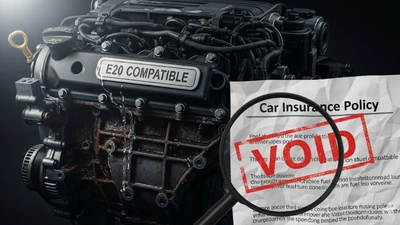
If you import a car that isn't certified for E20, you face two massive problems. First, the Ministry of Road Transport (MoRTH) now requires a "Material Compatibility Declaration" during registration. Second, using E20 in a non-compatible engine will corrode your fuel lines and void any international warranty.
For diesel imports, the fuel is slightly more forgiving, but you must ensure the vehicle has a DPF (Diesel Particulate Filter) that can handle the high sulfur fluctuations occasionally found in non-metro Indian pumps.
| Requirement | Status (Feb 2026) | Necessary Action |
|---|---|---|
| Petrol Blend | E20 (20% Ethanol) | Obtain "E20 Compatibility Letter" from OEM. |
| Emission Standard | BS-VI Phase 3 / WLTP | Check VIN against MoRTH global database. |
| OBD Status | OBD-III Mandatory | Ensure the car's ECU supports real-time cloud reporting. |
| Fuel Quality | 10 ppm Sulfur (Diesel) | Ensure DPF/SCR systems are active and not "deleted." |
The Road Tax
People often forget that "Import Duty" is paid to the Central Government, but "Road Tax" is paid to the State. In 2026, many states have introduced a "Green Surcharge" on imported ICE (Internal Combustion Engine) vehicles to push people toward EVs. While the car might be cleared by Customs for ₹1 Crore, a state like Karnataka will charge you 18-20% of that Landed Value just for the number plate. If you are a company (Pvt Ltd), the tax is often double what an individual pays.
- Karnataka/Bangalore: Notorious for the highest rates in the country (up to 20% for luxury CBUs).
- The BH Series Jugaad: If you are an employee of a company with offices in 4+ states, you can apply for BH (Bharat) Series registration, paying tax every 2 years instead of a massive upfront lump sum.
- Corporate vs. Individual: Registering a car in a company name is usually a 2x tax multiplier.
- Green Cess: States like Delhi and Mumbai now add a 1–2% "Environment Compensation Charge" on all imported SUVs.
| State / UT | Individual Rate (on CIF+Duty) | Company Rate | Special Note |
|---|---|---|---|
| Karnataka | 18% - 20% | 24% | Highest in India |
| Delhi | 12.5% | 15% | Strictly 10-year limit for Diesels. |
| Haryana (Gurgaon) | 10% | 12% | Popular for lower registration costs. |
| Maharashtra | 13% - 15% | 20% | Includes "Octroi/LBT" equivalent charges. |
| Puducherry | 7% | 10% | Cheapest, but requires proof of residence. |
The 2,500-Unit Homologation Shortcut
Historically, every imported car had to be tested by ARAI (Pune), which cost lakhs and took months. Under the Feb 2026 MoRTH Notification, if a manufacturer (like Porsche or GMC) is importing fewer than 2,500 units per year, and the car has a Whole Vehicle Type Approval (WVTA) from Europe or Japan, you can skip the prototype testing. This is the single biggest "time-saver" in the process. You simply present the European "E-Mark" certification, and the RTO must accept it.
- WVTA Certificate: You must obtain this from the manufacturer's headquarters (e.g., Stuttgart for Porsche).
- The Right-Hand Drive Rule: Even with the exemption, the car must be RHD from the factory.
- Speedo Check: The digital or analog dash must show km/h. If it shows MPH, the exemption is void.
- Authorized Signatory: Only the OEM (Manufacturer) or their official Indian subsidiary can claim this exemption for you.
| Feature | Standard Homologation | 2,500-Unit Exemption |
|---|---|---|
| Duration | 60 - 90 Days | 7 - 10 Days |
| Cost | ₹5 Lakhs - ₹15 Lakhs | Nil (Document Processing Only) |
| Testing | Physical crash/emission tests | Document-based verification |
| Eligibility | Any "New" model | Models with EEC/Japan WVTA |
Write a comment
Comments
No comments yet. Be the first to comment!