All You Need To Know About Honda-Horse Powertrain's 1.2-Litre Engine
By Salil Kumar
Published October 7, 2026
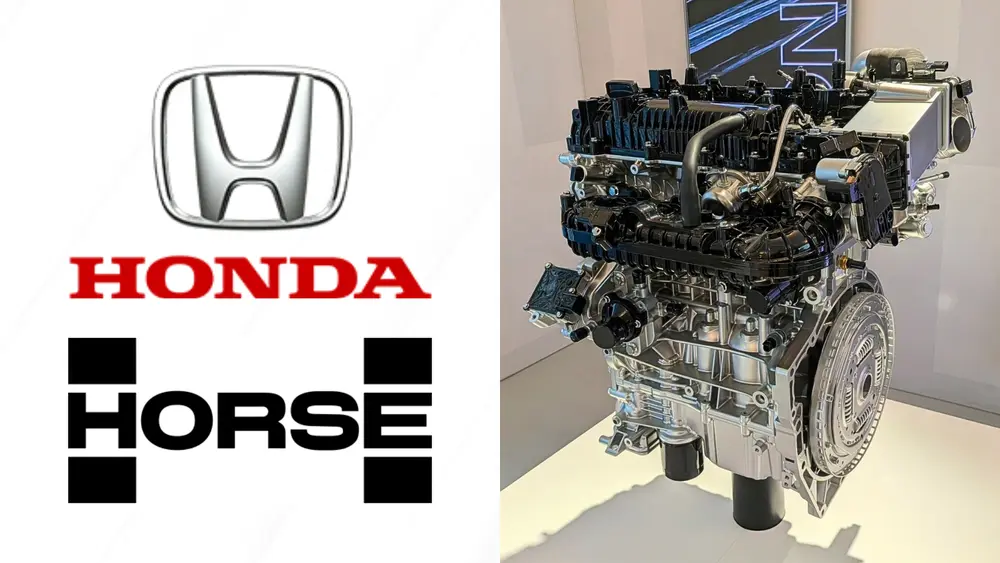
Quick Read - Honda’s upcoming sub-4m SUV (expected around 2028) could use Horse Powertrain’s 1.2-litre three-cylinder turbo-petrol engine, which currently makes 130 PS and 230 Nm. The engine is designed for hybrid and alternative-fuel applications.
Honda and Suzuki have both recently announced new powertrain plans for India, and the timing is hard to ignore. Developing a new engine is an expensive, long-term process, so two major manufacturers unveiling fresh powertrain strategies around the same time is unlikely to be pure coincidence.
In this article, we are focusing on Honda's rather unusual “Horse” engine, which comes from Horse Powertrain, a Chinese-French joint venture.
What is Horse Powertrain?
Horse Powertrain is a global powertrain technology company created by Renault Group and Geely. The company was formed in 2024 by combining Renault's former Horse powertrain business with technology and manufacturing operations associated with Geely's Aurobay.
The ownership structure has since expanded with Saudi energy company Aramco taking a 10 percent stake. Renault Group and Geely each hold 45 percent.
Also Read - Suzuki Developing New 125 bhp DITC Turbo Engine for India
Horse is headquartered in London and operates a large international manufacturing and engineering network. Its business covers internal combustion engines, hybrid systems, transmissions, power electronics and range-extender technology.
The company has positioned itself as an independent powertrain supplier capable of developing and manufacturing engines for different vehicle manufacturers.
Horse already makes a 1.2-litre three-cylinder engine
The engine at the centre of the reports appears to be related to Horse's H12 or HR12 family.
Horse started production of the HR12 1.2-litre engine in Romania in 2024. It is a three-cylinder turbocharged petrol engine designed with hybrid applications in mind.
The existing specification provides a useful indication of what Honda could potentially work with.
| Specification | Horse 1.2-litre HR12 |
|---|---|
| Engine configuration | 3-cylinder petrol |
| Displacement | 1.2 litres |
| Turbocharger | Yes |
| Maximum power | 96 kW |
| Approximate power | 130 PS |
| Maximum torque | 230 Nm |
| Peak torque | From around 1,800 rpm |
| Hybrid compatibility | Yes |
| Architecture | Long-stroke |
These numbers belong to the existing Horse engine and should not be treated as confirmed specifications for the future Honda SUV. Honda could use a different calibration, compression ratio, turbocharger setup or hybrid configuration depending on the final vehicle programme.
Also Read - How Does the Kia Sorento Hybrid Actually Work?
Why the 1.2-litre engine is important
Two reasons immediately come to mind. First, Honda's portfolio in India is still a joke. It has one SUV, a sedan and a smaller sedan, and two of those three are in a segment that nobody seems particularly interested in anymore: sedans.
Second, to make Honda's lack of compelling products even more of a problem, you have the widely criticised ethanol situation. Thanks to the Indian government's piss-poor implementation of the ethanol push, engine manufacturers have increasingly little time to adapt before Nitin Gadkari and his rather questionable research make higher ethanol blends, potentially even E100, a legal requirement.
So rather than spending years and tens of millions of dollars developing an entirely new engine from scratch, Honda appears to have taken the far more pragmatic route. It can use one of the best powertrains already being developed and sold globally, with an existing production record, and then adapt it for India.
The so called Horse Engine uses a long-stroke architecture aimed at improving efficiency and combustion characteristics. Horse has also developed sophisticated thermal-management systems, including water-cooled charge-air cooling and cooled low-pressure exhaust-gas recirculation.
The result is an engine designed to deliver usable low-end torque while maintaining efficiency and meeting increasingly strict emissions requirements.
For Honda, another major advantage is flexibility. Rather than creating separate engine families for petrol, mild hybrid and alternative-fuel applications, Honda could potentially use one basic architecture and adapt it for multiple configurations.
That could reduce development costs and shorten the time required to bring the vehicle to market.
Likely specifications of Honda's new engine
There is still no official Honda specification sheet, but the available information points toward a 1.2-litre three-cylinder turbocharged engine. The petrol version could potentially deliver power in the region of 125 to 140 PS, depending on the final calibration. Torque could remain around the 220 to 230 Nm range, although Honda could choose a different output to suit its target price and transmission.
A mild-hybrid version could use a 48-volt electrical system. A more advanced hybrid version could pair the engine with a larger battery and electric motor, with the combustion engine tuned more aggressively for efficiency.
The CNG version could be detuned slightly or recalibrated for the fuel characteristics of CNG.
None of these figures are confirmed Honda specifications yet. They are reasonable expectations based on the existing Horse engine family and the reported powertrain strategy.
Also Read - BYD Confirms Denza India Entry, Z9 GT and D9 Expected as First Models
This engine partnership needs to be viewed as part of Honda's broader India strategy. Honda has confirmed plans to introduce India-focused models from 2028 in both the under-four-metre and mid-size segments, with the upcoming compact SUV expected to sit below the Elevate and take on India's fiercely competitive sub-four-metre SUV market.
The real advantage of Horse's H12 engine is not just its 1.2-litre capacity or 130 PS output, but the flexibility of the architecture, which can support turbo petrol, mild-hybrid, alternative-fuel and CNG applications.
That could allow Honda to offer multiple powertrain versions of the same SUV without developing entirely separate engine programmes. Tata Technologies has also confirmed a major vehicle-engineering programme with a Japanese automaker, and industry reports have linked it to Honda and this upcoming sub-four-metre SUV project.
Expected launch timeline
Honda's official strategy points to 2028 as the starting point for its next wave of India-focused products. The compact SUV is therefore expected around 2028, although Honda has not announced a definitive public launch date.
The model is expected to measure under four metres and target the core Indian compact SUV market. Its final name, design, engine output, transmission and pricing have yet to be officially revealed.
Table of Contents
- What is Horse Powertrain?
- Horse already makes a 1.2-litre three-cylinder engine
- Why the 1.2-litre engine is important
- Likely specifications of Honda's new engine
- Expected launch timeline
Join the Conversation
Trending
MG Hector Blackstorm and Snowstorm Launched at Rs 20 Lakh
MG has launched the limited-edition Hector Blackstorm and Snowstorm at Rs 19.99 lakh each. Both come only as a 5-seater turbo petrol CVT, and a red-accented accessory pack gets fitted free at the dealership.
Anmol Kumar
October 7, 2026
Every Car With a Sunroof Under ₹15 Lakh
This list includes a variety of models, from premium hatchbacks to compact SUVs.
Arjun Nair
October 7, 2026

Top 10 SUVs with the Highest Ground Clearance
Ranging from compact SUVs to large, 7-seater SUVs, these models offer enough ground clearance to tackle most Indian roads.
Arjun Nair
October 7, 2026
2026 Honda Elevate Facelift Every Variant Explained
The 2026 Honda Elevate facelift is available in SV, V, VX, ZX, ZX+ and ZX+ Black variants. Here is our detailed variant-wise breakdown of prices, features and what each trim offers.
Anmol Kumar
October 7, 2026
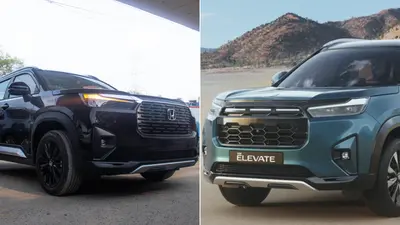
Old Honda Elevate vs New Honda Elevate: What Has Changed?
The Honda Elevate facelift brings new styling, more features and additional safety technology while retaining the same 1.5-litre petrol engine. Here is how the old and new Elevate compare on design, features, prices, powertrains and safety.
Anmol Kumar
October 7, 2026
Featured
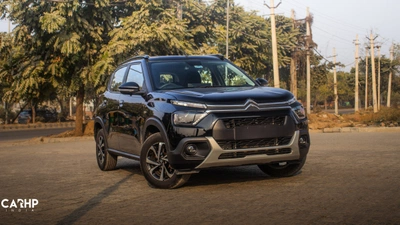
Citroen C3 Review: Who Should Consider This Car?
A few days ago, I took the Citroen C3X out for a spin in the city and on the highways. I travelled long distances and checked its fuel efficiency, features, comfort, and other factors. Today, I’ll briefly share my overall experience with the C3X and will tell you whether you should consider it or not and which is the most value-for-money variant of the lot.
Vatsal Agrawal
May 19, 2026
Tesla Finally In India Officially. Why Now And What Does It Mean For EVs?
The much-anticipated 2025 Tesla Model Y has officially arrived in India, marking a pivotal moment for the nation's burgeoning electric vehicle market. Launched on July 15, 2025, the Model Y Juniper facelift offers cutting-edge technology, impressive range, and signature Tesla performance. Positioned as a premium electric SUV, its entry will intensify competition and reshape consumer expectations for EVs across the subcontinent.
Author
July 17, 2025
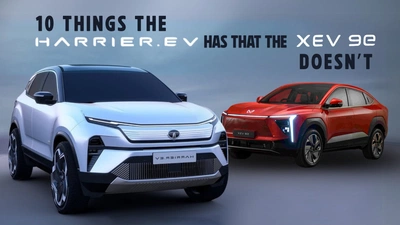
Here Are 10 Things The Harrier.EV Offers That The Mahindra XEV 9E Doesn't
The Harrier.EV is an incredible new offer from Tata. Its most popular competitor would be the Mahindra XEV 9E, priced similarly. With these two incredible offerings from home grown brands available, here is a list of everything the Harrier.EV offers that the XEV 9E doesn't.
Author
June 13, 2025
Write a comment
Comments
No comments yet. Be the first to comment!