Both EVs and CNGs Gain Share in the 2W and 4W Segments as per FADA Data
By Arjun Nair
Updated May 7, 2026
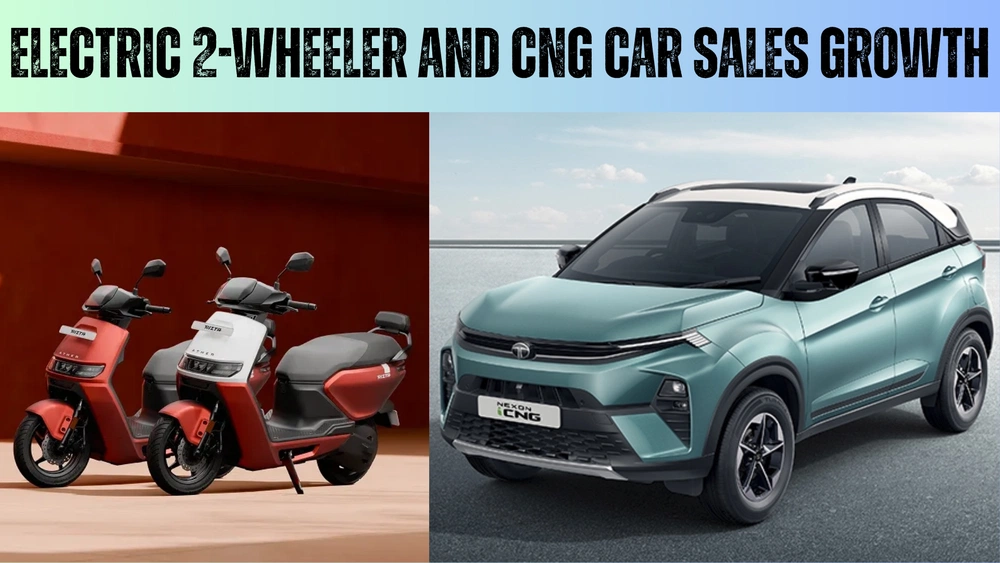
The two-wheeler market has spent six decades running almost entirely on petrol, and for most of that time, that felt like a permanent condition rather than a default. April 2026 data suggests the default is cracking.
Petrol's share in two-wheelers has slipped from 94.32% a year ago to 92.17% today, and while that two-point drop sounds modest, the direction it is moving toward is electric, not CNG. EV share in two-wheelers has gone from 5.46% to 7.76% in twelve months. CNG, despite years of government push and a ready infrastructure in several cities, sits at a rounding error of 0.07%.
| Two-Wheeler | Apr'26 | Mar'26 | Apr'25 |
|---|---|---|---|
| PETROL/ETHANOL | 92.17% | 90.13% | 94.32% |
| EV | 7.76% | 9.79% | 5.46% |
| CNG/LPG | 0.07% | 0.07% | 0.22% |
| Total | 100% | 100% | 100% |
This tells you something important about how the two-wheeler buyer thinks. When they are ready to leave petrol, they are not looking for a cheaper fuel to pour into the same kind of engine. They are done with engines entirely.
The Ola S1, Ather 450, and TVS iQube have done something that subsidised CNG kits could not - they made the act of charging feel modern and petrol feel dated. That perception shift, more than any spreadsheet comparison of running costs, is what is moving the needle.
Also Read - TVS Gives the iQube S a 4.7 kWh Battery Starts At 1.37 lakhs
The two-wheeler buyer who is switching today is largely urban, under 35, and buying a scooter for short commutes that rarely exceed 40 kilometres. For this specific use case, range anxiety is irrelevant and charging at home overnight is genuinely easier than finding a petrol pump at 8 AM in a congested colony lane.
The overwhelming majority i.e. buyers who are not switching, are in smaller cities and rural markets where public charging is absent, used EV prices are high, and petrol is simply the rational choice. The market is not converting uniformly. It is splitting, and the split is geographic as much as it is demographic.
The passenger vehicle story is a different animal altogether. Petrol dropped from 49.03% to 45.95% in a year, which is a meaningful contraction for a fuel that once commanded half the market. But EV, for all the noise around it, has only risen from 3.70% to 5.77%.
| Passenger Vehicle | Apr'26 | Mar'26 | Apr'25 |
|---|---|---|---|
| PETROL/ETHANOL | 45.95% | 44.81% | 49.03% |
| Diesel | 17.39% | 18.33% | 18.85% |
| CNG/LPG | 22.62% | 23.76% | 19.84% |
| HYBRID | 8.27% | 7.99% | 8.58% |
| EV | 5.77% | 5.11% | 3.70% |
| Total | 100% | 100% | 100% |
The real story is CNG, which has gone from 19.84% to 22.62% in twelve months and is now within reach of diesel's 17.39% share. Think about what it has taken for CNG to get here - no glamour, no government marketing campaign, no influencer content - just families doing the math around fuel costs and arriving at the same answer month after month.
Also Read - Top 10 Cheapest CNG Cars You Can Buy
The average CNG car in India today costs Rs 50,000 to 80,000 more than its petrol equivalent variant at purchase. At current CNG prices versus petrol, most urban buyers recover that premium within two to three years. That is a payback period that makes sense to a buyer who is not certain they will keep the car for a decade, and in India's current economic climate, very few buyers are making ten-year plans.
Diesel made a lot more sense back when when it was significantly cheaper per litre and buyers were confident they would drive enough to justify the higher purchase cost. Both of those conditions have weakened.
CNG has now stepped into that gap, not because it is exciting, but because it offers lower running costs, factory warranty, does not come with the BS6 complexity premium, and has a quietly, but quickly expanding network across most cities.
What OEMs have figured out, and what the data confirms, is that Indian car buyers in the Rs 6 to 10 lakh bracket are not chasing technology, they are chasing the lowest total cost of ownership they can get, and right now, CNG is offering that by a significant margin.
Source: FADA
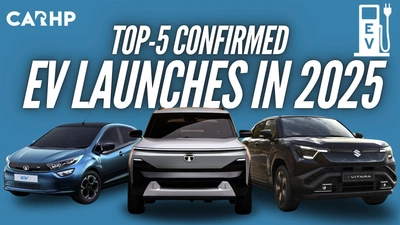
Image Source: Tata Motors, Ather Energy
Join the Conversation
Trending
MG Windsor EV Indulge Edition Launched at Rs. 17.99 Lakh
The MG Windsor EV Indulge Edition brings a new exterior finish, a rear entertainment screen and additional cabin accessories to India's electric car market. Priced at Rs. 17.89 lakh, it uses a 38 kWh battery pack with a claimed range of 332 km.
Anmol Kumar
October 13, 2026
New Jeep SUV based on Tata Sierra set for 2028 Launch
Tata and Stellantis have reportedly sealed a deal that puts a new Jeep on the Sierra’s ARGOS platform. The mid-size SUV, codenamed J1J, is expected in 2028 with ICE and electric options, and will be built in Maharashtra.
Anmol Kumar
October 13, 2026
Best Diwali Offers On Most Popular Cars
Carmakers and dealers are rolling out festive deals. We pick the best Diwali 2026 offers on India's most popular cars and keep this list updated as new deals arrive.
Arjun Nair
October 13, 2026

Featured
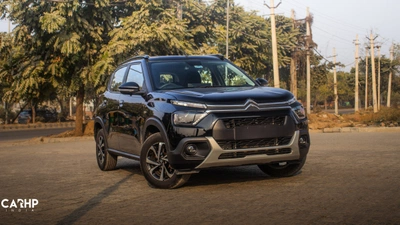
Citroen C3 Review: Who Should Consider This Car?
A few days ago, I took the Citroen C3X out for a spin in the city and on the highways. I travelled long distances and checked its fuel efficiency, features, comfort, and other factors. Today, I’ll briefly share my overall experience with the C3X and will tell you whether you should consider it or not and which is the most value-for-money variant of the lot.
Vatsal Agrawal
May 19, 2026
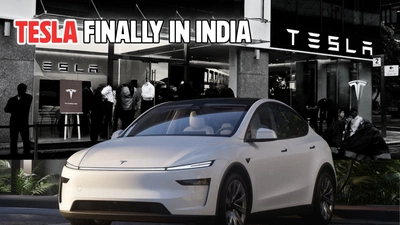
Tesla Finally In India Officially. Why Now And What Does It Mean For EVs?
The much-anticipated 2025 Tesla Model Y has officially arrived in India, marking a pivotal moment for the nation's burgeoning electric vehicle market. Launched on July 15, 2025, the Model Y Juniper facelift offers cutting-edge technology, impressive range, and signature Tesla performance. Positioned as a premium electric SUV, its entry will intensify competition and reshape consumer expectations for EVs across the subcontinent.
Author
July 17, 2025
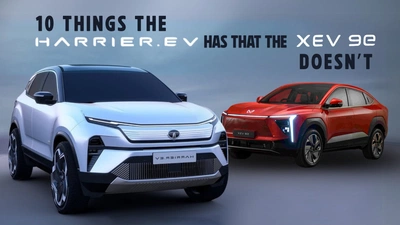
Here Are 10 Things The Harrier.EV Offers That The Mahindra XEV 9E Doesn't
The Harrier.EV is an incredible new offer from Tata. Its most popular competitor would be the Mahindra XEV 9E, priced similarly. With these two incredible offerings from home grown brands available, here is a list of everything the Harrier.EV offers that the XEV 9E doesn't.
Author
June 13, 2025
Write a comment
Comments
No comments yet. Be the first to comment!