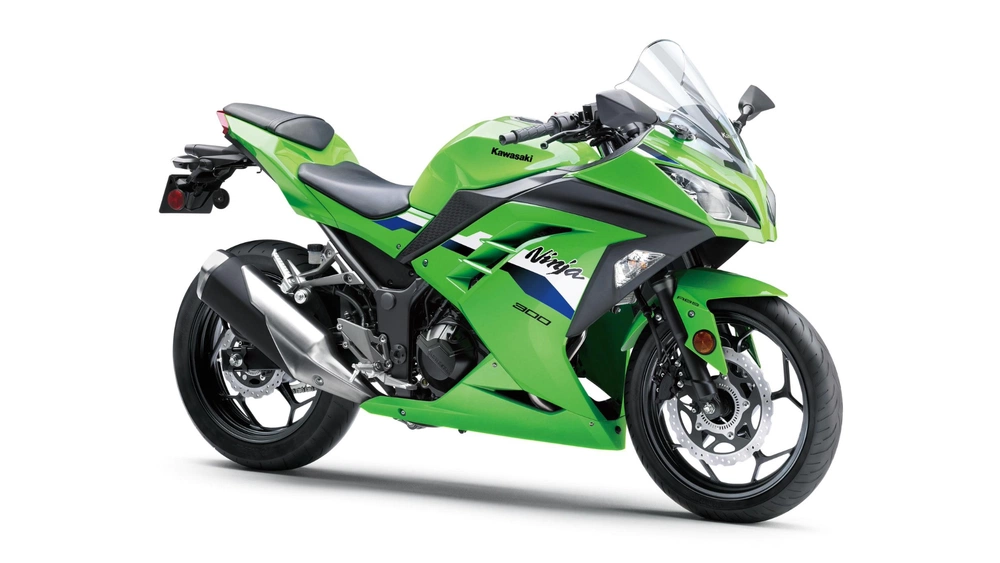
India Kawasaki Motors has launched the 2027 Ninja 300, priced at ₹3,34,000 ex-showroom. The bike makes a case for itself the same way it always has, with a parallel-twin engine in a fully faired body at a price no other twin-cylinder sportbike in India comes close to matching.
The 2027 model does not overhaul the recipe, but it builds on the meaningful updates introduced over the past two model years. Here are the five features that define the riding experience on the 2027 Ninja 300.
296cc Parallel-Twin Engine with Dual Throttle Valves
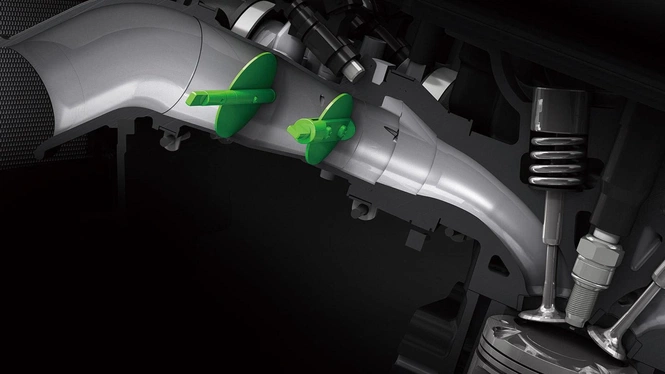
The 296cc liquid-cooled parallel-twin is the core reason buyers look at this motorcycle over its single-cylinder rivals. It makes 39 PS at 11,000 rpm and 26.1 Nm at 10,000 rpm, with the power spread usefully across the rev range rather than spiking at the top end alone.
What makes this engine stand out is the dual throttle valve system. There are two throttle valves per cylinder. The rider controls the primary set via the grip, while the ECU operates a secondary set to regulate airflow more precisely. The result is a throttle response that feels linear and predictable rather than abrupt, which is useful both in city traffic and on the highway.
Also Read – Honda Unveils 10 New Bikes and Scooters in its Biggest Launch Ever
Assist and Slipper Clutch
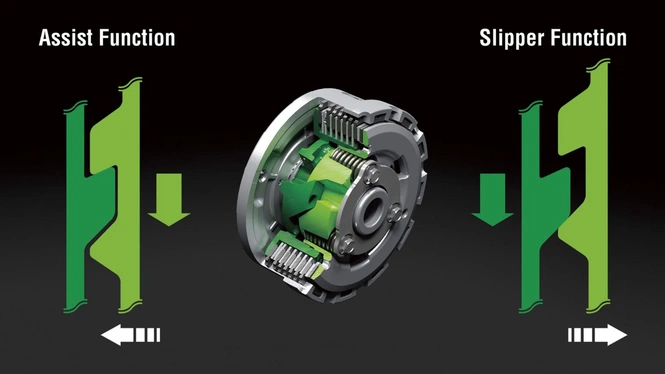
The Ninja 300 carries an assist and slipper clutch, which is meaningful at this price point. The assist function works as a self-servo mechanism, allowing Kawasaki to run lighter clutch springs. That translates to a noticeably lighter lever pull in stop-and-go traffic.
The slipper side handles hard downshifts. When engine braking force is too sudden, the slipper cam separates the clutch plates slightly to reduce back-torque and prevent the rear tyre from locking or skipping. This is particularly useful when downshifting into corners quickly, which is exactly the kind of riding a Ninja 300 owner tends to explore as their confidence builds.
Analogue-Digital Instrument Cluster
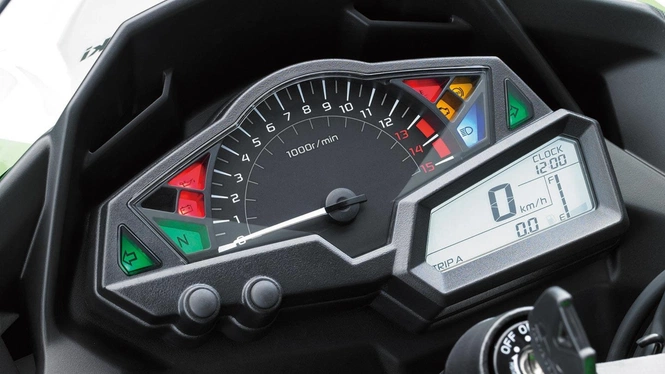
The Ninja 300 uses a hybrid instrument cluster with a large analogue tachometer as the centrepiece, flanked by a multi-function LCD screen. The digital side covers speed, fuel level, dual trip meters, odometer, clock, and an Economical Riding Indicator that nudges the rider toward more fuel-efficient throttle habits.
In an era where most rivals have moved to full TFT screens, the analogue tacho here is genuinely old-school. Whether that is a drawback depends on the rider. Those who like reading engine revs at a glance without squinting at a digital number will find it easier to use on the move than a purely digital setup.
Also Read – Cheapest Bikes With Fully Digital Display In 2026 Under 1 Lakh
Dual Projector Headlights
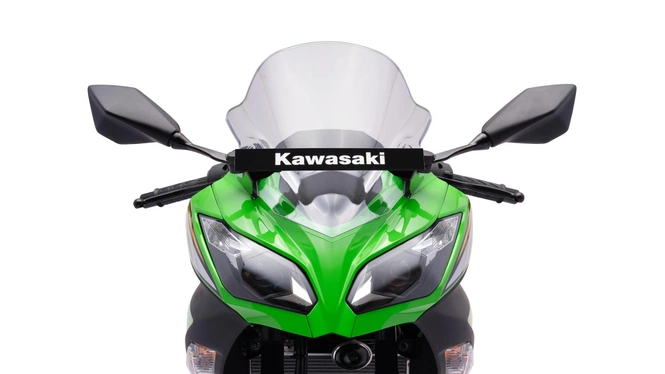
The 2027 Ninja 300 features dual projector headlamps, replacing the older halogen reflector setup from the 2025 model year onwards. Projectors deliver a more focused beam, improving night visibility without the scatter that poorly aimed reflector units produce.
Riders who commute in the early morning or late evening will notice the difference in throw and cut-off. The headlights also carry styling cues from the Ninja ZX-6R. Whether that visual reference lands is a matter of taste, but the lighting upgrade itself is straightforward and welcome.
Kawasaki Heat Management System
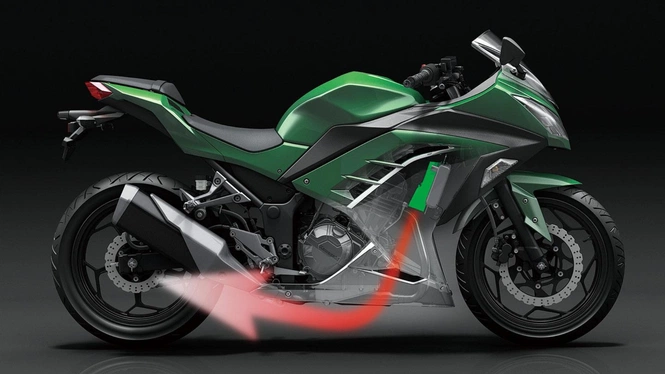
India's traffic conditions make heat management relevant on a liquid-cooled motorcycle in a way it simply is not in other markets. Kawasaki uses a patented radiator fan cover positioned behind the radiator to direct hot air downward and away from the rider, rather than letting it rise towards the legs and fuel tank. The fairing design also channels intake air through larger openings to help cool the engine from the front.
Also Read – Upcoming Confirmed Bikes And Scooter In 2026
Image Source: Kawasaki India
Table of Contents
- 296cc Parallel-Twin Engine with Dual Throttle Valves
- Assist and Slipper Clutch
- Analogue-Digital Instrument Cluster
- Dual Projector Headlights
- Kawasaki Heat Management System
Join the Conversation
Trending
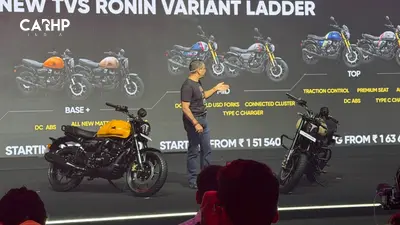
TVS Ronin Refreshed With Traction Control and Type-C Charger, Prices Start at Rs 1,42,490
TVS has updated the Ronin range for 2026 with additions across all three variants. The Base+ gets dual-channel ABS, the Mid gains Bluetooth connectivity for navigation and Type-C charging, and the Top adds traction control and a premium seat. Prices run from Rs 1,42,490 to Rs 1,63,640 ex-showroom.
Salil Kumar
September 18, 2026
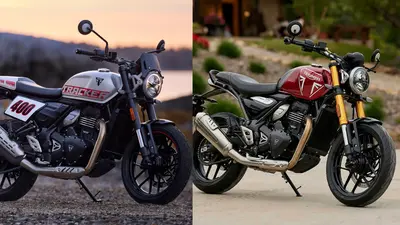
Triumph Speed 400 and Tracker 400 Get Price Cuts of Up to Rs 7,000
Triumph has reduced prices on the Speed 400 and Tracker 400 by up to Rs 7,371. The Speed 400 also gets free accessories worth Rs 6,507 for a limited period.
Anmol Kumar
September 18, 2026
Updated TVS Apache RTR 160 and RTR 160 4V Launched at Rs 1.27 Lakh and Rs. 1.41 Lakh
TVS has updated the Apache RTR 160 and Apache RTR 160 4V. The RTR 160 gains traction control, hazard lamps and LED turn indicators on its top variant, while the 160 4V adds Google Map mirroring, a Type-C charger, panic brake alert and coloured wheels.
Aman Kumar
September 18, 2026
TVS Apache RTR 200 4V Launched at Rs 1.49 Lakh With Adjustable USD Forks
TVS has launched the updated Apache RTR 200 4V with front adjustable inverted suspension, Google Map mirroring, a Type-C charger and panic brake alert as new additions. The top variant is priced at Rs 1,49,990 ex-showroom
Anmol Kumar
September 18, 2026
TVS Apache RR 310 and RTR 310 Black Diamond Edition Launched With Keyless Ride at Rs 2.87 Lakh and Rs 2.48 Lakh
TVS has introduced a Black Diamond Edition for the Apache 310 series ahead of the festive season. Both the RTR 310 and RR 310 gain a new Black Diamond colour and Keyless Ride. The RTR 310 is priced at Rs 2,48,990 and the RR 310 at Rs 2,87,790 ex-showroom.
Arjun Nair
September 18, 2026
Featured
Citroen C3 Review: Who Should Consider This Car?
A few days ago, I took the Citroen C3X out for a spin in the city and on the highways. I travelled long distances and checked its fuel efficiency, features, comfort, and other factors. Today, I’ll briefly share my overall experience with the C3X and will tell you whether you should consider it or not and which is the most value-for-money variant of the lot.
Vatsal Agrawal
May 19, 2026
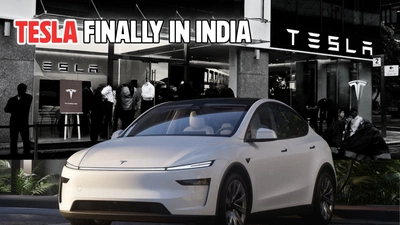
Tesla Finally In India Officially. Why Now And What Does It Mean For EVs?
The much-anticipated 2025 Tesla Model Y has officially arrived in India, marking a pivotal moment for the nation's burgeoning electric vehicle market. Launched on July 15, 2025, the Model Y Juniper facelift offers cutting-edge technology, impressive range, and signature Tesla performance. Positioned as a premium electric SUV, its entry will intensify competition and reshape consumer expectations for EVs across the subcontinent.
Charan Narain
July 17, 2025
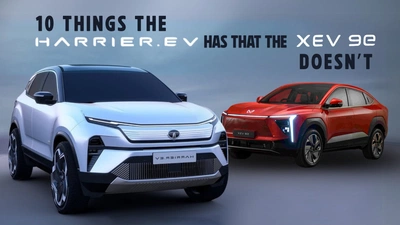
Here Are 10 Things The Harrier.EV Offers That The Mahindra XEV 9E Doesn't
The Harrier.EV is an incredible new offer from Tata. Its most popular competitor would be the Mahindra XEV 9E, priced similarly. With these two incredible offerings from home grown brands available, here is a list of everything the Harrier.EV offers that the XEV 9E doesn't.
Charan Narain
June 13, 2025
Write a comment
Comments
No comments yet. Be the first to comment!