Toyota Rumion 700km Review: Is This the Right Car for a Joint Family?
Published August 21, 2026
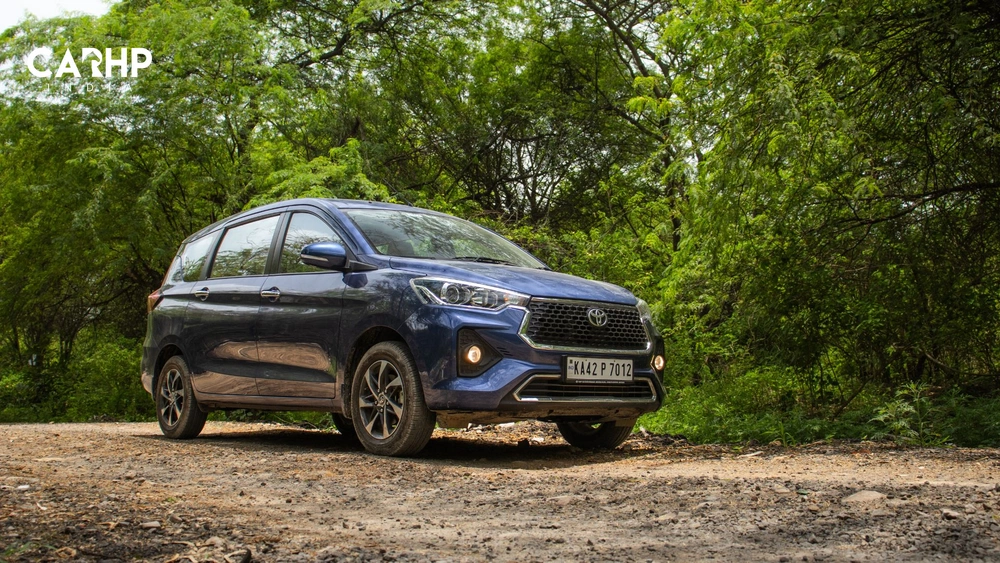
For families looking for a practical seven-seater, an MPV can still make more sense than an SUV. In this space, the Toyota Rumion focuses on exactly that formula. It is spacious, with comfortable seating, efficient powertrains and easy everyday usability.
But the Rumion has an interesting proposition. It shares its core mechanical package with the Maruti Suzuki Ertiga, while bringing Toyota's styling, badge and ownership experience. So, is there enough here to make the Rumion a compelling alternative?
I spent around 700 km with the Toyota Rumion, driving through Noida-Gurugram traffic and on expressways. I evaluated its real-world fuel efficiency, ride quality, highway performance, cabin comfort and overall practicality.
The bigger test, however, was its practicality. How comfortable is it for a family? Is the third row genuinely usable? How does it perform with a full load
Here's what my 700 km experience revealed.
What’s Good:
Comfort
Starting with the most important thing, the comfort. The Rumion’s cabin is made to offer comfort in every possible way. Whether I drove the vehicle, or was in the second row, or in the third row, there is enough comfort in each row, and much-needed miles on long tours were not a problem at all.

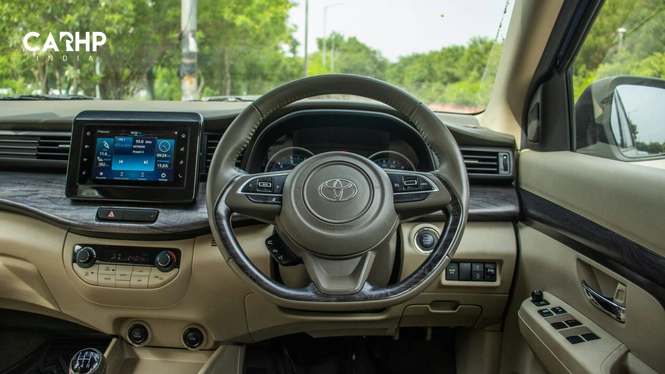
Now, starting with the front seats, since I was mostly in the driver’s seat, they are pretty comfortable. There is a good amount of bolstering support, and with the front centre armrest, it is a pretty comfortable place to be in. The seat cushioning is on the softer side, and one thing Toyota could have offered is leatherette upholstery instead of fabric even in the top trims.

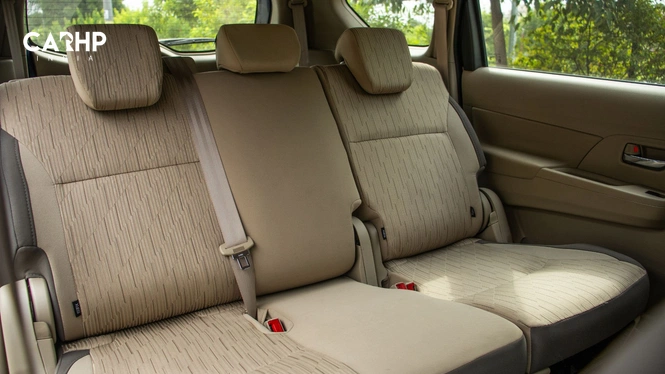
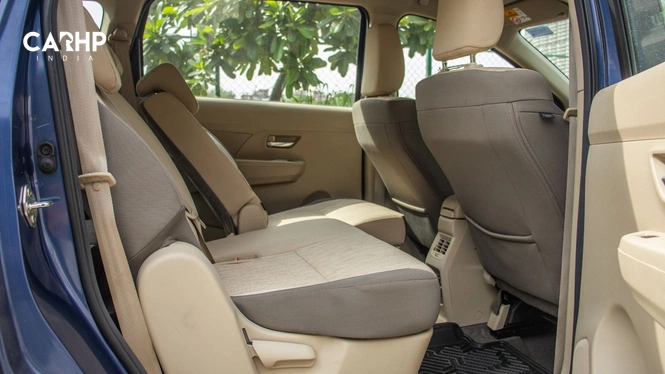
Now, when I travelled in the second row, the priorities changed, and now, I was able to feel the space and the calmness the cabin offers. Despite the Rumion not offering a sunroof, the cabin uses beige upholstery instead of dark, and the large windows bring in a lot of sunlight, making the cabin well-lit and airy.
The second row seats are wide enough, and three passengers of my size were pretty comfortable. Note that I am 5’10” tall and a bit heavier. I had ample knee, leg, and shoulder room, and under-thigh support was also good. To add more to the comfort, I even reclined it further and enjoyed my view outside.
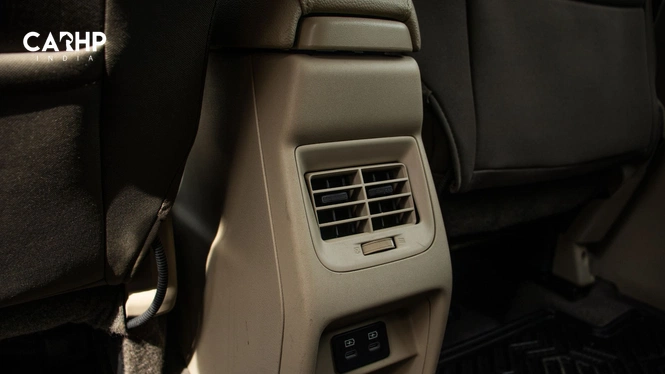
For amenities, I had rear AC vents, two USB Type-C charging sockets, and nothing else. If I compare it with the Maruti Suzuki Ertiga, it missed out on roof-mounted blower controls, a rear centre armrest, and some other amenities.

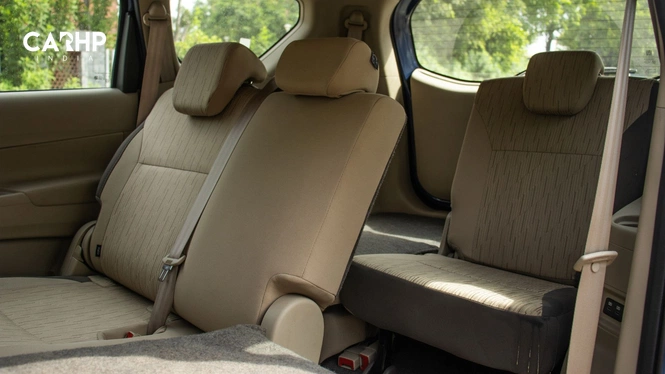
Earlier, I was a bit hesitant to spend my time in the third row seats of the Toyota Rumion, but later, God’s plan changed, and I had to travel in the third row. As soon as I got in, the ingress and egress, I feel, could have been slightly better, as the middle row seats do not tumble down, it just slide ahead by folding. Nevertheless, once I was in and adjusted the middle-row seats, I was pretty comfortable. Though the headroom is a bit compromised, it is best suited for short-height passengers or for kids.
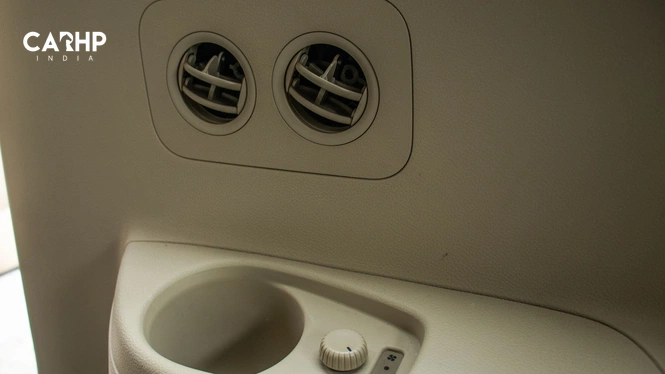
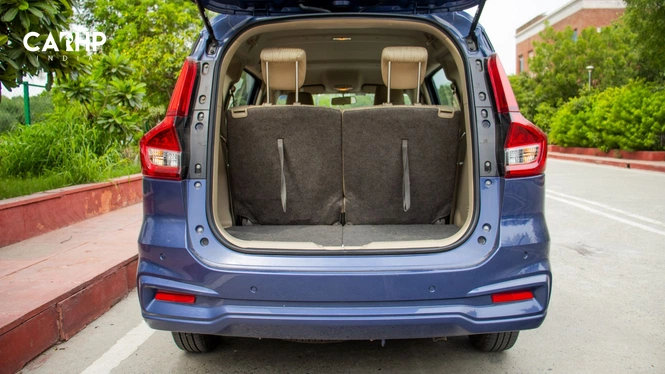
However, talking about amenities, Toyota has done a very brilliant move over here. So there are two USB Type-C charging ports on the left side, and the AC blower controls and the vents are on the right side. So if you have to charge your phone, there is no charging socket on the right side, and if you want to cool down in the hot summer, there is no AC vent on the left side.
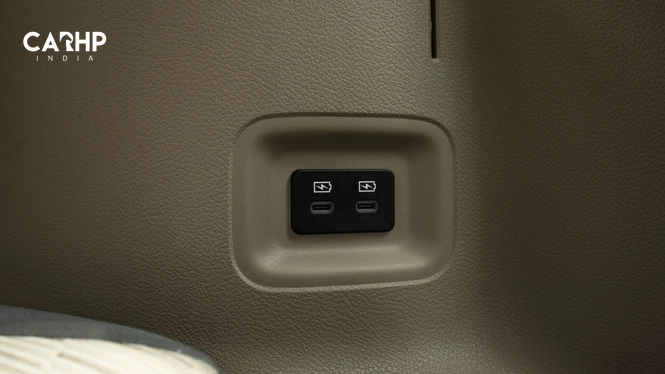
How cool is that? If by chance you have fought with the co-passenger for either of the two things, then either you have to wait for the cabin to cool down so that you can charge your phone, or you can cool down faster but compromise on charging your phone.
Ride and Handling
The suspension setup on the Toyota Rumion is on the softer side, or I should say it is well calibrated for daily driving conditions. In my daily commute from Noida to Gurugram, and back, there are multiple rumble strips, and the recent rains have even worsened the road quality in some areas. So, deliberately, to test the Rumion’s suspension, I went through these potholes and bad roads, and I was surprised to see the ride quality on offer. It felt so planted and nothing filtered inside the cabin.
Moreover, when I took it on the expressways and drove at around 100-120 km/h, things changed a bit. As the suspension is tuned on the softer side, the ride becomes a bit bouncy, and its effects are way too different in each row. When I was there as a co-passenger in the first row, I felt the ride was pretty normal and did not feel the bumps or the unevenness.
When I moved to the second row, things changed, and the bumpy ride quality started coming into the picture, and I was able to feel the vertical movement while cruising non-stop at 100-120 km/h speeds. However, when I shifted to the third row seats, I had to request the driver to slow down a bit on the road bumps or expansion joints, as it was very bouncy, and with luggage and seven passengers, I was in constant movement.
Now, coming to the handling part, the steering is light to operate in city conditions. It has a negligible amount of feel and feedback, and since it is a long car, the body roll is quite evident. While making quick overtakes, I did not get the confidence that I was expecting, and it could be due to the slimmer tyre profile section. Since the Rumion comes with an 185-cross-section tyre, I feel a wider tread could have offered better grip and stability for cornering.
Also Read: Kia Sonet X-Line Review: The Good, the Bad and Everything In Between
Fuel Efficiency
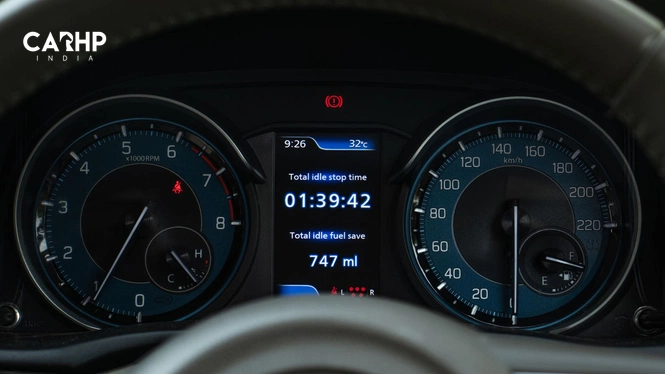
One of the main reasons for the Toyota Rumion being popular among the masses and family car buyers is its fuel efficiency. Though ARAI says the Rumion has a fuel efficiency of 20.51 km/l for the petrol manual, 20.11 km/l for the petrol automatic, and 26.11 km/kg for the CNG variant. Since I drove the petrol manual, I did a two-tank-to-tank test, one with air conditioning on and one without it.
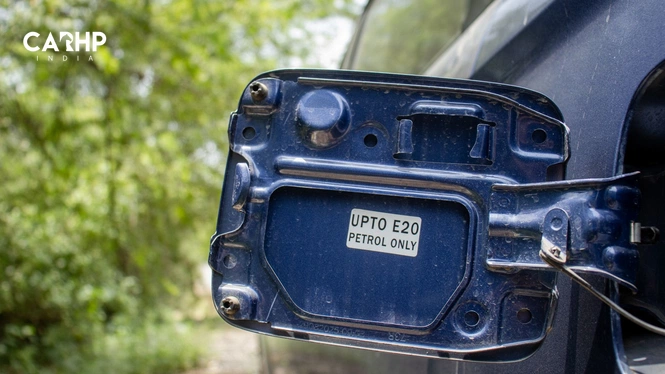
While I had the AC on, I got a real-world fuel efficiency of 10.98km/L. However, when I did it without the air conditioning, this time, the fuel efficiency jumped to almost
Performance
The Toyota Rumion is equipped with a 1.5L inline four-cylinder naturally aspirated petrol engine, which makes around 104 bhp and 137 Nm of peak torque, paired with a five-speed manual or a six-speed automatic gearbox. I drove the manual variant, and this is the same engine offered in the Maruti Suzuki Brezza, Grand Vitara, and other models.
Now, coming to my daily drive, since I commute between Noida and Gurugram, I found this car a lot meaningful. Though on paper you might feel the numbers are lower, in city traffic and peak bumper-to-bumper conditions, I feel this is one of the most refined and reliable engines on offer. I did not feel as if it missed the feel of driving an underpowered engine. The power delivery is linear throughout, and the gearing is on the taller side, so when I required slightly extra power, the mid-range was the sweet spot. During peak traffic, it crawled effortlessly in third gear as well, but I avoided excessive strain on the clutch plate and gearbox.
On highway stretches, I felt the things could have been better. Firstly, it picks up pace quite effortlessly even with all seven passengers, but once you cross 80km/h mark, things begin to change. There, I felt, this engine should have more power, and since I mentioned earlier that I drove a 5-speed manual, you feel the need for the additional sixth gear. The low-end lag is there, and you need to downshift; the mid-range is the sweet spot, between 2,000 RPM and 4,500 RPM, giving it a wide rev band, and the top-end does not feel bland.
Overall, I feel this engine in the Toyota Rumion does a good job, has a decent amount of power, and stays calm even at speeds of 100-120km/h.
What’s Bad
Features
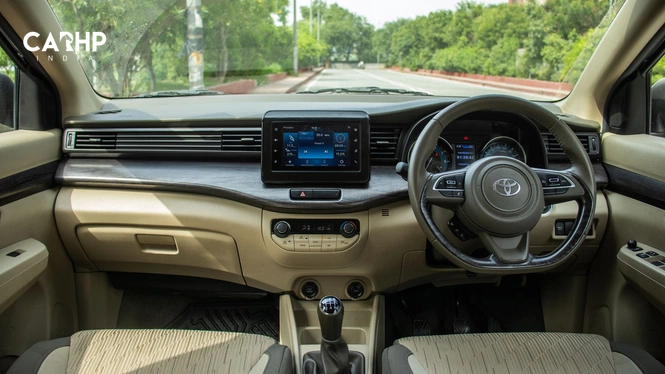
Although the Toyota Rumion has decent features like an 8-inch infotainment screen with wireless connectivity, auto headlamps, cruise control, all four power windows, automatic climate control, and others, there are a few features that I feel could have elevated my overall experience inside.
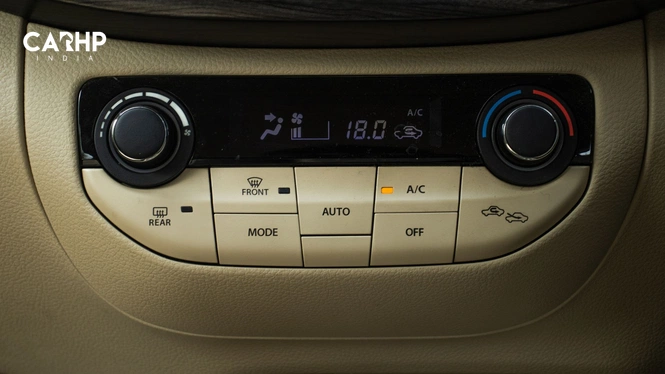
For instance, it misses out on front ventilated seats; there are no cooled cup holders, no wireless charger, and the list goes on. Coming to the rear seats, it misses out on roof-mounted blower controls, and instead, it only has AC vents lower down in the centre panel.
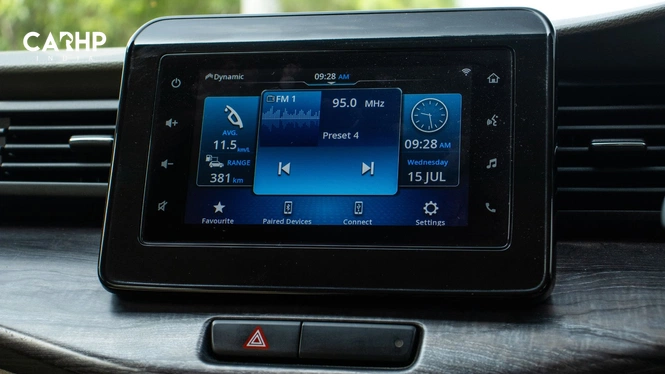
Additionally, the Rumion even misses out on a rear-centre armrest that is offered in the Maruti Suzuki Ertiga. In the third row, the positioning of the USB Type-C sockets and the AC vents could have been better. I feel some of these features that are omitted in the Rumion could be a deal-breaker for the buyers.
Also Read: My 700 KM Delhi-Dehradun Roadtrip With the Renault Kiger Turbo Manual: Most Underrated Highway Car?
Brakes
The next thing that I feel could have been better in the Rumion is the braking. Though it has front disc brakes and rear drum brakes, along with ABS with EBD, traction control, and other safety features, I did not feel confident in the braking power at all.
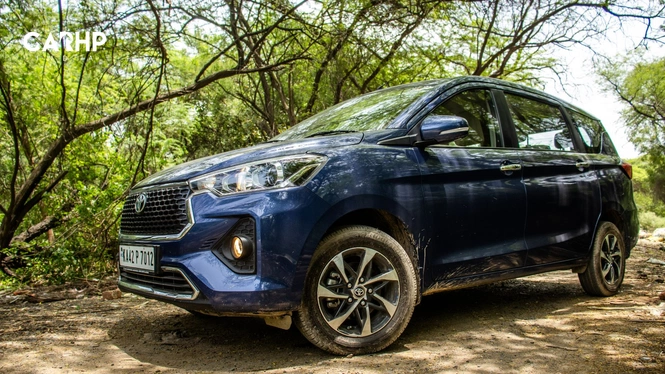
I felt the brakes were a bit soggy, and I had to plan earlier when to brake and how much distance was required. If you are someone who wants to get a Rumion and wants to solve this issue, I would suggest getting the brakes upgraded with aftermarket parts and thank me later. Even on hard braking, it did not inspire any confidence, and under panic situations, I was legit in fear of crashing into the vehicle moving ahead.
Design
Now, coming to the most subjective reason, the design. Though everybody knows it is the counterpart to the Maruti Suzuki Ertiga, keeping it short, I feel the design of the Rumion could be better.
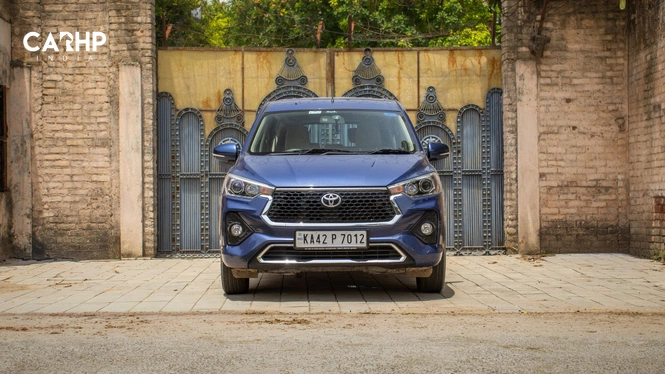
The front has a different grille pattern, and here, I totally give the points to the Maruti Suzuki Ertiga for having a better pattern. Though it tries to resonate with the elder sibling, the Innova Crysta, I feel it could have been worked on slightly better to make it look more appealing and beautiful.
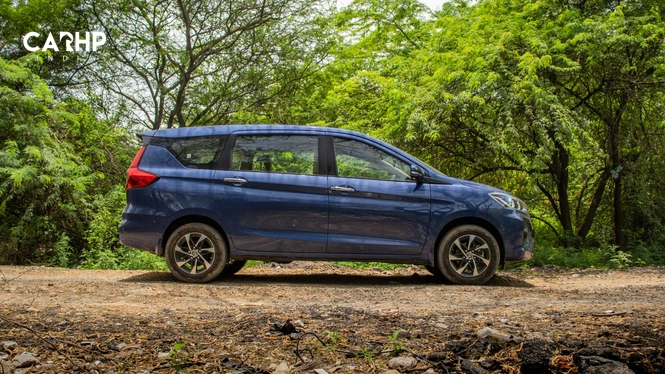
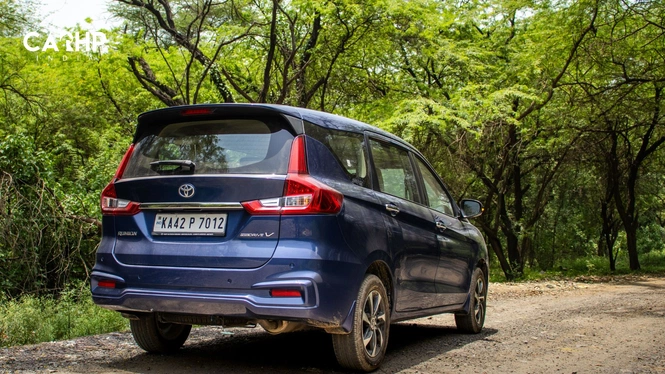
On the sides, though the silhouette and dimensions are almost the same, I feel the design for the alloy wheels is once again done better on the Maruti Suzuki Ertiga instead of the Toyota Rumion. It runs on a 15-inch unit, having a semi-chrome pattern, but I personally feel Toyota could do better.
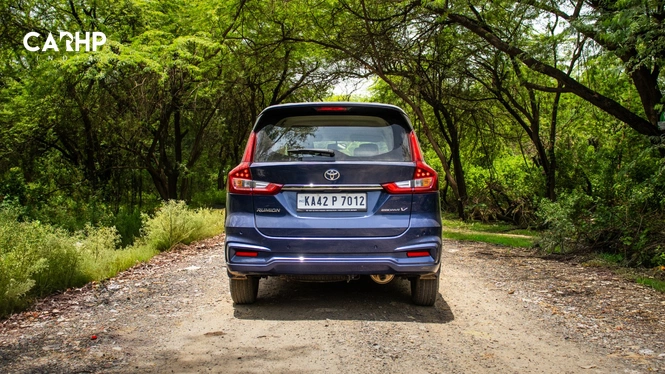
At the rear, there is not much of a design difference between the two MPVs. It comes with LED taillamps, and the rear looks more sorted compared to the front.
What is the price of the Toyota Rumion?
The price of the Toyota Rumion starts at ₹9.79 lakh (ex-showroom) for the base variant. Since I drove the V MT variant, the price of it is ₹12.70 lakh (ex-showroom). Compared to the Ertiga, the base variant is approx ₹85k more, and the same variant is roughly ₹1.06 lakh extra. You can check out the latest on-road price in your area at CARHP.IN.
Should You Buy It?
Now, the main question is: Should you go for the Toyota Rumion in 2026? Our answer is yes!! There are two types of buyers for the Toyota Rumion in the market.
- The first buyer is a fleet operator and is ready to compromise on some features, as the basics are sorted in this and the engine is also reliable.
- The other set of buyers is a family man who has a joint family along with a business and loves to travel together. Though the missing features can be a deal-breaker for him, as he is paying extra for the Rumion, what he gets is the reliability and the service experience that Toyota offers in the market and the trust built over the years.
So, overall, the Toyota Rumion is a great offering in the market, priced under ₹15 lakh, giving you a comfortable and spacious cabin, decent features, and a reliable petrol engine with good fuel efficiency. However, if you can spend more, there are other options like the Kia Carens Clavis or the Maruti Suzuki XL6.
Table of Contents
- What’s Good:
- Comfort
- Ride and Handling
- Fuel Efficiency
- Performance
- What’s Bad
Join the Conversation
Trending
I Drove Renault Kiger for 10,000km & Here Are 5 Reasons Why You Need It !!
I have spent around 5 months with the Renault Kiger to understand what it is like in the real world. Here is my overall experience, and I will tell you the five reasons why you should definitely consider it for under ₹10 lakh.
Vatsal Agrawal
September 21, 2026
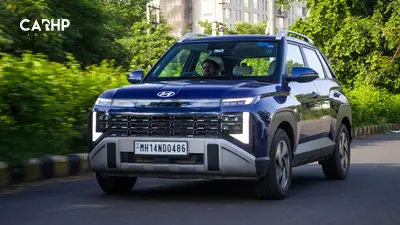
I Drove the Hyundai Venue HX8 Turbo Manual, and Can It Take on the Brezza and Nexon?
I tested the Hyundai Venue HX8 variant powered by the 1.0-litre turbo-petrol engine for over 1,500 km across Noida-Gurugram traffic and multiple expressways. We evaluated its real-world fuel economy, ride comfort, and overall drivability for daily commutes and long family road trips.
Vatsal Agrawal
September 16, 2026
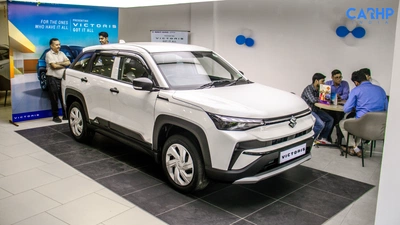
Maruti Victoris LXi CNG First Drive Review
This is the cheapest Victoris CNG you can buy and it comes with 27 kmpl mileage
Sayan Paul
August 17, 2026
Featured
Citroen C3 Review: Who Should Consider This Car?
A few days ago, I took the Citroen C3X out for a spin in the city and on the highways. I travelled long distances and checked its fuel efficiency, features, comfort, and other factors. Today, I’ll briefly share my overall experience with the C3X and will tell you whether you should consider it or not and which is the most value-for-money variant of the lot.
Vatsal Agrawal
May 19, 2026

Tesla Finally In India Officially. Why Now And What Does It Mean For EVs?
The much-anticipated 2025 Tesla Model Y has officially arrived in India, marking a pivotal moment for the nation's burgeoning electric vehicle market. Launched on July 15, 2025, the Model Y Juniper facelift offers cutting-edge technology, impressive range, and signature Tesla performance. Positioned as a premium electric SUV, its entry will intensify competition and reshape consumer expectations for EVs across the subcontinent.
Charan Narain
July 17, 2025
Here Are 10 Things The Harrier.EV Offers That The Mahindra XEV 9E Doesn't
The Harrier.EV is an incredible new offer from Tata. Its most popular competitor would be the Mahindra XEV 9E, priced similarly. With these two incredible offerings from home grown brands available, here is a list of everything the Harrier.EV offers that the XEV 9E doesn't.
Charan Narain
June 13, 2025
Write a comment
Comments
No comments yet. Be the first to comment!