Mahindra Bolero Neo vs Maruti Suzuki Ertiga - Which One Should You Buy
Mahindra Bolero Neo vs Maruti Suzuki Ertiga Comparison at CarHP India. Compare Mahindra Bolero Neo and Maruti Suzuki Ertiga Prices, Mileage, Features, Specs, Colours and much more.
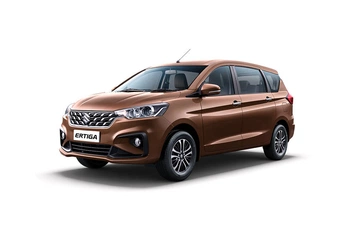
The Mahindra Bolero Neo is available in 6 variants, while the Maruti Suzuki Ertiga comes in 9 variants. The Bolero Neo is priced from ₹8.49 Lakh to ₹10.90 Lakh. The Ertiga is slightly more expensive, ranging from ₹8.80 Lakh to ₹12.94 Lakh. Under the hood, the Bolero Neo features a 1493cc diesel engine with 260Nm of torque and a 5-speed manual gearbox. It uses a rear-wheel-drive system that feels rugged and tough on the road. The Ertiga comes with a 1462cc petrol engine producing 101.64bhp at 6000rpm and 139Nm of torque at 4300rpm. It uses a 6-speed automatic transmission and a front-wheel-drive setup for a smoother city drive. The Bolero Neo delivers a mileage of 17.3 kmpl, which is helpful for keeping running costs down. Both vehicles offer 7 seats, but the boot space differs significantly. The Bolero Neo provides a 384-litre boot, whereas the Ertiga offers 209 litres. Inside, the Ertiga feels more premium with a leather-wrapped steering wheel, automatic climate control, and an engine start-stop button. It also supports wireless Android Auto and Apple CarPlay. The Bolero Neo includes a touchscreen infotainment system, cruise control, and keyless entry. Safety is a major point of difference. The Ertiga is equipped with 6 airbags, a 3-star safety rating, Electronic Stability Control, and Hill Assist. The Bolero Neo comes with 2 airbags and ABS as standard. For daily driving in busy metro cities, the Ertiga is the more practical choice due to its easy automatic gears and higher safety features. The Bolero Neo is better for buyers who need a heavy-duty vehicle for rougher roads. Families looking for comfort and convenience should choose the Ertiga. Book a test drive through this platform before making a final decision to get exclusive benefits, special discounts, and the best available offers by booking with us.
₹ 8.99 Lakh
₹ 8.90 Lakh


Compare Minimum 2 Cars At Once — Tap To Activate / Deactivate
Smart Summary for Car Selection
 Why Choose Mahindra Bolero Neo?
Why choose
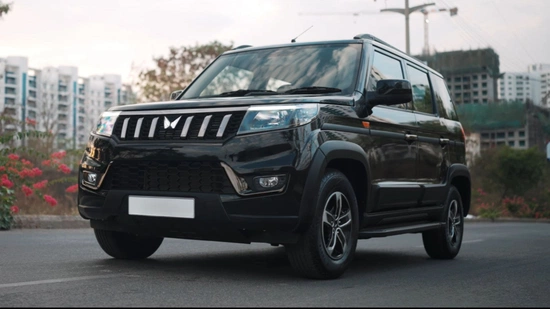
- The 1.5-litre diesel makes 100PS and 260Nm, and that torque figure is nearly double the Ertiga petrol's, which is what you feel on a loaded climb or a rough village road
- Body-on-frame construction and rear-wheel drive make it far more tolerant of bad roads and overloading than the Ertiga's monocoque
- At 3,995mm long it sits under four metres, so it is easier to place in tight lanes than the longer Ertiga
- Diesel running costs on a torquey engine work out lower per kilometre than the Ertiga petrol for high-mileage rural and semi-urban use
- The third row folds away to leave around 384 litres of boot space, so it doubles as a load carrier when the seats are not needed
- A 9-inch touchscreen with wireless smartphone mirroring, cruise control, 16-inch alloys and leatherette upholstery are fitted higher up the range
Why not choose
- Only dual airbags are fitted and electronic stability control is not available on any version, so the safety package is well behind the Ertiga's
- It scored one star for adult occupants and one star for children in Global NCAP testing, which is the single most important fact in this comparison
- The third row seats face sideways rather than forward, so those two places are far less safe and less comfortable than a forward-facing bench
- Only a five-speed manual is offered, so there is no automatic anywhere in the range
- Ladder-frame construction means noticeably more body movement and a firmer ride than the Ertiga on ordinary roads
- Cabin refinement, material quality and road noise are all worse than the Ertiga's
Why Choose Maruti Suzuki Ertiga?Why choose
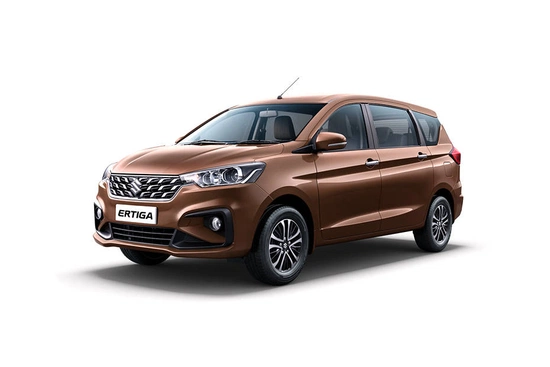
- All seven seats face forward, which makes the third row both safer and usable for real journeys rather than short local trips
- A six-speed torque converter automatic is offered on petrol, and the Bolero Neo has no automatic at any price
- CNG is offered with a claimed 26.11km per kg, which is the cheapest per-kilometre running cost available between these two
- Monocoque construction gives a far more settled ride and quieter cabin than the Bolero Neo's ladder frame
- Maruti's service network reach and parts pricing are the widest and lowest in the market, and on a family MPV kept for years that is the largest ongoing saving
- Cabin refinement and material quality both sit clearly above the Bolero Neo's
Why not choose
- The 1.5-litre petrol makes 103hp and 136.8Nm, roughly half the Bolero Neo diesel's 260Nm, so a fully loaded climb is hard work
- No diesel exists in the range, so buyers covering high monthly distances have no torque-focused option
- Monocoque construction and lower ground clearance mean badly broken roads and overloading are handled less well than by the Bolero Neo
- CNG is manual only, so the cheapest running cost and an automatic cannot be combined
- Boot space with all three rows upright is modest, so a full seven-seat load leaves little room for luggage
 Our Recommendation For Most Buyers
Bolero Neo
The Bolero Neo is built for a specific job, and on rough roads with a load it does that job better than the Ertiga. Its 260Nm diesel and body-on-frame construction handle broken village roads and heavy use in a way a monocoque MPV cannot, and under four metres it is easier to thread through tight lanes. The reason to think hard is safety.
It carries dual airbags only, has no stability control on any version, scored one star for both adults and children in Global NCAP testing, and its third row faces sideways rather than forward. For a vehicle likely to carry a family of seven, that combination is difficult to set aside no matter what the engine offers.
Ertiga
The Ertiga is the better choice for a family that actually uses all seven seats. Every seat faces forward, which makes the third row usable and far safer than the Bolero Neo's side-facing arrangement, and the monocoque body gives a quieter, more settled ride on ordinary roads. CNG at a claimed 26.11km per kg makes it the cheapest to run, and the torque converter automatic is something the Bolero Neo does not offer at any price. What you give up is capability under load.
The petrol's 136.8Nm is roughly half the Bolero Neo diesel's, so a full car on a long climb strains, and there is no diesel to move to.
Engine and Performance
Performance Specifications
Fuel Specifications
Dimensions and Design
Interior Specifications
Wheels & Tires
Suspension, Brakes & Steering
Safety Features
Interior Features
Comfort & Convenience
Infotainment Features
Exterior Features
Brochure

EMI Cost Comparison
Assuming 20% down payment, 9.5% interest, 60-month tenure
 Loan Amount
 Interest: 9.5%
 Down Payment (20%)
 Loan TenureLoan AmountInterest: 9.5%Down Payment (20%)Loan Tenure
Pros & Cons Comparison
Things We Like in Mahindra Bolero Neo
- The only sub-4m SUV offering a rugged body-on-frame, rear-wheel drive, and seven-seat layout.
- Engine Stop/Start and ECO mode are standard across all five variants.
Things We Like in Maruti Suzuki Ertiga
- Six airbags are standard on every variant.
- Smart Hybrid system helps the 7-seat petrol automatic achieve a highly competitive 20.30 km/l.
Things We Don't Like in Mahindra Bolero Neo
- Poor safety (1-star Global NCAP) due to an unstable bodyshell and weak chest protection.
- ESC (Electronic Stability Control) is absent across the entire Bolero Neo range.
Things We Don't Like in Maruti Suzuki Ertiga
- The S-CNG variant is not offered with an automatic gearbox.
- Lacks Bharat NCAP scores, also a recent two-airbag Africa-spec model scored 1-star in Global NCAP.
Mahindra Bolero Neo Comparisons
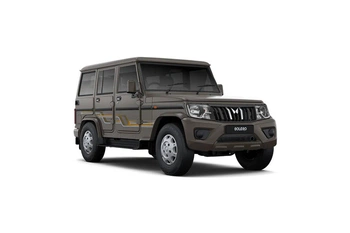
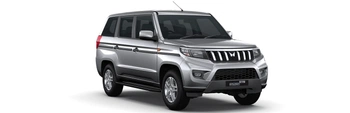
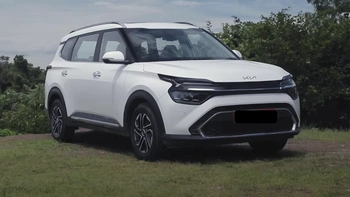
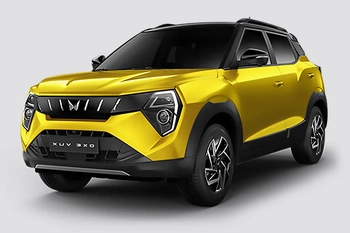
Maruti Suzuki Ertiga Comparisons
Car News