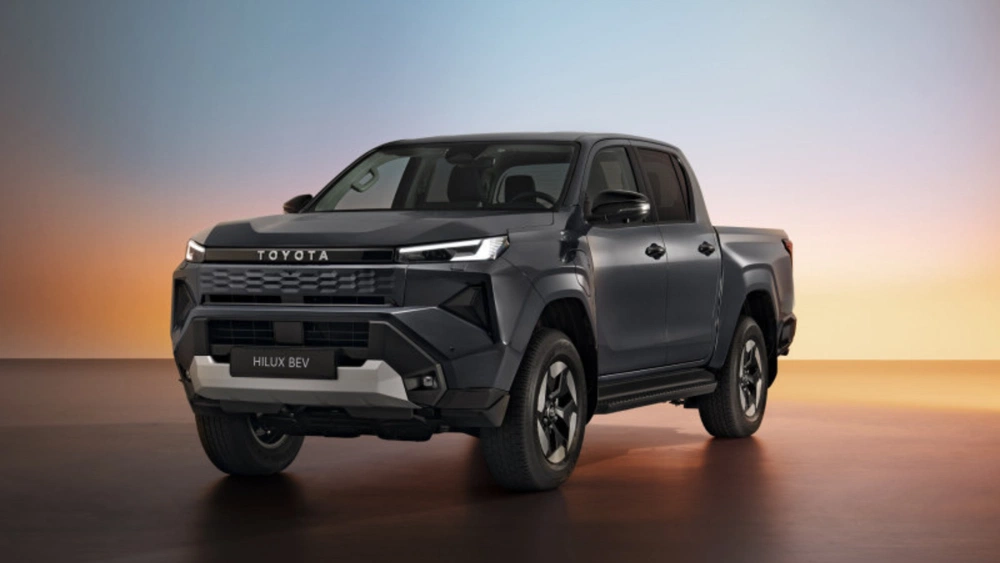
Toyota has unveiled the all-new ninth-generation Hilux, marking a major evolution for its legendary pickup. Known for its durability, dependability, and rugged appeal, the new Hilux introduces electrified powertrains for the first time including a mild-hybrid, a fully electric BEV, and a hydrogen fuel-cell version scheduled for 2028.
Toyota’s multipath strategy ensures the truck remains relevant across diverse markets and driving conditions. The lineup starts with the battery-electric model launching globally in December 2025, followed by the Hybrid 48V variant in spring 2026.
Also Read- 2026 Toyota Hilux Image Gallery
Exterior
The new Hilux carries forward the robust body-on-frame structure but features sharper, more modern styling. The front fascia gets slimmer LED headlights connected by a central bar that proudly displays the TOYOTA name.
The BEV variant adopts a cleaner look with a sealed-off grille for improved aerodynamics, while dedicated alloy wheels distinguish it from combustion models. Functional improvements include a redesigned side step and a new rear deck step for easier bed access.
Compared to the previous generation, the new Hilux has a wider stance and more refined proportions inspired by the latest Land Cruiser. The range now comes exclusively in a Double Cab body style, reflecting global customer demand for versatile, family-friendly pickups that can handle both work and recreation.
Interior
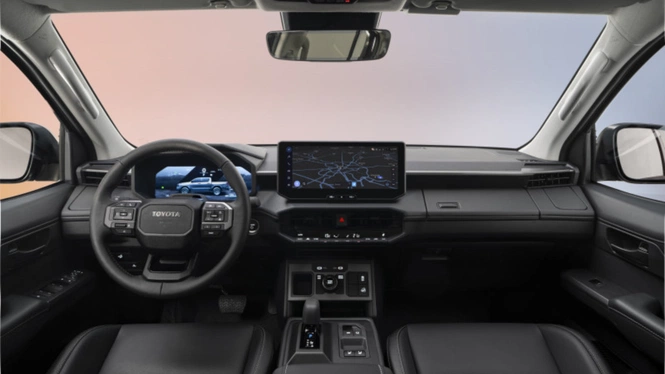
The cabin is a major step up in quality and technology. Influenced by the Land Cruiser’s layout, the dashboard adopts a horizontal design with a digital driver’s display and a large infotainment touchscreen both available up to 12.3 inches.
The centre console groups all off-road and drivetrain controls together for easier access, while higher trim levels introduce features such as wireless charging, new USB ports for front and rear passengers, and improved storage options.
Toyota has focused on improving everyday usability and comfort, with electric power steering (EPS) now standard in Western markets, offering lighter handling and better precision on rough terrain. The MyToyota app enhances connectivity by offering remote services, fleet tracking, and live vehicle data.
Overall, the new Hilux interior is more refined, tech-loaded, and comfortable, moving beyond the purely utilitarian design of the outgoing model.
Powertrains
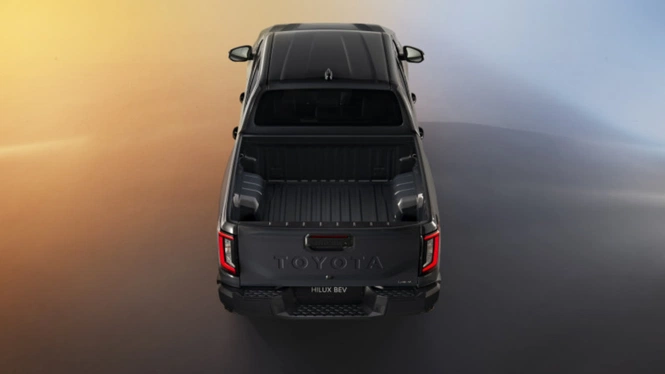
Hilux BEV (Battery Electric Vehicle)
The introduction of the BEV variant marks a turning point for Toyota’s pickup range. It uses a 59.2 kWh lithium-ion battery that powers electric motors on both axles, ensuring permanent all-wheel drive. Torque output is rated at 205 Nm from the front and 268.6 Nm at the rear.
Despite being fully electric, it retains traditional Hilux strengths such as ladder-frame durability, 4x4 performance, and a wading depth similar to the diesel version.
Payload capacity is around 715 kg, towing capability stands at 1,600 kg, and the WLTP range is approximately 240 km. A Multi-Terrain Select system tailors power delivery for various off-road surfaces, maintaining the off-road excellence of its combustion counterparts.
Hilux Hybrid 48V
Set to be the volume seller for Europe, the Hilux Hybrid 48V combines Toyota’s proven 2.8-litre diesel engine with a 48V lithium-ion battery, an electric motor-generator, and a DC-DC converter. The setup provides smoother start-offs, refined acceleration, and improved fuel efficiency.
The battery is cleverly placed under the rear seats, preserving cabin and cargo space. Payload capacity reaches up to one tonne, and braked towing remains at 3,500 kg — matching the current diesel model.
The hybrid system components are designed to withstand harsh off-road conditions, with the motor-generator mounted high to preserve the 700 mm wading depth.
Internal Combustion Engines
While Western markets move toward electrified options, Toyota will continue offering conventional engines in Eastern Europe and select regions. A 2.8-litre diesel replaces the older 2.4-litre unit, delivering more torque and better refinement.
The 2.7-litre petrol engine also stays in production for specific markets where diesel demand is lower.
Hydrogen Fuel Cell Hilux (FCEV)
Toyota has confirmed a hydrogen fuel-cell Hilux will arrive in 2028. It will use technology derived from the Mirai sedan, further expanding Toyota’s zero-emission offerings and reinforcing hydrogen’s role in the brand’s long-term sustainability plan.
Prices and Availability in India
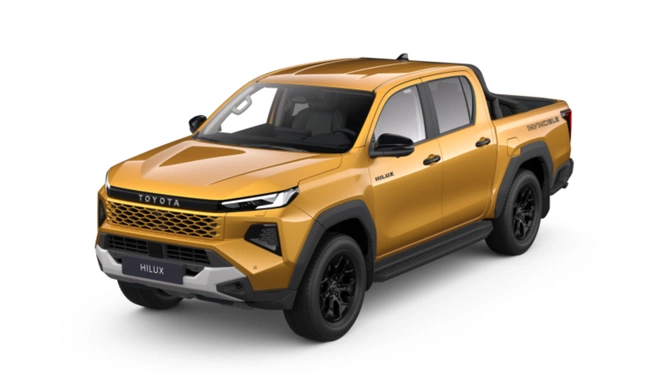
The current Toyota Hilux in India (8th generation) is priced between ₹30.40 lakh and ₹37.90 lakh (ex-showroom), offered solely with the 2.8-litre diesel engine and 4x4 drivetrain. its main rivals include models form ISUZU
As of now, Toyota has not confirmed launch plans for the new Hilux in India. However, industry sources indicate that the ninth-generation model will make its global debut in late 2025, followed by international market rollouts through 2026. Given India’s existing Hilux infrastructure and assembly setup, local introduction could occur in late 2026 or early 2027.
India is expected to receive the updated diesel and possibly the Hybrid 48V variant first, while the BEV model may follow later depending on infrastructure readiness and demand.
The upcoming Hilux is likely to see a modest price increase due to its upgraded features and imported components, with expected ex-showroom pricing ranging from ₹35 lakh to ₹42 lakh, depending on variant and localisation level.
Conclusion
The new Toyota Hilux represents the most comprehensive upgrade in the model’s long history. It stays true to its roots of strength and dependability while embracing the future with electrified and hydrogen-powered versions.
A more premium interior, improved connectivity, and refined dynamics ensure the Hilux remains as capable in the wild as it is comfortable on the road. For India, the next-generation Hilux promises a smarter, more versatile, and cleaner pickup designed to meet the demands of modern buyers — ready to carry its “invincible” legacy into a new era of mobility.
| Category | 2026 Toyota Hilux (9th Generation) |
|---|---|
| Platform | Updated ladder-frame chassis inspired by TNGA-F architecture |
| Body Style | Double Cab (only body style available globally) |
| Design Theme | “Tough and Agile” design with slimmer LED headlights, TOYOTA script bar, aero grille (BEV), and redesigned steps |
| Steering | Electric Power Steering (EPS) for Western markets, Hydraulic for Eastern markets |
| Infotainment | 12.3-inch touchscreen display with full digital driver display |
| Battery Electric (BEV) | 59.2 kWh lithium-ion battery, dual e-axles (AWD), 240 km WLTP range, 715 kg payload, 1,600 kg towing |
| Hybrid 48V | 2.8L diesel with 48V mild-hybrid assist, 1 tonne payload, 3,500 kg towing |
| Diesel Engine | 2.8L 4-cylinder turbo diesel (replacing 2.4L), offered in Eastern markets |
| Petrol Engine | 2.7L naturally aspirated petrol (select markets only) |
| Fuel Cell (FCEV) | Hydrogen-powered version confirmed for 2028 launch |
| Drive System | All-Wheel Drive standard across variants |
| Wading Depth | 700 mm (same as current model) |
| Payload Capacity | Up to 1 tonne (Hybrid 48V) |
| Towing Capacity | Up to 3,500 kg (Hybrid 48V) |
| Production Start | BEV: December 2025; Hybrid 48V: Spring 2026 |
| Expected India Launch | Late 2026 to early 2027 |
| Expected Price (India) | ₹35 lakh – ₹42 lakh (ex-showroom, estimated) |
Table of Contents
- Exterior
- Interior
- Powertrains
- Prices and Availability in India
- Conclusion
Join the Conversation
Trending
Every Dark/Black Edition Car On Sale From 8 to 35 Lakhs
These cars, with their blacked-out paint themes, stand out from their standard variants.
Arjun Nair
September 21, 2026
Maruti Suzuki Brings CNG-AMT Options To The Swift, Baleno and Dzire
Maruti has finally paired CNG with an automatic gearbox on the Swift, Dzire and Baleno, priced from Rs 7.92 lakh. The AMT trims share a 1.2 litre engine, a 55 litre boot-mounted tank and cost around Rs 35,000 more than the manual versions.
Anmol Kumar
September 21, 2026
Tata Sierra Dark Launched At Rs 13.99 Lakh, Check Prices
Tata Sierra #DARK launched from Rs 13.99 lakh with Friesian Black exterior, Violet Eclipse interior and Purple Chrome accents. Here is the full price list, features and powertrain details.
Arjun Nair
September 21, 2026

Tata Aeris To Debut On September 25, Expected To Replace Tigor
Tata has officially confirmed the Aeris name and a 25 September launch for its new compact sedan that replaces the Tigor. Here is everything known so far about the design, engine options, features, and expected pricing.
Anmol Kumar
September 21, 2026
Featured
Citroen C3 Review: Who Should Consider This Car?
A few days ago, I took the Citroen C3X out for a spin in the city and on the highways. I travelled long distances and checked its fuel efficiency, features, comfort, and other factors. Today, I’ll briefly share my overall experience with the C3X and will tell you whether you should consider it or not and which is the most value-for-money variant of the lot.
Vatsal Agrawal
May 19, 2026
Tesla Finally In India Officially. Why Now And What Does It Mean For EVs?
The much-anticipated 2025 Tesla Model Y has officially arrived in India, marking a pivotal moment for the nation's burgeoning electric vehicle market. Launched on July 15, 2025, the Model Y Juniper facelift offers cutting-edge technology, impressive range, and signature Tesla performance. Positioned as a premium electric SUV, its entry will intensify competition and reshape consumer expectations for EVs across the subcontinent.
Charan Narain
July 17, 2025
Here Are 10 Things The Harrier.EV Offers That The Mahindra XEV 9E Doesn't
The Harrier.EV is an incredible new offer from Tata. Its most popular competitor would be the Mahindra XEV 9E, priced similarly. With these two incredible offerings from home grown brands available, here is a list of everything the Harrier.EV offers that the XEV 9E doesn't.
Charan Narain
June 13, 2025
Write a comment
Comments
1Jenny Coombs Nadau Nadau
April 28, 2026Wonderful.