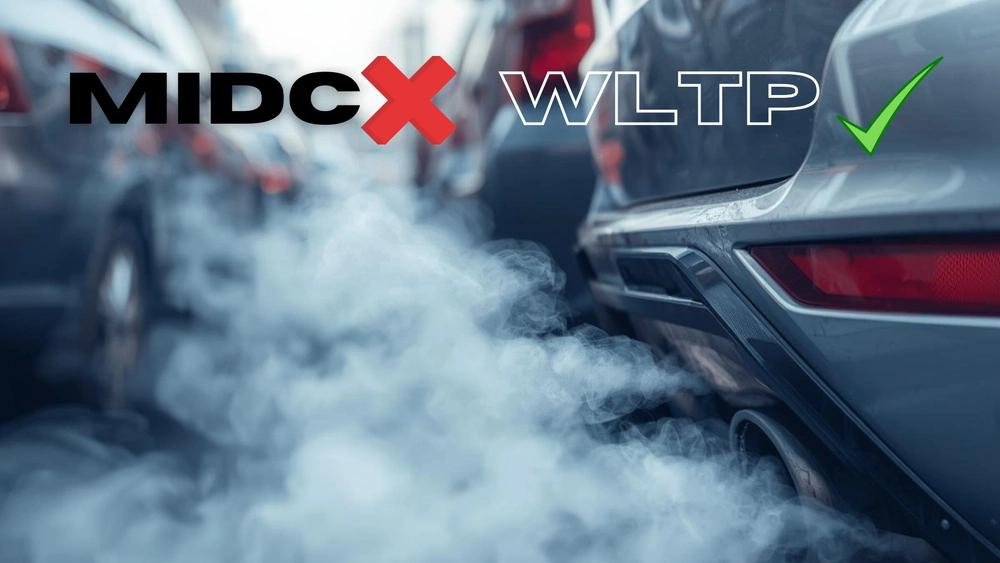
India is preparing to update its vehicle emission testing standards by adopting the Worldwide Harmonised Light Vehicle Test Procedure (WLTP) from 2027. This change aims to provide more realistic data on fuel efficiency and emissions for cars and other vehicles. It follows global trends to close the gap between lab results and real-world performance.
What is WLTP?
WLTP stands for Worldwide Harmonised Light Vehicle Test Procedure. It is a global standard for testing vehicle emissions and fuel economy under conditions that simulate real-world driving.
This procedure measures pollutants like carbon monoxide, hydrocarbons, nitrogen oxides, particulate matter, and particle number more accurately than older methods. The European Union adopted WLTP in 2018, and it involves testing on a chassis dynamometer to reflect everyday road use better.
What Emission Testing Cycle is India Currently Following, and Why is it Shifting to WLTP?
India currently uses the Modified Indian Driving Cycle (MIDC) for evaluating fuel efficiency and emissions. This lab-based method follows a fixed speed-distance-time pattern, but it often leads to a large difference between claimed figures on paper and actual on-road results.
The shift to WLTP makes sense, as MIDC has long faced criticism for not representing real-world driving conditions. WLTP offers a more representative test, ensuring that emissions of carbon dioxide, nitrogen oxides, and particulate matter from vehicles on the road align closely with lab data.
This move aligns India with international standards, promotes transparency, and supports environmental goals by enforcing stricter accountability for manufacturers.
Also Read: A Guide On How To Get Your Vehicle Scrapped In 2026
How Will it Impact Car Buyers and Owners?
The adoption of WLTP will give car buyers more accurate fuel economy and emission figures, helping them make more realistic comparisons between models, easing their purchase decisions. Claimed mileage numbers might appear lower on paper, but they will be closer to real-life performance.
Manufacturers will be required to add on-board diagnostics to alert drivers if emissions exceed limits, which can help spot any engine problems early. The change applies mainly to internal combustion engine vehicles in categories like passenger cars, SUVs, MPVs, and some vans, while electric vehicles will stick to MIDC.
When Will the WLTP Cycle be Implemented?
The WLTP cycle will take effect from April 1, 2027, as per a notification from the Ministry of Road Transport and Highways amending the Central Motor Vehicles Rules, 1989.
It will apply to all new BS6-compliant vehicles in M1 (passenger cars with up to nine seats), M2 (vehicles with more than nine seats under 5 tonnes gross vehicle weight), and N1 (goods vehicles under 3.5 tonnes) categories manufactured after that date. The Bureau of Energy Efficiency also plans to align Corporate Average Fuel Efficiency norms with WLTP around the same time.
Will Cars Get More Expensive?
Cars are unlikely to become more expensive due to this change. The shift is mainly about updating the testing method, not altering vehicle specifications or emission limits, which remain at BS6 levels. Prices for most models should stay the same.
Table of Contents
- What is WLTP?
- What Emission Testing Cycle is India Currently Following, and Why is it Shifting to WLTP?
- How Will it Impact Car Buyers and Owners?
- When Will the WLTP Cycle be Implemented?
- Will Cars Get More Expensive?
Join the Conversation
Trending
MG Windsor EV Indulge Edition Launched at Rs. 17.99 Lakh
The MG Windsor EV Indulge Edition brings a new exterior finish, a rear entertainment screen and additional cabin accessories to India's electric car market. Priced at Rs. 17.89 lakh, it uses a 38 kWh battery pack with a claimed range of 332 km.
Anmol Kumar
October 13, 2026
New Jeep SUV based on Tata Sierra set for 2028 Launch
Tata and Stellantis have reportedly sealed a deal that puts a new Jeep on the Sierra’s ARGOS platform. The mid-size SUV, codenamed J1J, is expected in 2028 with ICE and electric options, and will be built in Maharashtra.
Anmol Kumar
October 13, 2026
Best Diwali Offers On Most Popular Cars
Carmakers and dealers are rolling out festive deals. We pick the best Diwali 2026 offers on India's most popular cars and keep this list updated as new deals arrive.
Arjun Nair
October 13, 2026

Featured
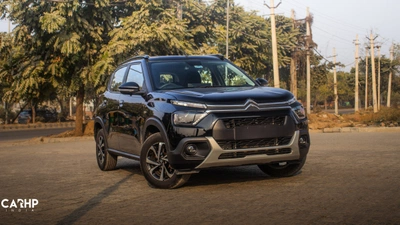
Citroen C3 Review: Who Should Consider This Car?
A few days ago, I took the Citroen C3X out for a spin in the city and on the highways. I travelled long distances and checked its fuel efficiency, features, comfort, and other factors. Today, I’ll briefly share my overall experience with the C3X and will tell you whether you should consider it or not and which is the most value-for-money variant of the lot.
Vatsal Agrawal
May 19, 2026
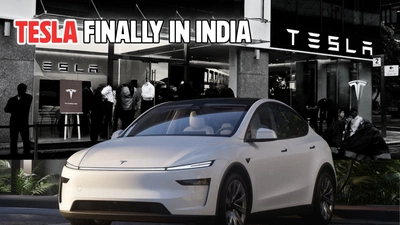
Tesla Finally In India Officially. Why Now And What Does It Mean For EVs?
The much-anticipated 2025 Tesla Model Y has officially arrived in India, marking a pivotal moment for the nation's burgeoning electric vehicle market. Launched on July 15, 2025, the Model Y Juniper facelift offers cutting-edge technology, impressive range, and signature Tesla performance. Positioned as a premium electric SUV, its entry will intensify competition and reshape consumer expectations for EVs across the subcontinent.
Author
July 17, 2025
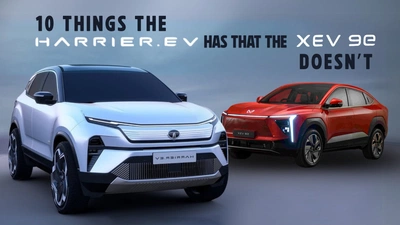
Here Are 10 Things The Harrier.EV Offers That The Mahindra XEV 9E Doesn't
The Harrier.EV is an incredible new offer from Tata. Its most popular competitor would be the Mahindra XEV 9E, priced similarly. With these two incredible offerings from home grown brands available, here is a list of everything the Harrier.EV offers that the XEV 9E doesn't.
Author
June 13, 2025
Write a comment
Comments
No comments yet. Be the first to comment!