How India is Turning into a Major Export Hub for Automobile Manufacturers
By Arjun Nair
Published June 23, 2026
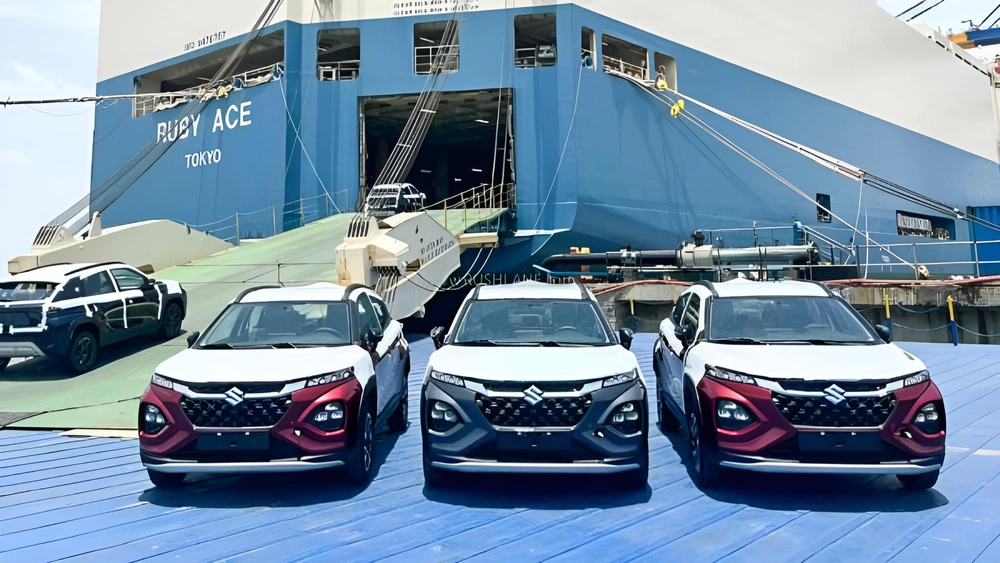
India’s journey in the automobile world has been truly inspiring. From being known mainly for its huge domestic market, the country is now steadily becoming a global export powerhouse.
Walk into any major port today, and you will see thousands of new cars and two-wheelers being loaded into large containers. In 2025 alone, India’s automobile exports jumped by 24 percent, crossing 63 lakh units.
| Segment | 2024 (Units) | 2025 (Units) | Growth (%) |
|---|---|---|---|
| Total Automobile Exports | 50,98,474 | 63,25,211 | 24.1 |
| Passenger Vehicles | 7,43,979 | 8,63,233 | 16 |
| Utility Vehicles | 3,23,624 | 4,27,219 | 32 |
| Two-Wheelers | 39,77,162 | 49,39,706 | 24 |
| Three-Wheelers | 2,98,235 | 4,25,527 | 43 |
| Commercial Vehicles | - | 91,759 | 27 |
India offers a perfect mix of low-cost manufacturing, skilled manpower, improving infrastructure, and supportive policies. Global manufacturers now see India as a reliable base to serve not just our market, but also markets in Africa, Latin America, the Middle East, and even parts of Europe.
Here's a detailed look at all the major factors that have contributed to this growth in exports.
Strong Production Base and Affordability
India has built one of the world’s largest automobile manufacturing ecosystems.
In FY24, around 28.43 million vehicles were produced, including passenger cars, commercial vehicles, and two-wheelers. This vast scale helps companies achieve economies that keep costs competitive.
Labour is skilled yet affordable, and there is a deep network of auto component suppliers that reduces dependency on imports.
Compact cars, hatchbacks, and utility vehicles made in India are especially popular abroad because they are durable, fuel-efficient, and suitable for rough roads in many developing countries.
Models like Maruti Suzuki’s Baleno, Swift, and Brezza, Hyundai’s Grand i10 and Verna, Kia’s Sonet, and Nissan’s Magnite regularly find buyers overseas. These vehicles offer great value for money, which is a big reason why demand keeps rising.
Maruti Suzuki continues to lead exports with a strong share of passenger vehicle shipments. In 2025, the company dispatched nearly 3.95 lakh units, contributing almost 46 percent of all passenger vehicle exports from India. Hyundai and others follow closely.
Two-wheelers, led by companies like Bajaj Auto and Hero MotoCorp, form the bulk of exports, with over 49 lakh units shipped in 2025.
Also Read - Different Segments of Cars in India Explained
Government Policies Giving a Big Push
The Indian government has played a key role through initiatives like “Make in India” and the Production-Linked Incentive (PLI) scheme.
The PLI scheme, with a budget of over Rs 25,000 crore for autos and components, encourages companies to invest in advanced manufacturing and achieve higher localisation. This has attracted fresh investments and helped build a stronger supply chain.
Other measures, such as 100 percent Foreign Direct Investment (FDI) in the sector and improvements in the Foreign Trade Policy, have made India more attractive. Trade agreements with countries like the UAE, and recent deals with the UK and EU, are opening new doors by reducing tariffs and improving market access.
These steps are helping Indian vehicles compete better in international markets.
Ports Leading the Way
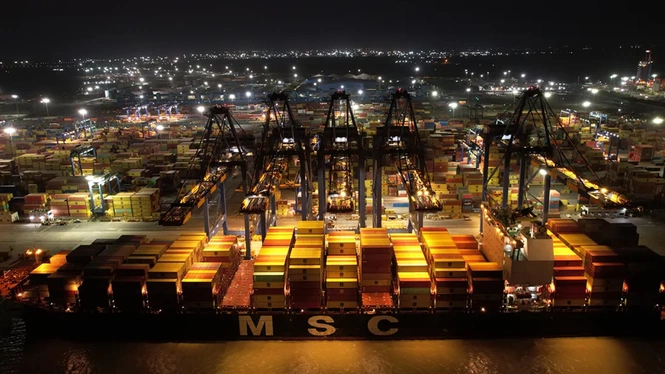
We cannot talk about exports without mentioning logistics.
Adani’s Mundra Port has emerged as India’s largest auto export hub, having recently shipped a record 6,008 cars in a single vessel recently. The port’s modern Roll-on/Roll-off (RoRo) terminal makes loading and unloading faster and more efficient.
From Mundra, vehicles now reach over 100 countries smoothly. Better port infrastructure, along with improved roads and railways, has cut down delivery times and costs.
Earlier, limited port capacity was a hindrance, but things have evolved, and are continuously changing fast.
Also Read - How Do I Import A Car In 2026?
Global Companies Betting Big on India
Major automakers like Hyundai, Kia, Toyota, Volkswagen, and Nissan have increased their presence in India not just for the domestic market but also for exports. Nissan, for instance, expects to cross 1 lakh vehicle exports from India in FY27.
The company already ships the Magnite and Sunny to more than 65 countries in Africa, the Middle East, Europe, and Oceania. India has become Nissan’s second-largest export base after the UK.
Suzuki is investing heavily, planning to take capacity to 4 million units by 2031. Hyundai is putting in around $5 billion by 2030. These investments show long-term confidence. Many companies use India as a hub for right-hand-drive markets and price-sensitive regions.
Even as domestic sales grow, exports provide an important balance.
Rising Demand in Global Markets
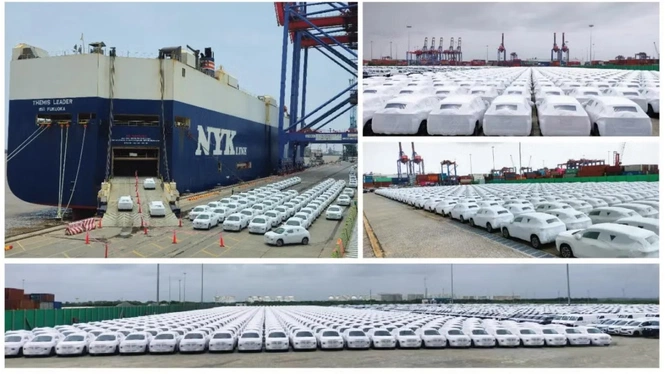
Indian vehicles are winning hearts in South Africa, Mexico, Saudi Arabia, the UAE, Chile, Nigeria, Nepal, Japan, and many African and Latin American countries. Demand remains steady in the Middle East, Africa, and Latin America.
Utility vehicles (MPVs, SUVs, Pickup trucks) and compact SUVs are seeing particularly strong growth because they suit local conditions well.
Passenger vehicle exports rose 16 percent in 2025 to over 8.63 lakh units, while utility vehicles jumped 32 percent. Two-wheelers grew 24 percent, and three-wheelers saw a healthy 43 percent rise.
Commercial vehicles also recorded 27 percent growth.
Moving Towards EVs For the Future
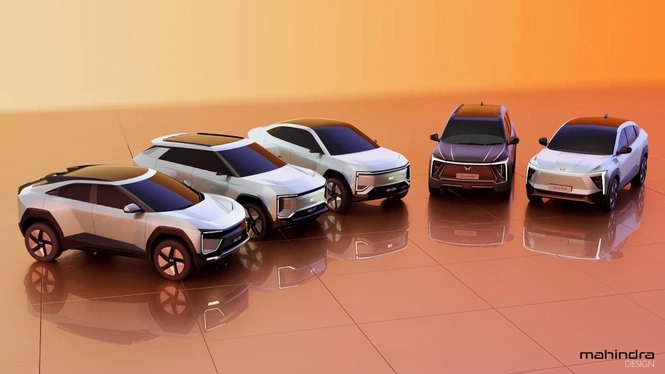
India is also preparing for the electric future, and several Government schemes are encouraging EV manufacturing and exports.
Companies like Tata Motors, Mahindra, and Ola Electric are investing in this space. As global demand for affordable EVs grows, Indian-made electric two-wheelers and compact SUVs could become big export stories in the coming years.
Of course, there are challenges, such as quality perceptions in some developed markets, evolving emission norms, and competition from other low-cost producers. However, with rising investments in R&D and technology, Indian auto manufacturers are addressing these issues steadily.
Also Read - Which EV Charging Companies in India Have the Most Chargers?
A Bright Road Ahead
From producing over 28 million vehicles a year to shipping more than 63 lakh units in 2025, India’s emergence as an auto export hub is impressive.
Strong government support, world-class infrastructure projects, cost competitiveness, and the commitment of manufacturers have all come together to make this happen.
It would be safe to say that India could become one of the top auto exporters in the years to come if it continues to focus on quality, innovation, and sustainability.
Source: SIAM, Autocar Professional
Table of Contents
- Strong Production Base and Affordability
- Government Policies Giving a Big Push
- Ports Leading the Way
- Global Companies Betting Big on India
- Rising Demand in Global Markets
- Moving Towards EVs For the Future
Join the Conversation
Trending

MG Windsor EV Indulge Limited Edition Teased, Here’s What to Expect
MG has teased a limited edition Windsor EV called Indulge. Expect cosmetic updates to the exterior and cabin, though power figures are likely to stay put on both battery options.
Anmol Kumar
October 8, 2026

Renault Duster Strong Hybrid to Launch on October 17
Renault has locked 17 October at Fairmont Mumbai for the Duster strong hybrid, a 160hp E-Tech setup that answers the missing diesel. Prices are still under wraps, though early expectations point well above the current range.
Arjun Nair
October 8, 2026
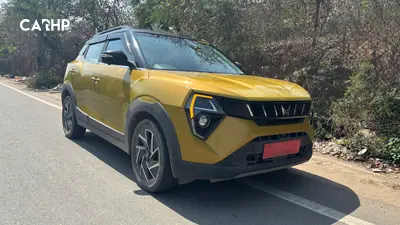
Mahindra XUV 3XO CNG Set For 15 October Debut As Its Fourth Powertrain
Mahindra has teased a CNG version of the XUV 3XO ahead of a 15 October debut. It adds a fourth powertrain to the brand's most affordable SUV and enters a segment where CNG options remain rare.
Anmol Kumar
October 8, 2026
Featured
Citroen C3 Review: Who Should Consider This Car?
A few days ago, I took the Citroen C3X out for a spin in the city and on the highways. I travelled long distances and checked its fuel efficiency, features, comfort, and other factors. Today, I’ll briefly share my overall experience with the C3X and will tell you whether you should consider it or not and which is the most value-for-money variant of the lot.
Vatsal Agrawal
May 19, 2026
Tesla Finally In India Officially. Why Now And What Does It Mean For EVs?
The much-anticipated 2025 Tesla Model Y has officially arrived in India, marking a pivotal moment for the nation's burgeoning electric vehicle market. Launched on July 15, 2025, the Model Y Juniper facelift offers cutting-edge technology, impressive range, and signature Tesla performance. Positioned as a premium electric SUV, its entry will intensify competition and reshape consumer expectations for EVs across the subcontinent.
Author
July 17, 2025
Here Are 10 Things The Harrier.EV Offers That The Mahindra XEV 9E Doesn't
The Harrier.EV is an incredible new offer from Tata. Its most popular competitor would be the Mahindra XEV 9E, priced similarly. With these two incredible offerings from home grown brands available, here is a list of everything the Harrier.EV offers that the XEV 9E doesn't.
Author
June 13, 2025
Write a comment
Comments
No comments yet. Be the first to comment!