Government Releases Revised CAFE III Draft Norms For Public Consultation
By Arjun Nair
Published July 18, 2026
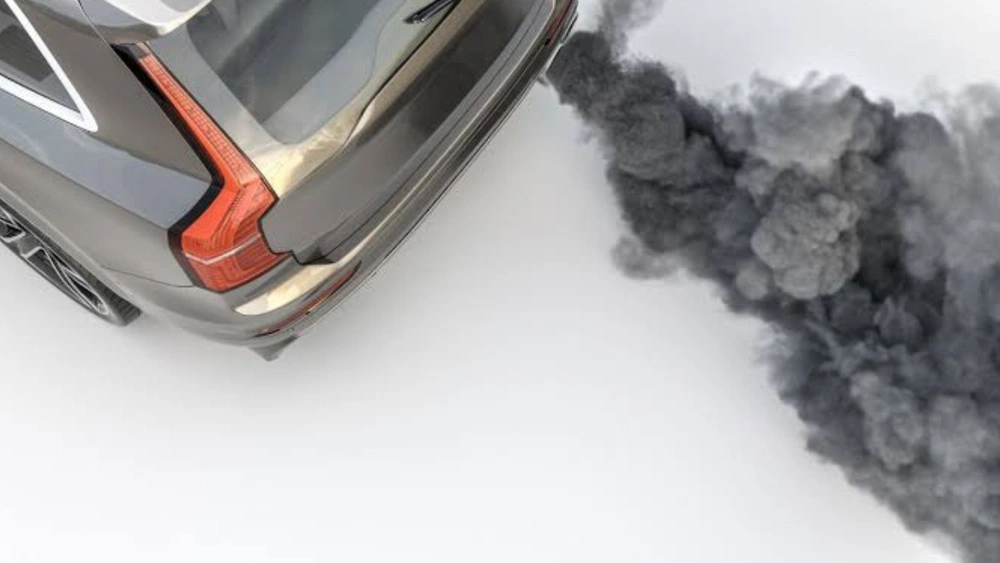
The Ministry of Power has issued a revised draft of the Corporate Average Fuel Economy Phase III (CAFE III) standards for passenger vehicles, proposed to take effect from April 1, 2027.
The updated draft adopts a more balanced stance compared to the earlier proposal, easing the overall fuel efficiency targets. Public feedback on the draft has been invited until August 6, 2026.
Updated CAFE III Norms Explained
Manufacturers will need to provide fuel efficiency data based on both the Modified Indian Driving Cycle (MIDC) and the Worldwide Harmonised Light Vehicles Test Procedure (WLTP).
A conversion factor between the two test cycles will be notified separately by the government.
Also Read – Top 10 Petrol Cars With Best Mileage You Can Buy
Phased Fuel Economy Targets Through FY2032
The proposal outlines progressively stricter fuel consumption targets over a five-year period. The proposed fleet-average target is 3.996 litres per 100 km (94.76 g CO₂/km) for FY2028, tightening to 3.3273 litres per 100 km (78.90 g CO₂/km) by FY2032.
These targets are less stringent than those proposed in the earlier draft. Compliance will be assessed over two blocks, with the first spanning three years and the second spanning two.
Compliance Credits And Penalty Structure
Manufacturers that exceed their prescribed fuel efficiency targets will earn compliance credits, while those falling short will accumulate debits. Credits may be traded with other manufacturers or purchased from the Bureau of Energy Efficiency (BEE).
The draft proposes a buyout price of Rs 2,500 per g CO₂/km for FY2028, rising by Rs 500 annually to Rs 4,500 per g CO₂/km by FY2032.
Unused credits will lapse at the end of a compliance block. Manufacturers with annual sales below 1,000 passenger vehicles remain exempt.
Also Read – Check Out These Upcoming Hybrid Cars In India
Incentives For EVs, Hybrids, And Fuel-Saving Technologies
The draft offers super credits (volume derogation) for battery electric vehicles (BEVs), range-extended electric vehicles (REEVs), plug-in hybrid electric vehicles (PHEVs), strong hybrid electric vehicles (SHEVs), and flex-fuel vehicles (FFVs).
Separately, Carbon Neutrality Factors (CNFs) are introduced for the first time, recognising the carbon-neutrality of ethanol, compressed biogas (CBG), and biofuels by permitting reductions in declared tailpipe CO₂ emissions.
The draft also finalises the technical criteria for claiming fuel-efficiency benefits from technologies such as start-stop systems, regenerative braking, tyre-pressure monitoring systems (TPMS), electric water pumps, high-efficiency air-conditioning systems, and advanced glazing, with an overall cap of 9 g CO₂/km across all technologies.
Also Read – Every Upcoming EV in 2026
Table of Contents
- Updated CAFE III Norms Explained
- Phased Fuel Economy Targets Through FY2032
- Compliance Credits And Penalty Structure
- Incentives For EVs, Hybrids, And Fuel-Saving Technologies
Join the Conversation
Trending
Five Chinese Cars That Could Shake Up the Indian Market
Chinese carmakers BYD, Denza and Jetour could bring five new SUVs, a luxury MPV and a high-performance electric grand tourer to India, with expected prices ranging from Rs 18 lakh to Rs 1.35 crore.
Anmol Kumar
October 23, 2026

Denza India Debut Set for November 13, Z9 GT and D9 Expected as First Models
Denza has confirmed its India entry, with the Z9 GT and D9 MPV expected as its first models. Prices could range from around Rs 90 lakh to Rs 1.5 crore, with no launch date announced yet.
Anmol Kumar
October 23, 2026
Top 10 Petrol Cars With Best Mileage You Can Buy
A list of the 10 most fuel-efficient petrol cars in India, including their claimed mileage, prices, engines and key features.
Arjun Nair
October 23, 2026
Featured
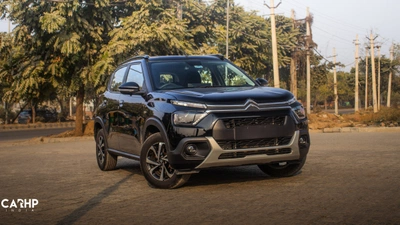
Citroen C3 Review: Who Should Consider This Car?
A few days ago, I took the Citroen C3X out for a spin in the city and on the highways. I travelled long distances and checked its fuel efficiency, features, comfort, and other factors. Today, I’ll briefly share my overall experience with the C3X and will tell you whether you should consider it or not and which is the most value-for-money variant of the lot.
Vatsal Agrawal
May 19, 2026
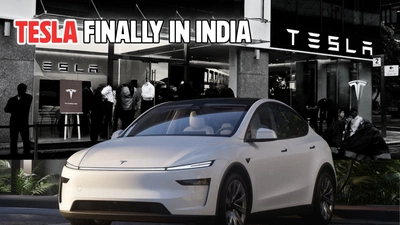
Tesla Finally In India Officially. Why Now And What Does It Mean For EVs?
The much-anticipated 2025 Tesla Model Y has officially arrived in India, marking a pivotal moment for the nation's burgeoning electric vehicle market. Launched on July 15, 2025, the Model Y Juniper facelift offers cutting-edge technology, impressive range, and signature Tesla performance. Positioned as a premium electric SUV, its entry will intensify competition and reshape consumer expectations for EVs across the subcontinent.
Author
July 17, 2025
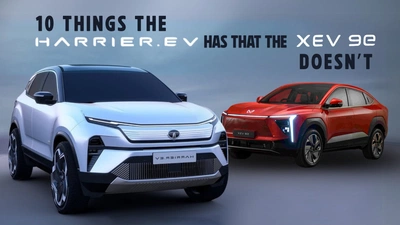
Here Are 10 Things The Harrier.EV Offers That The Mahindra XEV 9E Doesn't
The Harrier.EV is an incredible new offer from Tata. Its most popular competitor would be the Mahindra XEV 9E, priced similarly. With these two incredible offerings from home grown brands available, here is a list of everything the Harrier.EV offers that the XEV 9E doesn't.
Author
June 13, 2025
Write a comment
Comments
No comments yet. Be the first to comment!