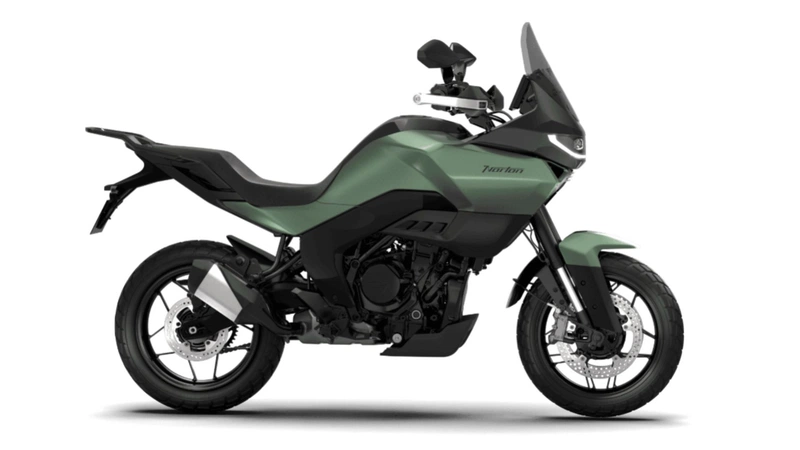

Norton Atlas GT Key Specifications
Norton Atlas GT Variants & Prices
| Variant Details | Expected Price | |
|---|---|---|
Atlas GT23 kmpl | 585 cc | ₹ 6.50 Lakhs* |
Atlas GT
Norton Atlas GT Overview

The Atlas GT is the road-focused version of Norton’s all-new middleweight adventure-tourer, powered by a 585cc liquid-cooled parallel-twin producing 69 bhp at 9,300 rpm and 57.5 Nm of torque.
While sharing its powertrain and steel trellis chassis with the standard Atlas, the GT features shorter-travel KYB suspension, 17-inch cast-alloy wheels, and a lower 815mm seat height for sharper handling on paved roads and sustained highway touring.
Also, the fully adjustable suspension at both ends is paired with dual 310mm front and 270mm rear discs.
A Bosch six-axis IMU enables a full electronics suite, including lean-sensitive ABS, cornering traction control, cornering cruise control, wheelie control, and slide control across five rider modes.
Tech highlights include an 8-inch TFT touchscreen with navigation and Bluetooth connectivity, while a bidirectional quick-shifter and slipper clutch streamline gear changes.
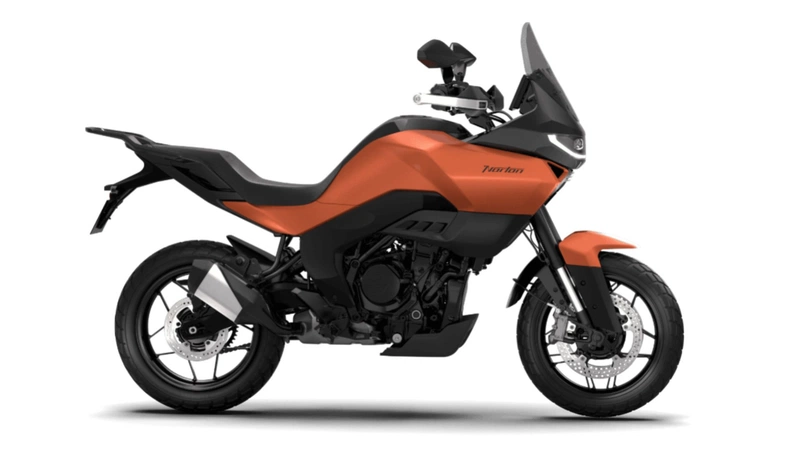
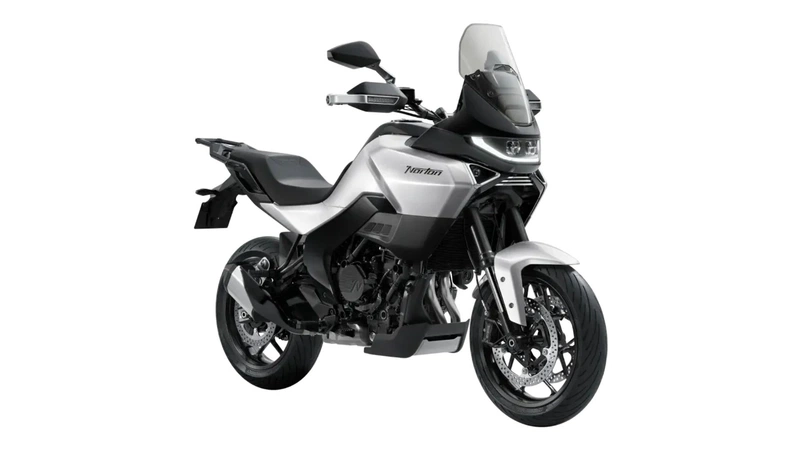
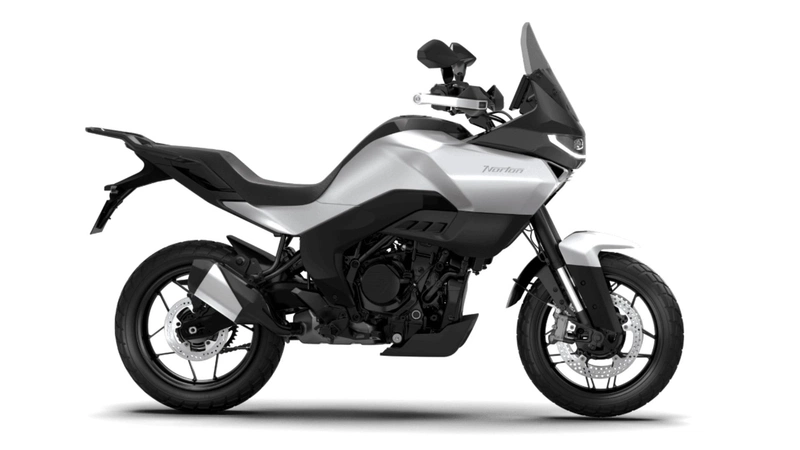
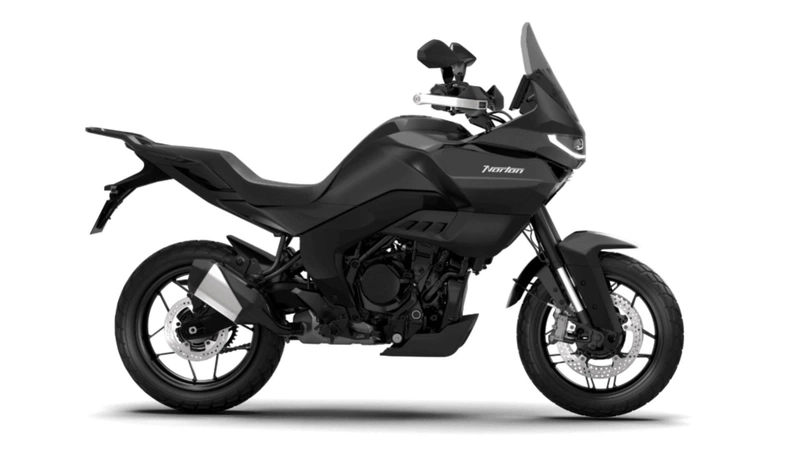
Lastly, it is available in four colors: Matrix Black, Trophy Silver, Verona Green, and Sinopia Orange.
Engine, Performance and Mileage
Engine, Performance and Mileage
The Atlas GT is powered by a 585cc liquid-cooled parallel-twin engine, producing 69 bhp at 9,300 rpm and 57.5 Nm of torque at 7,300 rpm, fed by a multi-point sequential fuel injection system with ride-by-wire throttle.
This power goes through a 6-speed gearbox with a cable-operated assist-and-slip multiplate wet clutch, and the bike comes with a bidirectional quick-shifter as standard, allowing clutchless upshifts and downshifts.
On the efficiency front, Norton has stated a fuel consumption figure of 23 kmpl for the Atlas GT, with a 15.4-litre fuel tank giving a theoretical range of well over 300 km on a full tank.
The engine meets EURO5+ and Bharat Stage VI emission norms.
design
design
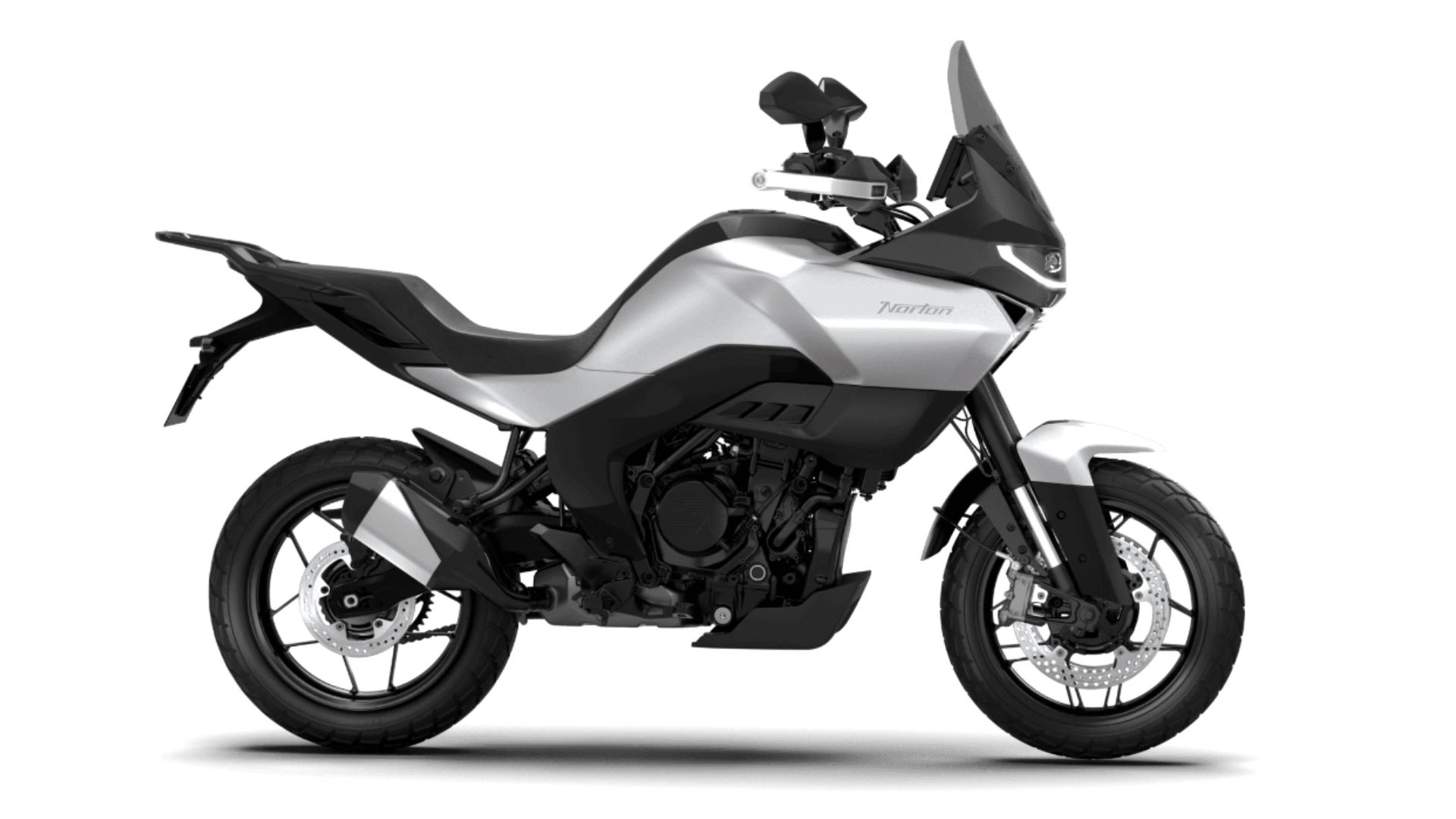
The Norton Atlas GT boasts a sportier, road-oriented stance than the standard Atlas, defined by its dedicated 17-inch wheels and restrained surfacing. Its clean side panels utilize minimal visible fixings to emphasize a sense of forward motion.
Up front, twin projector LED headlights feature speed-sensitive DRLs. The front indicators are integrated directly into the handguards to declutter the cockpit, where tapered aluminum handlebars, an 8-inch TFT touchscreen, and an ergonomic switch cube with programmable buttons dominate the rider’s view.
Rider comfort is managed by a built-in radiator "chimney" that directs engine heat away from the body, while ergonomics can be fine-tuned via adjustable levers and footpegs.
These are paired with a fixed contoured windscreen (adjustable only on Apex variants) and a one-piece 815mm seat positioned lower than the standard model.
At the rear, the cast-aluminum twin-sided swingarm is left exposed as a structural element. The tail section is capped off by a 3-in-1 multi-function LED unit that integrates the brake light and indicators, utilizing dynamic functionality to flash brighter under hard braking.
safety
safety
The Atlas GT’s safety package is built around a Bosch six-axis IMU, which continuously processes real-time pitch, roll, and yaw data. This electronic brain enables a suite of standard, cornering-aware rider aids, including lean-sensitive ABS, cornering traction control, and cornering cruise control.
The bike also incorporates specialized stability systems to handle tricky riding dynamics. These include rear-wheel slide control, wheelie control, drag torque control, and Hill Hold Assist for secure starts on steep inclines.
Braking comprises dual 310mm semi-floating front discs with radially mounted Bybre calipers and a 270mm rear disc setup.
Lastly, five rider modes are offered: Urban, Rain, Sport, Tour, and Enduro.
competition
competition
The Atlas GT closely competes with the Kawasaki Versys 650, Honda NX500, and Triumph Tiger Sport 660.
The Versys uses a 649cc parallel-twin with similar power but higher torque (61 Nm vs 57.5 Nm), though the Norton's peak arrives earlier. The Kawasaki offers a larger 21-liter tank (vs 15.4L) and a proven Indian service network. However, the Atlas GT counters with a superior electronics suite, featuring a six-axis IMU with lean-sensitive ABS and traction control, plus a bidirectional quick-shifter and a larger 8-inch TFT display.
Lighter at 196 kg, the NX500 uses a smaller 471cc twin (46.9 bhp/43 Nm), giving the more potent Atlas GT a clear advantage in outright performance. However, the Honda counters with its unique E-Clutch system for seamless, clutchless riding in traffic, and its lower curb weight makes low-speed city maneuvering significantly easier than the heavier Norton.
The Tiger’s 660cc inline-triple delivers a distinct, higher-revving character with superior peak output (80 bhp / 64 Nm) alongside a larger 17.2-liter fuel tank. By contrast, the Atlas GT offers a significantly more advanced standard electronics package, delivering cornering cruise and traction control via its six-axis IMU, and a lower 815mm seat height (vs 835mm) that provides better accessibility for shorter riders.
Norton Atlas GT Colors