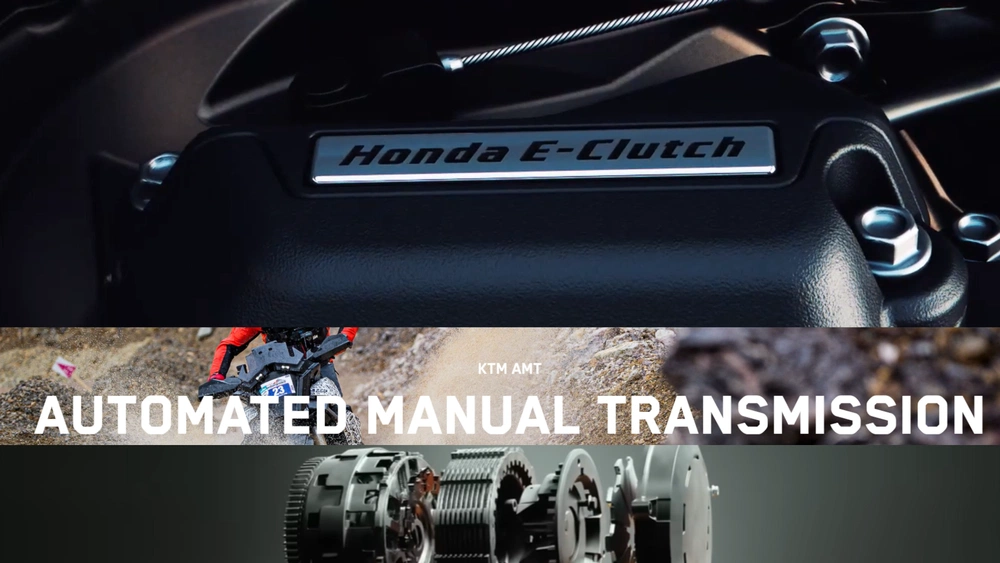
| Feature | Honda E-Clutch | KTM AMT |
|---|---|---|
| Clutch Lever | Yes (can use or override) | No |
| Gear Shifting | Always manual (foot pedal) | Automatic or manual (foot/paddles) |
| Modes | On/Off with manual override | Automatic (Comfort/Street/Sport) + Manual + Park |
| Starting from Stop | Just throttle – auto clutch | Just throttle – centrifugal clutch |
| Stall Protection | Yes | Yes |
| Extra Weight | 2 KG | 1 KG |
| Models & Prices (India ex-showroom, as of early 2026) | CBR650R: ₹10.40 lakh (40k more than manual) | 1390 Super Adventure S Evo: Not launched in India yet (global equiv. ~₹22-25 lakh+) |
What is AMT in Bikes?
AMT stands for Automated Manual Transmission. In motorcycles, it's a gearbox that automates the clutch (and sometimes the gear shifts too) so you don't have to pull a clutch lever constantly. It keeps the traditional manual gearbox feel and quick shifts but makes riding much easier, especially in traffic.
KTM calls their version AMT, and it's a full semi-automatic system with automatic and manual modes. Honda's similar tech is called E-Clutch, but it's not a complete AMT it only automates the clutch while you still shift gears yourself.
Why Has It Suddenly Been Implemented?
It hasn't come out of nowhere, but it's gaining traction now for good reasons. Cities everywhere (especially in India) have horrible traffic, so constantly using the clutch gets tiring and causes hand cramps.
Manufacturers want to attract new riders who find manual bikes intimidating, while keeping experienced riders happy with the sporty gearbox feel. Technology has improved small electric motors and sensors are now cheap, light, and reliable enough for bikes. Plus, with more people touring long distances, these systems reduce fatigue without turning the bike into a boring scooter. Honda and KTM are competing to bring car-like convenience to premium motorcycles.
How Does Honda E-Clutch Work?
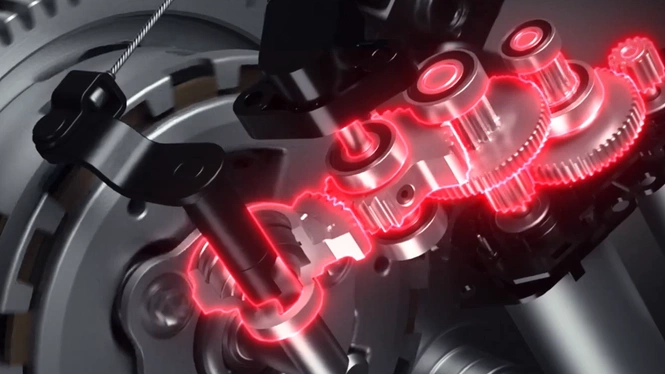
Honda E-Clutch is a smart add-on to a normal manual gearbox. Tiny electric motors (hidden next to the engine) automatically handle the clutch for you whenever you shift.
To start moving, just twist the throttle no clutch pull needed, and it won't stall. Tap the foot shifter up or down, and the system quickly disengages and re-engages the clutch smoother than most people can. The clutch lever is still there, so you can grab it anytime for full manual control (like for wheelies or super-precise starts). You can even switch the whole system off if you want pure old-school riding. It's simple, lightweight, and feels very natural.
How Does KTM AMT Work?
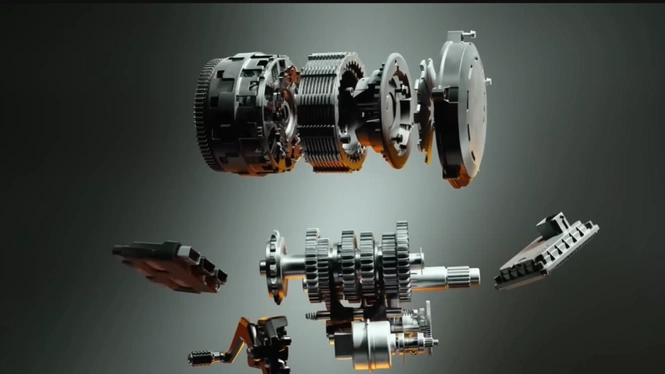
KTM's AMT is more advanced and removes the clutch lever completely. It has two modes: Automatic, where the bike shifts gears for you based on speed, throttle, and riding style (with Comfort, Street, or Sport settings), and Manual, where you shift with the foot lever or optional paddles super fast in about 50 ms.
Starting is easy with a centrifugal clutch that engages automatically when you open the throttle. It even has a Park mode to lock the bike on slopes. Electric actuators physically move the gears, and the bike's computer handles everything in auto mode. It's like having a proper automatic for relaxed cruising, but you can switch to sporty manual whenever you want.
Which One is Better And Reliable?
There's no clear winner it depends on what you want. Honda E-Clutch is better if you love shifting gears yourself and just want help with the clutch in traffic; it keeps the traditional riding feel intact
KTM AMT is better if you want true hands-free relaxation on long highways, with the option for quick manual shifts in fun corners. Honda's is simpler and already affordable in India, while KTM's feels more futuristic but is currently only on expensive adventure bikes.
For riders with disabilities, particularly lower-limb amputees, KTM’s AMT is a major advantage. In full Automatic mode you need no foot shifting at all just throttle and brakes while paddle shifters let you change gears with your fingers if you want. Honda’s E-Clutch removes the hand-clutch effort but still requires foot shifting, so it offers less help for leg amputees without additional modifications.
Now on the reliability part, both systems are covered under the typical warranty. Honda’s E-Clutch is arguably the most resilient; it uses two electric motors to actuate a standard clutch but crucially retains a physical cable and lever, allowing for a full manual override if the electronics fail a "fail-safe" that KTM lacks.
KTM’s AMT uses a centrifugal clutch and an electromechanical actuator to turn the shift drum. While rigorous testing has proven its durability, it is a "leverless" system, meaning you are entirely dependent on the electronics for actuation.
If you are someone who appreciates video Here is a link to How KTM System works and how Honda system works.
Image Source- Honda/KTM
Table of Contents
- What is AMT in Bikes?
- Why Has It Suddenly Been Implemented?
- How Does Honda E-Clutch Work?
- How Does KTM AMT Work?
- Which One is Better And Reliable?
Join the Conversation
Trending
Bajaj Pulsar Range Offered With Festive Benefits Of Up To Rs 12,000
Bajaj Auto is offering festive benefits of up to Rs 12,000 on its Pulsar range.
Arjun Nair
October 7, 2026
Triumph Bonneville T40 Launched at Rs 2.80 Lakh
Triumph has launched the Bonneville T40, T40 Black and T4 in India, bringing the classic Bonneville design to its 350cc range. The T40 pair gets a 4-inch TFT, five riding modes, cruise control and cornering rider aids, while the T4 costs less with a simpler equipment package.
Anmol Kumar
October 7, 2026
Bajaj Launches Pulsar NS400Z With New TFT Console at Rs 1.90 Lakh
Bajaj Pulsar NS400Z gets a new 5-inch TFT console, USB Type-C port and more features. Prices now start at Rs 1.90 lakh. Check for full details on the updated bike.
Salil Kumar
October 3, 2026
Featured
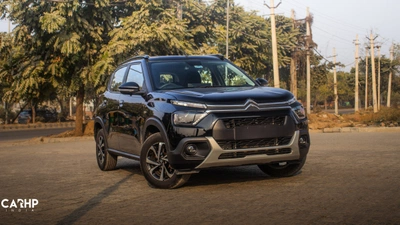
Citroen C3 Review: Who Should Consider This Car?
A few days ago, I took the Citroen C3X out for a spin in the city and on the highways. I travelled long distances and checked its fuel efficiency, features, comfort, and other factors. Today, I’ll briefly share my overall experience with the C3X and will tell you whether you should consider it or not and which is the most value-for-money variant of the lot.
Vatsal Agrawal
May 19, 2026
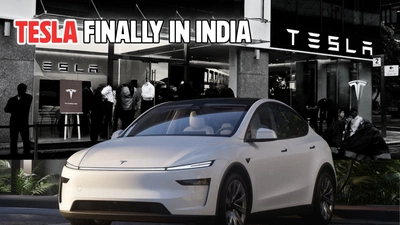
Tesla Finally In India Officially. Why Now And What Does It Mean For EVs?
The much-anticipated 2025 Tesla Model Y has officially arrived in India, marking a pivotal moment for the nation's burgeoning electric vehicle market. Launched on July 15, 2025, the Model Y Juniper facelift offers cutting-edge technology, impressive range, and signature Tesla performance. Positioned as a premium electric SUV, its entry will intensify competition and reshape consumer expectations for EVs across the subcontinent.
Author
July 17, 2025
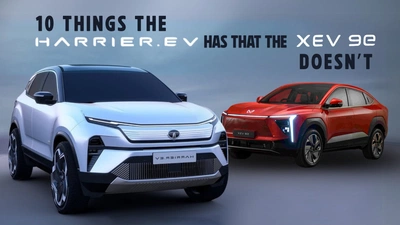
Here Are 10 Things The Harrier.EV Offers That The Mahindra XEV 9E Doesn't
The Harrier.EV is an incredible new offer from Tata. Its most popular competitor would be the Mahindra XEV 9E, priced similarly. With these two incredible offerings from home grown brands available, here is a list of everything the Harrier.EV offers that the XEV 9E doesn't.
Author
June 13, 2025
Write a comment
Comments
No comments yet. Be the first to comment!