Maruti Suzuki Jimny
Overall Rating

Maruti Suzuki Jimny
Overall Rating
EMI Loading
Maruti Suzuki Jimny Key Specifications
Maruti Suzuki Jimny Highlights
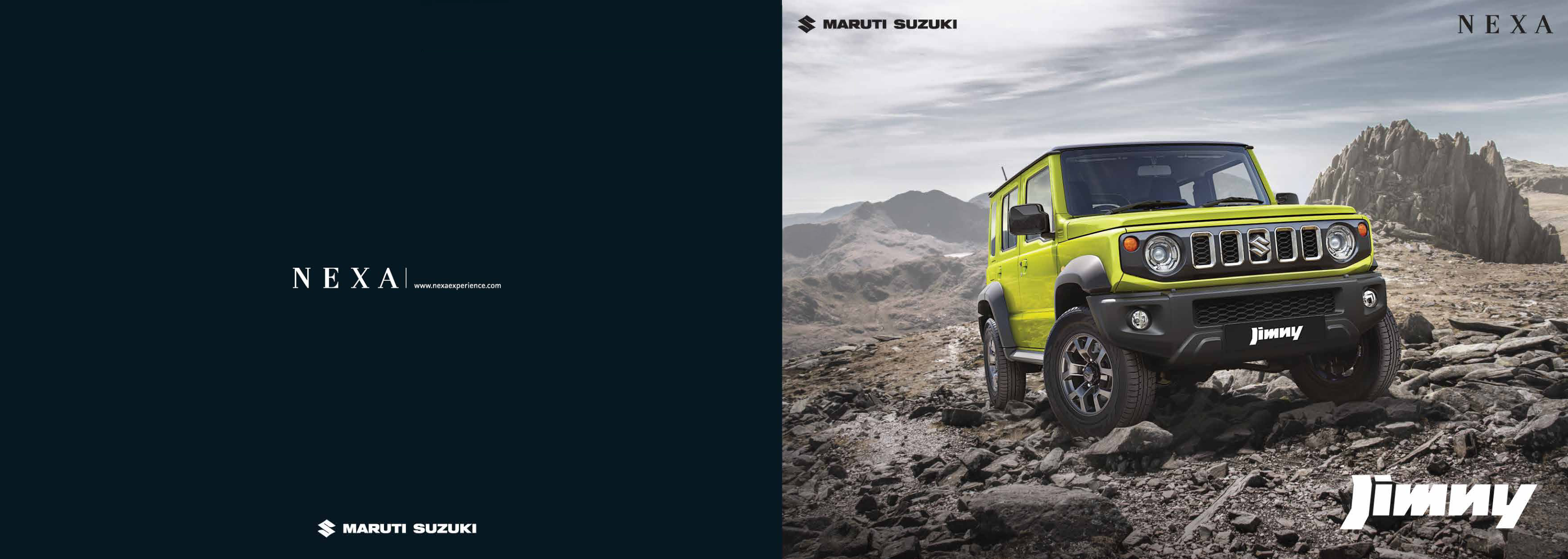

4x4 system with low-range gearbox makes tough terrain surprisingly approachable.

Headlight washers keep lenses clear in muddy or dusty conditions.

9-inch touchscreen with wireless phone mirroring is quick and easy to navigate.
Maruti Suzuki Jimny Overview


The Suzuki Jimny has been in continuous production for over fifty years, across four generations, and has built a reputation for off-road ability that very few production vehicles have at any price.
The fourth-generation Jimny, available in three-door form internationally, was adapted by Maruti Suzuki into a five-door configuration specifically for India, and this was not simply a matter of adding two doors. The wheelbase was extended from the three-door's 2250 mm to 2590 mm, the body grew significantly, and the suspension geometry was revised accordingly, while retaining the solid axles, ladder-frame chassis, and AllGrip Pro 4WD system that define the Jimny's core identity.
The result is a vehicle with no direct engineering equivalent at its price.
The solid front and rear axles with 3-link rigid axle and coil spring suspension provide axle articulation and terrain-following capability that independent suspension systems cannot replicate in extreme conditions. Combined with the AllGrip Pro low-range 4WD system, a 210 mm ground clearance, and approach and departure angles that numerically exceed most competitors, the Jimny is the most off-road-capable vehicle one can buy in India.
With all that capability also come a few compromises.
The naturally aspirated 1.5-litre K15B engine produces 103 bhp, adequate for the Jimny's weight but not competitive with turbocharged petrol and diesel engines offered in this price bracket, the 4-speed automatic is short on ratios by modern standards, the cabin cannot seat more than four, the 219-litres boot is not the largest, and with no crash test result for the India-spec model, some of the safety assurances that buyers of comparable vehicles now expect are absent.
However, these are mostly trade-offs, not flaws. Every aspect of the Jimny that appears to be a limitation on paper is a deliberate consequence of building a vehicle that prioritises rugged off-road architecture. The buyer who understands the Jimny's engineering philosophy and wants exactly what it offers will find very little to fault. The buyer who approaches it as a premium compact SUV for daily family use will find several things to miss.
Engine and Performance
Engine and Performance
| Specification | Details |
|---|---|
| Engine | 1.5L K15B four-cylinder petrol |
| Displacement | 1462 cc |
| Power | 103 bhp at 6000 rpm |
| Torque | 134 Nm at 4000 rpm |
| Transmission | 5-speed manual / 4-speed torque converter AT |
| Drivetrain | 4WD (AllGrip Pro) standard on all variants |
| Transfer Case | 2H / 4H / 4L selectable |
| Fuel Tank | 40 litres |
| Suspension (F) | 3-link rigid axle with coil springs |
| Suspension (R) | 3-link rigid axle with coil springs |
| Brakes (F) | Disc |
| Brakes (R) | Drum |
The K15B 1.5-litre four-cylinder naturally aspirated engine powering the Jimny is a familiar unit in Maruti Suzuki's India lineup, producing 103 bhp and 134 Nm.
In city use, the engine is smooth and undemanding. Low-speed throttle response is clean, the idle start-stop works without hesitation, and the vehicle's relatively modest kerb weight of 1205 kg means the 103 bhp feels more than adequate at urban speeds. Making quick overtakes in the city are nearly effortless.
Hitting an open stretch of road is when the engine's naturally aspirated character becomes more apparent. Overtaking requires planning and a downshift rather than a casual press of the accelerator, and at sustained highway speeds above 100 km/h, the engine is working noticeably harder than a turbocharged alternative at the same speed.
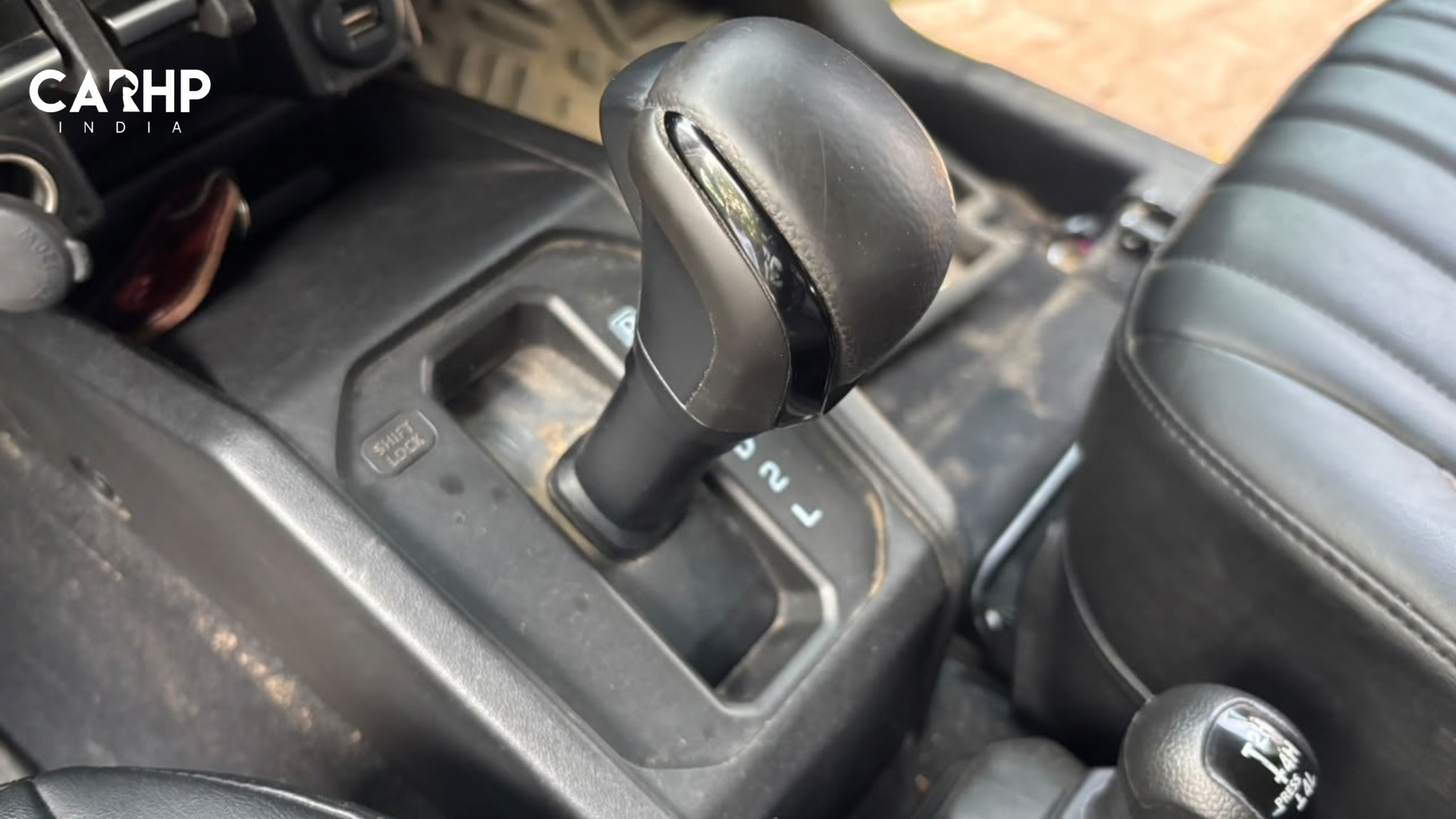
The 5-speed manual's ratios suit the engine's delivery reasonably well, with a useful spread across the gears for both on and off-road use. The 4-speed automatic is a more significant limitation in this regard, as the single-step ratio gap between each gear makes it less efficient at managing the engine's available power, and it will seem notably dated to anyone coming from a modern 6-speed torque converter or CVT unit.
The chassis is where the Jimny separates itself from every competitor in this price bracket. Solid front and rear axles, each located by a 3-link arrangement with a Panhard rod for lateral stability, allow each wheel to travel deeply through its range without directly affecting the opposite side of the axle.
In extreme terrain like rock crawls, deep ruts, and heavily cambered surfaces, this articulation makes the Jimny capable of maintaining traction in situations where vehicles with independent suspension lose contact with the ground. Low-range 4WD, selectable from 4H to 4L without stopping, provides the mechanical gear reduction needed for slow, controlled crawling over serious obstacles.
On paved roads, the solid axle setup makes its presence felt differently from an independent suspension system.
Ride quality over rough surfaces is composed at low to medium speeds, with the long-travel suspension absorbing sharp-edged imperfections capably. At higher speeds, the Jimny's body can become more active over road undulations than a monocoque SUV with independent suspension would be, and directional stability on imperfect highway surfaces requires slightly more attention from the driver than heavier, wider vehicles would. The narrow 1645 mm body makes the Jimny feel less planted on the highway than it does on trails, though never to the point of being unsafe.
The steering, though an electric unit, is heavier than purely city or highway-focused cars. This is because it uses a heavy-duty, off-roading focused recirculating ball steering mechanism instead of a standard rack-and-pinion setup found on most cars.
Although a traditional rack-and-pinion steering is precise and quick and better for on-road use, it can get damaged or kick back violently when heavy rocks hit the front wheels in off-road situations. A recirculating ball system handles high-torque shocks from rough terrain much better, making it the ideal setup for the off-road purpose-built Jimny.
As a result, steering feedback feels slow and vague, and it demands noticeably more steering rotation even for small turns and corners.
Additionally, the Jimny's front rigid axle limits its maximum steering angle, giving it a large 5.7-metre turning radius that can make tight U-turns challenging. People used to driving more road-focused cars will need an adjustment period.
The absence of traction aids beyond ESP and hill descent control is compensated by the AllGrip Pro system's effectiveness in 4L. With low-range gearing and the mechanical traction of solid axles, the Jimny can manage terrain that electronic aids alone cannot resolve.
fuel economy
fuel economy
The ARAI figures of 16.94 km/l for the manual and 16.39 km/l for the automatic are moderate for a 1.5-litre petrol, reflecting the Jimny's body-on-frame construction and 4WD system's inherent mechanical losses relative to lighter front-wheel-drive vehicles.
Real-world owner reported figures are modest, with 9-11 km/l in heavy city traffic, going up to 15 km/l with relaxed highway cruising at 80-90 km/h. The idle start-stop system helps in city conditions where the engine would otherwise idle for extended periods.
Off-road driving in 4L, with the engine at higher loads for sustained periods, will drop figures to the lower single digits.
The 40-litre fuel tank is adequate for urban use but provides a more limited range on long highway trips than buyers of adventure-oriented vehicles typically want. Planning refuelling stops on remote routes requires more attention than a larger tank would demand.
interior
interior
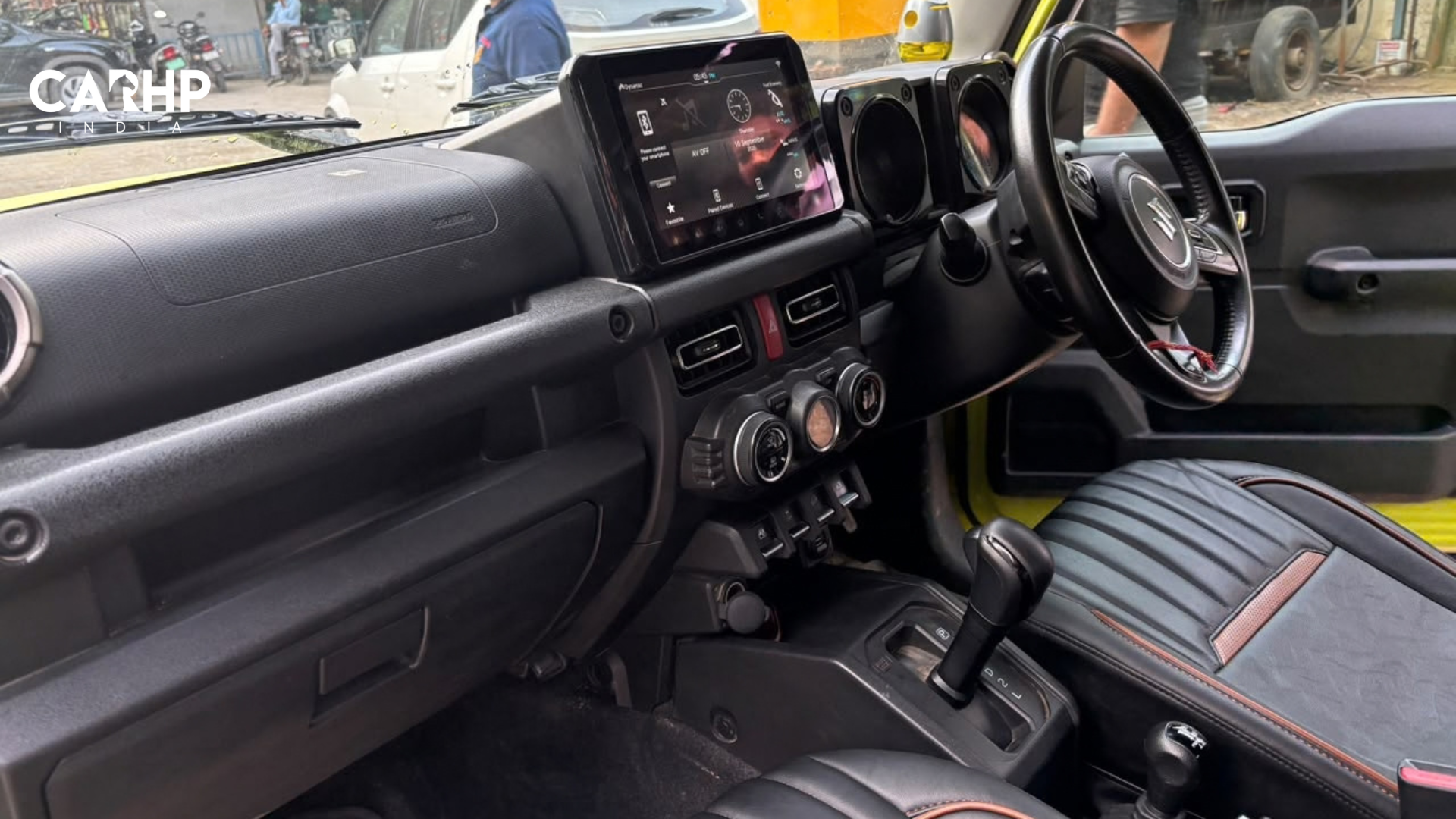
The Jimny's cabin reflects its engineering priorities with an honesty that is refreshing once understood.
Materials throughout are durable rather than premium, with hard plastics on the dashboard and door panels, simple fabric seat upholstery, and a lack of soft-touch surfaces anywhere in the interior. The overall build feels solid and practical, as everything has been chosen to survive rough treatment rather than to impress at a first viewing.
The analogue instrument cluster with its central digital MID is clear and functional without any attempt at visual drama.
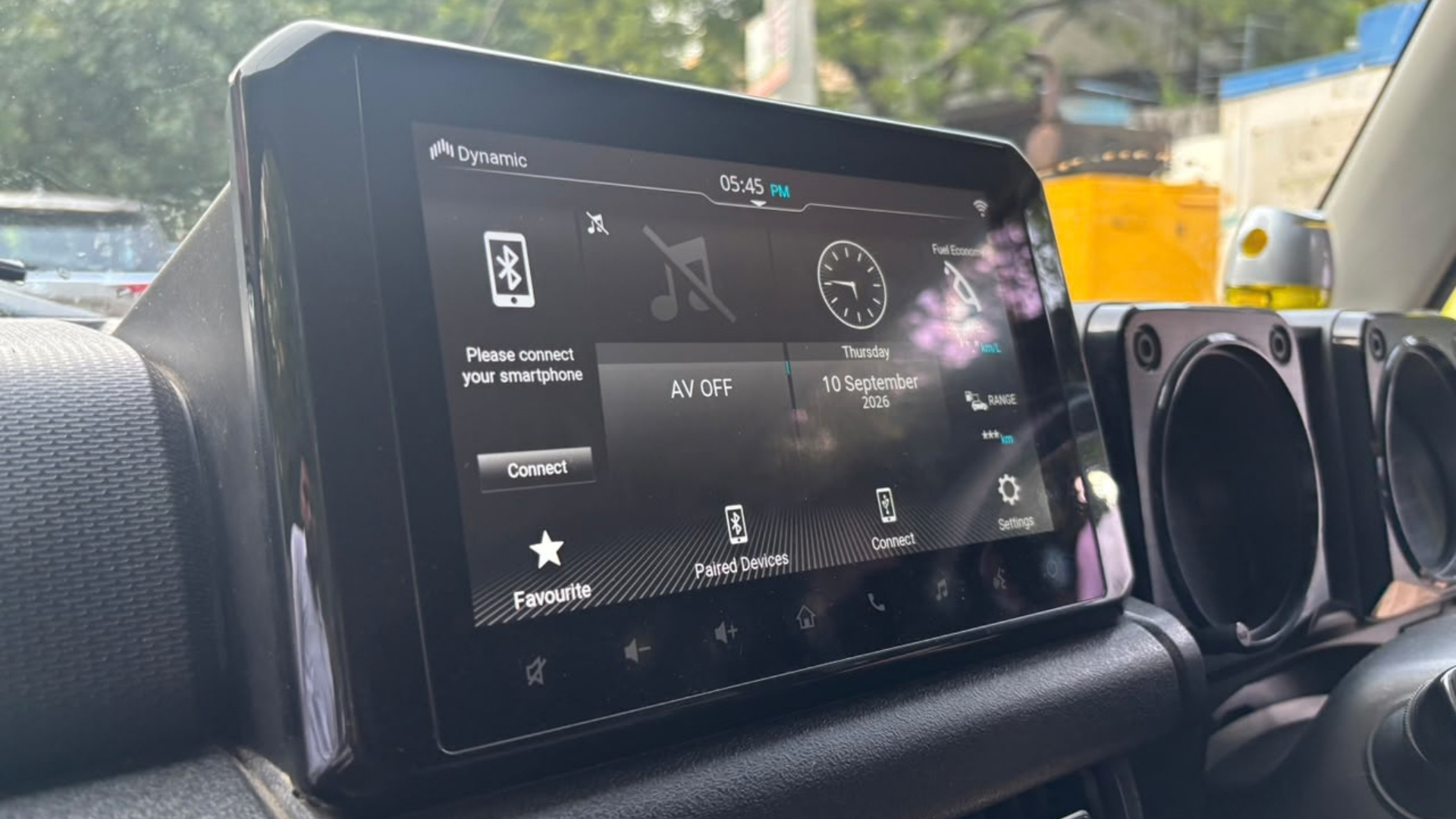
The 9-inch SmartPlay Pro+ touchscreen in the Alpha trims is the cabin's most capable feature. Wireless Android Auto and Apple CarPlay work smoothly and effectively handle navigation and media for the majority of use cases. The Arkamys-tuned 4-speaker audio system is competent but not impressive.
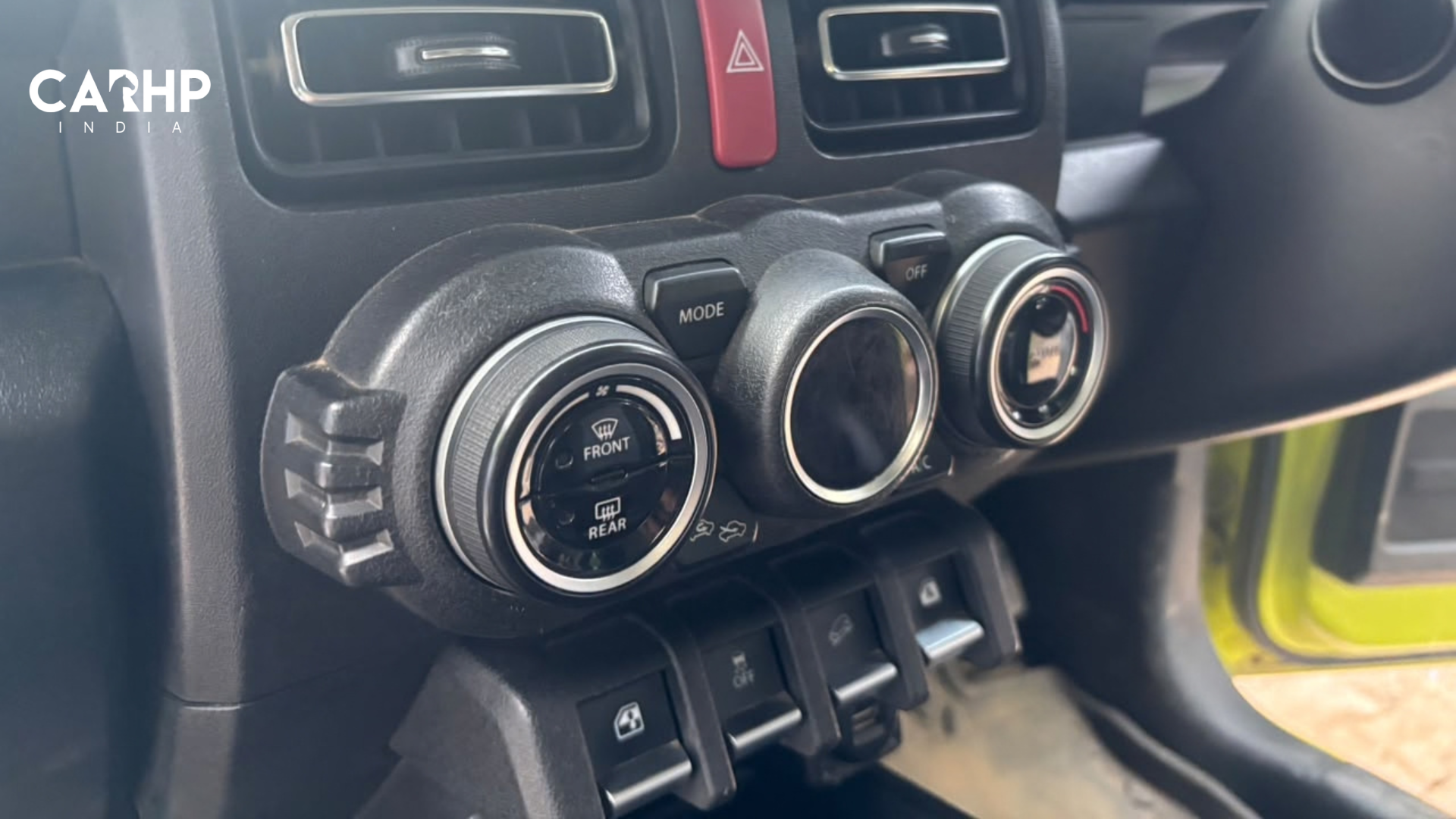
The climate control in the Alpha, with its simple three-dial arrangement, is easy to operate and works effectively.
The Zeta trim gets a 7-inch SmartPlay Pro system, but retains the wireless connectivity.
Where the cabin falls short against rivals at the same price is in storage and convenience provisions. Door pockets are shallow and do not accommodate a standard water bottle. There are no dedicated bottle holders, and the centre console storage is limited. Only a 12V outlet and a single USB port are offered, which is inadequate for two-front-seat occupants and leaves rear passengers without any charging provision.
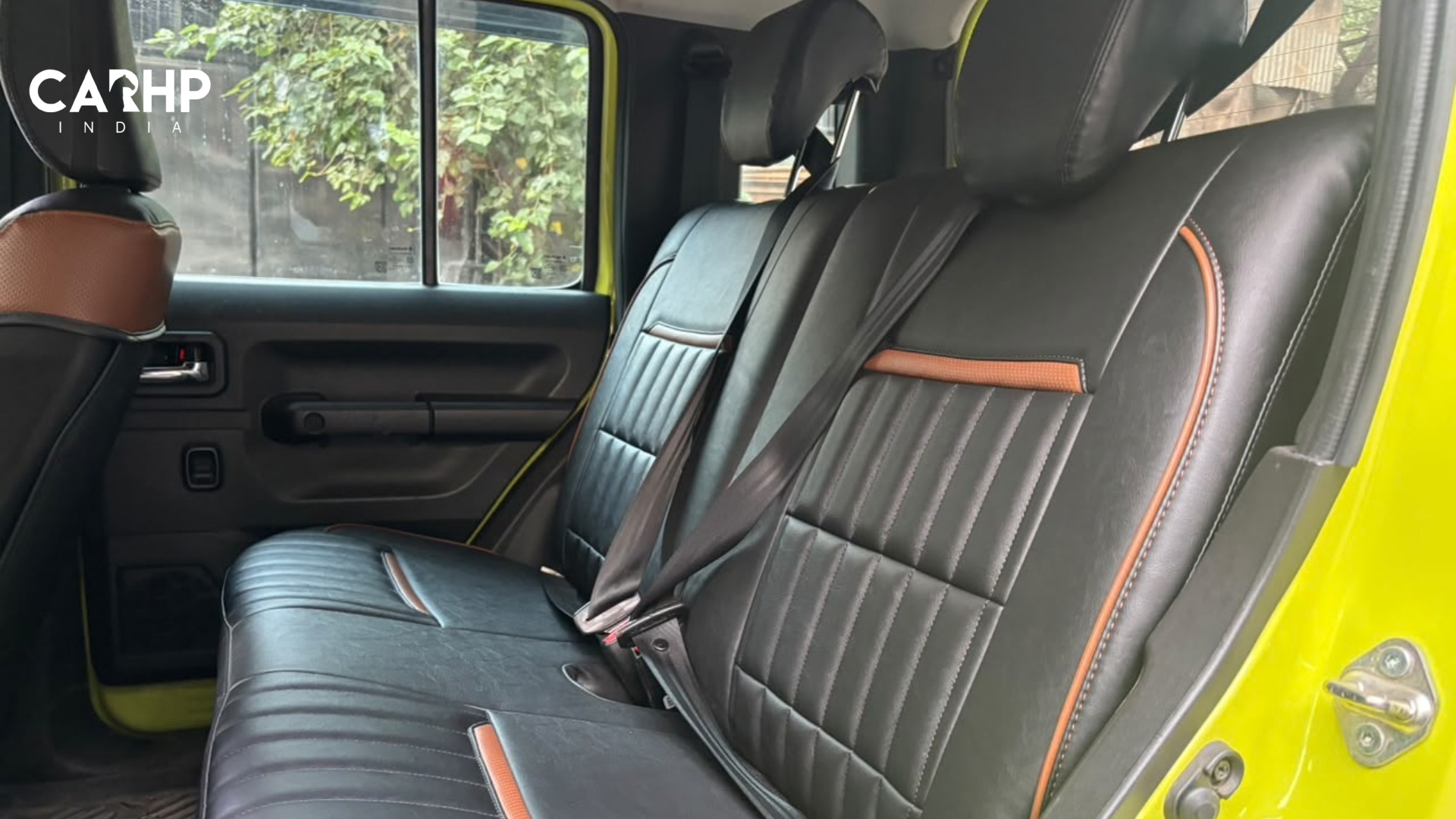
The rear seat is a genuine two-adult space, and it becomes evident the moment you look at it. Legroom is workable for average-height occupants behind a similarly sized driver, and headroom is acceptable, thanks to the tall roofline. The rear doors open wide, making access easier than the Mahindra Thar OG and Gurkha 3-door's single rear entry arrangement.
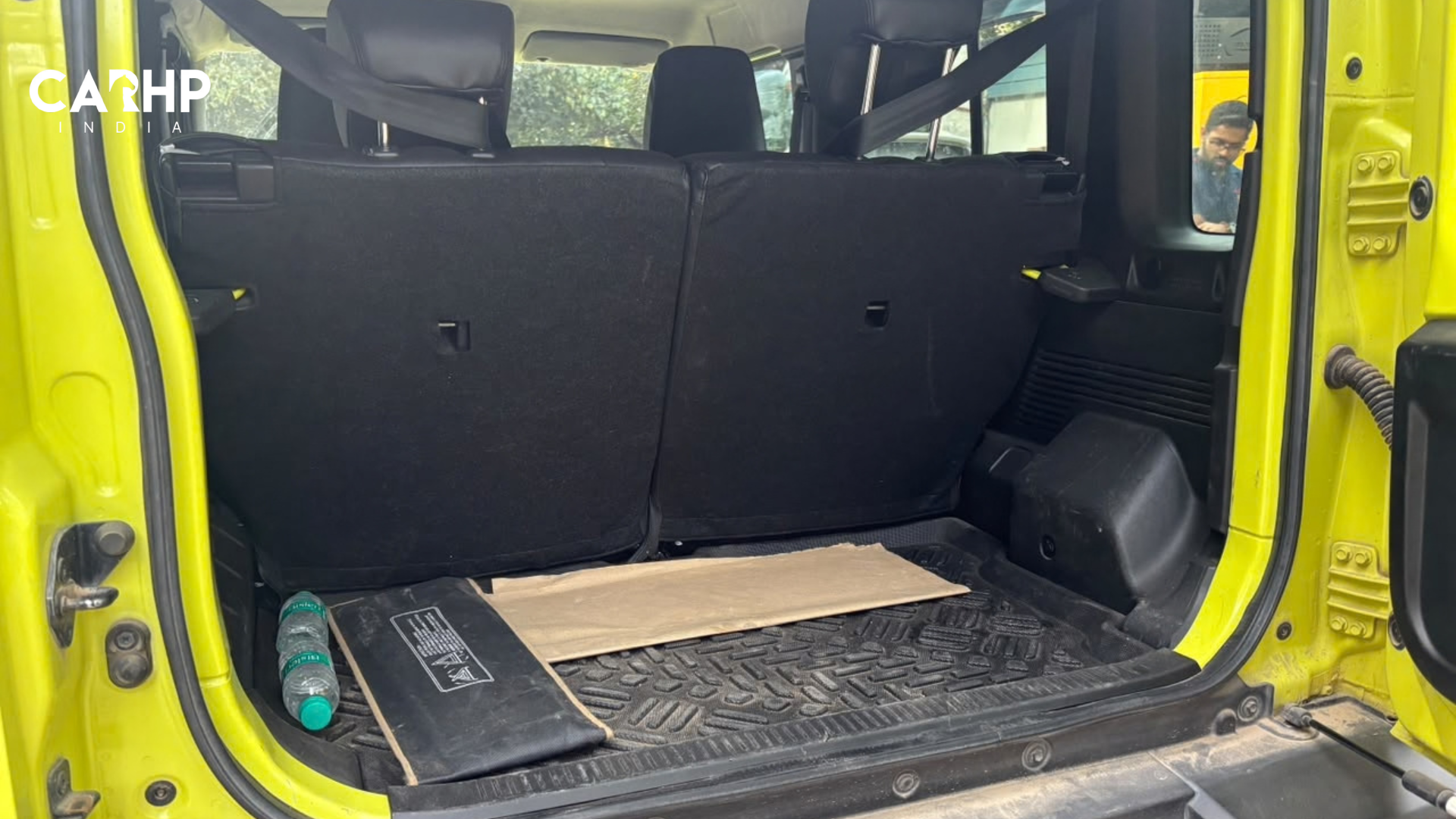
The 219-litre boot with the rear seats up is decent, making it more practical than the Thar OG, but not as much as the Gurkha 3-door which offers 500 litres. Two compact overnight bags or one large suitcase are about the practical limit with the rear seat in use. It gets split folding option, with space extending to 332 litres with both the seats down.
The cabin quality is appropriate for a vehicle at this price and with this purpose. Its limitations are real but consistent with what the Jimny is. An owner who buys the Jimny for its off-road hardware will find the interior adequate, except the lack of proper storage spaces.
exterior
exterior
| Specification | Details |
|---|---|
| Length | 3985 mm |
| Width | 1645 mm |
| Height | 1720 mm |
| Wheelbase | 2590 mm |
| Ground Clearance | 210 mm |
| Approach Angle | 36 degrees |
| Departure Angle | 50 degrees |
| Ramp Breakover Angle | 24 degrees |
| Water Wading Depth | 300-310 mm |
| Turning Radius | 5.7 metres |
| Tyres | 195/80 R15 |
| Wheels | 15-inch steel (Zeta) / 15-inch alloy (Alpha, Alpha Pro) |
The Jimny's design is an extension of the international fourth-generation model, scaled and proportioned specifically for the five-door format.
The circular LED headlamps, flat windscreen, boxy roofline, short front overhang, flared wheel arches, and horizontal tail lamps integrated into the rear bumper give the Jimny a unique presence that has defined it across generations.
The India-spec five-door's chrome grille treatment distinguishes it visually from the internationally sold three-door model, which uses a blacked-out grille. This was a deliberate decision by Maruti for the Indian market. The 15-inch alloy wheels in the Alpha trims are well-matched to the 195/80 R15 tyres, which provide the tall sidewall height that benefits off-road traction and cushions the ride over rough terrain. Though, the tyres look skinny for a car of this profile, and many buyers get them upsized.
The exterior dimensions make the five-door Jimny noticeably larger than the three-door model sold abroad, but still compact relative to its direct rivals in India. The Mahindra Thar OG and Force Gurkha 3-door, while comparable in length are significantly taller and wider. Despite equal length, the Jimny's extended wheelbase over the Gurkha 3-door provides more rear seat space.
The 50-degree departure angle is the standout off-road specification and reflects the very short rear overhang behind the rear wheels. No competitor in this price bracket matches this figure. The approach angle of 36 degrees is strong, and the 210 mm ground clearance, while numerically below the Gurkha's 233 mm and the Thar OG's 226 mm, is aided by the solid-axle suspension's travel characteristics in a way that static ground clearance measurements alone do not capture.
safety
safety
The Jimny comes with six airbags, ABS with EBD, ESP, hill hold, hill descent control, and ISOFIX as standard across all variants, which is a comprehensive active and passive safety package for a body-on-frame off-road vehicle at this price.
Hill descent control is particularly relevant for a vehicle of the Jimny's capability profile, managing brake application automatically on steep descents to prevent wheel lock.
The India-specific five-door Jimny has not been submitted for testing by Bharat NCAP or Global NCAP. The three-door Jimny sold internationally received a 3-star Euro NCAP rating, but this applies to a different body and wheelbase configuration and is not directly applicable to the India-spec vehicle.
TPMS is absent from all Jimny variants, which is surprising for an SUV where tyre management is relevant to off-road performance as well as on-road safety.
ADAS is also not offered on any variant, consistent with the Jimny's philosophy of providing passive safety equipment and driver-controlled assistance rather than active intervention systems.
competition
competition
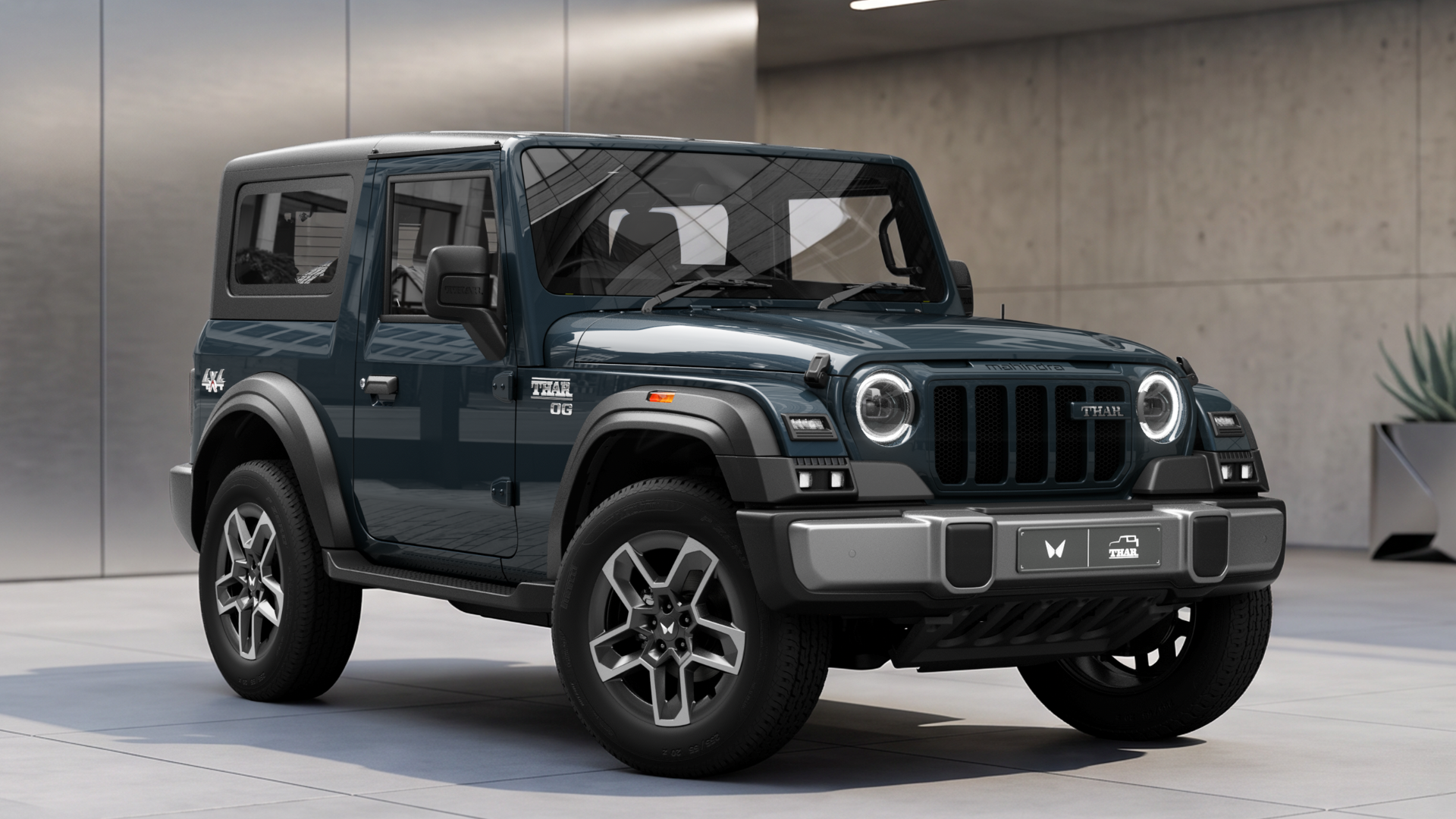
The Mahindra Thar OG is the most direct rival and the Jimny's primary comparison point for most buyers.
It offers three engine choices including a 1.5-litre diesel (117 bhp, 300 Nm), a bigger 2.2-litre diesel (152 bhp, 330 Nm) and a 2.0-litre turbo petrol (162 bhp, 330 Nm) against the Jimny's sole naturally aspirated 1.5-litre petrol. The Thar OG's higher outputs make it noticeably more capable under heavy loads and at highway speeds. In off-road terms, the Thar OG's Electronic Locking Differential and terrain modes provide more electronically assisted traction management than the Jimny's AllGrip Pro system.
The Jimny counters with the solid axle's inherent articulation advantage, a 50-degree departure angle that substantially exceeds the Thar OG's 36 degrees, proper seating for four adults with some boot space, and a more established global engineering heritage in this specific format.
The Jimny's price range largely overlaps with the Thar OG's entry trims, making it a genuine like-for-like comparison rather than an aspirational one. Six airbags are standard in the Jimny, unlike the Thar OG which only offers the same in its top-end ZXT trims.
For buyers who will use their SUV primarily on the road and occasionally off it, the Thar OG with its stronger engines, more driver-friendly electric power steering and a shorter turning radius makes for a better pick.
For those who want a no-nonsense off-roader for adventures that can also seat four people comfortably, the Jimny offers a 4x4 drivetrain at a significantly lesser price, making it the default choice.

The Force Gurkha is the hardcore alternative, with the deepest off-road credentials of any production vehicle at this price.
Its 2.6-litre Mercedes-derived diesel produces 138 bhp and 320 Nm, with mechanically locking front and rear differentials and 700 mm of wading depth. Its raw mechanical off-road package exceeds the Jimny in several specific areas.
In daily use, however, the Gurkha does not look as tempting. Its large dimensions coupled with a hydraulic power steering and a notchy gearbox make city driving a task, the cabin is too basic, the rear-door access arrangement is awkward, only dual airbags are offered, there is no crash rating, and refinement on road is notably below the Jimny's standard.
For buyers who will spend the majority of their ownership experience in serious off-road territory, the Gurkha is worth serious consideration, but for a split between daily commuting and weekend off-road use, the Jimny is the more balanced choice.

The Mahindra Thar Roxx sits above the Jimny in price, size, and feature content, and its entry level variants overlap with the Jimny's Alpha variants.
It is a five-door, proper five-seater vehicle with a more premium cabin, significantly more features, ADAS in upper trims, and a choice of turbo petrol and diesel engines. It is less focused as a driver's off-road tool and more functional as a family SUV that also goes off-road.
The Thar Roxx is undoubtedly the more complete everyday vehicle. The Jimny offers none of these but delivers the more focused off-road experience when the road ends.
final verdict
final verdict
The Maruti Suzuki Jimny occupies a specific and honest position in the Indian market.
It is the only new car in India that offers solid front and rear axles, a body-on-frame ladder chassis, and a genuine low-range 4WD transfer case with AllGrip Pro, all in a five-door body with six airbags as standard and Maruti's service network behind it. Nothing else at this price offers that combination.
Its limitations include an engine that is adequate rather than exciting, a dated 4-speed torque converter automatic, a large turning radius, a simple cabin lacking proper storage spaces, a small boot, and no published crash rating for the India-spec model to refer to.
Running an off-road vehicle as a sole daily car, particularly in dense city traffic or on highway-heavy commutes, involves compromises that a mainstream crossover does not require.
The Alpha manual best balances the Jimny's strengths with practical everyday usability. It gets the full feature set and the 5-speed manual's more appropriate ratio spread for both on and off-road use. The automatic makes more sense for buyers who will use the Jimny as a primary car as well.
For those on a tighter budget, the Zeta trim offers good value for money as well. While it does miss out on features like auto AC, cruise control, and UV-cut glass, it gets the same off-roading hardware and can be had in both transmission options as well.
In either form, the Jimny is a vehicle best bought by someone who knows what they are getting and wants precisely that, and for that buyer, it is one of the most singularly rewarding purchases available in the Indian new-car market.
Maruti Suzuki Jimny News
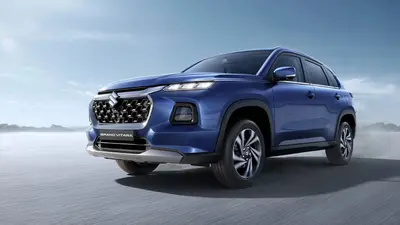
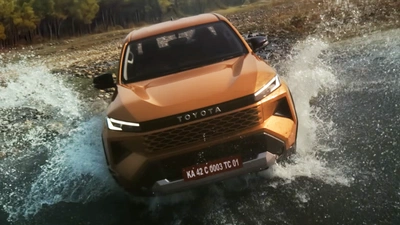
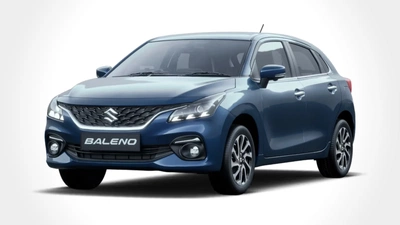
Maruti Suzuki Hikes Car Prices by Up to ₹30,000 in August With Baleno, e Vitara and Jimny Getting Costlier
Maruti Suzuki has increased prices across its Arena and Nexa lineup in August 2026, with hikes ranging from ₹2,500 on entry-level models to as much as ₹30,000 on the Baleno. Here is a full breakdown of what has changed and by how much.
Anmol Kumar
August 19, 2026




Maruti Suzuki Jimny FAQs
What engine does the Jimny use, and is it powerful enough for daily city driving?
−The Jimny uses a 1.5-litre K15B petrol engine producing 104.8PS and 134.2Nm of torque. It is adequately powered for city use, though it is tuned more for off-road capability than outright performance.
What is the fuel efficiency of the Jimny?
+Maruti Suzuki rates the Jimny at 16.94 km/l for the manual transmission and 16.39 km/l for the automatic. Real world figures drop to 10-11 km/l in the city and 15 km/l on the highway.
Does the Jimny have a proper 4WD system?
+Yes. The Jimny comes with Maruti's ALLGRIP PRO system, which includes a Low Range Transfer Gear, a part-time 4WD setup suited for serious off-road use.
How many people can the Jimny seat?
+The Jimny has a seating capacity of 4 passengers only. This is a hard limit set by its compact body dimensions and is not expandable.
What is the boot space in the Jimny?
+With the rear seatbacks up, boot space ranges between 208-219 litres depending on seat position. With the rear seat fully folded, it expands to 332 litres.
What safety features does the Jimny offer?
+The Jimny comes with 6 airbags, along with ABS, EBD, ESP, Hill Hold Control, Hill Descent Control, Brake Assist, and a rear-view camera as standard.
Does the Jimny support Android Auto and Apple CarPlay?
+Yes. Both Android Auto and Apple CarPlay are supported wirelessly on the Jimny's touchscreen infotainment system across the lineup.
What is the ground clearance of the Jimny, and how does it handle rough roads?
+The Jimny offers 210mm of ground clearance (unladen), a 36° approach angle, and 46° departure angle, making it one of the most capable stock SUVs for rough terrain in its price segment.
How many variants does the Jimny come in, and what are their names?
+The Maruti Suzuki Jimny is available in 6 variants: Alpha, Alpha AT, Alpha Dual Tone, Alpha Dual Tone AT, Zeta and Zeta AT. It offers transmission options.
Is the Maruti Suzuki Jimny available in petrol, CNG, electric or diesel engines?
+The Jimny is currently available with Petrol engines.
What are the key safety features in the Jimny ?
+The Jimny comes equipped with several safety features including Anti-lock Braking System (ABS), Central Locking, Electronic Brakeforce Distribution (EBD), Electronic Stability Control (ESC) and Hill Assist.
What are the boot space and dimensions of the Maruti Suzuki Jimny?
+The Jimny offers 211 Litres of boot space. Its dimensions are 3985 mm in length, 1645 mm in width, and it has a wheelbase of 2590 mm.
What colours does the Maruti Suzuki Jimny come in?
+The Maruti Suzuki Jimny is available in the following colours: Pearl Arctic White, Sizzling Red/ Bluish Black Roof, Granite Grey, Bluish Black, Sizzling Red, Nexa Blue and Kinetic Yellow/Bluish Black Roof.