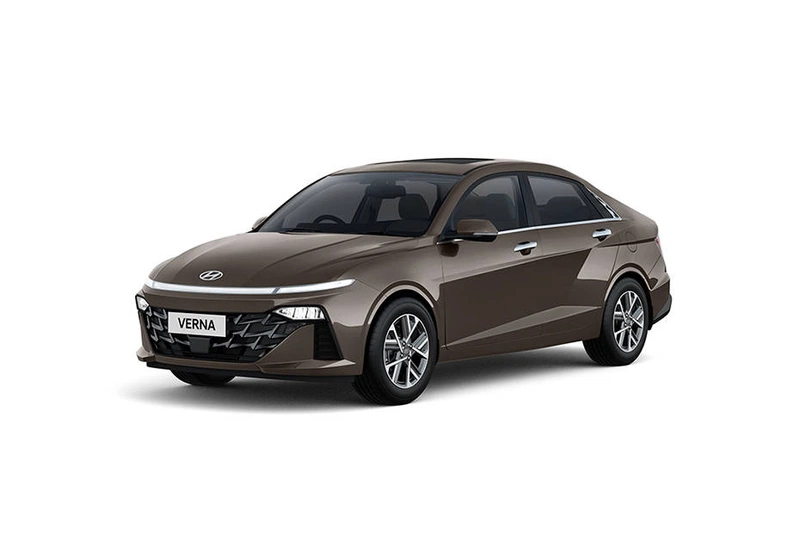
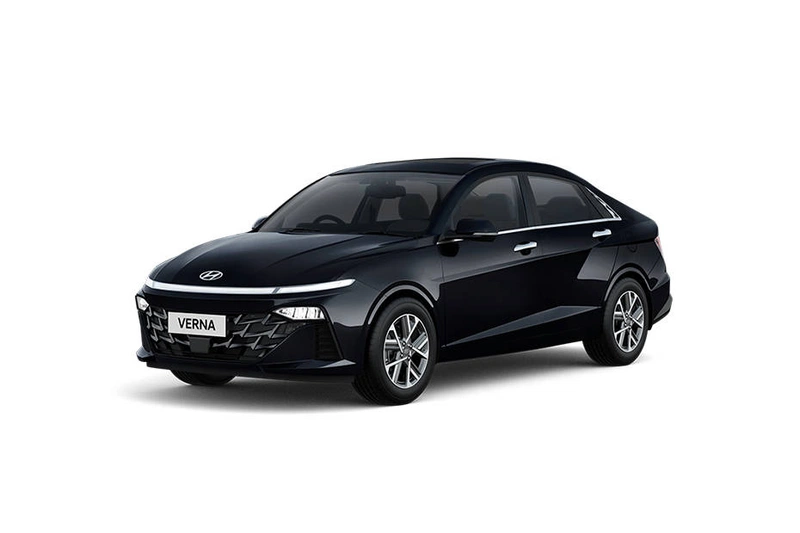
Hyundai Verna
Overall Rating

Hyundai Verna
Overall Rating
EMI Loading
Hyundai Verna Key Specifications
Hyundai Verna Highlights
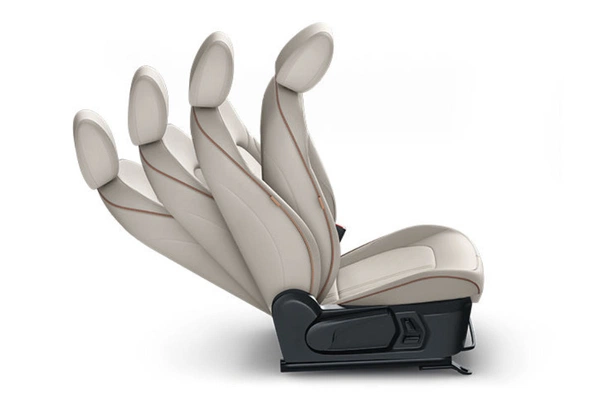
Powered driver seat.
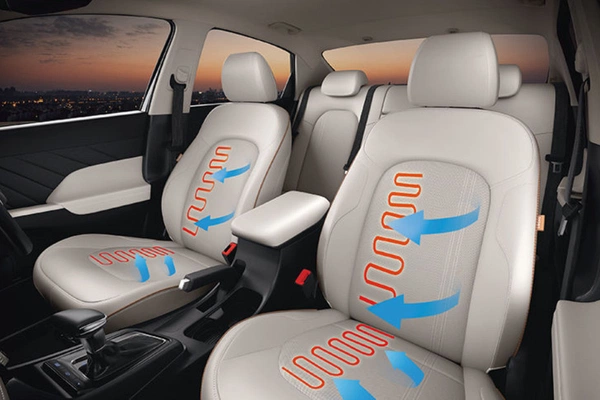
Heated & ventilated seats.
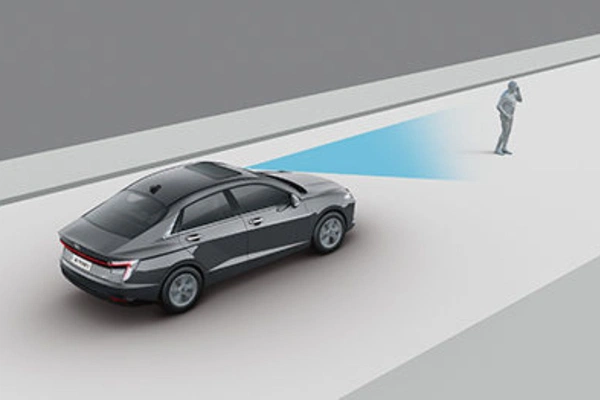
ADAS.
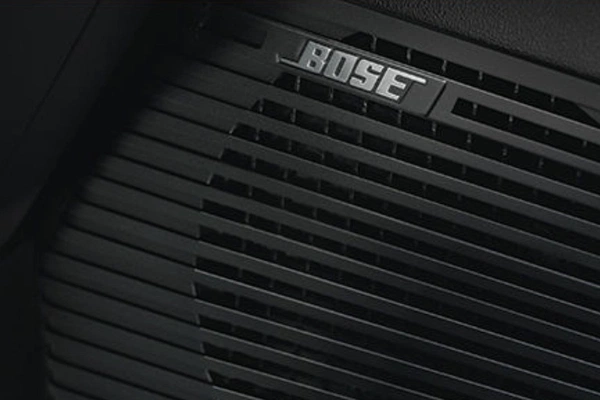
8-speaker Bose system.
Hyundai Verna Overview
Getting a sedan these days will definitely make your neighborhood frown as most people have lost the capability to drive sensibly on the road. The “go to” reason for some people for buying SUVs or PseudoSUVs is that they don’t want to slow down on speedbreakers, and weirdly enough, they’re very proud about it.
But since you’re interested in learning more about the Verna, I’d like to believe that you don’t fall under that category of headless chickens.
Now that I have your attention, let me tell you why you should choose the Verna over its competitors or skip it and go for the Honda City or VAG twins.
Starting with a brief introduction to the Verna, it starts at ₹10.99 Lakhs (Ex-Showroom) and the top trim with the most powerful engine and quickest gearbox will cost you ₹18.41 Lakhs (Ex-Showroom).
Instead of the older E - SX trim levels, the Verna variants are now renamed to HX2, HX4, HX6, HX6 Plus, HX8 and HX10, borrowed straight from the new Venue.
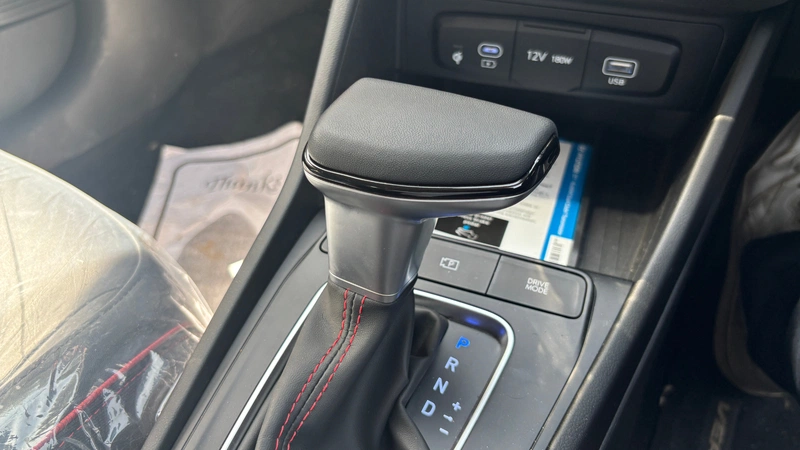
We’ll talk in detail about the engines below, but just to let you know, the new Hyundai Verna gets two 1.5 liter 4-cylinder engines. The most accessible one is a naturally aspirated engine paired to either a six-speed manual or a CVT (IVT in Hyundai’s nomenclature). Talking about the other unit, it’s a 1.5-liter 4-Cylinder direct injection turbocharged motor rivaling the likes of the Skoda Slavia and VW Virtus’ 1.5 TSI variants.
This engine is available with either 7-speed DCT or a 6-speed manual which the VW Sedans don’t have anymore.
We spent time with both engines. We drove them on the highway and in the kind of stop-start city traffic that actually tells you something about a car. Here's what we found.
Engine and Performance
Engine and Performance
Before we get into the details of how the engines feel in real life, let’s have a quick look at what are the specifications and outputs -
Here's the powertrain lineup for the 2026 Hyundai Verna facelift:
| Spec | 1.5L Naturally Aspirated Petrol (MPi) | 1.5L Turbo Petrol (T-GDi) |
|---|---|---|
| Displacement | 1,497 cc | 1,482 cc |
| Power | 115 HP | 160 HP |
| Torque | 144 Nm | 253 Nm |
| Peak Torque | 4,500 rpm | 1,500–3,500 rpm |
| Transmission Options | 6-speed Manual / IVT (CVT) | 6-speed Manual / 7-speed DCT |
Now the biggest miss here is a proper diesel engine which is already available in Hyundai’s stable, but we are still not sure Hyundai discontinued the Diesel in the Verna. A lot of customers actually preferred Verna for its diesel performance.
However, coming back to the available options, the naturally aspirated 1.5-liter petrol should be the go-to option for most Verna customers, mostly because of its accessibility, as prices vary from ₹10.99 to ₹17.31 Lakhs ex-showroom including the IVT options.
On the contrary, the 1.5-liter turbocharged motor comes with a starting price of ₹16.29 Lakhs and goes up to ₹18.41 Lakhs including the DCT options.
And although the turbo 1.5 motor is the most fun to drive engine in the lineup, I personally prefer the naturally aspirated 1.5, especially with the 6-speed manual.
If you’re completely fixed about getting an automatic, the CVT aka IVT will serve you the best, no doubt about it, and it barely feels underpowered in regular use.
However, Hyundai does some magic with their clutch that even if you’re driving a manual in an insane stop-n-go traffic, the clutch feels so light that left leg cramps kind of cease to exist. It’s so soft that finding the biting point feels tricky in the first few minutes of driving.
And not only that, with the soft clutch, the engine also has more than enough torque available from a very low RPM, making the whole setup very tractable in day to day use cases.
On the highway, you will definitely feel it a little strained compared to a 1.5 Turbo, and that’s expected. But the 1.5-NA will offer you significantly better fuel efficiency compared to the 1.5 Turbocharged Verna.
Now, let’s say you’re an enthusiast looking for a fun car, and you love highway drives, midnight drives, and long trips. Trust me, a turbo changes the game completely.
First of all, Hyundai has tuned the 1.5-liter turbocharged 4-cylinder engine to deliver the power in a very linear mode, so the power is very predictable.
So, if you’re expecting a sudden rush of power, please go for the Virtus and Slavia. The Verna is way more predictable than any of its counterparts and that’s what makes it stand out as a strong contender. 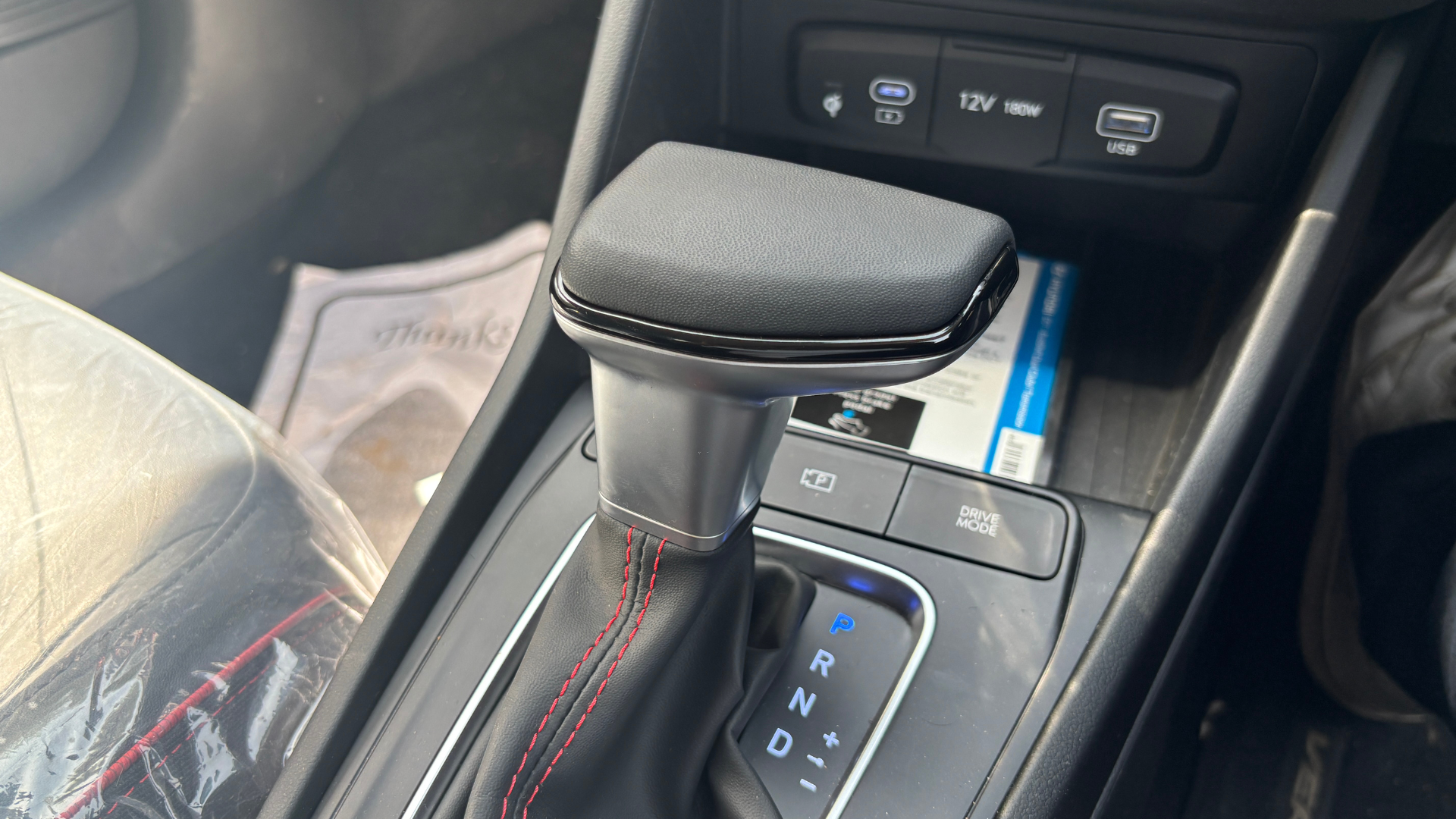
Plus, being a 1.5-liter engine, it doesn’t struggle as much in lower speeds, when the turbo isn’t completely spooled up. The DCT plays a major role in shaping the overall turbo-rush into a gradual yet strong powerband.
Highway overtakes would barely require a downshift but stupid highway overtakes are insanely fun on this.
However, sad to say, it’s not as confident in terms of handling, which we will talk about in the next segment.
Apart from that, the engine works flawlessly, the DCT is slower than the DCTs we’ve driven in the past, but that has been done to survive the hot Indian weather, making the compromise worth it.
In terms of efficiency, lower teens to single digit is what you can expect inside a city, out on the highway, if driven gently, you can easily churn out around 17-18 kilometers to a liter of the current e20 petrol.
Lastly but most importantly, braking of the 2026 Hyundai Verna is a genuine strong point. Disc brakes sit at all four corners for the turbocharged variants, and for the non-turbo units, only the front axle gets a pair of discs which is a genuine miss.
Although both setups feel confident enough and stopping power feels adequate in the non-turbo trims, it’d have been lovely to see an all four disc brake setup in the Verna as standard just like the Creta.
No clue why the compromise when Hyundai already has the setup lying in their garage.
Ride and Handling
The Hyundai Verna is built for outright comfort, while most of its competitors aren’t.
Vertical motions are bare minimum on a bad patch of roads. On higher speeds, undulations are heard and not felt, and that’s the beauty of Korean Engineering.
Yes you will encounter weird speed-breakers and you may have to cross it sideways like a sportscar but it’s not the fault of the car, it’s the stupidity of the people who don’t have any idea of how to make a speedbraker.
So, it doesn’t make sense to give up on a better driving experience just for a few dumb speedbreakers you’ll encounter.
Now, once you leave the urban jungle, the ride quality needs to be steady and confident. If you’re thinking that focusing on comfort will make the Verna less assuring on high speed stability, you’re partially right.
The Verna can’t compete with the level of confidence a Virtus or a Slavia will provide, even Honda City feels slightly better at highway speeds.
However, it has recently come to my realization that the underconfidence one may feel while taking a sharp turn at a high speed, or switching lanes quicker than usual, is largely dependent on the feedback from the car.
I usually don’t like to push a car once I stop getting enough feedback from the ground, but the chassis of the current generation Verna is well equipped to stick to the road and perform at a very close level of what we’ve seen on a VAG car.
The lack is in the way a Verna talks to the driver, maybe Hyundai can work on the steering feedback or something that makes the car feel a bit more direct for the driver. Maybe a bit more rawness.
But hey, the Verna is mostly targeted towards a comfort-oriented customer base at this point so Hyundai’s POV is also sensible.
fuel economy
fuel economy
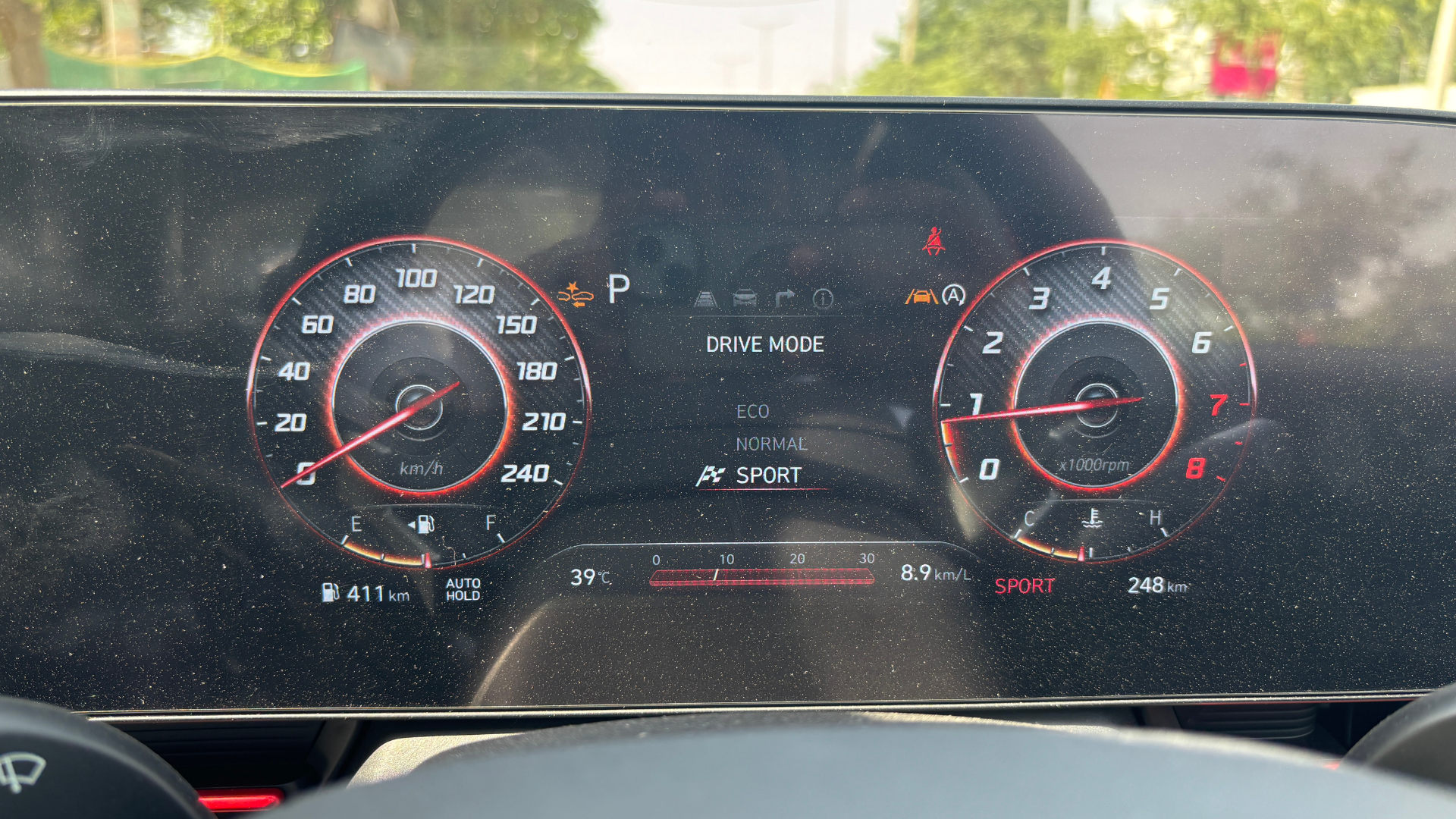
ARAI-certified mileage for the Verna ranges from 18.6 kmpl to 20.6 kmpl, depending on the engine and gearbox combination.
The MPi petrol delivers 18.6 kmpl with the 6-speed manual and 19.6 kmpl with the iVT automatic.
Meanwhile, the Turbo GDi petrol returns 20.0 kmpl with the 6-speed manual and 20.6 kmpl with the 7-speed DCT.
The fuel tank capacity is 45 litres across all variants.
interior
interior
Even the pre-facelift Verna felt the best in the segment when it came to the interiors and comfort.
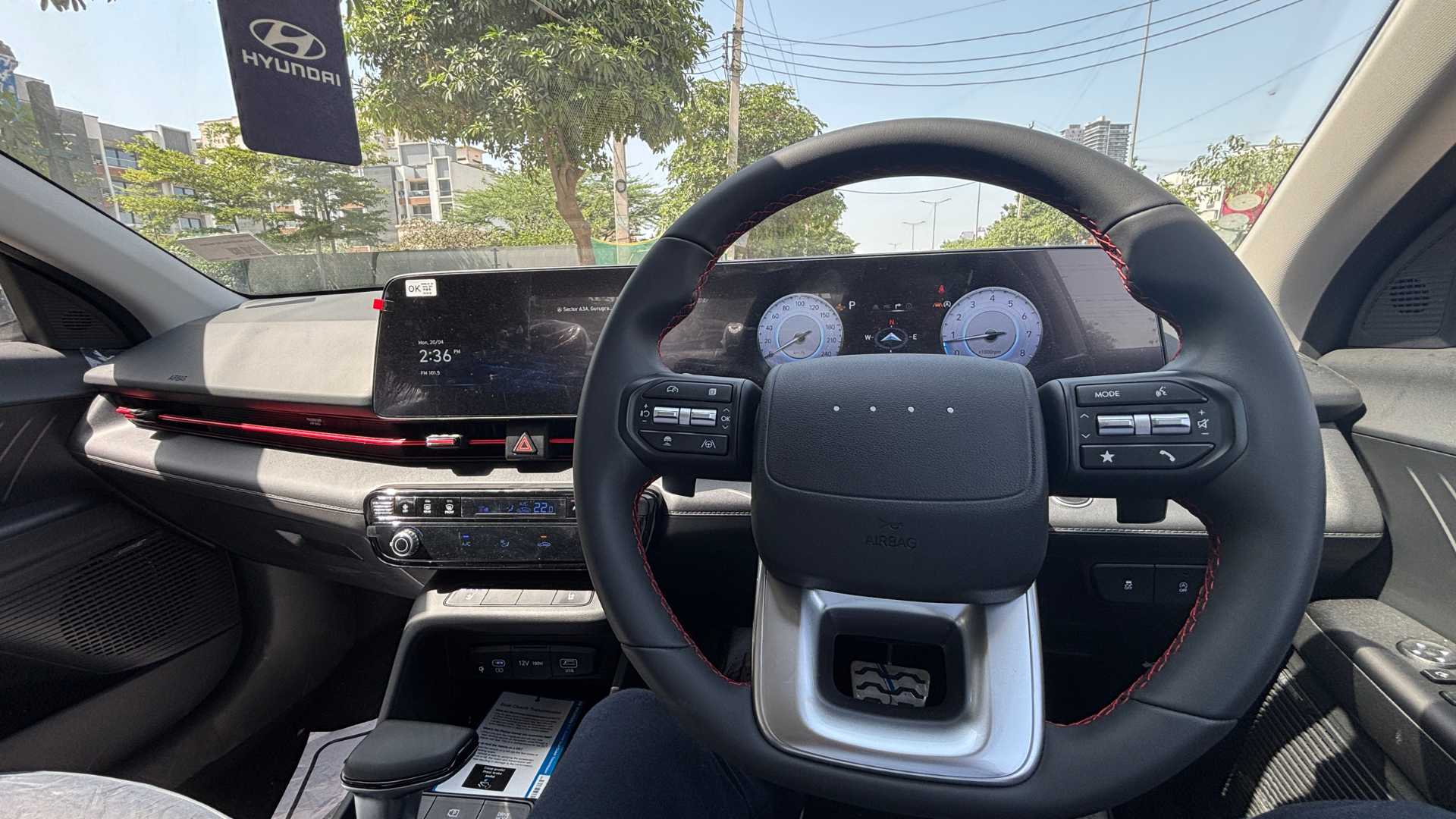
The Koreans are known for packaging the most attractive and practical interior in the most efficient way possible, and they ate with the Hyundai Verna facelift.
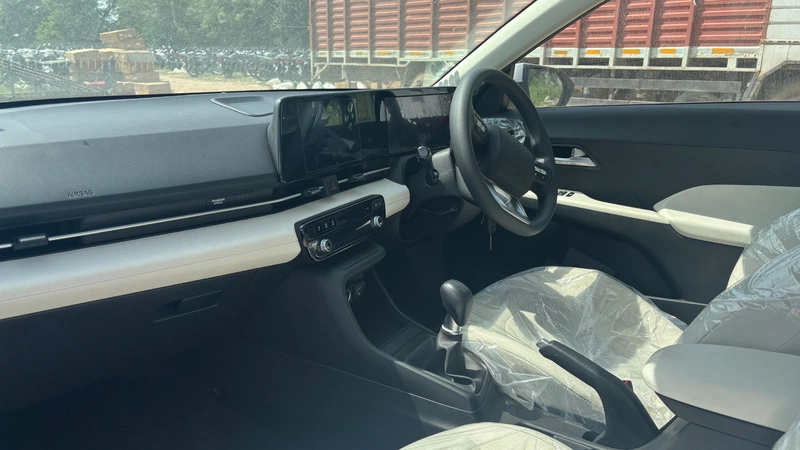
If you’re getting the top trim with the non-turbo engine, the cabin is covered in a shade of white with a secondary tone of dark grey contrasting the theme. You also get a very well-incorporated ambient light uplifting the cabin to a premium-level.
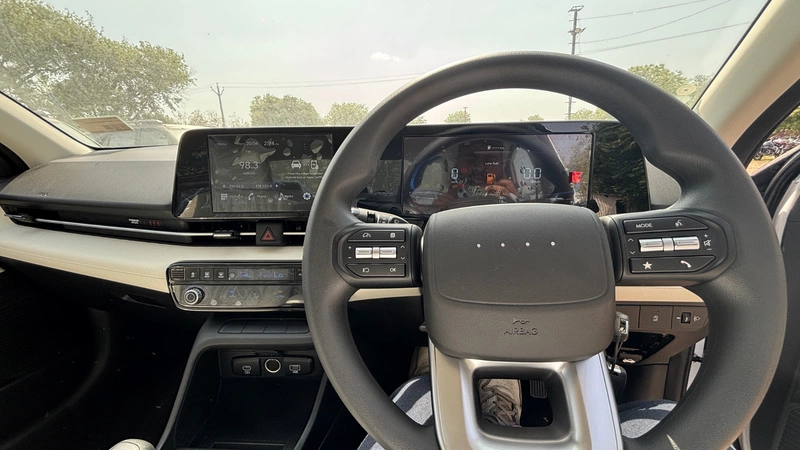
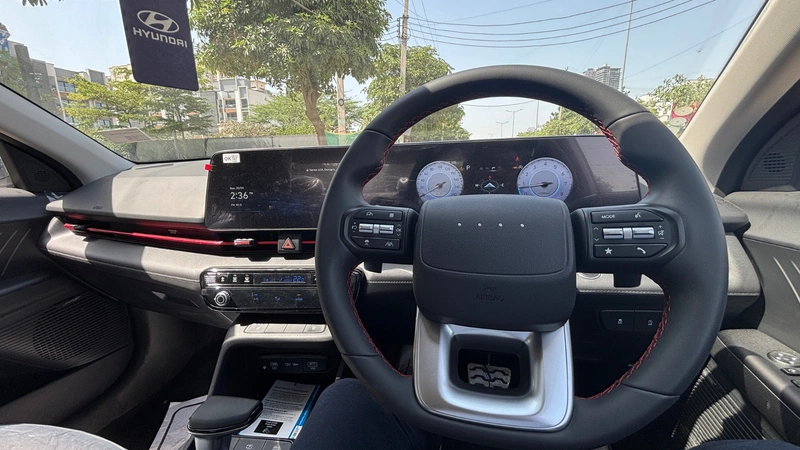
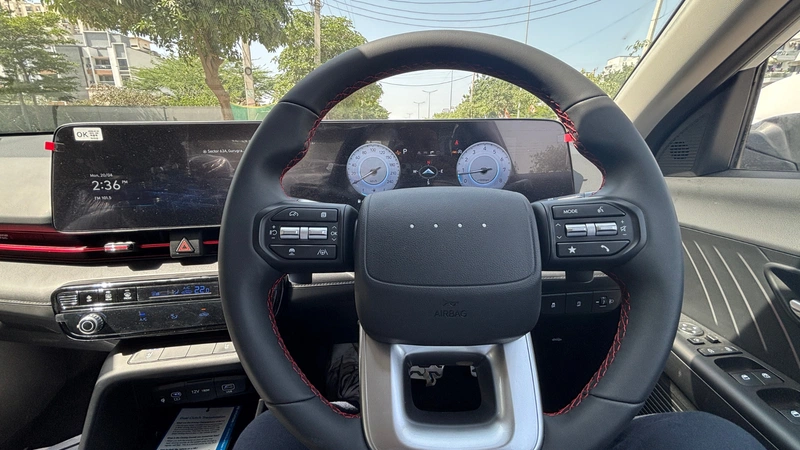
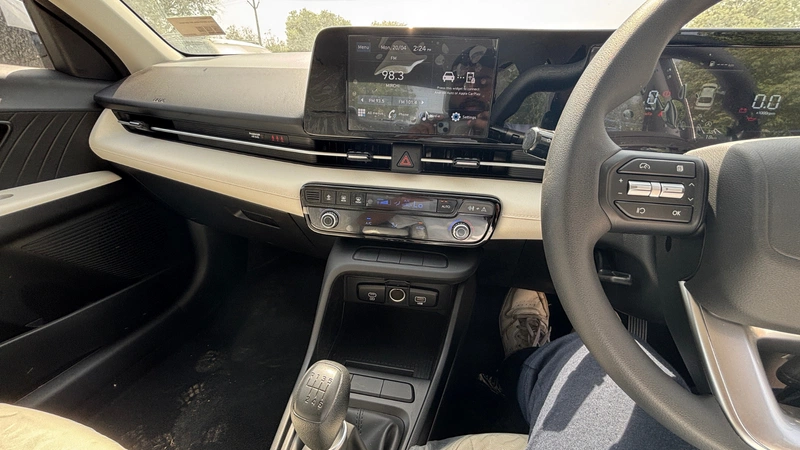
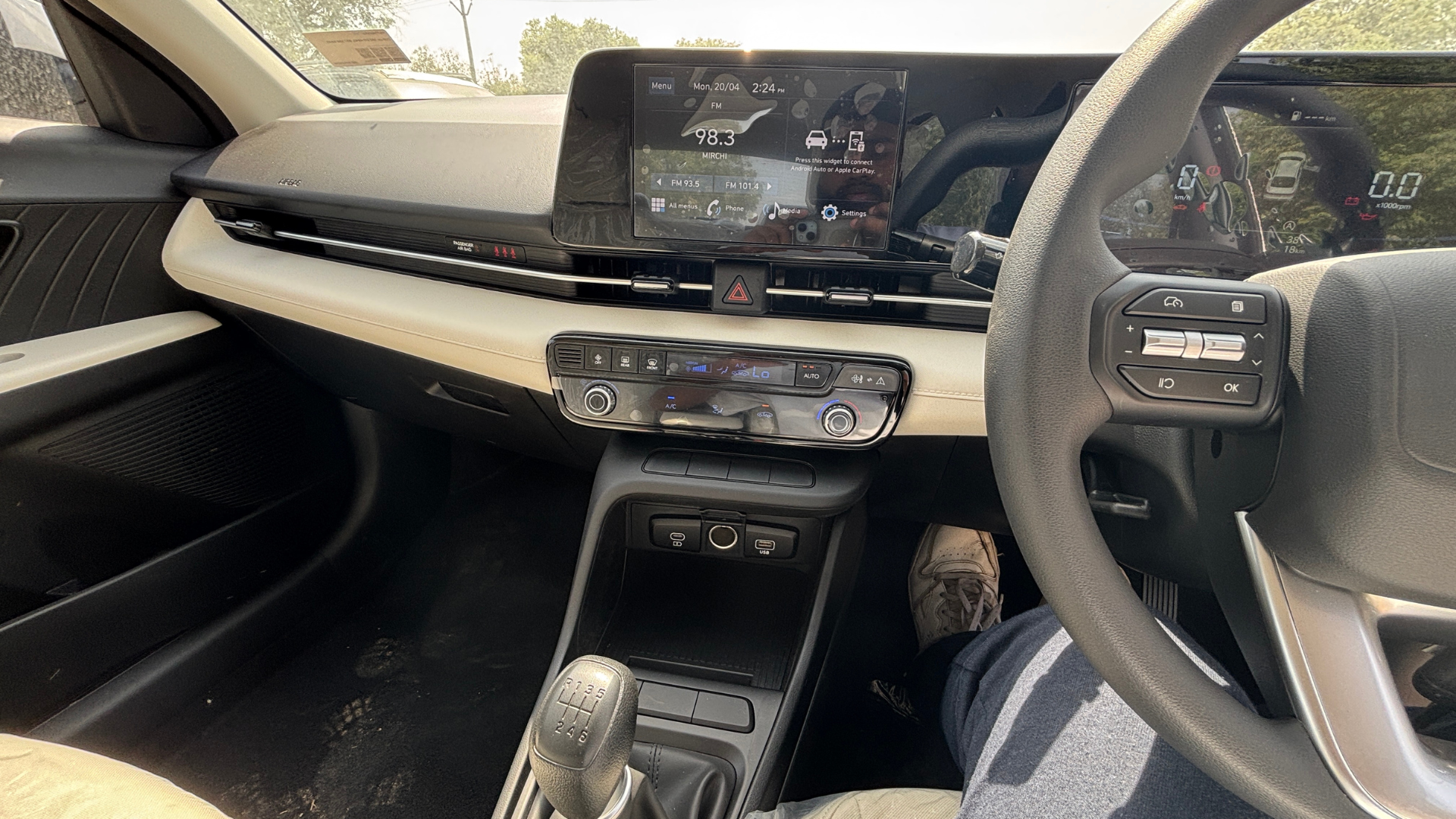
The steering wheel is completely new this time and it feels great to hold it. It's comparatively thicker than most other cars I’ve driven so far. The design feels a lot better than the older 2-spoke setup, and it does feel a lot sportier than before.
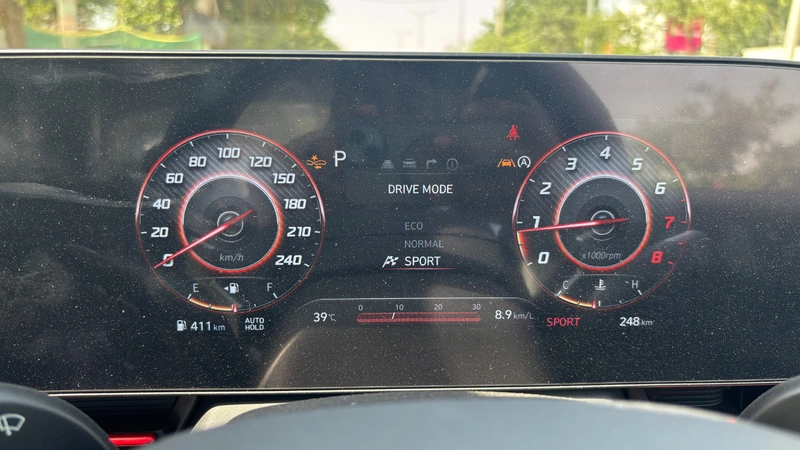
In terms of equipment, you have 2 screens in front of you if you’re the driver, and Hyundai has got rid of the oldschool digital-speedometer setup, and now it offers a setup that uses the digital screen to mimic the usual analog meters showing RPM and Speed alongside other data.
The second, i.e., the infotainment screen is also pointed slightly towards the driver so it’s easy for the driver to use it when driving. Moreover, I love the fact that
Hyundai has managed to incorporate both the media and AC controls in one set of buttons.
You can use one button to convert the panel into AC control from Media and vice versa. Although most of these buttons are touch sensitive, the basics, such as the volume control, temperature adjustment and fan-speed.
In terms of static comfort inside the 2026 Hyundai Verna, the seats are quite full of cushion, and the overall space is great to accommodate a family of 5 adults.
The front seat is very comfortable and you can easily do hundreds of kilometers on the highway without any sign of fatigue. (Sad that there is no diesel to compliment it anymore)
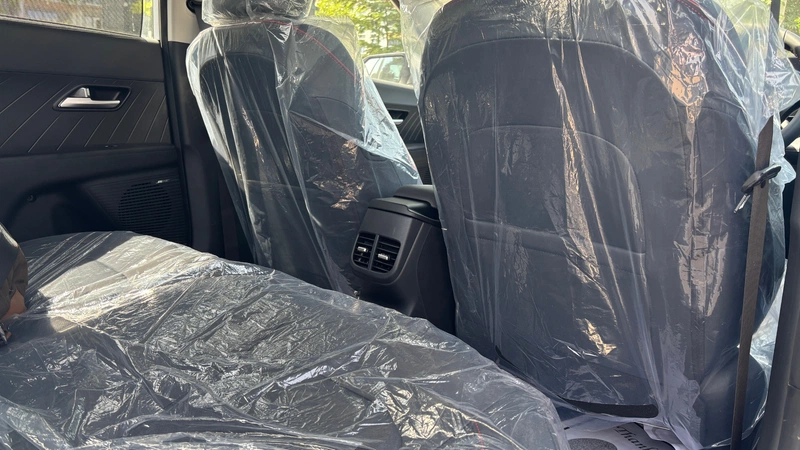
The rear seats have more than enough thigh support for an average Indian, if you’re around 6 ft, you may feel a slight lack of underthigh engagement, but, you won’t definitely feel cramped, unless the driver or passenger ahead of you is also a 6 ft person.
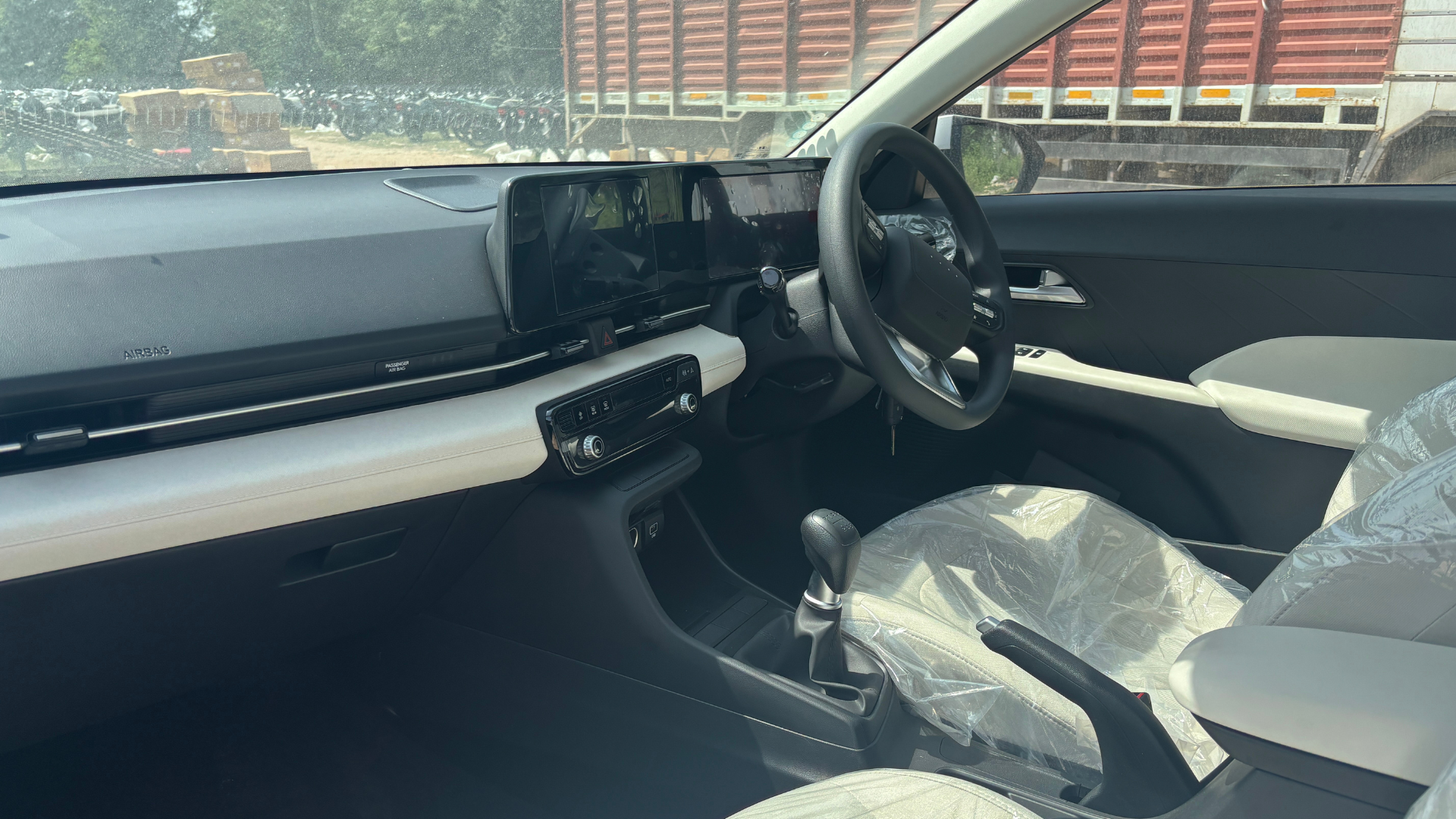
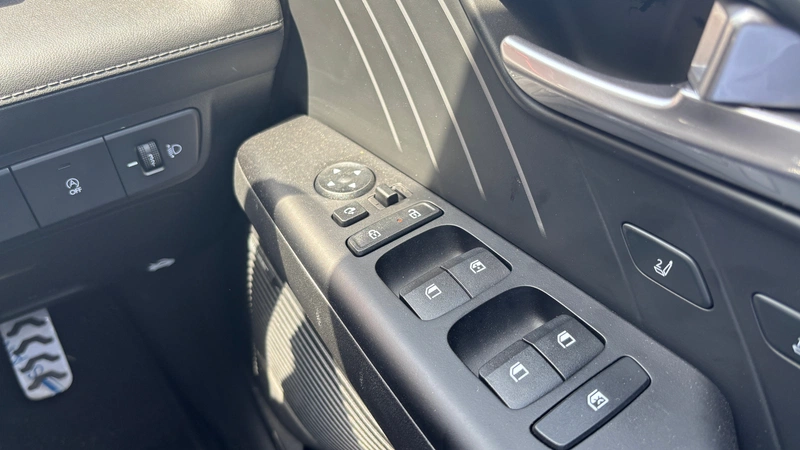
The front seats are ventilated as well as powered, and the rear passengers get an option to operate the front seat position from the back itself because there’s a set of controls at the right side of the co-passenger seat, just like we have seen on multiple top-tier cars.
Note that the driver seat also comes with a memory seat function which makes the overall ownership a lot better than its rivals.
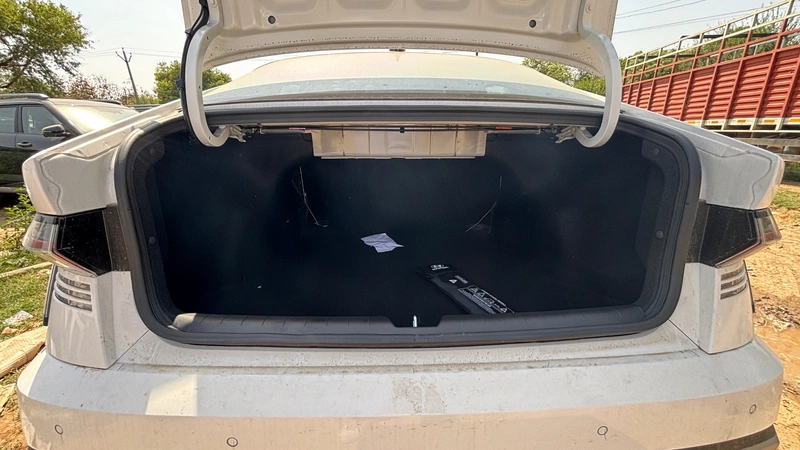
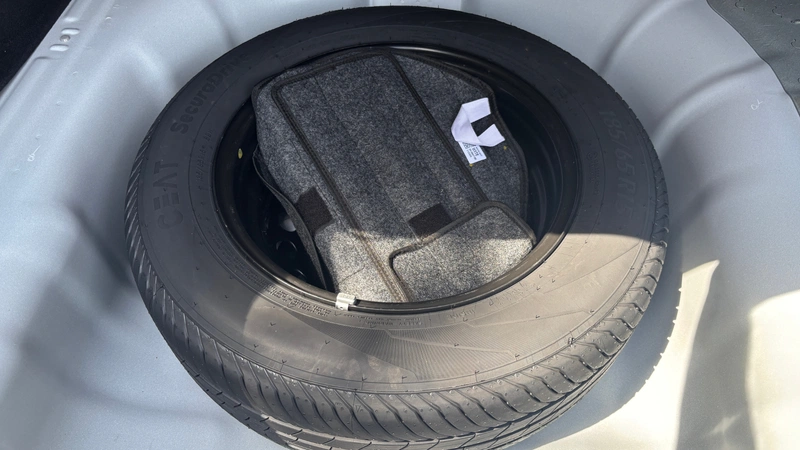
Lastly and most importantly, the 2026 Hyundai Verna comes with a large 528 liters of boot space which is quite easy to access, and its lower boot lip also helps in terms of loading heavier luggages.
exterior
exterior
First of all, I want to address the Elephant in the room without sugarcoating it.
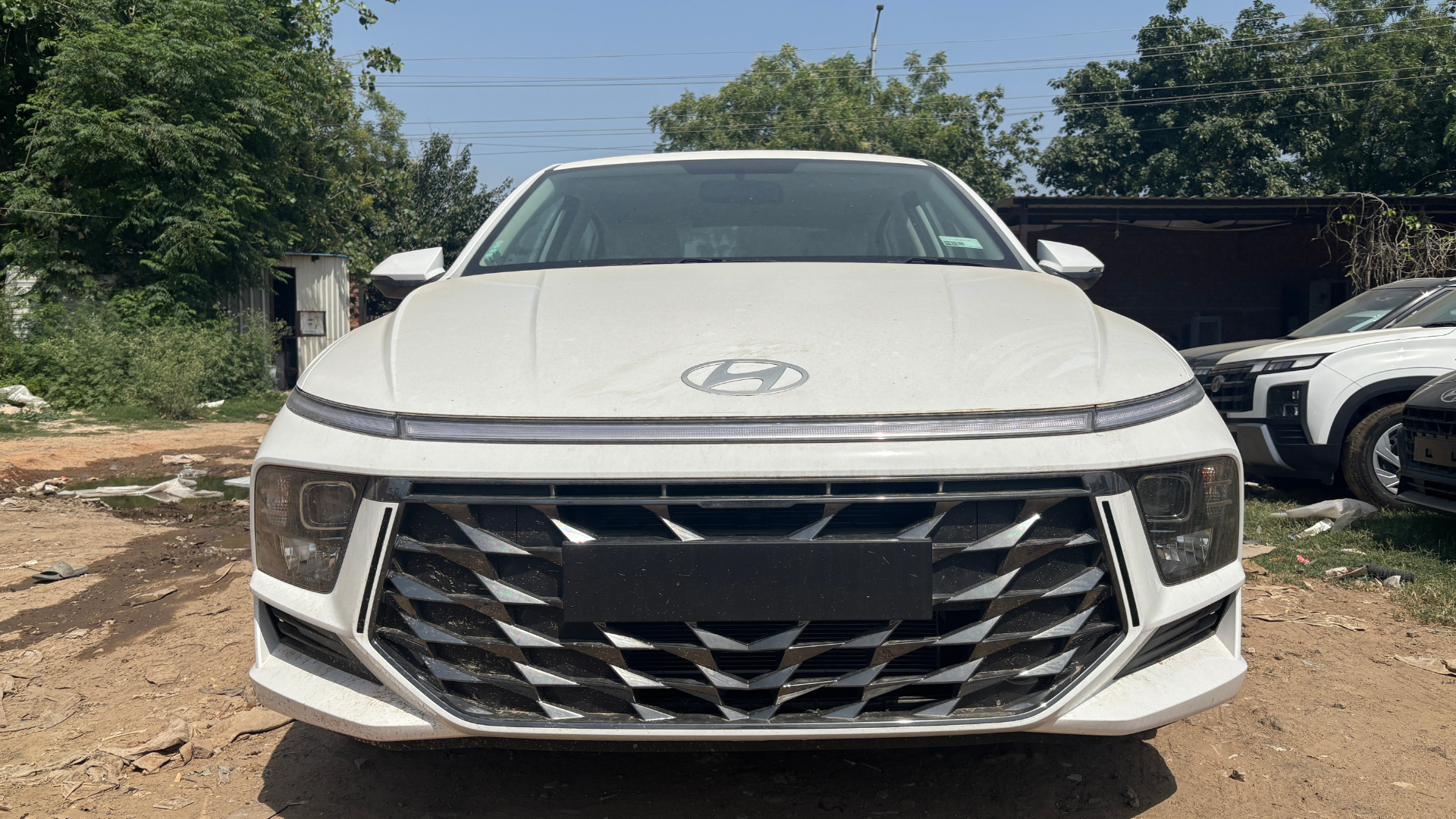
If you found yourself uncomfortable with this 6th generation of Verna when it came out, you’re not alone. If you did like this generation’s design, that’s great, you’re one of the few lucky ones.
But honestly, while the overall design felt more premium than ever, the face of the new Verna looked like it was designed by the same kid who designed the Cybertruck.
My bad, it was done by some 50+ year old adult!
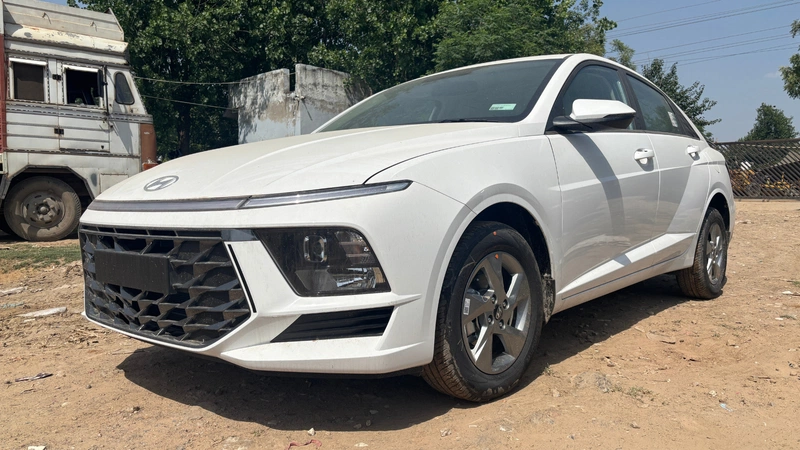
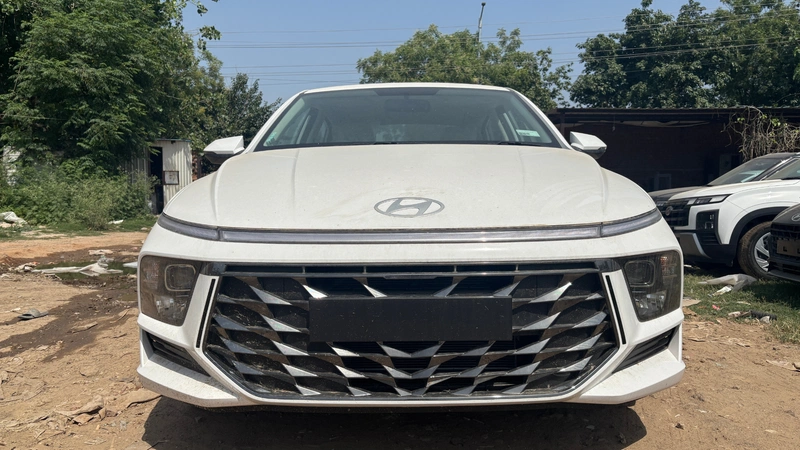
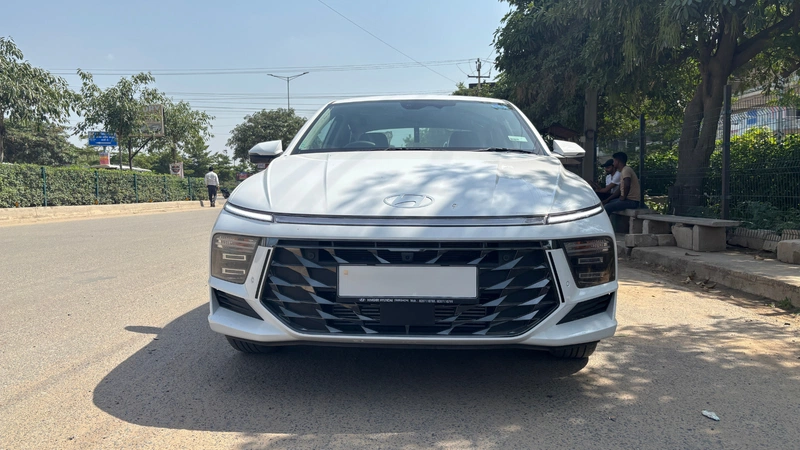
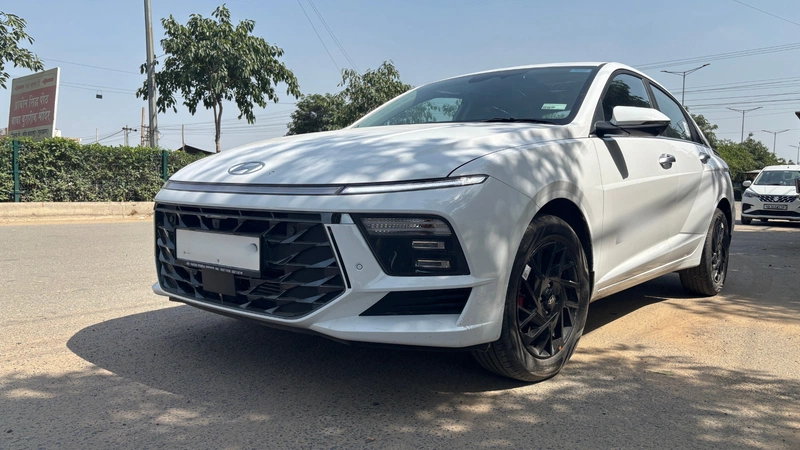
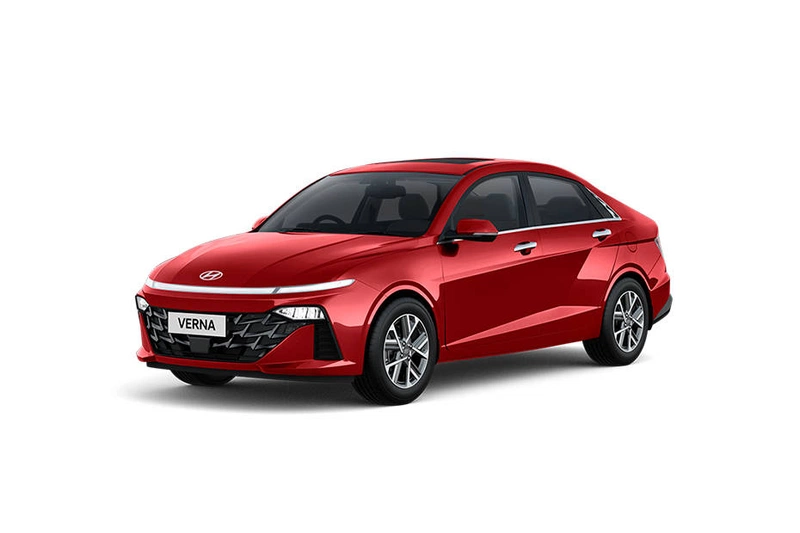
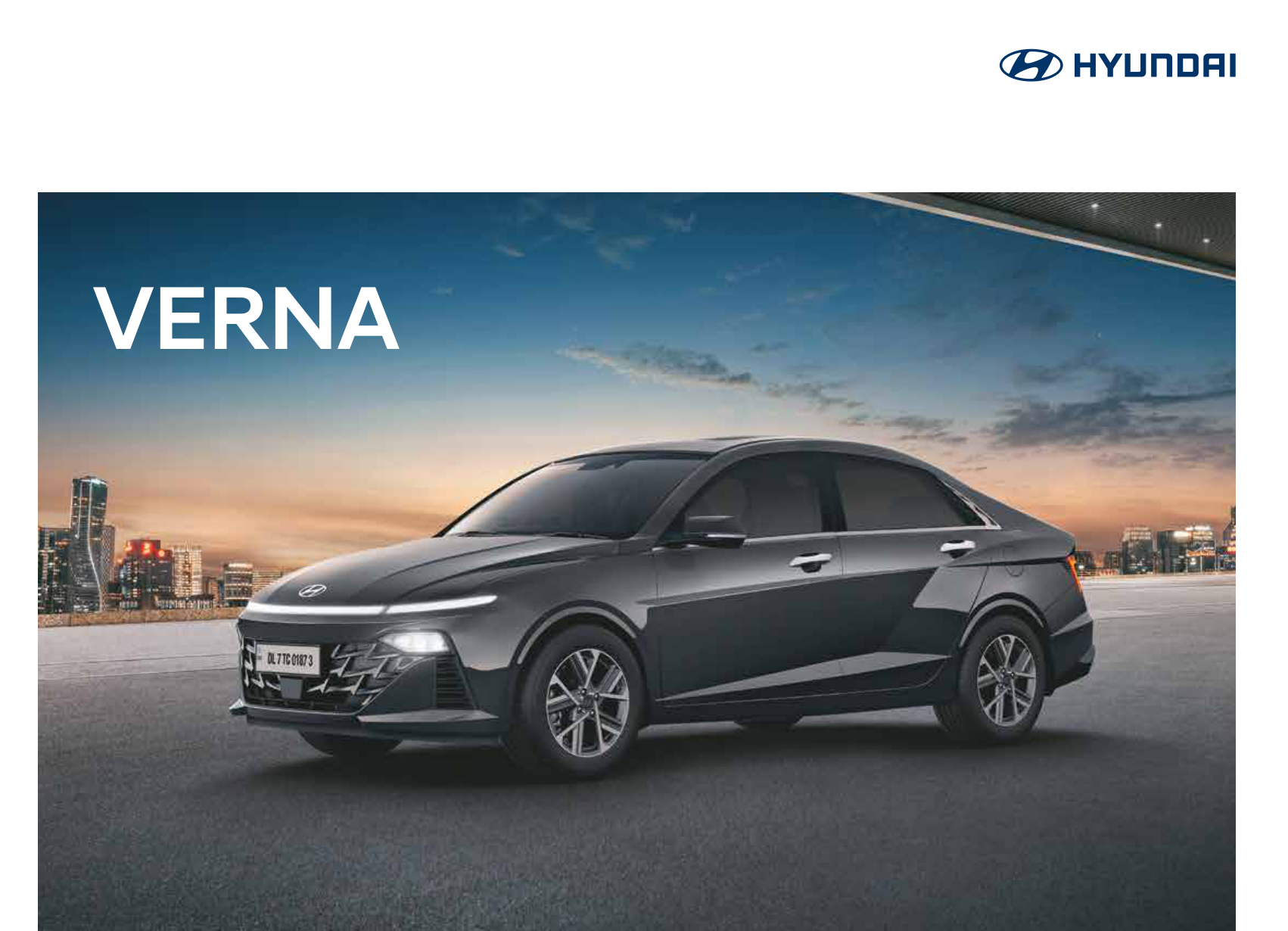
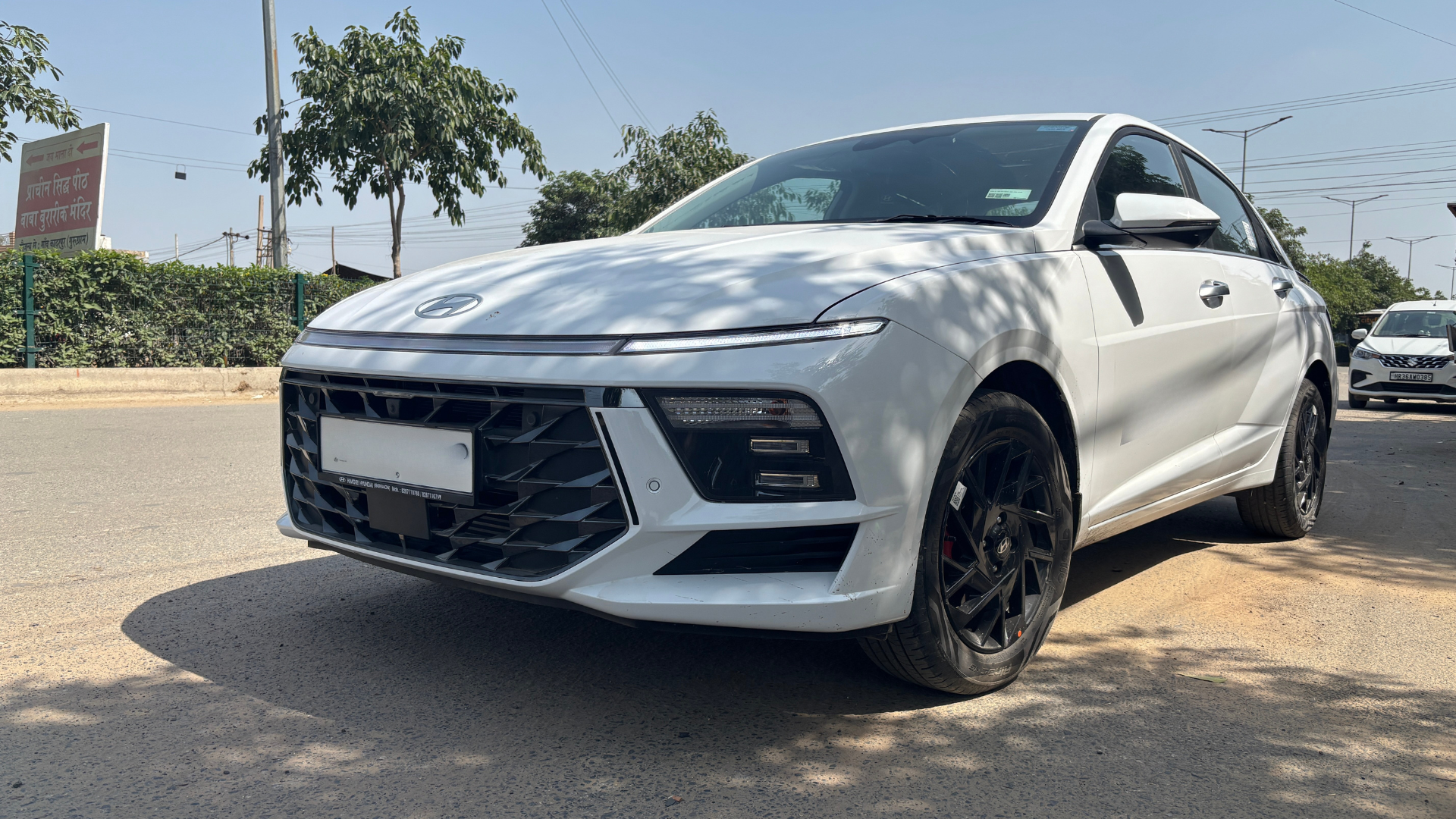
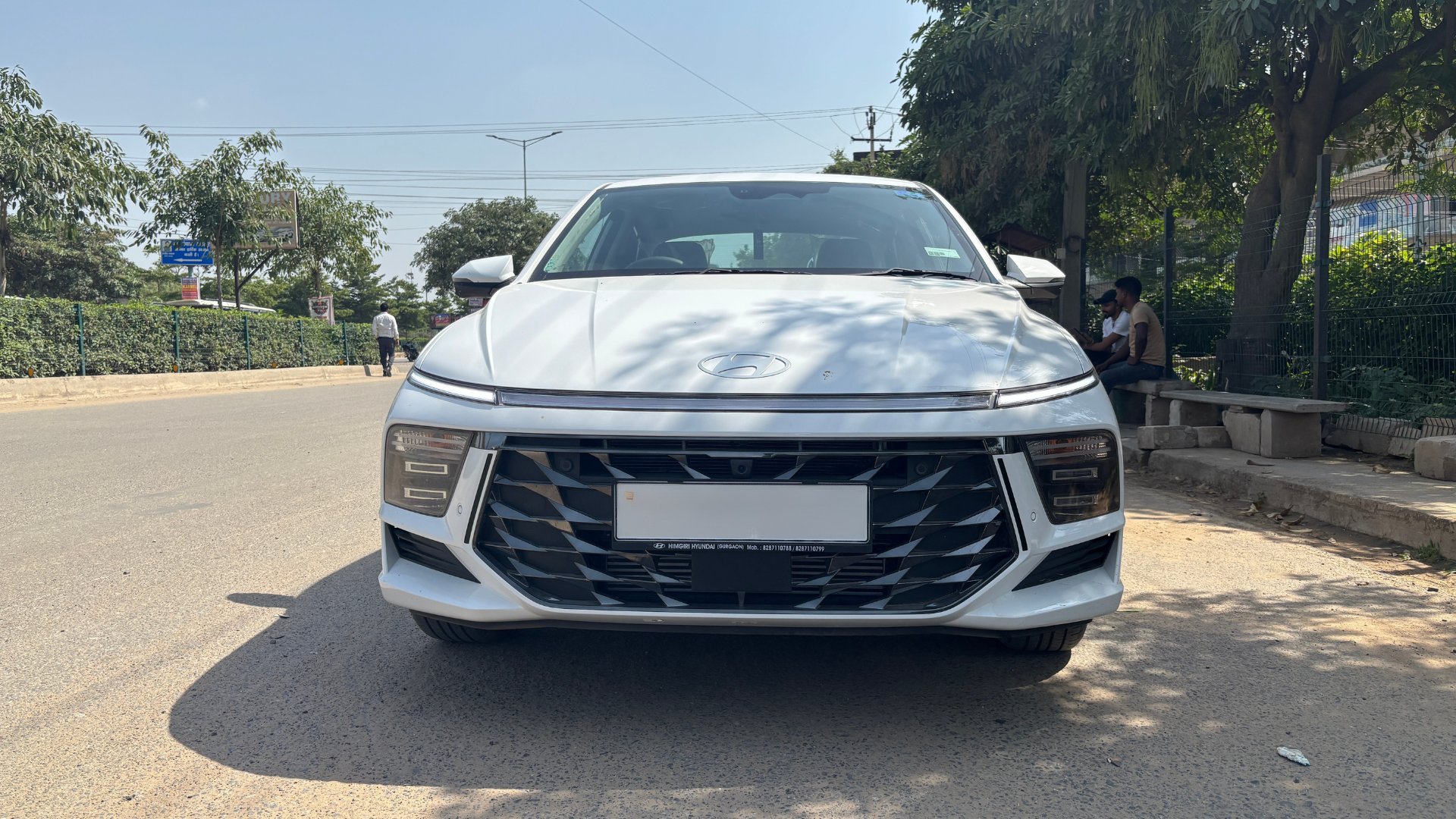
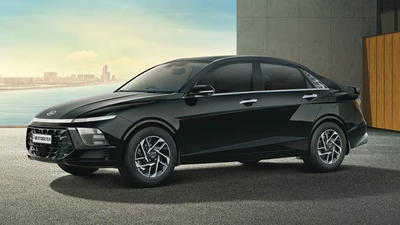
Anyway, that front fascia has been an issue for the current generation of Hyundai Verna, and the manufacturer has finally addressed it with a redesigned front look which does a good amount of justice to the “Verna” nameplate.
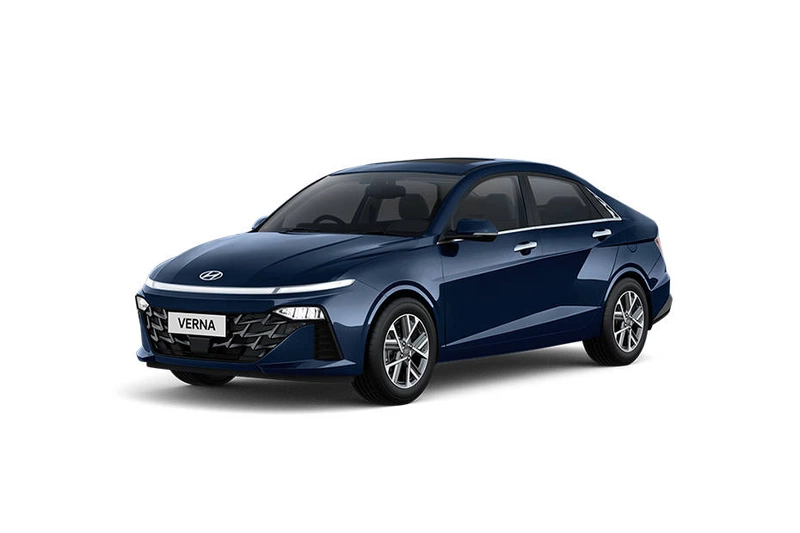
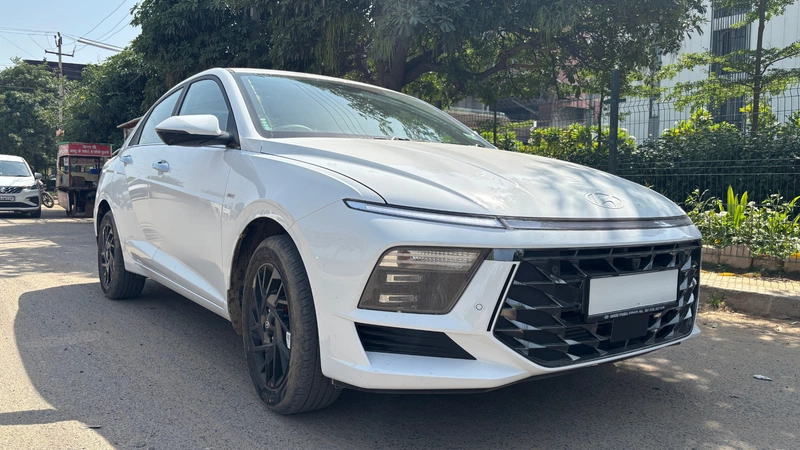
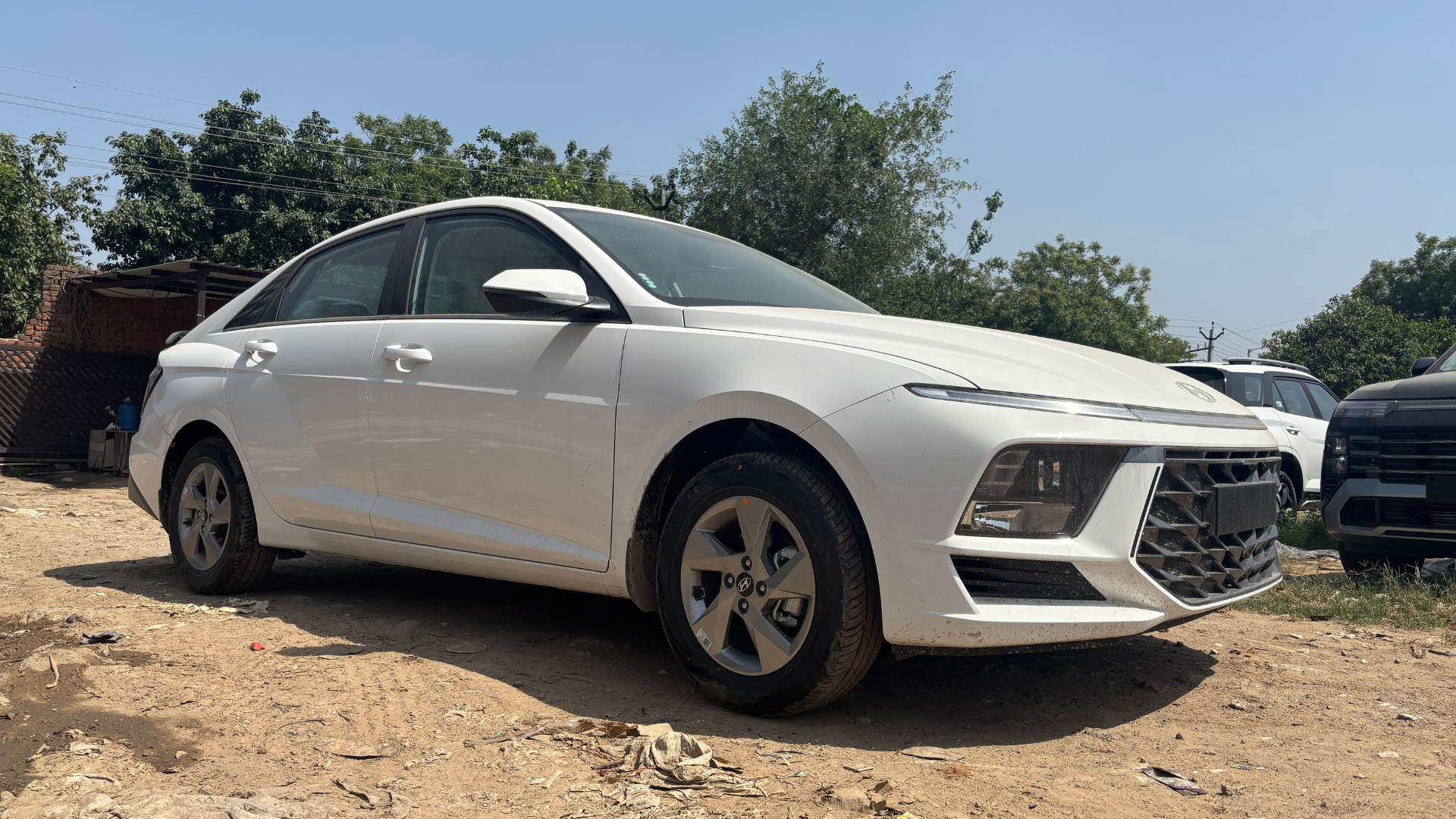
The headlamp design has been improved a lot, to the level that it doesn’t look out of place anymore, and feels way more organized and premium than before. The grille still looks a bit too large but now it’s more aligned to its higher siblings i.e., Sonata & Elantra, making it look more presentable.
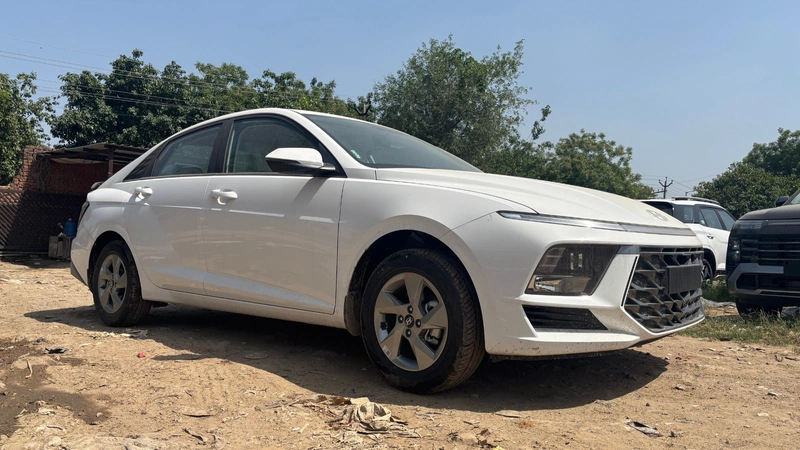
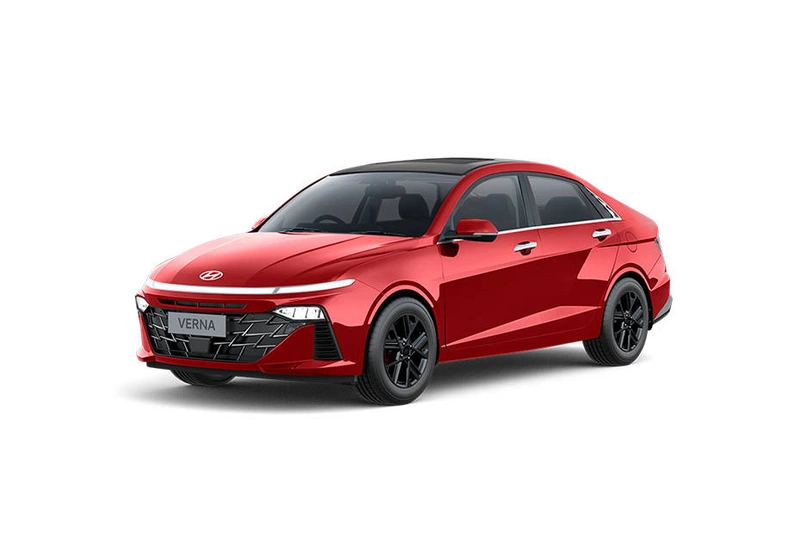
On the sides, things largely are the same, since a basic facelift doesn’t really do any major updates to the overall silhouette. The only noticeable difference is the set of alloys you get in the top-trims, which come with a better design than before in my opinion.
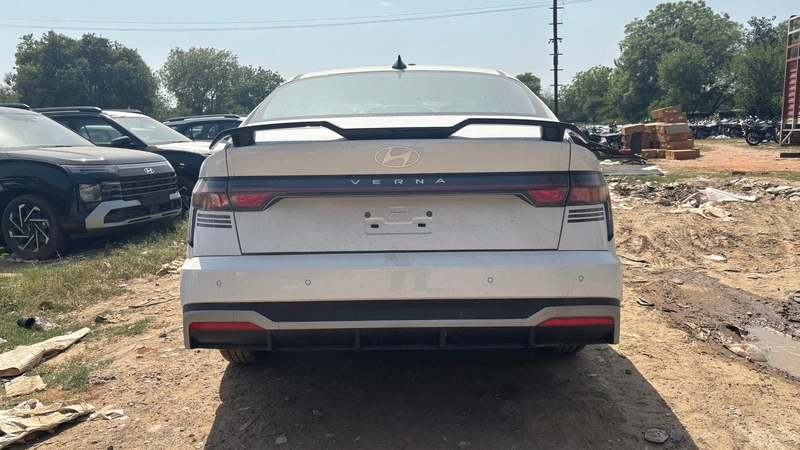
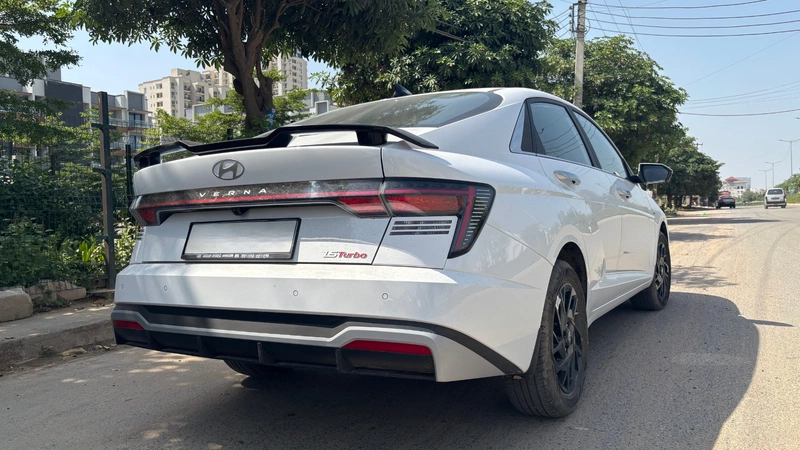
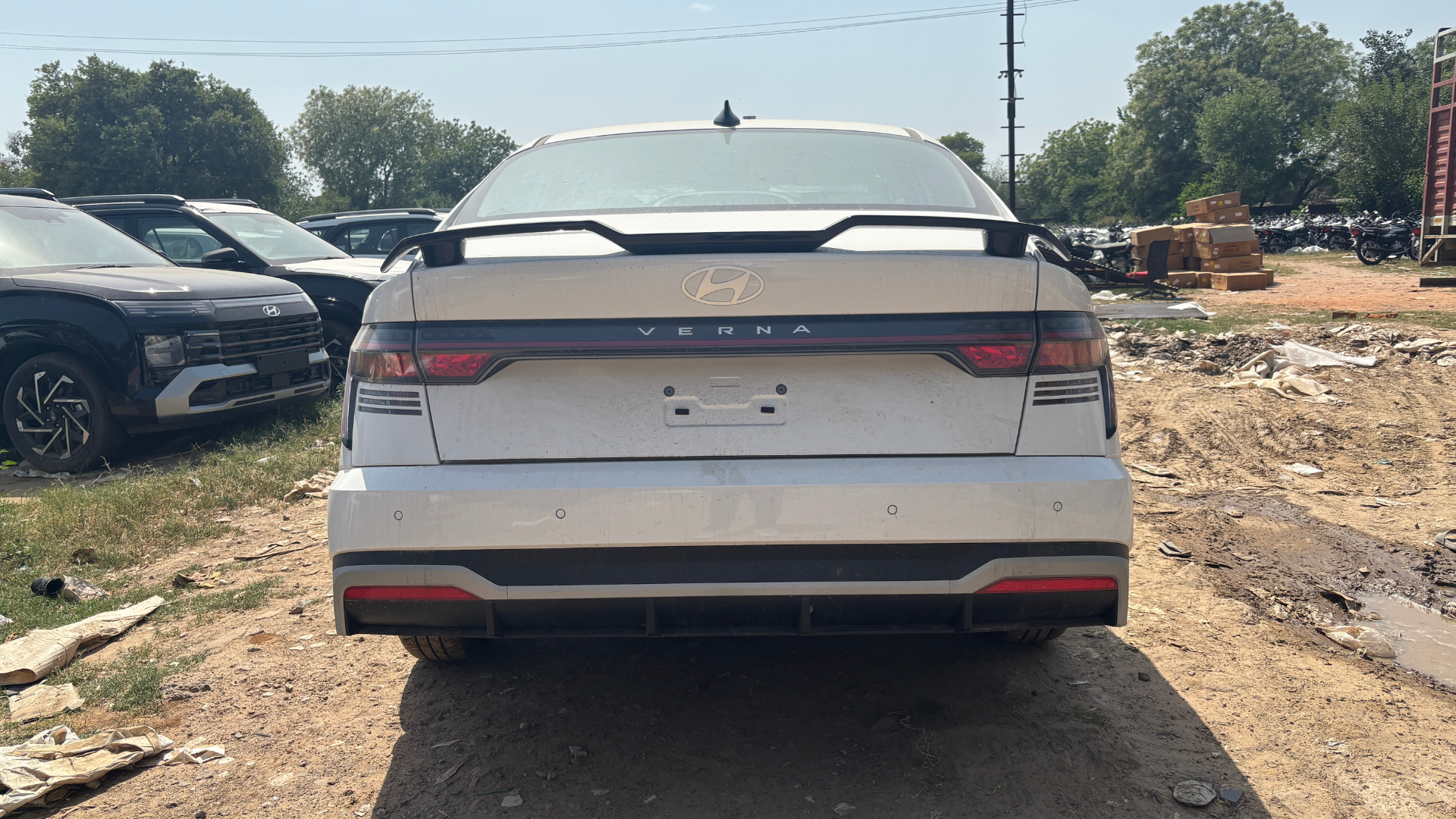
Don’t expect major changes at the back either, it already looked good in this 6th generation of Verna and now it looks a little bit better as Hyundai has added a contrasting silver lining between the bumper and the diffuser making it look a bit more aggressive.
The lighting setup should’ve been improved however, a full LED setup of tail-lamps, turn-indicators and reverse lamps would’ve achieved a next level premiumness in the segment.
Here's the current-generation (2026 facelift) Hyundai Verna dimensions:
| Dimension | Specification |
|---|---|
| Length | 4,565 mm |
| Width | 1,765 mm |
| Height | 1,475 mm |
| Wheelbase | 2,670 mm |
| Ground Clearance | 165 mm |
| Boot Space | 528 litres |
| Fuel Tank Capacity | 45 litres |
safety
safety
Let's talk about the part that actually matters more than horsepower numbers or infotainment screens, because no amount of Bose speakers will save you in an accident.
The Verna carries a five-star Global NCAP rating for both adult and child occupant protection, and it's under the newer, tougher protocol, not some outdated test that half the cars on Indian roads got their five stars under a decade ago. That puts it among the safest cars sold in India right now, sedan or SUV, and this isn't marketing spin, it's independently verified.
With the facelift, you get six airbags as standard across the range, with a seventh thrown in on the higher trims. ABS with EBD, electronic stability control with vehicle stability management, hill start assist, tyre pressure monitoring, ISOFIX mounts, rear parking sensors and disc brakes on all four wheels (finally, on some variants at least) are all part of the package.
Hyundai loves to tell you the Verna has "seventy-five plus safety features," and look, I'm not going to pretend that number means anything real. It's a marketing flex more than a spec sheet. But strip away the number and the substance underneath is genuinely there.
The Level 2 ADAS suite gives you adaptive cruise control, forward collision warning and avoidance, and lane keeping assistance. On a clean, well-marked highway, it's a genuine fatigue reducer, and I found myself actually relaxing on a long drive because of it. Inside city traffic though, switch it off and pay attention yourself, because no camera is reading the mind of the two-wheeler that's about to cut you off from nowhere.
What actually earns its keep every single day is the stuff this facelift added. The surround-view camera isn't just there to look fancy on the screen, it's sharp and genuinely useful when you're squeezing into a tight parking spot. The blind view monitor throwing the adjacent lane onto your instrument cluster the moment you indicate has already saved me from a lane change I probably shouldn't have made. And the factory dashcam quietly recording everything ahead is the kind of thing you don't appreciate until the day some idiot rear-ends you and then tries to argue it was your fault.
competition
competition
Honda City
The Honda City is the obvious rival, and the more sensible, buttoned-up choice if that's your thing. It's been recently updated too, and its naturally aspirated engine is known for outstanding refinement and the kind of long-term durability owners brag about at service centres.
The hybrid variant genuinely transforms your city fuel bill in a way nothing on this list can match, its rear seat handles three adults better, and resale values remain the strongest in the segment. What it doesn't have is a turbo, so if you want performance, you're out of luck, and its cabin tech and feature list trail visibly behind the Verna's.
For a high-mileage city buyer, the hybrid City might genuinely be the smarter car overall. For anyone chasing outright performance or the longest feature list, though, the Verna takes this one.
VW Virtus & Skoda Slavia
The Volkswagen Virtus and Skoda Slavia are the ones to test drive if you actually care about how a car feels through your hands and not just how it looks on paper. Sharper steering, real feedback, firmer damping that pays off at speed on rough roads, and a structural solidity you can genuinely feel when you shut the door.
They've got their own five-star crash credentials and their own 1.5 turbo with cylinder deactivation. They're the more engaging cars to drive quickly, no argument there. What they trade away is low-speed ride comfort, feature count, cabin tech, air conditioning performance (a genuinely underrated Indian-market priority), and dealer reach, and their resale numbers lag behind Hyundai's.
Everyone I know who's cross-shopped all three lands on the same conclusion: the Verna is quicker and more comfortable, the Germans are more involving, and the decision just comes down to which of those two things you actually care about.
Hyundai Creta
Here's the honest bit though: the Verna's real competition isn't even a sedan. Buyers with eighteen lakh rupees to spend are walking straight past this car and into a midsize SUV showroom, and a lot of them are ending up at the Creta, literally sitting in the same Hyundai showroom.
Against that, the Verna genuinely offers better ride comfort, a much bigger boot, a more powerful engine, better high-speed composure, and a lower centre of gravity that makes it safer in a sudden emergency manoeuvre.
What it can't give you is ground clearance, the easy step-in height older passengers want, or the commanding seating position Indian buyers have clearly decided they can't live without. If none of that bothers you, this is the best car you can buy at this price, full stop.
final verdict
final verdict
If you've made it this far, you already know where this is going. The Verna is, right now, the most complete midsize sedan you can buy in India, and the facelift has closed pretty much every gap rivals used to poke fun at it for.
The turbo engine is the most powerful and among the most refined in its class. The ride is the best balance of comfort and control I've found in this segment for Indian roads, which, if you've read the previous sections, you'll know isn't a compliment I hand out lightly. The boot is genuinely massive. The cabin feels well put together, generously equipped, and stays quiet even when you're pushing it.
The crash rating is a documented five stars, not a "trust me bro" five stars. And things that were embarrassingly missing before, driver assistance, the surround-view camera, the blind view monitor, wireless connectivity, are all standard fare now.
Buy this if you want a quick, comfortable, thoroughly equipped sedan with a genuine five-star crash rating and a boot that swallows a family's worth of luggage, and if you've already decided you don't want an SUV. Skip it if you regularly carry three adults in the back, need a diesel or hybrid, or care more about steering feel than anything else on this list.
For the buyer this is actually built for, it's the most complete car in its category, and honestly, the fact that this category keeps shrinking says a lot more about where Indian car buying is headed than it does about the Verna itself.
Hyundai Verna News

Hyundai Verna FAQs
What is the mileage of the Hyundai Verna 2026?
−The naturally aspirated petrol returns around 18.6 to 20.6 kmpl on paper. The turbo drops to single digits in heavy city traffic but climbs to 17-18 kmpl if you're gentle with it on the highway.
Does the Hyundai Verna have a diesel option?
+No. The current facelift only offers two 1.5-litre petrol engines, naturally aspirated and turbo. There's no diesel anymore, which stings for buyers who came to the Verna specifically for that.
What is the ground clearance of the Hyundai Verna facelift?
+165mm. Enough for regular Indian roads and speed breakers, though not something you'd call generous next to a compact SUV.
Is the Hyundai Verna automatic worth buying?
+The NA-CVT is smooth, predictable, and barely feels underpowered day to day. The turbo-DCT is quicker and more fun but comes with a real question mark on long-term gearbox durability and higher city fuel bills
How many airbags does the Hyundai Verna have?
+Six airbags as standard across the range, with a seventh on higher trims.
How many airbags does the Verna have?
+Six airbags are standard across all variants. The top variant adds a centre side airbag, bringing the total to seven.
What is the boot space of the Hyundai Verna?
+528 litres, among the largest in its segment, with a low boot lip that makes loading heavier bags easier.
Hyundai Verna vs Honda City, which one should I buy?
+The City wins if you want a hybrid and the best long-term reliability. The Verna wins if you want more power, a bigger feature list, and a genuinely comfortable ride.
What is the on-road price of the Hyundai Verna in India?
+Ex-showroom prices run from roughly Rs 11 lakh to Rs 18.41 lakh depending on the engine and trim, with the on-road figure typically running 12-15% higher depending on your city and state.
What is the mileage of the Hyundai Verna?
+The Verna delivers (manual) and up to (automatic) as per ARAI. Real-world mileage ranges from depending on conditions.
Is the Hyundai Verna available in petrol, CNG, electric or diesel engines?
+The Verna is currently available with Petrol engines.
What is the current ex-showroom price of the Hyundai Verna?
+The current ex-showroom prices start at and go up to , depending on the variant.
How many variants does the Verna come in, and what are their names?
+The Hyundai Verna is available in 22 variants: HX10 iVT, HX10 iVT DT, HX10 Turbo DCT, HX10 Turbo DCT DT, HX2, HX4, HX6, HX6 DT, HX6 iVT, HX6 iVT DT, HX6 Plus, HX6 Plus DT, HX6 Plus iVT, HX6 Plus iVT DT, HX8, HX8 DT, HX8 iVT, HX8 iVT DT, HX8 Turbo, HX8 Turbo DCT, HX8 Turbo DCT DT and HX8 Turbo DT. It offers transmission options.
What is the engine capacity, power, and torque of the Verna?
+It has a engine that produces and of torque.
What are the key safety features in the Verna ?
+The Verna comes equipped with several safety features including Anti-lock Braking System (ABS), Central Locking, Electronic Brakeforce Distribution (EBD), Electronic Stability Control (ESC) and Hill Assist.
What are the boot space and dimensions of the Hyundai Verna?
+The Verna offers 528 Litres of boot space. Its dimensions are 4565 mm in length, 1765 mm in width, and it has a wheelbase of 2670 mm.
Which features are available in the top model of the Verna (touchscreen, camera, cruise control, etc.)?
+The top HX10 Turbo DCT DT variant includes .
What is the standard warranty on the Verna, and what are the average service costs?
+Hyundai offers a warranty. Annual service costs range between .
What colours does the Hyundai Verna come in?
+The Hyundai Verna is available in the following colours: .
Which variants of the Hyundai Verna have a sunroof?
+variant of Hyundai Verna is having sunroof
Is the Hyundai Verna available in petrol, CNG, electric or diesel engines?
+The Verna is currently available with Petrol engines.
What are the key safety features in the Verna ?
+The Verna comes equipped with several safety features including Anti-lock Braking System (ABS), Central Locking, Electronic Brakeforce Distribution (EBD), Electronic Stability Control (ESC) and Hill Assist.
What are the boot space and dimensions of the Hyundai Verna?
+The Verna offers 528 Litres of boot space. Its dimensions are 4565 mm in length, 1765 mm in width, and it has a wheelbase of 2670 mm.
What colours does the Hyundai Verna come in?
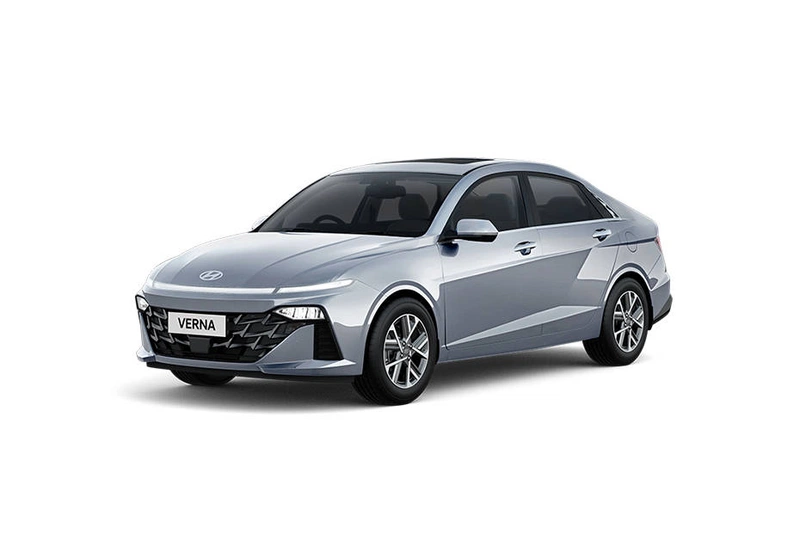
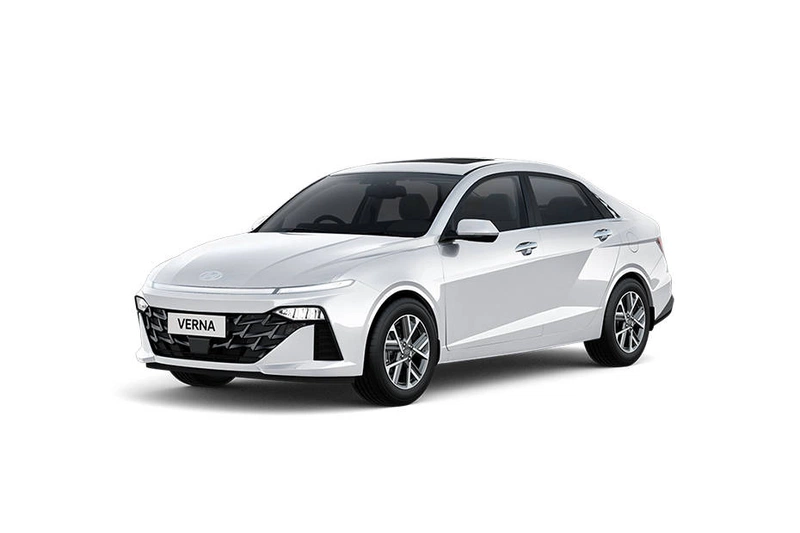
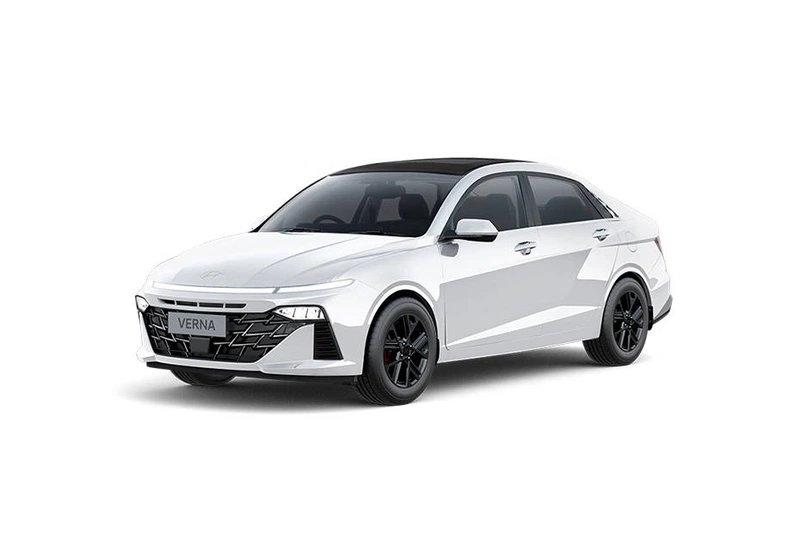
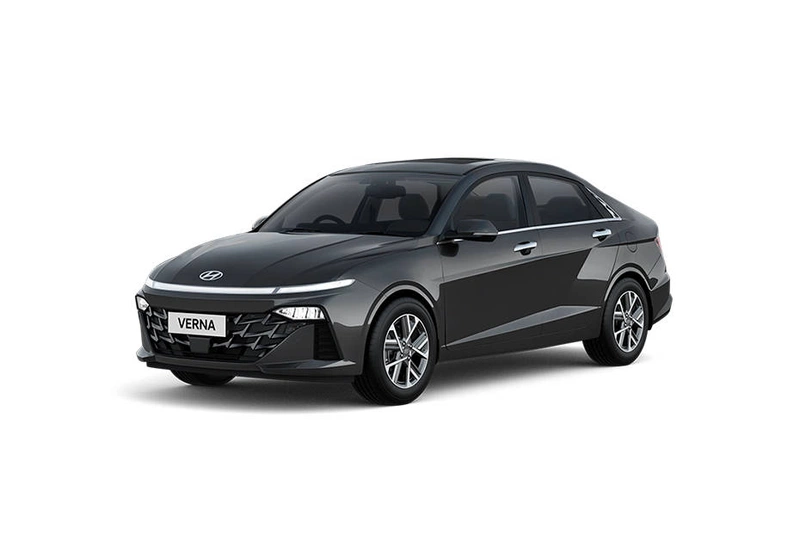
+The Hyundai Verna is available in the following colours: Fiery Red Dual Tone, Fiery Red, Typhoon Silver, Atlas White, Atlas White With Abyss Black, Titan Grey, Tellurian Brown and Abyss Black.