Unsafe Cars in India: Avoid These Models and Choose Safer Alternatives
By Salil Kumar
Updated June 11, 2026
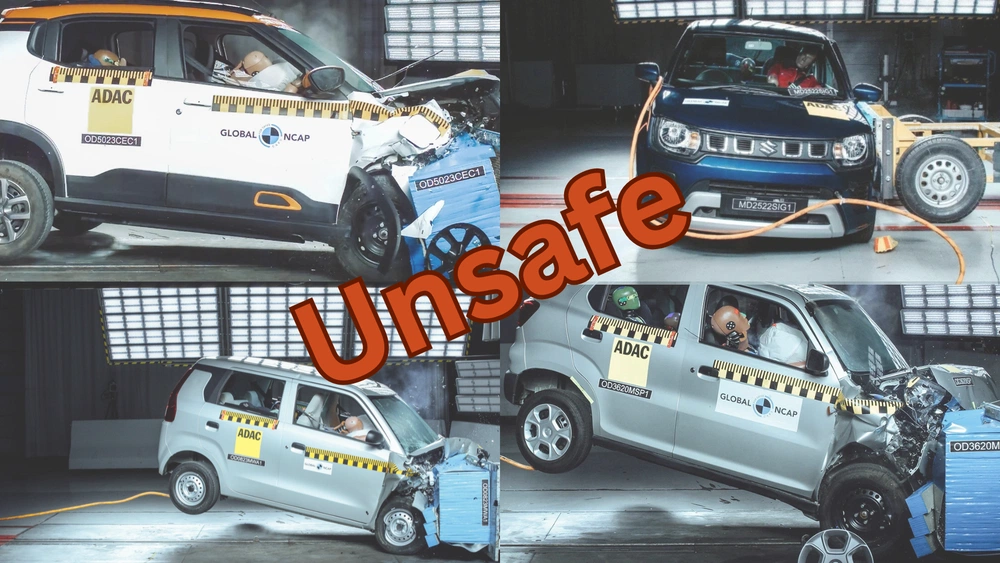
When we buy a car, we're investing in freedom, convenience, and a safe way to transport our loved ones. Unfortunately, not all cars sold in India are built with the same high regard for your well-being. Crash tests, particularly by Global NCAP (GNCAP), have revealed that some of our most popular and affordable models offer alarmingly poor protection.
A common and critical finding is an "unstable bodyshell." This means the car's fundamental structure collapses on impact, making severe injuries far more likely, regardless of other features.
Also Read- Safest Cars In India To Buy in 2026
Why 6 Airbags Don't Automatically Make a Car Safe
You'll see many cars advertised with "6 Airbags" as the main safety highlight. While airbags are crucial, they are a passive safety system. Think of them as the soft cushions inside a box. If the box itself (the car's body shell) is weak and collapses in a crash, the cushions can't protect what's inside.
Safety starts with a stable structure. This is the car's skeleton, built from high-strength steel, and designed to absorb and redirect impact energy away from the passenger cabin. If the bodyshell is rated "unstable," it means the steering wheel, pedals, and dashboard can be pushed into the cabin, causing severe injuries before the airbag can even do its job properly.
Airbags are a supplemental restraint system; they work with seatbelts and a strong body, not instead of them. A car with 2 airbags and a 5-star stable structure can be far more safer than a car with 6 airbags and a 1-star unstable structure.
| Car | Safety Rating |
|---|---|
| Kia Sonet | 1 Star |
| Suzuki Fronx | 1 Star |
| Citroen eC3 | 0 Stars |
| Maruti Suzuki S-Presso | 1 Star |
| Maruti Suzuki Wagon R | 1 Star |
| Maruti Suzuki Ignis | 1 Star |
| Renault Kwid | 1 Star |
| Maruti Suzuki Swift | 1 Star |
| Mahindra Bolero Neo (Pre-facelift) | 1 Star |
| Maruti Suzuki Alto K10 | 2 Stars |
| Hyundai Grand i10 Nios (2-Airbag) | 2 Stars |
| Suzuki Baleno (2-Airbag) | 1 Star |
| Suzuki Baleno (6-Airbag) | 2 Stars |
| Maruti Suzuki Ciaz | 1 Star |
| Maruti Suzuki Celerio | 3 Stars |
Kia Sonet 1 Star GNCAP
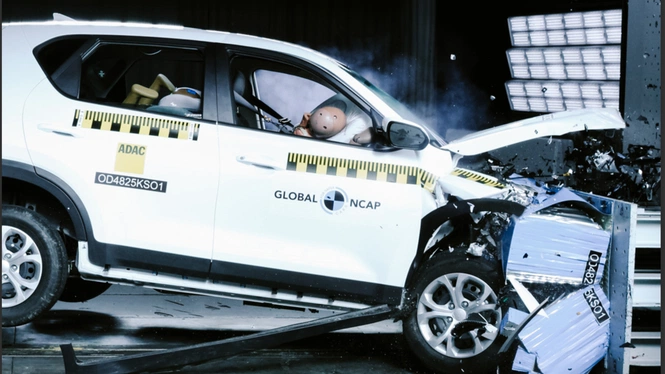
The Kia Sonet secured a disappointing 1-star Adult Occupant Protection rating and 3-star Child Occupant Protection rating in the latest Global NCAP crash test. The SUV scored 21.29 out of 34 points for adult safety and 28.57 out of 49 points for child safety.
While protection for the driver's and passenger's head and neck was rated good in the frontal crash test, chest, knee and leg protection varied between adequate and marginal.
The report highlighted that the footwell area was unstable, while the bodyshell was also rated unstable and incapable of withstanding further loadings. Side impact chest protection was rated poor, and the absence of standard side curtain airbags and ESC impacted the overall score.
This test was conducted by South African GNCAP, but the same car is sold in India as per their test report.
Safer Alternative- Kylaq, Brezza, Nexon, Mahindra 3X0
Suzuki Fronx
This is may not have Maruti in front of it but its pretty much the same car sold in Australia, They crash tested it and the result was pretty unnerving, The Fronx scored a poor 1 star crash test rating.
During ANCAP’s full width frontal test, the rear passenger seatbelt retractor of the Suzuki Fronx failed, resulting in an uncontrolled seatbelt
release where the rear dummy became unrestrained, allowing it to strike the rear of the front seat.
Sadly, we cannot even recommend the badge-engineered Toyota variant, aka Taisor, as it is also based on similar architecture and is unsafe. We suggest you abandon this crossover segment entirely and go for the Brezza, or you can wait for the Fronx facelift, which will be released in a few weeks’ time, and pray that it gets a decent BNCAP rating.
Citroen eC3 (GNCAP Rating: 0 Stars Adult, 1 Star Child)
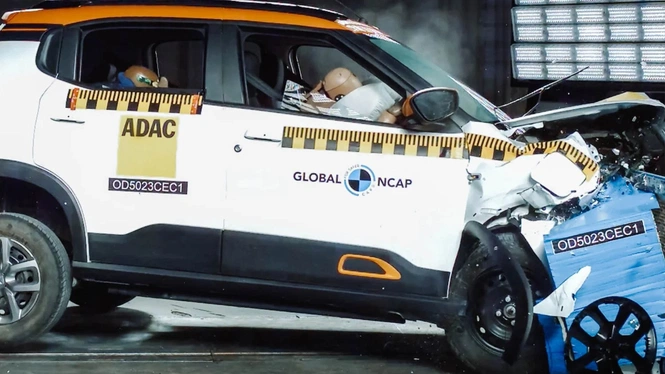
Starting at ₹12.90 Lakh, this EV's 2023 GNCAP test was shocking, returning a zero-star rating for adult protection. This was despite being a modern EV. Testers cited an unstable bodyshell and poor protection for the driver's and passenger's chest and knees. It's a stark reminder that a high-tech powertrain does not equal modern structural safety.
Safer Alternative: The Tata Punch.ev (5-star BNCAP) or Tata Nexon.ev (5-star BNCAP) are both 5-star rated electric alternatives.
Maruti Suzuki S-Presso (GNCAP Rating: 1 Star Adult, 0 Stars Child)
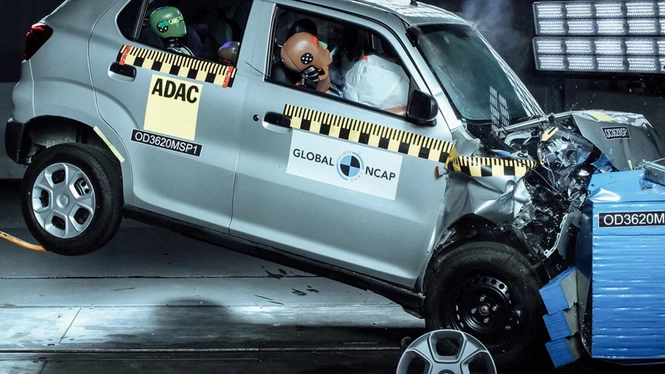
This micro-SUV, starting around ₹3.50 Lakh, has shown poor safety performance. Its 2023 test resulted in a one-star adult rating and zero stars for child safety, making it a high-risk choice for families. The bodyshell was rated as unstable.
Safer Alternative: The Tata Punch (starts at ₹5.50 Lakh) is a direct rival with a proven 5-star GNCAP rating and a stable bodyshell.
Maruti Suzuki Wagon R (GNCAP Rating: 1 Star Adult, 0 Stars Child)
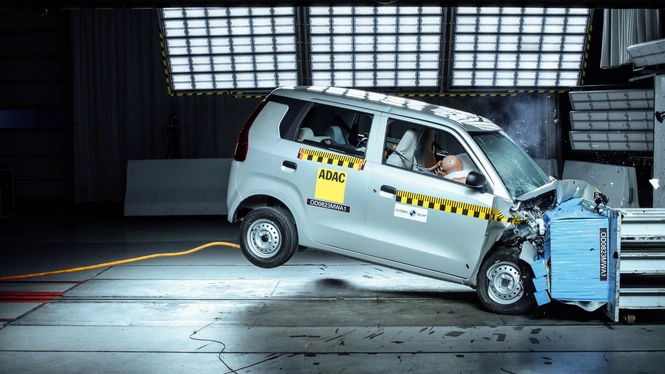
This bestseller, starting at ₹4.99 Lakh, is a practical choice for many, but its 2023 GNCAP test was deeply concerning. It scored just one star for adult safety and zero for child safety, with an unstable bodyshell and weak chest protection for the driver.
Safer Alternative: The Tata Punch (starts at ₹5.50 Lakh) offers 5-star safety and a similar tall-boy stance, while the Hyundai Exter (6 airbags standard) is a better-equipped choice.
Maruti Suzuki Ignis (GNCAP Rating: 1 Star Adult, 0 Stars Child)
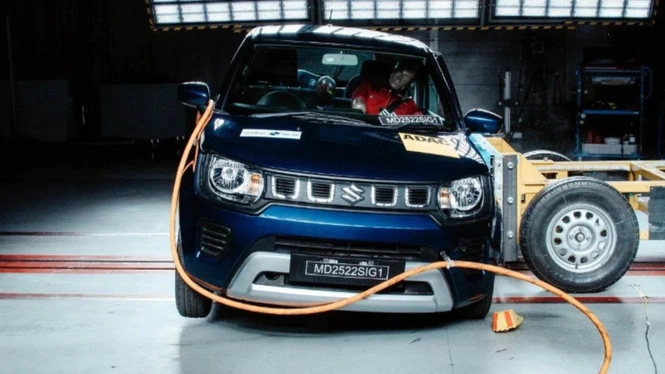
Sold as a premium "Nexa" product, the Ignis (starting at ₹5.35 Lakh) received a one-star adult and zero-star child rating in its 2022 test. It showed poor protection for the driver's chest and knees, and the bodyshell was rated as unstable.
Safer Alternative: The Tata Tiago (starts at ₹5.54 Lakh) is a 4-star GNCAP-rated alternative or consider the 5-star rated Tata Punch.
Renault Kwid (GNCAP Rating: 1 Star Adult, 1 Star Child)
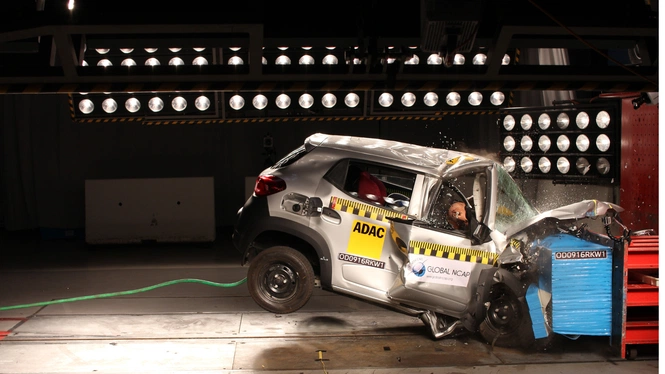
Another popular budget hatchback, the Kwid (starting at ₹5.76 Lakh) was tested in 2022 and received a one-star rating for both adult and child occupants. Testers noted an unstable structure and weak protection for the driver's chest.
Safer Alternative: The Tata Tiago (starts at ₹5.54 Lakh) provides a much more robust 4-star safety structure for a similar price.
Maruti Suzuki Swift (GNCAP Rating: 1 Star Adult, 1 Star Child)
The sporty and popular Swift (starts at ₹6.49 Lakh) received a disappointing one-star rating in its 2022 test. Both the bodyshell and footwell area were rated as unstable, posing a high risk of injury to the driver in a frontal crash
Safer Alternative: The Tata Altroz (starts at ₹6.30 Lakh) is a direct 5-star BNCAP-rated competitor, offering world-class structural safety. Its Nexa rival Baleno scored a 4 star rating in Japan, so its also on the table.
Mahindra Bolero Neo( Pref-acelift) (GNCAP Rating: 1 Star Adult, 1 Star Child)
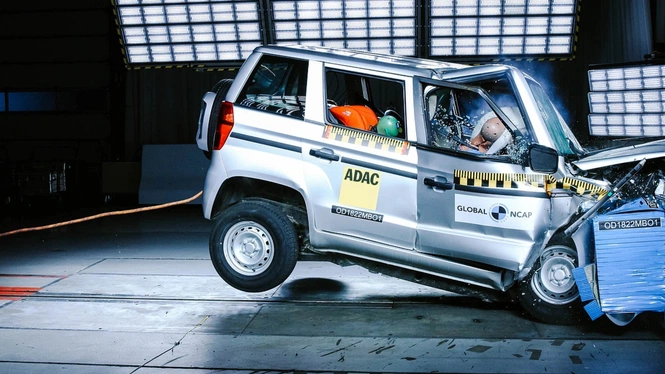
This rugged, body-on-frame SUV (starting at ₹8.49 Lakh) scored a surprisingly low one-star rating in its 2023 test. GNCAP noted an unstable structure, an unstable footwell area, and a risk of injury to the driver's chest and legs. We included this because now that's it will be replaced by the updated version, Mahindra will likely give high discounts making it entice but dangerous deal
Safer Alternative: The Mahindra XUV300 (5-star GNCAP) or Tata Nexon (5-star BNCAP) offer vastly superior monocoque-chassis safety.
Maruti Suzuki Alto K10 (GNCAP Rating: 2 Stars Adult, 0 Stars Child)
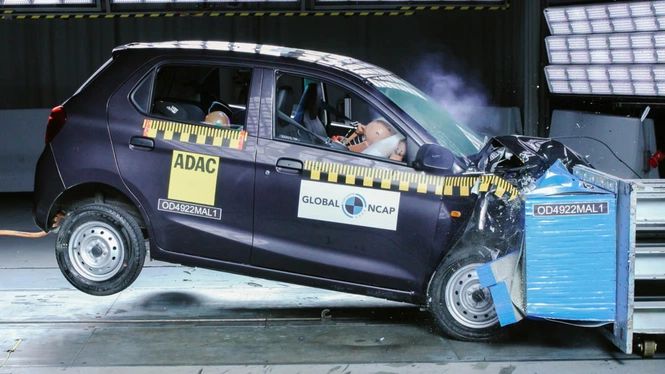
India's ubiquitous entry-level car, starting at ₹3.70 Lakh, scored a low two stars for adult protection and zero stars for child occupants in its 2023 test. The lack of 3-point seatbelts for all passengers and poor child restraint performance are major concerns.
Safer Alternative: The Tata Tiago (starts at ₹5.54 Lakh) offers a significantly safer 4-star GNCAP rating in a similar price bracket.
Hyundai Grand i10 Nios (2-Airbag Model) (GNCAP Rating: 2 Stars Adult, 2 Stars Child)
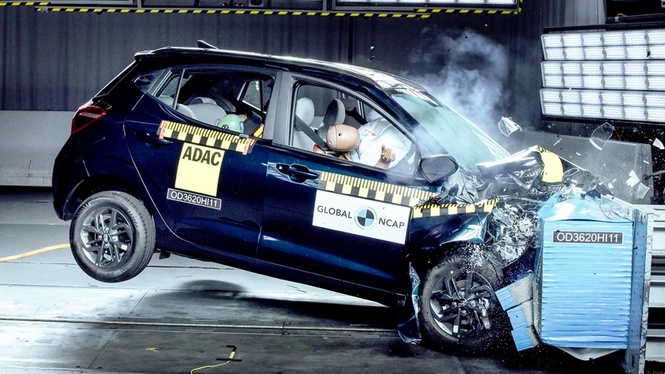
When GNCAP tested the common 2-airbag version in 2023 (starting around ₹5.92 Lakh), it returned a two-star rating. The car's structure was deemed unstable, and protection for the driver's chest was weak. While newer models come standard with 6 airbags, this rating highlights the risk of an unstable frame.
In December 2025 African NCAP gave the Grand i10 0 Stars which makes it even more avoidable than before. In fact, most of Hyundai's portfolio doesn't have the 5-star rating
Safer Alternative: The Tata Altroz (starts at ₹6.30 Lakh) is the 5-star benchmark in the premium hatchback segment.
Suzuki Baleno (2-Airbags Model - 1 Star) (6-Airbags Model - 2 Stars)
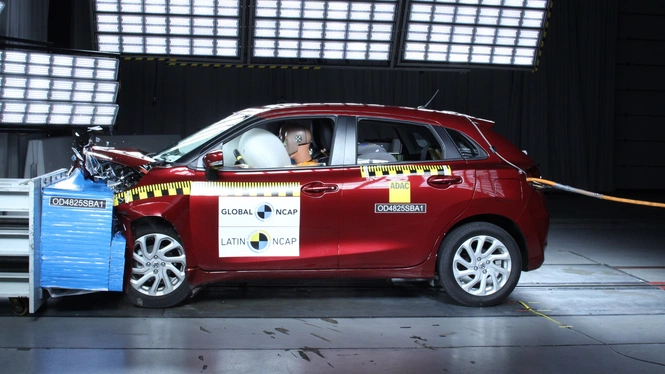
Latin NCAP (a sister program supported and co-founded by Global NCAP, to bring consumer crash testing to Latin America) recently tested the dual airbags and 6 airbags variants of the India-manufactured Suzuki Baleno (Starting from ₹5.99 lakh).
The dual airbags variant scored just 1 star, with 42.28% for Adult Occupant and 65.46% in Child Occupant Protection. The model was assessed in frontal impact, side impact, whiplash, pedestrian protection, and ESC. In the frontal crash test, the Baleno demonstrated a stable structure, accompanied by a stable footwell area, providing adequate protection to the driver and passenger chests.
The variant equipped with 6 airbags improved with a 2-star rating, achieving 79.38% in Adult Occupant Protection, while Child Occupant Protection remained unchanged at 65.46%. This variant was assessed in frontal impact, side impact, side pole impact, whiplash, pedestrian protection, and ESC. The added standard side body and curtain airbags ensured good protection to the head and adequate protection for the chest in both side impact scenarios.
It is worth noting that Latin NCAP has a more stringent scoring benchmark, and the Indian-spec Baleno, which comes with 6 airbags, ABS with EBD, ESP, and Hill-Hold Assist, would achieve a much higher rating if tested by Global NCAP standards. This is evident with the hatchback scoring 4 stars in Bharat NCAP.
Safer Alternative: The Tata Altroz (starts at ₹6.30 Lakh) is the 5-star benchmark in the premium hatchback segment.
Maruti Suzuki Ciaz 1 Star GNCAP
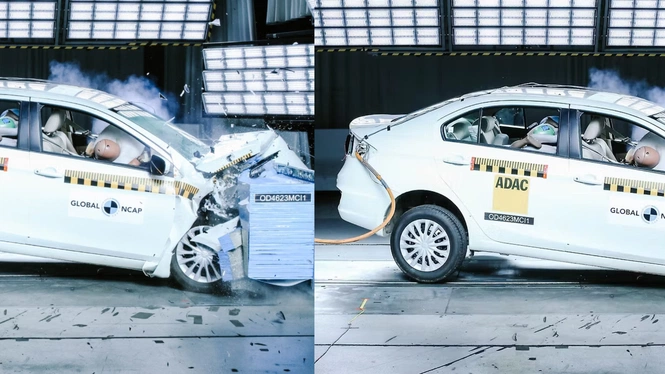
The discontinued but popular Maruti Suzuki Ciaz has received a 1-star Global NCAP rating for adult occupant protection, scoring 20.86 out of 34 points. This result highlights serious concerns about its crashworthiness by current standards. The bodyshell and footwell area were rated unstable, indicating the structure is unable to handle higher crash loads.
Driver protection for the chest and lower legs was assessed as weak, while rear occupant protection was also limited.
The child occupant protection score stood at 28.57 out of 49 points, translating to 3 stars, which is relatively better but still not class-leading. Despite standard features like dual airbags, ABS, and ESC, the Ciaz lacks side and curtain airbags, and its weak structural performance keeps it well behind newer rivals on safety.
Safer Alternatives to Maruti Suzuki Ciaz
Buyers looking for a safer midsize sedan should consider Skoda Slavia and Volkswagen Virtus with 5-star GNCAP ratings
Maruti Suzuki Celerio 3 Star GNCAP
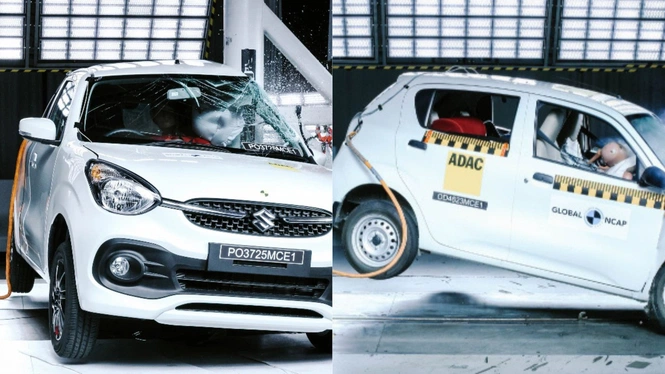
The updated Maruti Suzuki Celerio scored 3 stars for adult occupant protection, with 18.04 out of 34 points, and 2 stars for child occupant protection, scoring 18.57 out of 49 points, in Global NCAP tests. While this is an improvement over older versions, the results still point to average safety at best.
The bodyshell and footwell were again rated unstable, limiting protection during frontal impacts. Driver chest protection was marked as weak, and child occupant safety was affected by limited restraint performance. Even with six airbags, ESC, and ISOFIX mounts now offered as standard, the Celerio’s underlying structure prevents it from achieving higher safety scores.
Safer Alternatives to Maruti Suzuki Celerio
For buyers prioritising safety in the hatchback segment, the Tata Tiago is a clearly safer alternative, having earned 4-star Global NCAP ratings thanks to its stronger structure and better occupant protection. The Tata Punch is another standout option, achieving a 5-star adult occupant rating, making it one of the safest cars in its price range.
Also Read- Safest Cars Under ₹10 Lakhs
BNCAP VS GNCAP Which Is Better?
BNCAP is specifically designed for India, evaluating vehicles sold domestically and reflecting local road conditions, traffic scenarios, and vehicle variants. It conducts frontal offset crash tests at 64 km/h and side-impact tests at 50 km/h, scoring adult occupant protection and child safety out of 32 points, with additional points for airbags and seatbelt reminders.
GNCAP, on the other hand, tests vehicles globally, often using stricter protocols and assigning up to 34 points for adult occupant protection. It also includes pedestrian safety assessment, which BNCAP does not currently cover. For example, the Tata Punch scored 31.46/32 points for adult protection in BNCAP and 5 stars for adults and 4 stars for children in GNCAP, highlighting stricter global benchmarks.
Which cars sold in India have received a 5-star Global NCAP safety rating?
Several cars in India have achieved a 5-star rating from Global NCAP, demonstrating excellent safety for both adult and child occupants. These include the Tata Punch EV, which scored 5 stars for adult protection (31.46/34) and child protection (45/49), and the Tata Nexon, which also achieved 5 stars for adults and children.
The Mahindra XUV700 earned 5 stars for adult protection and 4 stars for child safety, while the Mahindra XUV300 achieved 5 stars for adults and 4 for children. Other 5-star rated models include the Volkswagen Virtus, Hyundai Verna, Tata Harrier, Tata Safari, Maruti Suzuki Dzire, and Nissan Magnite,
Table of Contents
- Why 6 Airbags Don't Automatically Make a Car Safe
- Citroen eC3 (GNCAP Rating: 0 Stars Adult, 1 Star Child)
- Maruti Suzuki S-Presso (GNCAP Rating: 1 Star Adult, 0 Stars Child)
- Maruti Suzuki Wagon R (GNCAP Rating: 1 Star Adult, 0 Stars Child)
- Maruti Suzuki Ignis (GNCAP Rating: 1 Star Adult, 0 Stars Child)
- Renault Kwid (GNCAP Rating: 1 Star Adult, 1 Star Child)
Join the Conversation
Trending
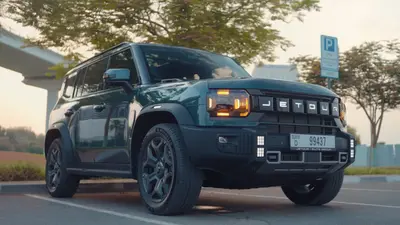
Five Chinese Cars That Could Shake Up the Indian Market
Chinese carmakers BYD, Denza and Jetour could bring five new SUVs, a luxury MPV and a high-performance electric grand tourer to India, with expected prices ranging from Rs 18 lakh to Rs 1.35 crore.
Anmol Kumar
October 23, 2026
Denza India Debut Set for November 13, Z9 GT and D9 Expected as First Models
Denza has confirmed its India entry, with the Z9 GT and D9 MPV expected as its first models. Prices could range from around Rs 90 lakh to Rs 1.5 crore, with no launch date announced yet.
Anmol Kumar
October 23, 2026
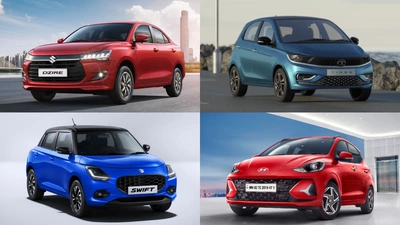
Top 10 Petrol Cars With Best Mileage You Can Buy
A list of the 10 most fuel-efficient petrol cars in India, including their claimed mileage, prices, engines and key features.
Arjun Nair
October 23, 2026
Featured
Citroen C3 Review: Who Should Consider This Car?
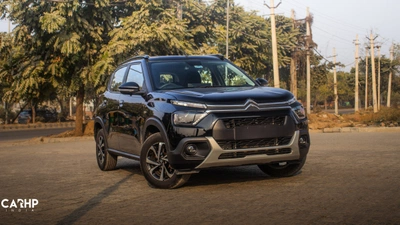
A few days ago, I took the Citroen C3X out for a spin in the city and on the highways. I travelled long distances and checked its fuel efficiency, features, comfort, and other factors. Today, I’ll briefly share my overall experience with the C3X and will tell you whether you should consider it or not and which is the most value-for-money variant of the lot.
Vatsal Agrawal
May 19, 2026
Tesla Finally In India Officially. Why Now And What Does It Mean For EVs?
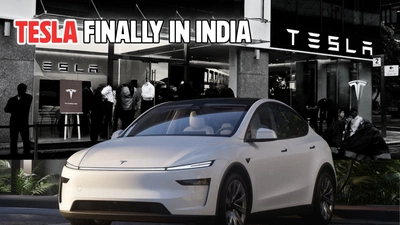
The much-anticipated 2025 Tesla Model Y has officially arrived in India, marking a pivotal moment for the nation's burgeoning electric vehicle market. Launched on July 15, 2025, the Model Y Juniper facelift offers cutting-edge technology, impressive range, and signature Tesla performance. Positioned as a premium electric SUV, its entry will intensify competition and reshape consumer expectations for EVs across the subcontinent.
Author
July 17, 2025
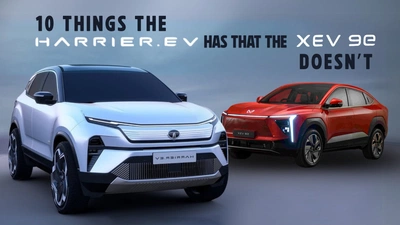
Here Are 10 Things The Harrier.EV Offers That The Mahindra XEV 9E Doesn't
The Harrier.EV is an incredible new offer from Tata. Its most popular competitor would be the Mahindra XEV 9E, priced similarly. With these two incredible offerings from home grown brands available, here is a list of everything the Harrier.EV offers that the XEV 9E doesn't.
Author
June 13, 2025
Write a comment
Comments
No comments yet. Be the first to comment!