Supreme Court Extends Third-Party Insurance for New Cars to 4 Years, Two-Wheelers to 6 Years
By Anmol Kumar
Published August 5, 2026
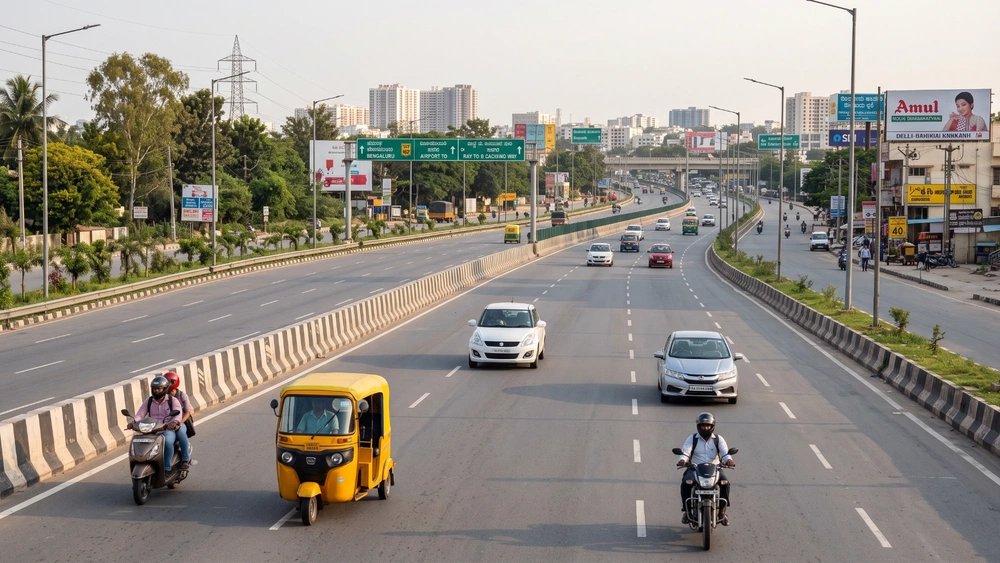
The Supreme Court has directed mandatory third-party insurance for new vehicles to be extended by one year, overriding recommendations from both IRDAI and the General Insurance Council. New cars must now carry four years of third-party cover and new two-wheelers six years, up from three and five years respectively since the court's 2018 order.
The bench of Justices Sanjay Karol and Prashant Kumar Mishra cited the reason plainly: eight years after the last mandate, nearly 56 per cent of vehicles on Indian roads remain uninsured, stating,
“While the Insurance Regulatory and Development Authority of India (IRDAI) and the General Insurance Council (GIC) have recommended that this period not be enhanced, we are of the view that it is in the interest of road safety that the period be enhanced by one year. Therefore, it is directed that henceforth, third-party insurance for four years for new cars and six years for new two-wheelers be required to be purchased. IRDA to immediately issue necessary directions.”
The ruling came while the court was hearing an appeal by National Insurance Company against a Telangana High Court order directing it to pay Rs 10 lakh to the family of a road accident victim. The insurer had disputed its liability on the ground that no additional premium had been paid to cover the personal risk of the vehicle owner. The apex court dismissed that appeal and directed the insurer to pay, cautioning courts handling accident claims against taking a "hyper-technical approach" on liability questions.
Also Read – Why Does Your Car’s Service History Matters During Insurance Claims and Renewals?
What this means for new vehicle buyers

The additional year of mandatory cover means new car and two-wheeler buyers will pay a higher upfront premium at the dealership. The court has directed IRDAI to issue implementing directions immediately, so revised terms are expected to apply to new policies going forward.
The court also directed that vehicle buyers be offered a four-tier insurance structure at purchase, covering mandatory third-party liability, optional passenger cover, personal accident cover for the owner, and own-damage cover.
Also Read – Government Releases Revised CAFE III Draft Norms For Public Consultation
ANPR cameras, police apps, and the fuel pump plan
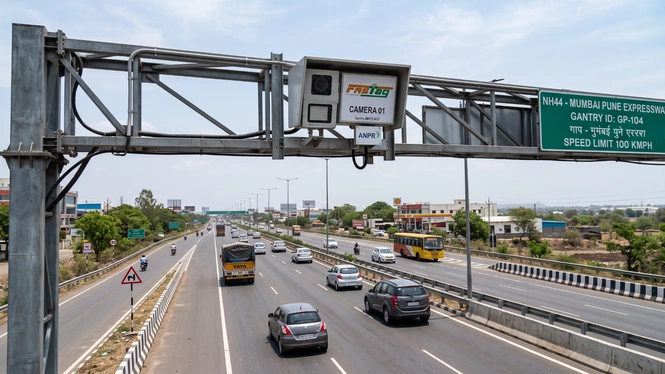
The court also directed that ANPR cameras on highways be integrated with insurance data from the Insurance Information Bureau and vehicle data on the VAHAN portal, enabling automatic e-challans for uninsured vehicles. State police are to be issued mobile applications linked to the same databases for real-time verification.
The more striking proposal is a pilot project to deny fuel at petrol pumps to uninsured vehicles. The Ministry of Petroleum and Natural Gas has reportedly given in-principle agreement. If implemented well, this could make insurance verification a passive, infrastructure-level process rather than one that depends on individual traffic stops.
The court has asked all stakeholders to file compliance affidavits by 14 August, with the matter listed again on 18 August.
Also Read – Unified Bharat e-Charge (UBC) Explained: India's Answer to the EV Charging App Problem
Image Source: Generated using Gemini
Table of Contents
- What this means for new vehicle buyers
- ANPR cameras, police apps, and the fuel pump plan
Join the Conversation
Trending
Best Diwali Offers On Most Popular Cars
Carmakers and dealers are rolling out festive deals. We pick the best Diwali 2026 offers on India's most popular cars and keep this list updated as new deals arrive.
Arjun Nair
October 3, 2026
Hyundai Navratri and Diwali Season Offers in October 2026
Hyundai India's October 2026 offers cover 11 models, with the Creta getting up to Rs. 1.15 lakh and the Alcazar up to Rs. 90,000. A Navratri Booking Bonus is new, while the Venue stays at Rs. 5,000.
Anmol Kumar
October 3, 2026
BYD Confirms Denza India Entry, Z9 GT and D9 Expected as First Models
Denza has confirmed its India entry, with the Z9 GT and D9 MPV expected as its first models. Prices could range from around Rs 90 lakh to Rs 1.5 crore, with no launch date announced yet.
Anmol Kumar
October 3, 2026
Featured
Citroen C3 Review: Who Should Consider This Car?
A few days ago, I took the Citroen C3X out for a spin in the city and on the highways. I travelled long distances and checked its fuel efficiency, features, comfort, and other factors. Today, I’ll briefly share my overall experience with the C3X and will tell you whether you should consider it or not and which is the most value-for-money variant of the lot.
Vatsal Agrawal
May 19, 2026
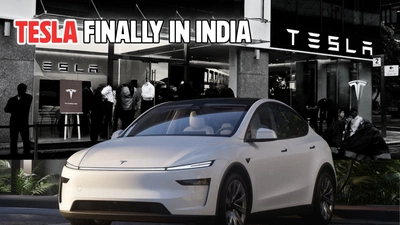
Tesla Finally In India Officially. Why Now And What Does It Mean For EVs?
The much-anticipated 2025 Tesla Model Y has officially arrived in India, marking a pivotal moment for the nation's burgeoning electric vehicle market. Launched on July 15, 2025, the Model Y Juniper facelift offers cutting-edge technology, impressive range, and signature Tesla performance. Positioned as a premium electric SUV, its entry will intensify competition and reshape consumer expectations for EVs across the subcontinent.
Charan Narain
July 17, 2025
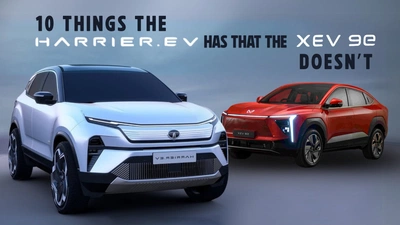
Here Are 10 Things The Harrier.EV Offers That The Mahindra XEV 9E Doesn't
The Harrier.EV is an incredible new offer from Tata. Its most popular competitor would be the Mahindra XEV 9E, priced similarly. With these two incredible offerings from home grown brands available, here is a list of everything the Harrier.EV offers that the XEV 9E doesn't.
Charan Narain
June 13, 2025
Write a comment
Comments
No comments yet. Be the first to comment!