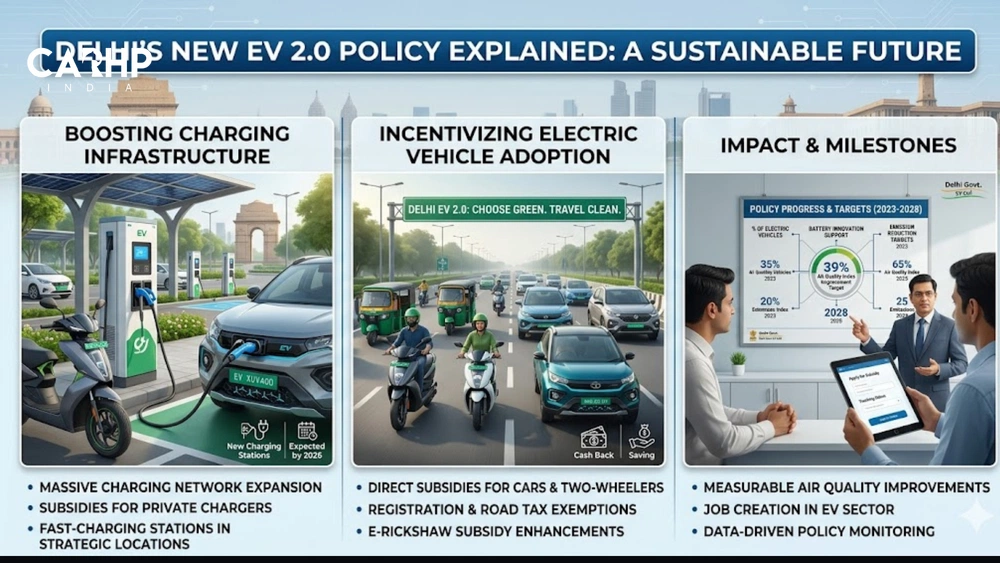
Delhis proposed new EV policy draft is the most ambitious and aggressive EV transitions I have seen. While the intent is clearly positive for the environment, the reality is that both infrastructure and consumer affordability may not yet be ready for such a rapid shift.
A transition of this scale needs strong groundwork, and right now that foundation still feels uneven.
I just hope EV Policy 2.0 does not end up repeating what happened with the E20 fuel rollout. That push, in many cases, felt rushed and poorly adapted to existing vehicles. Owners of pre-2023 cars, including myself, have had to deal with higher maintenance costs and compatibility issues linked to ethanol-blended fuel.
That experience shows what can happen when implementation moves faster than real-world readiness, and it raises valid concerns about whether this new EV push might face similar challenges if not executed carefully.
Below is everything that has been proposed under this new EV 2.0 which if passed will go into effect form 2027-28 onwards.
Ban on new petrol two-wheelers from April 1, 2028
Two-wheelers account for roughly 65 to 70 percent of Delhi’s total registered vehicles, which is why this rule targets them first. The draft EV Policy 2.0 proposes stopping all new petrol two-wheeler registrations from April 1, 2028, effectively making electric scooters the default option for future buyers. I
iportantly, this is not a blanket ban on usage, as over 1.2 crore two-wheelers currently registered in Delhi will continue operating until their lifecycle ends.
The policy aligns with Delhi’s broader target of achieving 80 percent EV share in new vehicle registrations by 2030, up from about 12 to 14 percent currently. The rule assumes that by 2028, EV two-wheeler prices will be near parity with petrol models due to falling battery costs and scale.
- 65 to 70 percent of Delhi vehicles are two-wheelers
- Ban applies only to new registrations from April 2028
- Over 1.2 crore existing two-wheelers remain unaffected
- Supports 80 percent EV adoption target by 2030
Only electric three-wheelers allowed from January 1, 2027
Delhi has over 1 lakh registered auto-rickshaws and goods three-wheelers, most of which run daily for commercial use, making them a major contributor to localized pollution. The draft policy mandates that from January 1, 2027, only electric three-wheelers will be allowed for new registrations.
This is significant because commercial three-wheelers typically run 80 to 120 km per day, far higher than private vehicles, amplifying their emissions impact. Electric three-wheelers can reduce running costs by up to 60 to 70 percent per km, which is a key incentive for drivers. T
he policy also aims to fully electrify Delhi’s para-transit segment in phases, starting with new registrations and eventually influencing permit renewals.
- Over 1 lakh three-wheelers operate in Delhi
- New registrations restricted to EVs from January 2027
- Daily usage of 80 to 120 km per vehicle
- Up to 60 to 70 percent lower running cost with EVs
No new petrol or diesel vehicles in aggregator fleets from 2026
Aggregator fleets including ride-hailing and delivery services are among the highest mileage vehicle users, often clocking 150 to 250 km per day per vehicle. Under EV Policy 2.0, no new petrol or diesel vehicles can be added to such fleets starting 2026, meaning all future expansion must be electric
Also Read- Isobutanol: India’s Next Big Alternative to Diesel?
. Delhi already has thousands of aggregator vehicles, and electrifying this segment can significantly cut emissions due to high utilization rates. The policy complements existing rules that require delivery fleets to gradually increase EV share, targeting 100 percent electrification of last-mile delivery fleets by 2030. This rule ensures that companies drive adoption instead of relying solely on individual consumer decisions.
- Fleet vehicles run 150 to 250 km daily on average
- No new ICE vehicles allowed in fleets from 2026
- Targets 100 percent electrification of delivery fleets by 2030
- Focus on high-usage vehicles for maximum emission reduction
100 percent road tax and registration fee waiver for EVs
Road tax and registration charges in Delhi can account for 8 to 12 percent of a vehicle’s on-road price, which is a major upfront cost. The draft policy proposes a 100 percent waiver on both, making EVs significantly more affordable at purchase.
This benefit is expected to be capped for vehicles priced up to around ₹30 lakh, ensuring it primarily benefits mass-market buyers rather than luxury segments. For example, on a ₹15 lakh car, buyers could save roughly ₹1.5 to ₹2 lakh upfront through these exemptions.
This approach directly reduces the cost gap between EVs and ICE vehicles, especially important as subsidy amounts are expected to reduce over time.
- 8 to 12 percent of on-road price saved via tax waiver
- Likely capped at around ₹30 lakh vehicle price
- Can reduce upfront cost by ₹1.5 to ₹2 lakh
- Makes EVs more competitive without direct subsidies
Incentives linked to battery capacity and phased reduction
The policy moves toward a battery capacity-based incentive structure, where subsidies are calculated per kWh, typically ranging between ₹5,000 to ₹10,000 per kWh depending on the vehicle category.
This means a scooter with a 3 kWh battery could get around ₹15,000 to ₹30,000, while larger EVs receive higher benefits.
However, these incentives will reduce over a 3 to 5 year period, encouraging early adoption before subsidies phase down.
This model ensures that better, longer-range vehicles receive higher support while also preventing long-term dependence on government funding. It also aligns with falling battery prices, which have already dropped by nearly 80 percent globally over the past decade.
- Incentives based on ₹ per kWh battery capacity
- Approx ₹5,000 to ₹10,000 per kWh benefit
- Subsidies reduce over 3 to 5 years
- Battery costs down nearly 80 percent over 10 years
Scrappage-linked incentives for older vehicles
Delhi has a large number of ageing vehicles, including BS-III and BS-IV models, which contribute disproportionately to pollution. The policy introduces additional incentives for scrapping such vehicles and replacing them with EVs. Owners can receive combined benefits that may go up to ₹20,000 to ₹1 lakh, depending on vehicle type and category.
Also Read – A Complete Guide On Scrapping Your Vehicle in 2026
This creates a dual impact by boosting EV sales while actively removing high-emission vehicles from the road. Delhi already enforces deregistration of diesel vehicles older than 10 years and petrol vehicles older than 15 years, and this policy builds on that by offering financial motivation for early replacement.
- Incentives up to ₹20,000 to ₹1 lakh with scrappage
- Targets BS-III and BS-IV vehicles
- Diesel vehicles banned after 10 years, petrol after 15 years
- Encourages early replacement with EVs
Mandatory EV adoption timelines for commercial segments
Commercial vehicles, including goods carriers, contribute heavily to urban emissions due to high daily usage. The policy introduces defined timelines to electrify these segments in phases, aiming for a majority EV share well before 2030. Goods carriers in Delhi typically operate 100 to 200 km daily, making them ideal candidates for electrification due to fuel savings.
The policy aligns with the broader target of achieving 80 percent EV penetration in new commercial vehicle registrations by 2030. By setting deadlines instead of voluntary targets, the government ensures predictable and measurable progress.
- Goods vehicles run 100 to 200 km daily
- Phased EV adoption timelines for commercial use
- Target of 80 percent EV share in new registrations by 2030
- Ensures structured transition rather than voluntary shift
Expansion of charging infrastructure and battery swapping
Delhi currently has over 3,000 public and semi-public charging points, and the new policy aims to scale this significantly to support mass EV adoption. The target includes installing chargers at regular intervals, with a goal of one charging station every 3 km in urban areas.
Battery swapping is also being promoted, especially for two- and three-wheelers, to reduce downtime and improve convenience. Private sector participation will be key, supported by government incentives and simplified approvals. A dense charging network is critical to support the projected jump from current EV levels to 80 percent of new vehicle sales by 2030.
- 3,000+ charging points already in Delhi
- Target of one charger every 3 km
- Strong push for battery swapping networks
- Essential for scaling EV adoption to 80 percent
EV battery recycling and disposal framework
With EV adoption expected to rise sharply, battery waste management becomes a critical issue. The policy proposes a structured recycling ecosystem aligned with India’s Battery Waste Management Rules, 2022, which mandate extended producer responsibility.
Lithium-ion batteries typically last 6 to 8 years, after which they require recycling or second-life use. The framework aims to recover valuable materials like lithium, cobalt, and nickel, reducing dependence on imports. India currently imports a majority of its battery raw materials, so recycling can significantly improve resource security while preventing environmental damage.
- Battery lifespan of 6 to 8 years on average
- Governed by Battery Waste Management Rules 2022
- Focus on recovering lithium, cobalt, nickel
- Reduces import dependency and environmental risk
Thats about it, we will keep updating this page as this policy develops further. Right now its only a proposal and is open for debate and adjustment.
Source- DOT
Table of Contents
- Ban on new petrol two-wheelers from April 1, 2028
- Only electric three-wheelers allowed from January 1, 2027
- No new petrol or diesel vehicles in aggregator fleets from 2026
- 100 percent road tax and registration fee waiver for EVs
- Incentives linked to battery capacity and phased reduction
- Scrappage-linked incentives for older vehicles
Join the Conversation
Trending
2026 Maruti Suzuki Baleno Facelift Every Variant Explained
Every Baleno facelift variant explained, from the stripped Sigma to the ADAS-equipped Alpha (O). Find out exactly which trim suits your needs, what each one gives up, and where the real value sits in the lineup.
Anmol Kumar
September 19, 2026
5 Hatchbacks Under Rs 8 Lakh You Can Consider as Your Next Car
All these hatchbacks are good picks, suiting different requirements.
Arjun Nair
September 19, 2026
Top 10 Best Mileage CNG Cars You Can Buy In 2026
CNG offers an unbeatable value for money proposition for car buyers. Here are the most efficient CNG cars currently on sale.
Salil Kumar
September 19, 2026
Featured
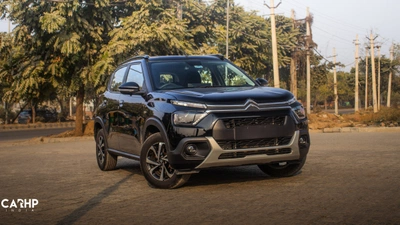
Citroen C3 Review: Who Should Consider This Car?
A few days ago, I took the Citroen C3X out for a spin in the city and on the highways. I travelled long distances and checked its fuel efficiency, features, comfort, and other factors. Today, I’ll briefly share my overall experience with the C3X and will tell you whether you should consider it or not and which is the most value-for-money variant of the lot.
Vatsal Agrawal
May 19, 2026
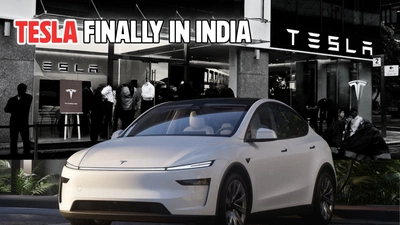
Tesla Finally In India Officially. Why Now And What Does It Mean For EVs?
The much-anticipated 2025 Tesla Model Y has officially arrived in India, marking a pivotal moment for the nation's burgeoning electric vehicle market. Launched on July 15, 2025, the Model Y Juniper facelift offers cutting-edge technology, impressive range, and signature Tesla performance. Positioned as a premium electric SUV, its entry will intensify competition and reshape consumer expectations for EVs across the subcontinent.
Charan Narain
July 17, 2025
Here Are 10 Things The Harrier.EV Offers That The Mahindra XEV 9E Doesn't
The Harrier.EV is an incredible new offer from Tata. Its most popular competitor would be the Mahindra XEV 9E, priced similarly. With these two incredible offerings from home grown brands available, here is a list of everything the Harrier.EV offers that the XEV 9E doesn't.
Charan Narain
June 13, 2025
Write a comment
Comments
No comments yet. Be the first to comment!