Flex Fuel In India: Fuel Grades, Sources, Engine Effects And Launch Date
By Arjun Nair
Updated June 6, 2026
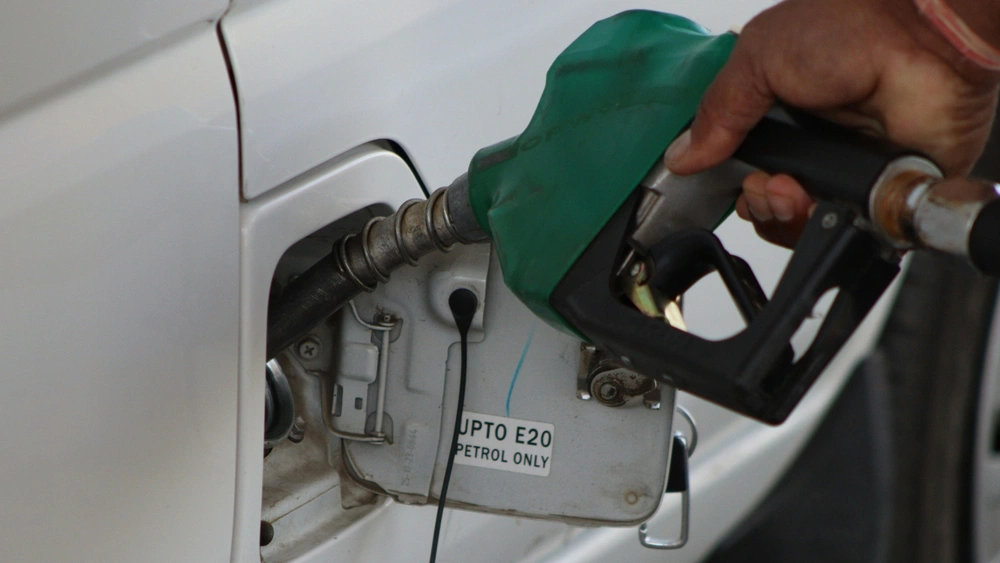
India, which imports a large part of its crude oil, has been actively promoting ethanol blending in petrol to reduce dependence on foreign oil, support farmers, and lower vehicle emissions.
Under its Ethanol Blending Programme (EBP), the government has set ambitious targets to increase the share of ethanol in fuel.
Ethanol fuel blends are mixtures of ethanol (mainly made from sugarcane, corn or other crops) and regular petrol.
The current trending narrative about different levels of blending like E25, E30, E85, and so on may get confusing or overwhelming for many, but the concept is fairly simple.
The letter 'E' stands for ethanol, while the number shows the percentage of ethanol in the blend. Different countries use different blends depending on their policies and vehicle compatibility.
Also Read - Every E85-Compatible Car Announced In India
Different Grades Of Ethanol
| Blend | Ethanol % | Countries |
|---|---|---|
| E10 | 10% | USA, India, Europe, many others |
| E15 | 15% | USA (growing) |
| E20 | 20% | India (widely promoted) |
| E22 | 22% | Brazil, India (newly notified) |
| E25 | 25% | Brazil |
| E30 | 30% | Brazil (mandated), India (notified) |
| E85 | 85% | USA, Brazil |
| E100 | 100% | Brazil |
Also Read - Upcoming Flex Fuel Cars You Need To Know About
What does E85/E100 do to an engine?
The short answer depends entirely on whether the engine was designed for it. E85 carries an octane rating above 100, which allows engines tuned for it to use higher compression ratios and more aggressive ignition timing than is ever possible with 93-octane petrol.
Ethanol also boosts dynamic compression naturally because its combustion chamber volume demand is higher, extracting more energy per cycle. The cooler burn is a real advantage too. Ethanol's high heat of vaporisation means lower combustion temperatures, which protects pistons and valves under sustained high load, making it popular in track applications.
The flip side: fuel economy can drop by up to 30% on E85 because ethanol has lower energy density than petrol. And compatibility is non-negotiable. In a purpose-built flex-fuel vehicle, all fuel-contact components including stainless steel lines, ethanol-compatible seals, and upgraded injectors are designed to resist ethanol.
Corrosion only becomes a real problem in non-flex-fuel vehicles where traditional materials were never designed for alcohol exposure. E85 is hygroscopic, absorbing water, which corrodes aluminum, magnesium, and certain rubbers, meaning fuel hoses, gaskets, pumps, and seals on non-FFV engines are at genuine risk.
If you are looking for professional research on the effects of ethanol on passenger cars, I could only find studies conducted in the USA on turbocharged GDI cars, which are the closest comparison to our own car market.
In essence, the studies found that E85 ethanol can have positive effects if the carmaker has carried out proper tuning, particularly with regard to ignition timing and engine calibration, rather than relying solely on basic hardware changes.
Where will India source its ethanol?
India's ethanol comes from two main agricultural pipelines: sugarcane derivatives and food grains. Production has now reached roughly 1,800 crore litres in the 2025-26 ethanol supply year, drawing on sugarcane, molasses, and grain feedstocks including maize and rice.
Sugarcane is the backbone. India lifted all restrictions on ethanol production from sugarcane juice, syrup, and all types of molasses from November 1, 2025, allowing sugar mills and distilleries to produce without quantitative limits.
Grain-based ethanol fills the gap when sugarcane supplies tighten, and government procurement guarantees of ₹66.17 per litre for grain-based ethanol provide a stable revenue floor for producers. The government also uses surplus FCI rice stocks as a swing feedstock during tight years. The long-term plan is to scale maize cultivation specifically for fuel, since maize-based ethanol does not compete with sugar production the way juice-diversion does.
When will E85/E100 arrive and what will it cost?
India has entered a new phase of ethanol mobility with the launch of E85 fuel in Delhi, priced at Rs 82.12 per litre, around Rs 20 cheaper than E20 petrol. E85 contains 85 percent ethanol and 15 percent petrol and is designed exclusively for flex-fuel vehicles (FFVs), not regular petrol cars. The first dispensing station has been opened by Indian Oil in Delhi, with plans to expand the network nationwide.
Please don't be misguided by this Rs 82 per litre headline. Ethanol has lower density than petrol; you will need to fill up the tank more quickly. So, for example, if 10L regular petrol gave you 100 km of range, you will need 12-14 litres of E85 to get the same range as ethanol has lower density than fuel
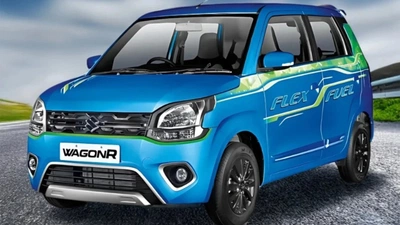
This, as of now, is a very nuanced topic with no clear fundamentals whatsoever. There is a reason Maruti didn't even announce the mileage when they launched the WagonR flex fuel earlier this week.
| Example for 100 km Range | Regular Petrol | E85 |
|---|---|---|
| Fuel Required | 10 litres | 12-14 litres |
| Fuel Price (per litre) | Rs 102 | Rs 82 |
| Total Fuel Cost | Rs 1,020 | Rs 984-Rs 1,148 |
| Distance Covered | 100 km | 100 km |
I only have an E20 car. What do I do?
Nothing, for now. This transition is not coming for your car.
E85 and E100 will be sold alongside E20 and will not replace it. India is following Brazil's model with separate storage tanks and dispensers at petrol bunks for each blend. E20 continues to serve existing vehicles while the higher blends are exclusively for flex-fuel vehicles. Even after E85 is formally available, it will take years to go mainstream and will not suddenly replace E20 across the country.
Existing vehicles built for E10 or E20 cannot run on E85. The high alcohol content is corrosive to standard seals, hoses, and fuel systems and can cause permanent engine damage.
Your E20 car keeps running exactly as it does today. When you eventually buy something new, the Maruti Fronx Flex Fuel is expected around ₹9-10 lakh, and Tata is preparing its first flex-fuel passenger vehicle for late 2026 or early 2027, which will be your entry point into this ecosystem if you choose it.
Sources: Snake Eater, HDFCSKY,
Table of Contents
- Different Grades Of Ethanol
- What does E85/E100 do to an engine?
- Where will India source its ethanol?
- When will E85/E100 arrive and what will it cost?
- I only have an E20 car. What do I do?
Join the Conversation
Trending
Everything You Need To Know About BS7 Emission Norms
India is gearing up for the next major leap in vehicle emission standards with Bharat Stage 7.
Arjun Nair
July 23, 2026
Which EV Charging Companies in India Have the Most Chargers?
EV adoption in any country is largely dependant on the availability of charging infrastructure.
Arjun Nair
July 21, 2026
Essential Features Every Car Should Have as Standard
Essential Features Every Car Should Have as Standard
Arjun Nair
July 13, 2026
Featured
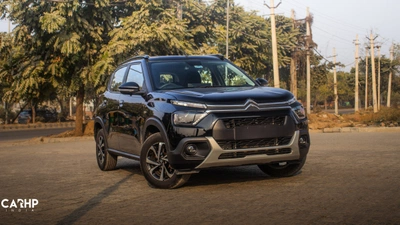
Citroen C3 Review: Who Should Consider This Car?
A few days ago, I took the Citroen C3X out for a spin in the city and on the highways. I travelled long distances and checked its fuel efficiency, features, comfort, and other factors. Today, I’ll briefly share my overall experience with the C3X and will tell you whether you should consider it or not and which is the most value-for-money variant of the lot.
Vatsal Agrawal
May 19, 2026
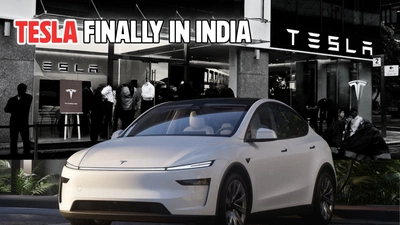
Tesla Finally In India Officially. Why Now And What Does It Mean For EVs?
The much-anticipated 2025 Tesla Model Y has officially arrived in India, marking a pivotal moment for the nation's burgeoning electric vehicle market. Launched on July 15, 2025, the Model Y Juniper facelift offers cutting-edge technology, impressive range, and signature Tesla performance. Positioned as a premium electric SUV, its entry will intensify competition and reshape consumer expectations for EVs across the subcontinent.
Author
July 17, 2025
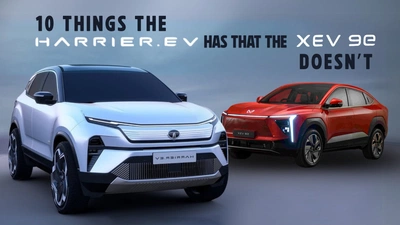
Here Are 10 Things The Harrier.EV Offers That The Mahindra XEV 9E Doesn't
The Harrier.EV is an incredible new offer from Tata. Its most popular competitor would be the Mahindra XEV 9E, priced similarly. With these two incredible offerings from home grown brands available, here is a list of everything the Harrier.EV offers that the XEV 9E doesn't.
Author
June 13, 2025

Write a comment
Comments
No comments yet. Be the first to comment!