

Genesis GV80
Genesis GV80 Key Specifications
Genesis GV80 Variants & Prices
Filter By Fuel type & Transmission type| Variant Details | Expected Price | |
|---|---|---|
GV80 Base Base Model | ₹ Price To Be Announced* |
GV80 Base
Genesis GV80 Overview

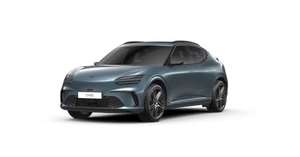
The Genesis GV80 represents the flagship SUV offering from the Korean luxury brand, and its entry into India marks a significant shift in Hyundai Motor Group’s domestic strategy. As of February 2026, plans are firmly in place to introduce the Genesis brand to Indian consumers by 2027. Unlike many luxury imports that arrive as Completely Built Units (CBU), the GV80 is expected to be locally assembled (CKD) at Hyundai’s manufacturing facility near Chennai. This move is intended to avoid the high import duties typically associated with luxury vehicles, allowing Genesis to price the GV80 aggressively against established models like the BMW X5 and the Mercedes-Benz GLE. The GV80 will likely be available in both standard SUV and Coupe-SUV body styles to cater to different buyer preferences. The Indian-spec model is expected to feature a heavy localization of software services and connected car technology suited for local road conditions. By bringing the GV80 to India, the manufacturer aims to capture the growing segment of buyers looking for a sophisticated, tech-heavy SUV that offers more standard features than its European rivals. The vehicle will serve as a brand shaper, establishing the "Athletic Elegance" design philosophy in the Indian luxury landscape.
Engine and Performance
The Genesis GV80 is expected to arrive in India with multiple powertrain options, including a traditional Internal Combustion Engine (ICE) and a fully electric version known as the Electrified GV80. The petrol variants are likely to include a 2.5-liter four-cylinder turbocharged engine producing 304 hp and 422 Nm of torque, and a more powerful 3.5-liter twin-turbo V6 engine that generates 380 hp and 530 Nm of torque. Both engines will be mated to an 8-speed automatic transmission with an All-Wheel Drive (AWD) system as standard. For the electric version, the GV80 is expected to feature a dual-motor setup—one on each axle—providing a combined output of approximately 364 hp and 700 Nm of torque. This electric powertrain will likely be supported by a 400V/800V multi-rapid charging system, allowing the battery to charge from 10% to 80% in about 18 to 22 minutes using a 350 kW DC fast charger. The SUV is also expected to include a Disconnector Actuator System (DAS) that can automatically connect or disconnect the motor and drive shaft based on driving conditions to improve efficiency. Regenerative braking levels will be adjustable via paddle shifters, allowing for one-pedal driving in city traffic.
interior
Inside, the Genesis GV80 focuses on a "Beauty of White Space" philosophy, which prioritizes a clean layout and high-quality materials like Nappa leather, real wood trim, and knurled metal finishes. The centerpiece of the updated cabin is a massive 27-inch integrated OLED display that combines the digital instrument cluster and the infotainment system into a single seamless unit. This screen allows for split-screen functionality, enabling the driver to view navigation while the passenger accesses media controls. The center console features a touch-based climate control panel and a crystal-designed shift-by-wire rotary dial for gear selection. For the Indian market, the GV80 is likely to be offered in both 5-seater and 7-seater configurations, with the latter featuring power-folding third-row seats. Rear seat passengers are expected to get individual 14.6-inch entertainment screens and a dedicated climate zone. Other interior highlights include a 3-spoke steering wheel with integrated haptic controls, a high-end Bang & Olufsen sound system with up to 18 speakers, and active noise cancellation technology that uses microphones to detect road noise and emit inverted sound waves to cancel it out. The boot space is generous, offering approximately 727 liters with the third row folded, making it practical for long family trips.
exterior
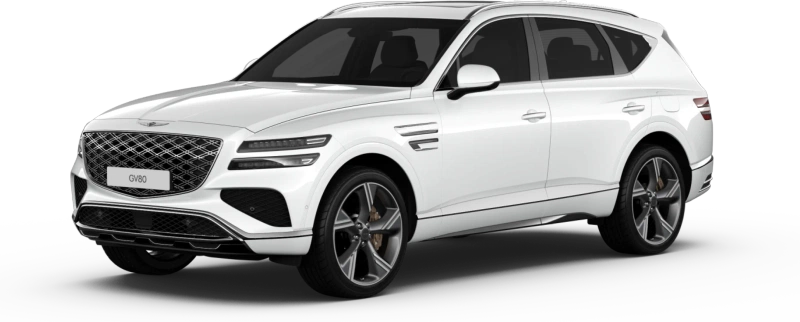
The exterior design of the Genesis GV80 is defined by a massive "Crest" grille and a unique "Two-Line" LED lighting architecture that extends from the headlamps to the side repeaters and through to the tail lamps. The SUV measures approximately 4,945 mm in length, 1,975 mm in width, and 1,715 mm in height, with a wheelbase of 2,955 mm, giving it a significant road presence comparable to its primary rivals. The front fascia features a double-layered G-Matrix pattern on the grille, while the air intakes are enlarged to improve cooling for the high-performance engines. Along the side, a sharp "Parabolic Line" runs from the hood to the rear, creating a sense of motion even when the vehicle is stationary. The Indian version is expected to ride on 20-inch or 22-inch alloy wheels, depending on the trim level, with a multi-spoke design that complements the chrome accents used around the window line. At the rear, the GV80 features a clean tailgate design with the "Genesis" lettering spaced out across the center. The exhaust tips are likely to be hidden or integrated into the rear bumper design to emphasize a modern, clean look. Ground clearance is expected to be around 205 mm, which is sufficient for Indian highway conditions and minor off-road excursions.
competition
In the Indian luxury SUV market, the Genesis GV80 will face stiff competition from established European manufacturers. Its primary rival will be the BMW X5, which is known for its driving dynamics and premium interior. The Mercedes-Benz GLE will be another major competitor, focusing on comfort and brand prestige. The Audi Q7, with its 7-seater practicality and Quattro AWD system, also occupies this space. Furthermore, the GV80 will compete with the Volvo XC90, which appeals to buyers prioritizing safety and minimalist Scandinavian design. While the Genesis brand is a newcomer to India, the GV80 aims to differentiate itself by offering more standard features and advanced screen technology at a price point that might undercut the German brands due to local assembly. The Land Rover Discovery and Range Rover Velar also fall within a similar price bracket, though they lean more toward off-road capability. The success of the GV80 will depend on how well Genesis can establish a premium service network to match the after-sales experience provided by Mercedes and BMW.