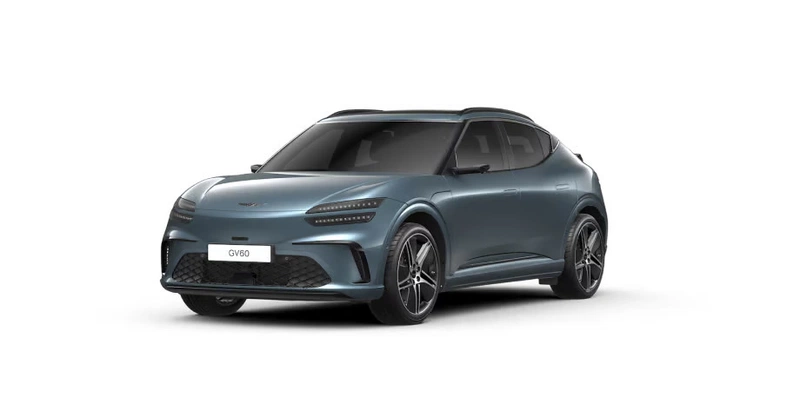

1 Images
Exterior
The Genesis GV60 is a luxury electric crossover from Hyundai’s premium division, expected to launch in India by 2027. Built on the dedicated E-GMP platform, it features a unique design with a focus on high-end technology like facial recognition and a crystal sphere gear selector. The EV is likely to offer a range between 450 km and 515 km on a single charge, supported by ultra-fast 800V charging capabilities. Local assembly in India is expected to keep its pricing competitive against German rivals.
70 Lakh*
Genesis GV60 Key Specs
Fuel Type
Electric

Genesis GV60 Variants & Prices

Filter By Fuel type & Transmission type

GV60 Base

70 Lakh*
225 bhp

Genesis GV60 Overview

user avatar
Salil Kumar
Updated on March 16, 2026

The Genesis GV60 marks the entry of Hyundai’s luxury arm into the Indian market, a move strategically planned for 2027. Following recent investor meets, it has been confirmed that Genesis will not just import cars but will focus on local assembly to capture the growing premium EV segment in India. The GV60 serves as the brand’s first dedicated electric vehicle, positioned as a high-performance luxury crossover that sits above the Hyundai Ioniq 5 and Kia EV6 in terms of features and materials. This vehicle is designed to appeal to buyers who want a sophisticated alternative to established European brands like BMW and Mercedes-Benz. By using the E-GMP architecture, the GV60 offers a flat floor and a long wheelbase, which translates into significant cabin space for a car that measures roughly 4,515 mm in length. The Indian version is expected to feature a high degree of localization for its battery components and powertrain assembly to navigate the high taxation on imported luxury cars. This strategy suggests that Genesis is serious about volume growth in the Indian luxury space rather than remaining a niche player. With its distinct "Athletic Elegance" design language and a focus on tactile luxury, the GV60 will lead the brand's charge as India transitions toward high-end electrification over the next few years.

engine and performance

The Genesis GV60 is expected to be offered in India with multiple powertrain configurations based on the 77.4 kWh battery pack, though an updated 84 kWh pack may be introduced by the time of the 2027 launch. The standard rear-wheel-drive (RWD) version is likely to produce approximately 225 hp and 350 Nm of torque. For buyers seeking more performance, the all-wheel-drive (AWD) variant could offer a combined output of 314 hp and 605 Nm. There is also a Performance model that features a "Boost Mode," temporarily increasing power to 483 hp, allowing the car to accelerate from 0 to 100 kmph in just 4.0 seconds. The driving range is estimated to fall between 450 km and 515 km on the WLTP cycle, which should translate to a realistic real-world range of about 380 km to 420 km in Indian driving conditions. One of the biggest technical advantages of the GV60 is its 800V ultra-fast charging architecture. This system allows the battery to charge from 10% to 80% in approximately 18 minutes using a 350 kW DC fast charger. Furthermore, the car supports Vehicle-to-Load (V2L) technology, which enables the vehicle to act as a mobile power bank, providing up to 3.6 kW of electricity to power external devices like laptops, camping equipment, or even other electric vehicles.

interior

Inside the cabin, the Genesis GV60 focuses on a concept called the "Beauty of Openness," utilizing the flat floor of the electric platform to maximize legroom and storage. The most striking feature is the Crystal Sphere, a spherical gear selector located on the floating center console. When the car is turned off, the sphere acts as a mood light, and when the vehicle is started, it rotates 180 degrees to reveal the drive-by-wire shift dial. The dashboard is dominated by a single housing that contains two 12.3-inch screens: one for the digital instrument cluster and one for the infotainment system. High-quality materials like Nappa leather and recycled fabrics are used throughout the cabin to maintain a luxury feel. For the Indian market, the GV60 is likely to include a 17-speaker Bang & Olufsen sound system, a panoramic sunroof, and ventilated front seats with massage functions. One of the standout technologies is "Face Connect," which uses an infrared camera on the B-pillar to recognize the driver’s face and unlock the doors without a physical key. This is paired with a fingerprint authentication system on the center console that allows the car to be started and automatically loads the driver’s saved seat and mirror preferences. The rear seats offer a 60:40 split, and the boot space is expected to be around 432 liters, supplemented by a small "frunk" or front trunk for charging cables.

exterior

The exterior design of the Genesis GV60 follows a minimalist yet futuristic approach that distinguishes it from traditional luxury SUVs. The front is dominated by the signature "Two-Line" Quad Lamps, which are ultra-slim LED units that wrap around the corners of the vehicle. Below these lamps sits a large Crest Grille, which is placed lower than on internal combustion Genesis models to improve cooling for the high-voltage batteries located in the floor. The car features a clamshell hood, which is a single panel that integrates the fenders to create a clean surface without visible gaps. On the sides, the GV60 has a coupe-like silhouette with a sloping roofline that ends in a fixed rear spoiler. The door handles are flush with the bodywork and pop out automatically when the driver approaches. Wheel sizes are expected to range from 19-inch to 21-inch alloys with aerodynamic designs. At the rear, the two-line theme continues with the tail lamps, and the overall look is rounded and muscular. Reports suggest that the Indian model may also offer digital side mirrors, which replace traditional glass with cameras and internal screens to reduce wind resistance. The ground clearance is expected to be around 160 mm to 170 mm, which is standard for luxury electric crossovers designed for urban environments.

competition

Upon its launch in India, the Genesis GV60 will compete in the rapidly expanding luxury electric SUV segment. Its most direct competitors will be the Volvo C40 Recharge and the BMW iX1, both of which offer similar dimensions and performance metrics. The Volvo C40 Recharge provides a strong safety reputation and a minimalist Swedish design, while the BMW iX1 focuses on driving dynamics and brand recognition. The GV60 will also face internal competition from its cousins, the Kia EV6 and the Hyundai Ioniq 5. While these cars share the same platform, the Genesis will distinguish itself with superior interior materials, more advanced tech features like facial recognition, and a more premium dealership experience. Other potential rivals include the Mercedes-Benz EQA and the Audi Q4 e-tron, should they be available in the Indian market by 2027. The Genesis GV60's primary advantage over these rivals will likely be its 800V charging system, which is faster than the 400V systems found in many European competitors. Additionally, the unique "Crystal Sphere" and luxury-first approach are expected to attract buyers who find the German offerings too conventional.

Genesis GV60 Car FAQs

The Genesis GV60 is expected to debut in India in H1 2027 as part of Hyundai Motor Group’s Genesis entry plan. It will likely launch first, with local testing beginning in late 2026.
The Genesis GV60 is expected to be priced between ₹65–80 lakh (ex-showroom). Likely locally assembled, the RWD variant may start lower, while the AWD Performance trim with premium features will sit at the top end.
The Genesis GV60 may receive an 84kWh battery upgrade for India, replacing the 77.4kWh pack. It could offer 530–550 km range and retain 800V fast charging, enabling 10–80% charging in under 20 minutes.
EV Charging Cost Calculator
Quickly estimate your monthly and yearly charging expenses for your electric vehicle. Enter your driving habits and electricity rates to get accurate cost insights.Calculate EV Charging Cost
Genesis GV60