Mahindra XUV300 32000 KM Ownership Review
our teammate Arjun just reached another milestone in his beloved XUV300 here is what he has to say about it in his own words
By Salil Kumar
Published February 17, 2026
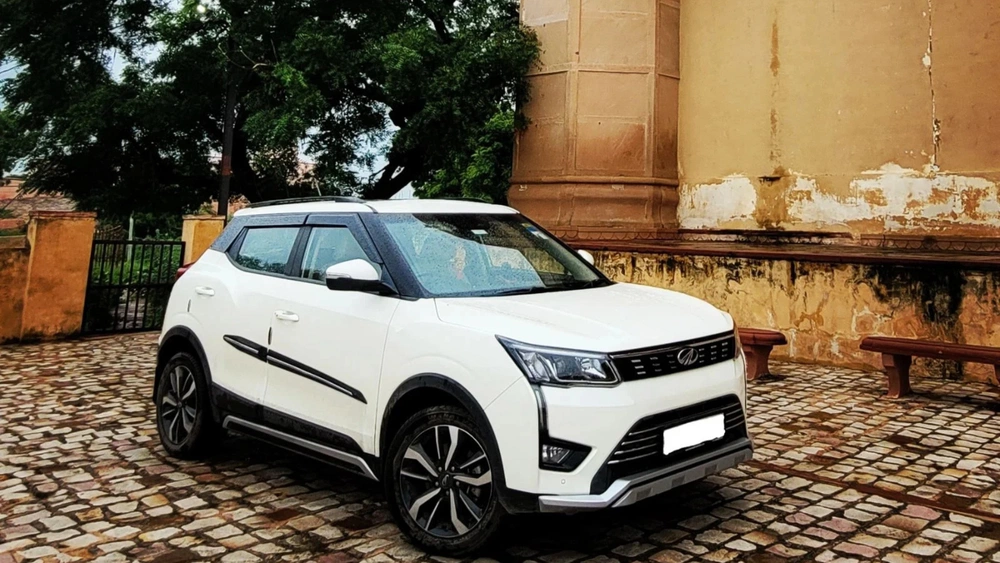
Table of Contents
- Purchase Experience
- What I Love
- What Could Be Better?
- E20 Affect
- Final Verdict
We have owned a Mahindra XUV300 since April 2021. It is the top-of-the-line Petrol W8 Optional variant, with an AMT. For a four-year-old car, it has not run a lot, having only recently crossed 30,000 kilometres. The primary reasons for choosing the XUV300 were its striking looks, strong engine, roomy cabin, overall build quality, convenience of an automatic, and safety features.
As the XUV impressed us right from its launch and fulfilled most of the criteria, we did not consider any other car outside of our website research. Interestingly, Mahindra introduced an AMT variant on the petrol variants right before we began our car hunt, sealing the deal on the decision.
Purchase Experience
The car cost us Rs 13.7 lakh on road, including all accessories and a one-year extended warranty. The relationship with the Mahindra dealership was good, and there were no issues from their end. However, after the booking, there was a 2-month waiting period, which felt like an endless wait.
This was due to a worldwide semiconductor shortage, as the global automotive industry was impacted by the COVID-19 pandemic. The day of the delivery was much-awaited, and it was completely worth it, as we received the car in pristine condition, with no visible damage, and everything functioning like it was supposed to.
What I Love
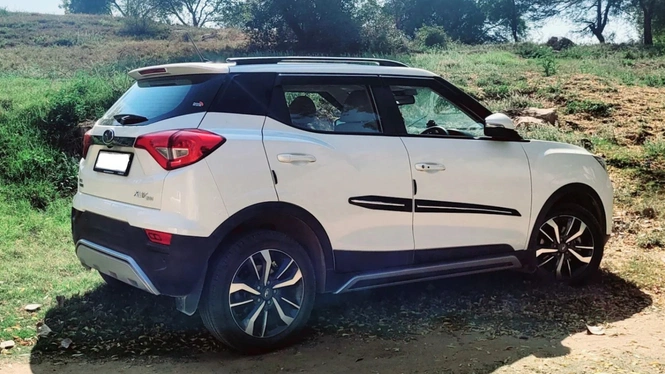
The very first factor that draws you to any car is its looks. As a long-standing admirer of the XUV5OO, the 3OO, with its subtle design influences from its bigger sibling, won me over. The front fascia appears aggressive and imposing, thanks to the sharp headlamps and the LED DRL housing strips that connect them to the fog lamps.
To the side, the 17-inch diamond-cut alloy wheels and the protruding creases above the wheel arches go a long way to enhancing the XUV300’s road presence. The beautiful butterfly wing-like LED taillights look striking, even more so at night when they are fully illuminated.
On the inside, the XUV300 does not feel like a sub-four-metre car. The front seats provide ample cushioning and have never disappointed on long drives. They almost feel sporty, holding you well even while you push the car around twisty roads. Three adults can sit comfortably at the rear, and the white interiors and leatherette upholstery make the cabin experience feel airy, further enhanced by the sunroof. There are plenty of storage spaces as well, with bottle holders on each door and a deep glovebox.
The quality of materials used inside the cabin feels premium and well-built, with all dials, buttons and switches feeling tactile to operate. Fortunately, there have been no major audible rattles or squeaks so far. The doors feel very hefty and shut with a reassuring thud.
The thing I love the most about the car, however, is the way it drives. While it feels sedated at lower revs in slow-moving traffic, that changes completely once it crosses the 1,500 rpm mark. I like to call it the silence before the storm, as the 200 Nm of meaty torque is felt very well, pushing you back on your seat.
Thanks to just how strong the engine feels in the mid-range, it builds speed effortlessly, and there has rarely been an urge to push it towards the top-end of the rev range. However, when you do have that urge, it darts ahead like an arrow. What impresses me more than the performance of the car is how reassuring and confident it feels at triple-digit speeds. The steering weighs up brilliantly well, there is little to no vertical movement, and disc brakes on all four wheels offer supreme braking power.
What Could Be Better?
Undoubtedly, the biggest downside during the XUV300’s ownership has been its puny boot space. At just 257 litres, it is best to carry one large suitcase and a few small bags. Some rear legroom could have definitely been sacrificed for a larger boot. While it does get 60:40 folding seats, it is not ideal when more than three passengers are travelling.
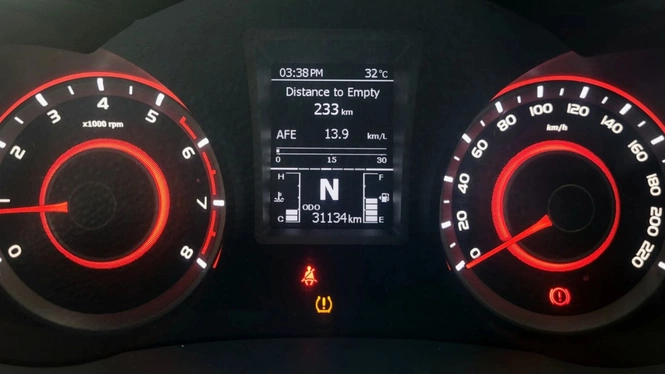
Hardly delivering anything above 15 km/l in the city, fuel economy is not this car’s strongest suit. But given the amount of performance on offer, it would be unfair to complain any further about this. Cruising at 90-100 in 6th gear on expressways has delivered around 17 km/l, though.
Though the 17-inch alloys serve the looks, the tyres have been susceptible to frequent punctures, validating Mahindra’s decision to downgrade to 16-inch rims on the later models of the 300, and now on the 3XO. We are planning to get all four tyres upgraded to Yokohamas, as they have proven to be very durable on our Vitara Brezza.
Wireless Android Auto and Apple CarPlay are majorly missed in the car. While there is wired connectivity for the same, it glitches occasionally, disconnecting and connecting randomly. This can get frustrating while driving, especially while navigation is in use on unfamiliar routes.
The white upholstery, though giving an airy feeling, has been susceptible to catching dust easily. Having turned pale, it is due for a thorough cleaning.
At the time of purchase, the car was compatible with the Blusense+ app, which offered connected car features including live location, with precise information like the car’s real-time speed and gear it is being driven on. However, the app stopped functioning a couple of years ago, and has been replaced by a rather basic Bluesense app, exclusive to the XUV3OO. This app offers primarily AC and audio controls, along with service
reminders, which are rarely used.
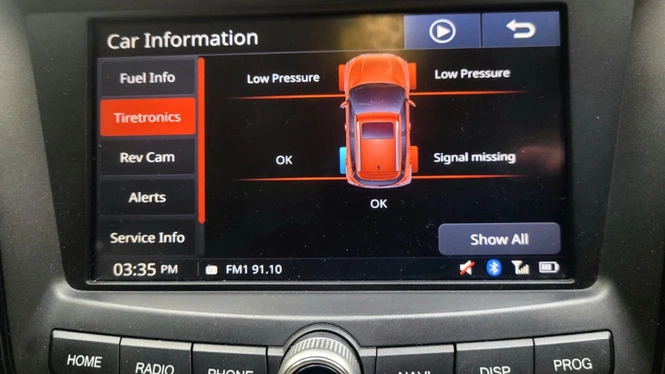
The quality of the service has been mixed, but lately unsatisfactory. For the 30,000 km service, we had specifically asked them to fix the TPMS on the rear tyres and resolve the check engine light, which has started coming up lately shortly after the car is started. Both of these issues were not properly resolved. Moreover, the service centre does not offer the desired premium experience, though this service centre could be an exception. However, our experiences with Maruti’s Arena and Nexa service centres have been significantly better in this regard. What also does not help is fewer service centres closer to our home.
E20 Affect
While fuel efficiency has taken a noticeable hit, especially during city rush hours, the engine performance has seemingly remained unaffected. Though there is an underlying concern that the check engine warning may be a result of E20 fuel’s incompatibility with the engine.
Final Verdict
To sum it up, the XUV300 has not given us any major reasons to complain in these four years of ownership. If sent back in time, we were put in the same situation again, our decision would most likely remain the same.
Write a comment
Comments
No comments yet. Be the first to comment!