What Regulation Changes Has F1 Made Before the 2026 Miami GP?
By Arjun Nair
Updated April 28, 2026
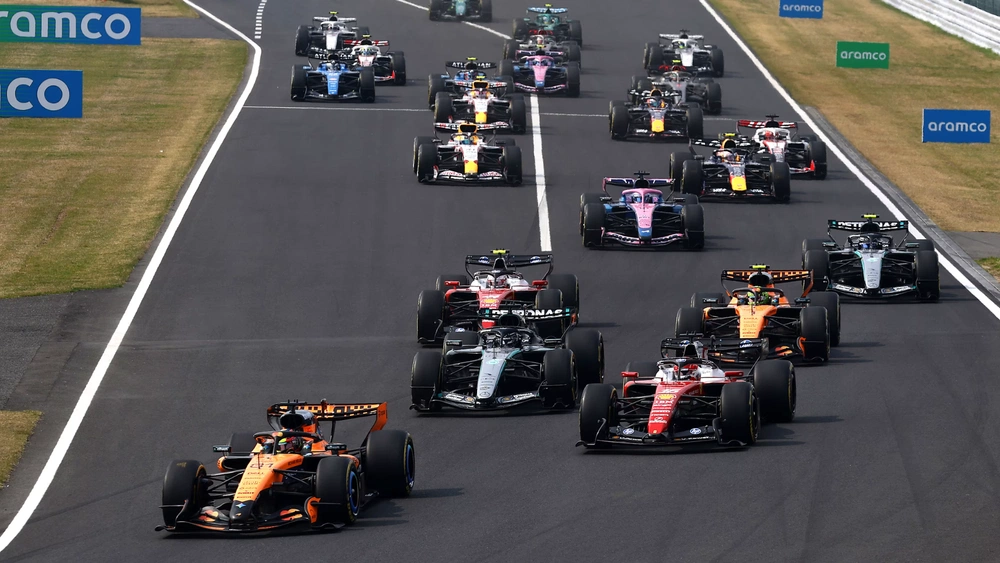
Formula 1 has made some important course corrections to its 2026 regulations just in time for the Miami Grand Prix. Ever since the 2026 season started, the new hybrid systems have been causing some unexpected headaches for drivers.
Following a high-level meeting between the FIA, team bosses, and engine manufacturers, a set of refinements has been agreed upon to make the racing safer and more exciting.
Why Were the Changes Introduced?
The 2026 season introduced a major shift where the car's power is split almost equally between the engine and electrical energy. However, the three races so far in Australia, China, and Japan showed some significant flaws.
Drivers have been complaining about having to lift and coast - basically slowing down mid-straight to save battery, even during qualifying.
What has been even more concerning is the super-clipping, where a car suddenly loses electrical power at the end of a straight due to the battery running out. This creates a massive speed difference between cars, which led to Oliver Bearman's scary crash while trying to avoid crashing into Franco Colapinto in Japan.
These new tweaks aim to stop more incidents like this from happening.
Faster, Flat-out Qualifying
To make qualifying more thrilling again, the FIA has tweaked how the battery recharges.
Less Energy Harvesting: The maximum energy a car can recharge per lap has been cut from 8MJ to 7MJ. This may sound like less power, but it actually means drivers don't have to spend as much time "saving" energy.
More Punch: The peak power for the "superclip" (the extra electrical boost) has been increased from 250kW to 350kW.
Aimed Result: Drivers can now push flat-out for more of the lap. Instead of long phases of managing the battery, they will have shorter, more intense bursts of power, making the cars much more fun to drive and watch.
Also Read - F1 Miami GP 2026 - Rule Changes, Current Standings, IST Schedule, and Where To Watch
Possibly Safer Race Starts
While Ferrari seems to have nailed its start off the line, not every team has managed to do the same.
One of the biggest issues so far has been some cars bogging down or losing power right after lights out when the whole grid is charging forward - something Red Bull's Max Verstappen has suffered consistently so far.
Miami will see the debut of a ‘low-power start detection’ system.
Essentially, if the sensors detect a car accelerating too slowly after the clutch is released, the MGU-K (the electric motor) will automatically kick in to give the car a minimum level of speed.
To alert the drivers behind, the car's rear and side lights will also flash, preventing any nasty rear-end collisions - something which would have been a matter of when, not if.
Better Racing and Safety
The ‘Boost’ button used during the race is also getting a cap. Instead of the entire 350kW, the Boost mode will only give drivers an extra 150kW over the current amount the car is already deploying. This change aims to prevent those dangerous speed gaps between a car that is attacking and one that is harvesting its battery.
There are also small but vital changes for wet (rain-affected) races. After feedback from the grid, the FIA is allowing higher tyre blanket temperatures for intermediate tyres to help drivers find grip immediately.
The rear lights have also been simplified so that drivers can see the car ahead more clearly through the heavy spray.
Also Read - Mercedes-Benz C-Class EV Revealed Globally, Gets 762km Range
A Collaborative Step Forward
Though many fans have expressed disappointment about these new regulations, it is heartening to see how quickly the sport has reacted.
Usually, F1 rules are set in stone for a long time, but this unexpected big gap in the calendar due to the cancellation of the Bahrain GP and Saudi Arabian GP has given everyone the perfect window to analyse and fix these issues.
These changes aren't a total overhaul, but rather a fine-tuning to ensure that the 2026 season delivers the high-speed drama we all expect without compromising on driver safety and avoiding too many battery-related problems.
We will see the first real impact of these tweaks when the cars hit the track in Miami.
2026 F1 Miami GP Schedule in IST
| Day | Session | Time (IST) |
|---|---|---|
| May 1, Friday | Practice 1 | 9:30 PM - 11:00 PM |
| May 2, Saturday | Sprint Qualifying | 2:00 AM - 2:44 AM |
| Sprint | 9:30 PM - 10:30 PM | |
| May 3, Sunday | Qualifying | 1:30 AM - 2:30 AM |
| May 4, Monday | Race | 1:30 AM - 3:30 AM |
Image Source: Formula 1
Table of Contents
- Why Were the Changes Introduced?
- Faster, Flat-out Qualifying
- Possibly Safer Race Starts
- Better Racing and Safety
- A Collaborative Step Forward
- 2026 F1 Miami GP Schedule in IST
Join the Conversation
Trending
Hyundai BAYON Design Sketches Revealed Ahead of India Launch
Hyundai India has released the first design sketches of the BAYON, its upcoming mid-size SUV. The renders preview a sculpted exterior with H-Edge lighting and a tech-focused cabin ahead of what is expected to be a launch later this year.
Anmol Kumar
September 16, 2026

Safest Cars In India To Buy in 2026
A complete list of Bharat NCAP tested models, their adult and child occupant protection scores, and star ratings.
Salil Kumar
September 15, 2026
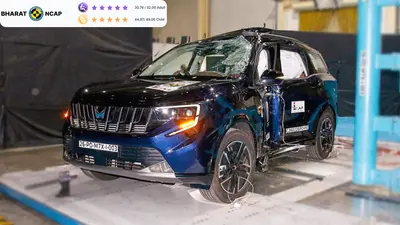
Mahindra XUV 7XO Scores 5 Stars in Bharat NCAP, Gets Near-Perfect Adult Safety Score
The Mahindra XUV 7XO has been awarded a 5-star Bharat NCAP rating, scoring 30.76 out of 32 for adult occupant protection and 44.97 out of 49 for child safety. The rating covers the full variant range, petrol and diesel both.
Arjun Nair
September 15, 2026

Maruti Wagon R Facelift Spied Testing With New Head and Tail Lights
The Wagon R facelift has been spotted testing in CNG and heavy camouflage. A fresh face, reworked rear, and a bigger touchscreen can be expected on one of India's best-selling hatchbacks.
Anmol Kumar
September 15, 2026

Maruti Suzuki Offering Up to Rs. 1.35 Lakh Benefits in September 2026
Maruti Suzuki's September 2026 Arena offers cover seven models, with the Victoris strong hybrid getting the highest benefits at Rs. 1.35 lakh. Here is the full breakdown, including fuel-type differences on the Wagon R, Alto K10, Swift, and Eeco.
Anmol Kumar
September 11, 2026
Featured
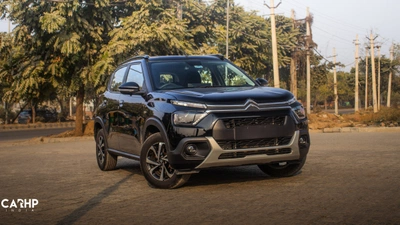
Citroen C3 Review: Who Should Consider This Car?
A few days ago, I took the Citroen C3X out for a spin in the city and on the highways. I travelled long distances and checked its fuel efficiency, features, comfort, and other factors. Today, I’ll briefly share my overall experience with the C3X and will tell you whether you should consider it or not and which is the most value-for-money variant of the lot.
Vatsal Agrawal
May 19, 2026
Tesla Finally In India Officially. Why Now And What Does It Mean For EVs?
The much-anticipated 2025 Tesla Model Y has officially arrived in India, marking a pivotal moment for the nation's burgeoning electric vehicle market. Launched on July 15, 2025, the Model Y Juniper facelift offers cutting-edge technology, impressive range, and signature Tesla performance. Positioned as a premium electric SUV, its entry will intensify competition and reshape consumer expectations for EVs across the subcontinent.
Charan Narain
July 17, 2025
Here Are 10 Things The Harrier.EV Offers That The Mahindra XEV 9E Doesn't
The Harrier.EV is an incredible new offer from Tata. Its most popular competitor would be the Mahindra XEV 9E, priced similarly. With these two incredible offerings from home grown brands available, here is a list of everything the Harrier.EV offers that the XEV 9E doesn't.
Charan Narain
June 13, 2025
Write a comment
Comments
No comments yet. Be the first to comment!