
Honda Rebel 500 Key Specifications
Honda Rebel 500 Variants & Prices
| Variant Details | Ex. Showroom Price | |
|---|---|---|
Rebel 500 STD153 kmph | 27 kmpl | 471 cc | ₹ 5.49 Lakh* |
Rebel 500 STD
Pros & Cons of Honda Rebel 500
Things We Like
- Exceptionally refined and smooth 471cc parallel-twin engine.
- Very low 690mm seat height inspires immense confidence.
Things We Don't Like
- Expected premium pricing for the performance and features offered.
- Minimalist feature list lacks connectivity and modern rider aids.
Honda Rebel 500 Overview

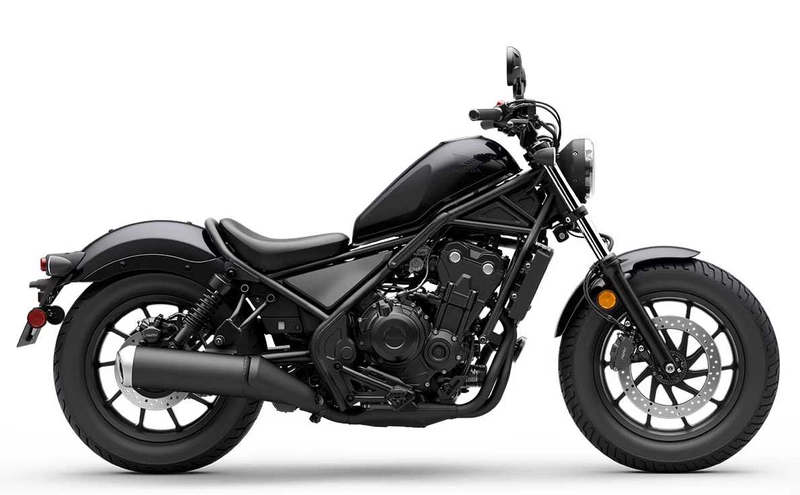
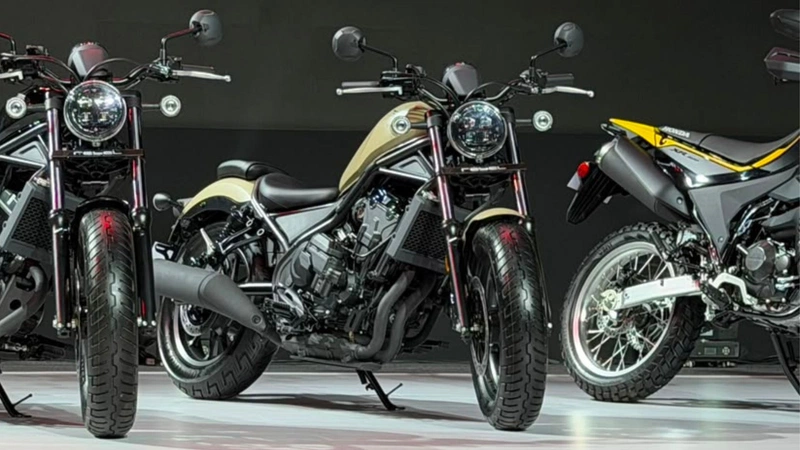
The Rebel 500 retains Honda's signature minimalist bobber-inspired design with a low-slung profile, round LED headlamp, sculpted fuel tank, blacked-out engine and exhaust, wide handlebars and a low seat height of just 690 mm.
The relaxed ergonomics and manageable dimensions make it suitable for both experienced riders and those stepping up to a larger-capacity motorcycle. Despite its cruiser styling, the Rebel 500 is engineered to deliver a comfortable riding experience in city traffic as well as on long-distance highway tours.
Power comes from a 471cc, liquid-cooled, parallel-twin engine producing 46 bhp and 43.3 Nm of torque, paired with a six-speed gearbox featuring an assist and slipper clutch. The engine is widely regarded for its smooth performance, strong mid-range acceleration and refined character, making it one of the most approachable twin-cylinder motorcycles in its segment.
The motorcycle features telescopic front forks and twin rear shock absorbers, while braking is handled by disc brakes at both ends with dual-channel ABS.
It also comes equipped with full LED lighting, an inverted LCD instrument cluster, alloy wheels and premium switchgear. Honda's focus on quality, refinement and easy handling is expected to make the Rebel 500 a compelling alternative to more traditional cruisers.
Once launched, the Honda Rebel 500 will compete with the Royal Enfield Super Meteor 650, Kawasaki Eliminator, Benelli 502C and Keeway V302C. Its combination of premium Japanese engineering, smooth twin-cylinder performance and timeless cruiser styling is expected to attract riders looking for a refined middleweight cruiser with everyday usability.
Engine, Performance and Mileage
Engine, Performance and Mileage
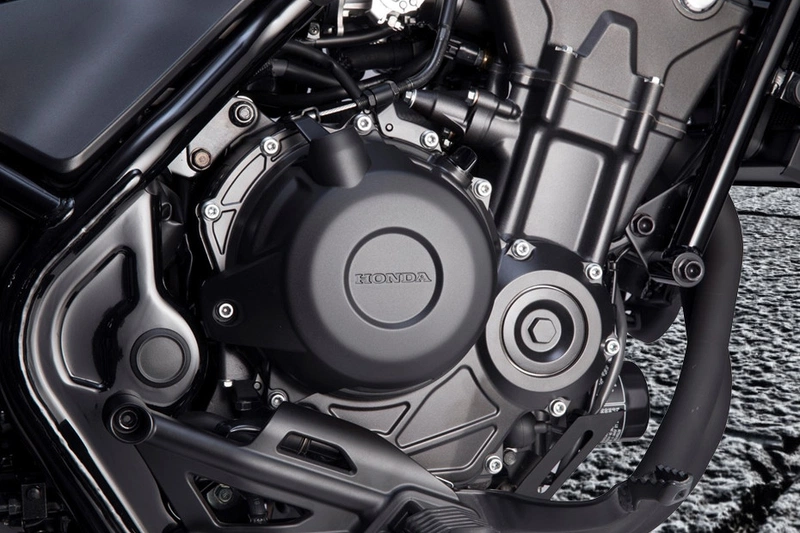
The heart of the Honda Rebel 500 is the well-regarded 471cc, liquid-cooled, parallel-twin engine, compliant with BS6 Phase 2 norms. This DOHC, 8-valve unit produces 45.9 PS of power at 8,500 rpm and 43.3 Nm of torque at 6,000 rpm, paired with a 6-speed transmission featuring a slip-and-assist clutch. The character of this engine is a significant departure from typical cruisers. Instead of a torque-heavy, low-revving feel, it delivers power in a smooth, linear fashion, encouraging riders to explore the mid-to-high rev range. In city traffic, this translates to a tractable and predictable ride, with the light clutch action mitigating fatigue. On the highway, the engine is capable of sustained cruising at speeds of 100-120 km/h without feeling stressed, a testament to Honda's refinement.
The throttle response is precise, with no discernible snatchiness. Fuel efficiency is projected to be in the range of 25-27 kmpl under mixed Indian riding conditions, which is competitive for a 500cc twin. However, riders expecting the traditional, thumping character of a cruiser will find the Rebel’s sewing-machine-smooth operation and higher-revving nature to be a different, more contemporary experience.
posture comfort
posture comfort
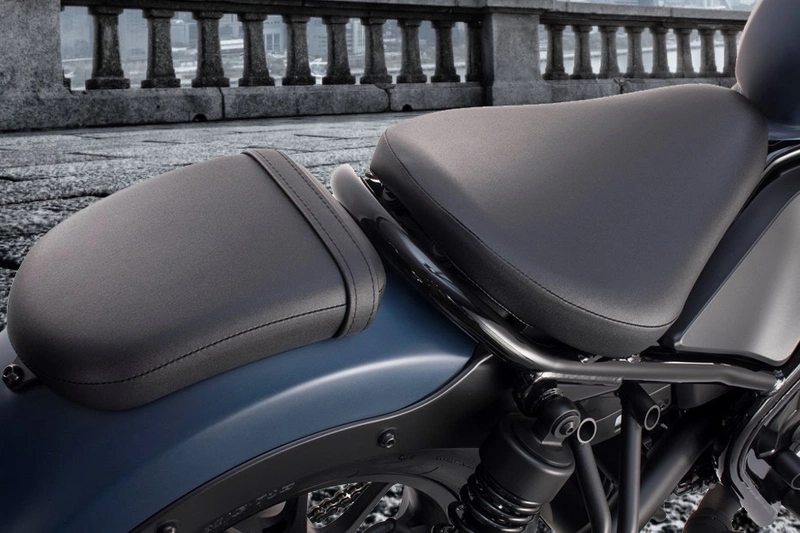
Ergonomically, the Rebel 500 offers a unique, neutral riding posture. The footpegs are mid-set rather than forward-set, and the handlebar reach is natural, creating a comfortable triangle that is less taxing on the rider’s back than a traditional cruiser stance. The standout feature is the 690mm seat height, which allows riders of virtually any height to place their feet firmly on the ground, instilling immense confidence. The rider’s seat itself is adequately padded for city commutes and short highway stints. However, practicality for two-up riding is severely compromised. The pillion seat is a small, thinly padded unit that is suitable only for very short distances.
Furthermore, the lack of a standard grab rail makes it an uncomfortable and insecure perch for a passenger. Luggage-carrying capacity is non-existent out of the box, requiring owners to invest in aftermarket saddlebags and mounting stays for any touring aspirations. Heat management from the liquid-cooled engine is efficient, and riders are unlikely to feel excessive heat on their legs in dense traffic, a significant advantage over larger air-cooled engines. Overall, it’s a comfortable motorcycle for the solo rider, but impractical for those who frequently ride with a pillion.
handling ride quality
handling ride quality
The Rebel 500 is built on a tubular steel diamond frame, with a 41mm telescopic front fork and preload-adjustable twin rear shock absorbers. The motorcycle's defining handling characteristic is its accessibility, stemming directly from its low 690mm seat height and a kerb weight of 191 kg. This combination provides an exceptionally low centre of gravity, making it feel lighter than its specifications suggest and remarkably easy to manage in slow-moving traffic and tight parking spots. The ride quality, however, is on the firmer side. While competent on well-paved roads, the limited suspension travel can transmit sharp jolts from potholes and broken tarmac directly to the rider, a significant consideration for Indian road conditions. Its low ground clearance of 136mm demands caution over larger speed breakers.
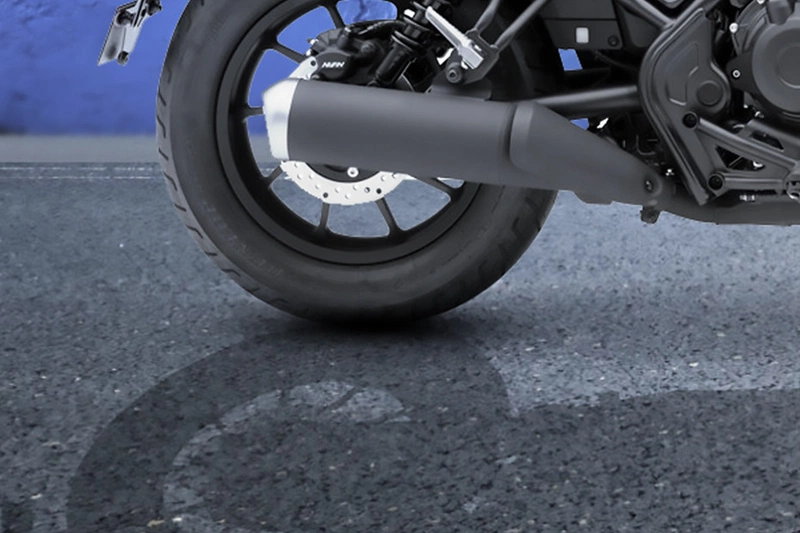
At highway speeds, the long wheelbase ensures good straight-line stability. Cornering capability is adequate for a cruiser, but its lean angle is limited by the low-set footpegs, which will scrape during spirited riding. Braking duties are handled by a single 296mm front disc and a 240mm rear disc, governed by dual-channel ABS. While the setup offers sufficient stopping power for most situations, the front brake lacks the initial bite and feedback of the twin-disc setups seen on some competitors.
design
design
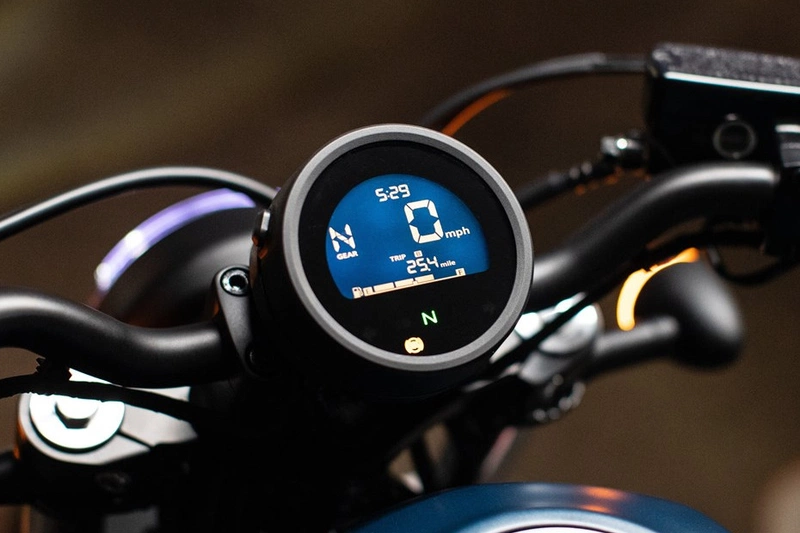
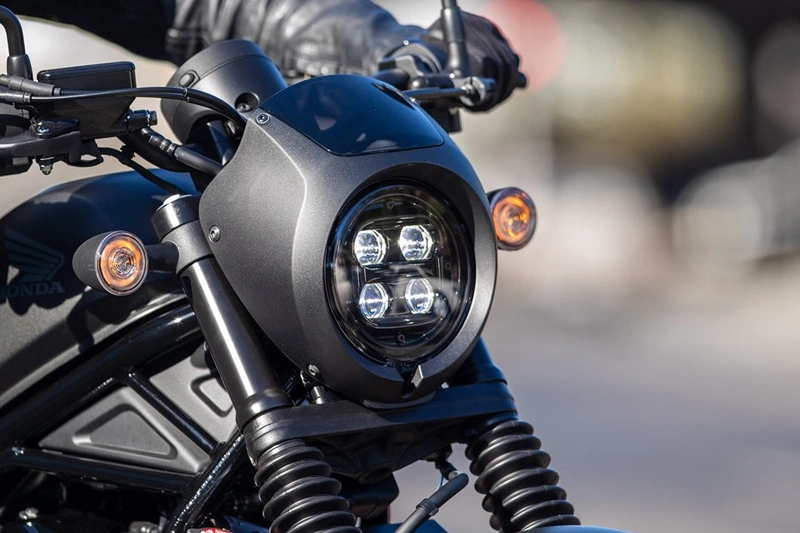
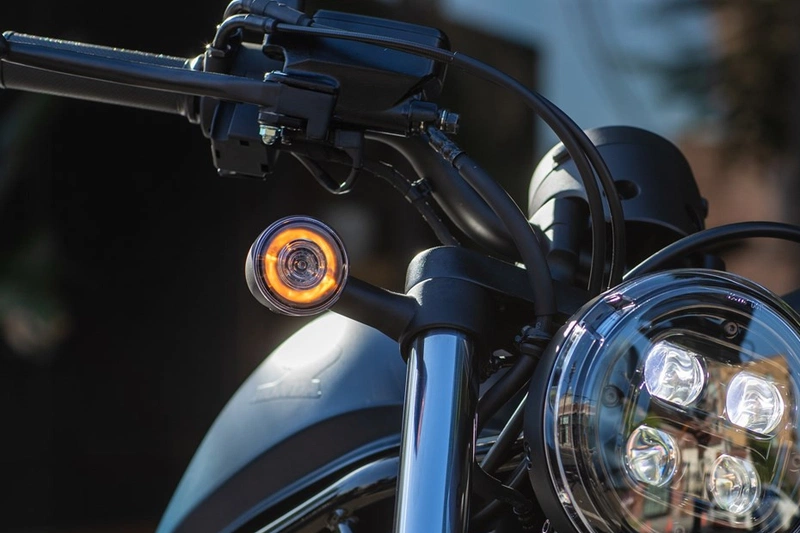
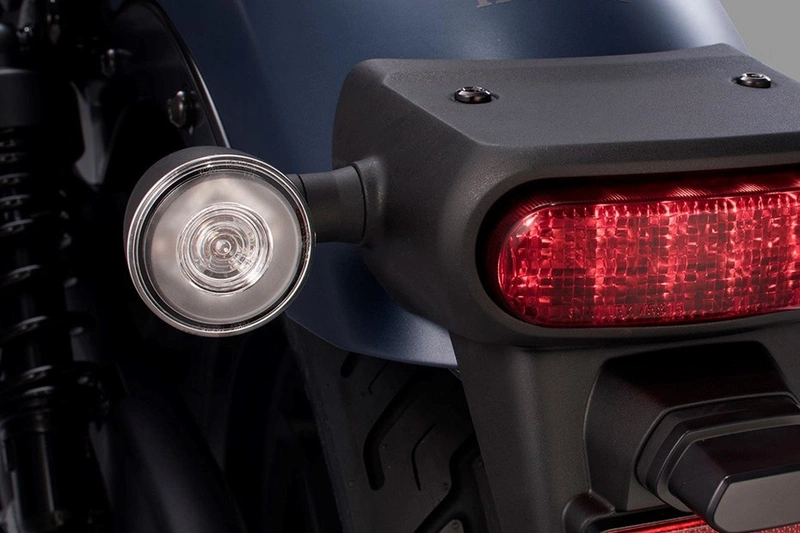
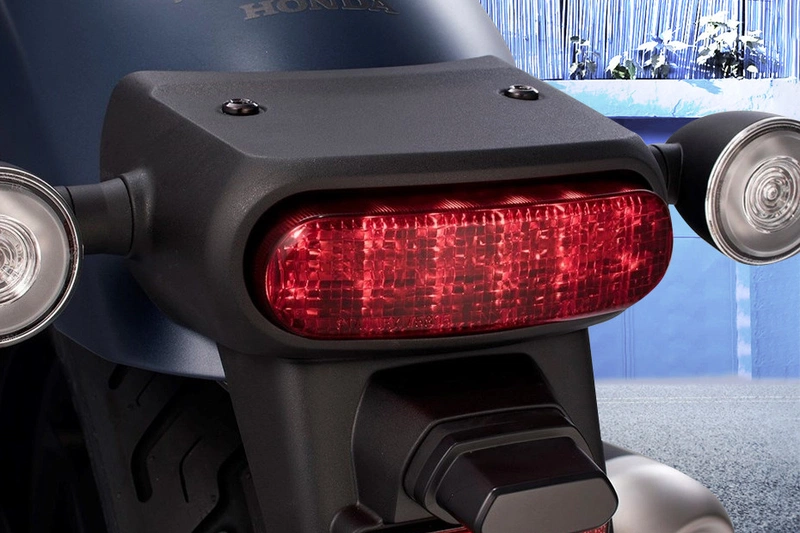
The Rebel 500 adopts a minimalist, modern "bobber" design language that stands in stark contrast to the chrome-laden aesthetic of traditional cruisers. Its blacked-out engine, frame, and wheels, combined with a sloped fuel tank and a solo-style seat, create a distinctive and contemporary silhouette. The entire lighting system is full-LED, including the quad-projector headlamp, taillight, and indicators, which offers excellent visibility and a premium look. The instrument cluster is a single, circular negative-LCD pod. It displays essential information such as speed, gear position, fuel level, and time, but its compact size can make it slightly difficult to read at a glance under harsh sunlight. In terms of modern equipment, the Rebel 500 is notably sparse.
It lacks features that are increasingly common in this price segment, such as Bluetooth connectivity, turn-by-turn navigation, riding modes, or a USB charging port as standard fitment. While this spartan approach aligns with the minimalist bobber philosophy, potential buyers comparing it against more feature-rich competitors might find the equipment list wanting. The focus here is purely on the core riding experience, with little in the way of electronic aids or conveniences.
safety
safety
The primary safety net on the Honda Rebel 500 is its standard dual-channel Anti-lock Braking System (ABS). This system works independently on the front and rear wheels, preventing lock-ups during emergency braking on both dry and wet surfaces, which is a crucial feature for unpredictable Indian road conditions. The braking hardware itself, a single disc at both ends, provides predictable but not exceptional stopping power. The full-LED lighting package significantly contributes to passive safety by making the motorcycle more visible to other road users, especially during dawn, dusk, and nighttime. Another standard safety feature is the side-stand engine cut-off switch, which prevents the motorcycle from being ridden with the side stand deployed.
A notable omission in the safety suite is the absence of a traction control system. While not a universal standard in this segment, its inclusion would have provided an additional layer of safety, especially given the engine's ability to rev quickly on low-traction surfaces. Compared to its peers, the Rebel 500's safety package is adequate and meets the segment standard, but it does not introduce any new benchmarks. The confidence it inspires comes more from its manageable dynamics than from an advanced electronic safety suite.
competition
competition
The Indian middleweight cruiser market offers compelling alternatives to the Rebel 500, each with a distinct advantage.
Royal Enfield Super Meteor 650:
This is the Rebel's most direct competitor in terms of market positioning. It offers a larger 650cc parallel-twin engine with more torque, a classic chrome-heavy design, and significantly more road presence. Its key differentiator is its exceptional value proposition, undercutting the expected price of the Honda substantially.
Kawasaki Vulcan S:
Positioned at a premium, the Vulcan S targets a more performance-oriented rider. Its 649cc parallel-twin engine produces a much higher 61 PS of power. Its clear differentiator is its superior performance and the unique "Ergo-Fit" system, which allows for adjustable footpegs, seat, and handlebar for a customized fit.
Benelli 502C:
The 502C offers a different flavour of cruising with its aggressive, Ducati Diavel-inspired power-cruiser aesthetics. It uses a 500cc parallel-twin engine with similar performance figures to the Rebel. Its primary differentiator is its muscular styling and feature list, which includes a TFT display, offering a more modern appeal.
buying advice
buying advice
Who should buy it?
The ideal buyer is a rider seeking a refined, reliable, and incredibly easy-to-manage cruiser for solo city riding and weekend jaunts. It’s perfect for those who value Honda’s engineering and a modern bobber aesthetic over traditional cruiser character and outright features.
Who should skip it?
Riders who prioritize long-distance touring, regularly carry a pillion, or demand the best value for money should look elsewhere. Those seeking a feature-rich experience, classic cruiser charm, or higher performance will find better options in competitors like Royal Enfield or Kawasaki.
Honda Rebel 500 Specifications & Features
Engine & Transmission
| Starting | Self Start Only |
| Engine Type | 4 Stroke, 8 valves Parallel Twin DOHC, Liquid Cooled |
| Displacement | 471 cc |
| Max Torque | 43.3 Nm @ 6000rpm |
| Number of Cylinders | 2 |
| Cooling System | Liquid Cooled |
| Fuel Supply | Fuel Injection |
| Gear Box | 6 Speed |
| Bore | 67 mm |
| Stroke | 66.8 mm |
| Compression Ratio | 10.7 |
| Emission Type | bs6-2.0 |
| Clutch | Wet multiplate |
| Valve Per Cylinder | 4 |
| Paddle |
Motor & Battery
| Drive Type | Chain Drive |
| Reverse Assist | |
| Transmission | Manual |
| Peak Power | 46.22 PS @ 8500 rpm |
| Swappable Battery |
Mileage & Performance
| Overall Mileage | 27 kmpl |
Performance
| Top Speed | 153 kmph |
| average speed |
Chassis & Suspension
| Body Type | Cruiser Bikes |
Tyres & Brakes
| Front Brake Diameter | 296 mm |
| Rear Brake Diameter | 240 mm |
| Radial Tyre |
Dimensions & Capacity
| Width | 810 mm |
| Length | 2205 mm |
| Height | 1090 mm |
| Fuel Capacity | 11.2 L |
| Saddle Height | 690 |
| Ground Clearance | 125 mm |
| Wheelbase | 1490 mm |
| Kerb Weight | 191 Kg |
| Engine Oil | 3.2 L |
| pillion grab rail | |
| pillion seat |
Electricals
| Headlight | LED |
| Taillight | LED |
| Turn Signal Lamp | LED |
| Low Battery Indicator | |
| Projector Headlights | |
| Low Oil Indicator | |
| Low Fuel Indicator | |
| Pilot Lamps | |
| Drls |
Features & Safety
| Pass Switch | 1 |
| Display | |
| Fuel Gauge | Digital |
| Traction Control | |
| Power Modes | |
| Launch Control | |
| Quick Shifter | |
| Adjustable Windscreen | |
| Engine Kill Switch | |
| Central Locking | |
| Real Time Mileage Indicator | |
| Service Due Indicator | |
| Switchable ABS | |
| Engine Immobilizer | |
| EBS | |
| Shutter Lock | |
| Internet Connectivity | |
| Airbag | |
| Fast Charging | |
| External Fuel Filling | |
| Seat Opening Switch | |
| I3S Technology | |
| Telematics | |
| Artificial Intelligence | |
| exhaust heat shield | |
| hazard warning indicator | |
| hazard warning lights | |
| high beam indicator | |
| malfunction indicator | |
| no of tripmeters | 2 |
| saree guard | |
| shift light | |
| stand alarm | |
| vehicle location tracking |
Underpinnings
| Suspension Front | Telescopic Forks |
| Suspension Rear | Showa Dual Shock Absorbers |
| Brakes Front | Disc |
| Brakes Rear | Disc |
| Tyre Size | Front :-130/90-16, Rear :- 150/80-16 |
| Wheel Size | Front :-406.4 inch, Rear :-406.4 inch |
| Tubeless Tyre | Tubeless |
| ABS | Dual Channel |
| Frame | Steel Diamond |
| caliper front piston | 2 |
| caliper rear piston | 1 |
| Tyre Type | Tubeless |