
EMI Loading
Honda CB350RS Key Specifications
Honda CB350RS Variants & Prices
| Variant Details | Ex. Showroom Price | |
|---|---|---|
CB350RS DLX Base Model | ₹ 1.98 Lakh* | |
CB350RS DLX Pro Top Model | ₹ 2 Lakh* |
CB350RS DLX
CB350RS DLX Pro
Honda CB350RS Comparison with similar Bikes
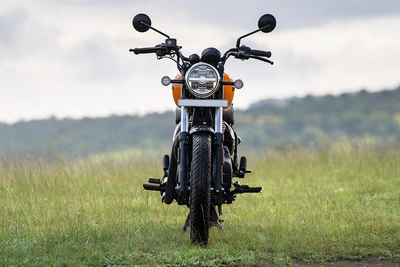
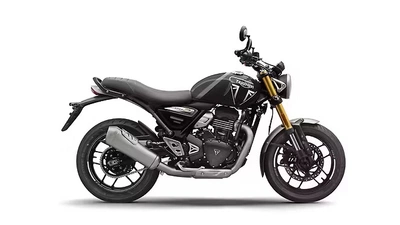
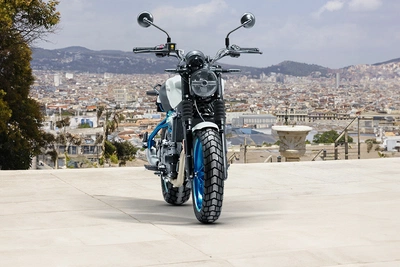
Pros & Cons of Honda CB350RS
Things We Like
- Exceptionally refined and tractable engine with minimal vibrations.
- Segment-leading safety suite with traction control and dual-channel ABS.
Things We Don't Like
- Honda’s premium BigWing service network has limited reach.
- Engine feels strained and lacks top-end power above 110 km/h.
Honda CB350RS Overview

Engine, Performance and Mileage
Engine, Performance and Mileage
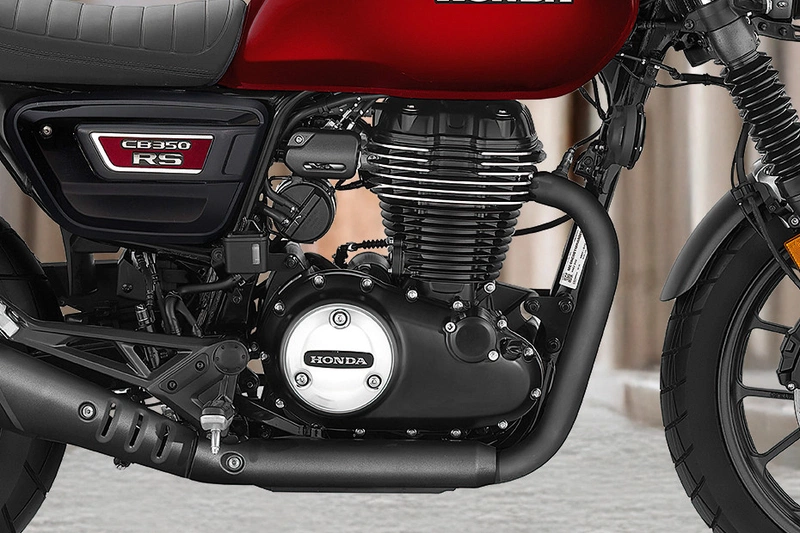
The heart of the Honda CB350RS is its 348.36cc, air-cooled, single-cylinder engine, a unit that prioritises character and refinement over outright performance figures. It produces a modest 21.07 PS at 5,500 rpm but a substantial 30 Nm of torque at a very low 3,000 rpm. This torque-rich nature defines its real-world behaviour. In city traffic, the engine is remarkably tractable, allowing the rider to maintain speeds as low as 30-35 km/h in third gear without protest. The power delivery is linear and predictable, devoid of any sudden surges. Coupled with a slip-and-assist clutch that results in an exceptionally light lever pull and a slick-shifting 5-speed gearbox, urban commuting is effortless.
On the highway, the CB350RS settles into a comfortable cruise between 80-100 km/h, with minimal vibrations felt through the handlebars or footpegs. Pushing beyond 110 km/h reveals the engine's limitations, where it begins to feel strained. Fuel efficiency is a strong point, with real-world figures consistently hovering between 35 and 40 kmpl, making it a viable daily commuter. The engine's long-stroke architecture and distinct exhaust note provide a satisfying thump without being obtrusive, striking a fine balance between classic feel and modern smoothness.
posture comfort
posture comfort
The ergonomics of the CB350RS strike a balance between relaxed and sporty. The footpegs are slightly rear-set and the handlebar is positioned lower compared to the H'ness, encouraging a minor forward lean. This posture is engaging for spirited riding but may prove less comfortable than a fully upright stance for riders on very long tours. The 800mm seat height is accessible to riders of average height. The rider's portion of the single-piece seat is well-cushioned and supportive for daily commutes.
However, the pillion experience is a significant compromise. The tapered rear section of the seat is narrow and offers limited space, and the integrated grab strap is less secure than a conventional grab rail. This makes the bike suitable for short city rides with a pillion, but not for extended two-up touring. The air-cooled engine manages heat efficiently, with no uncomfortable warmth directed at the rider's legs in dense traffic. For luggage mounting, options are limited due to the upswept exhaust and minimal rear-end bodywork; riders will need to invest in well-designed aftermarket racks or saddle stays for any serious touring aspirations.
handling ride quality
handling ride quality
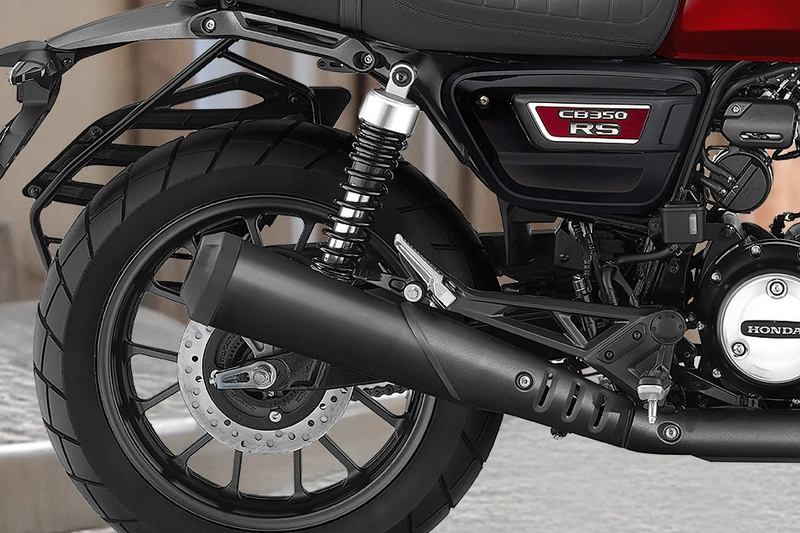
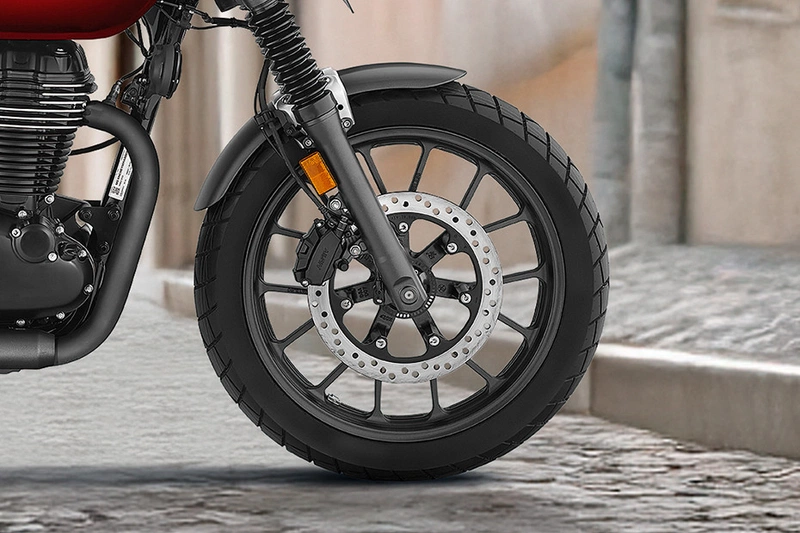
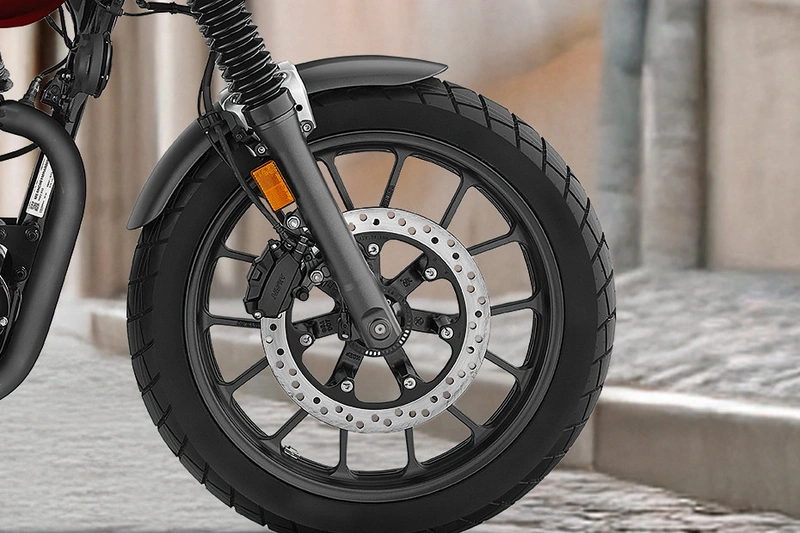
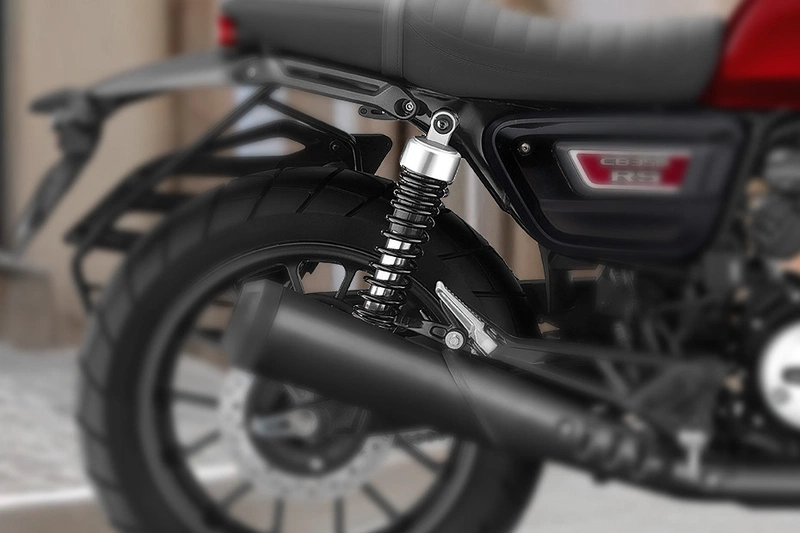
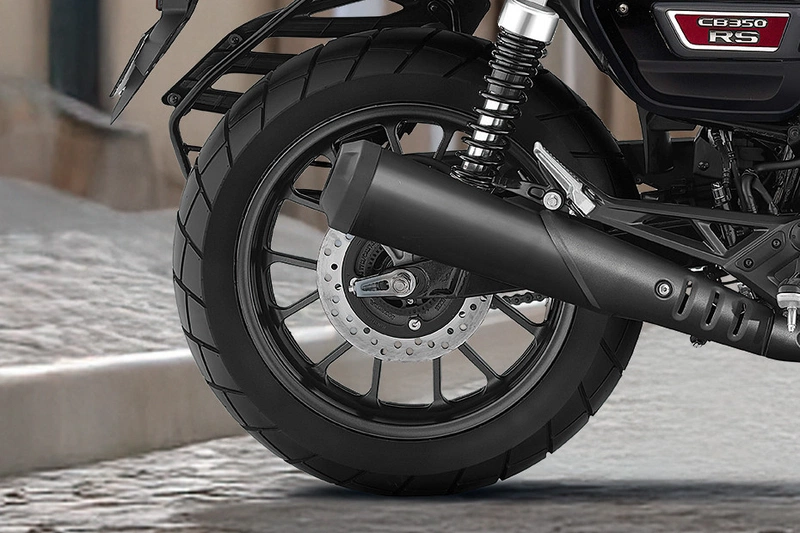
The CB350RS is built on a half-duplex cradle frame, supported by telescopic front forks and twin hydraulic shock absorbers at the rear. The suspension is tuned with a bias towards firmness compared to its sibling, the H'ness CB350. This results in commendable stability at highway speeds and confidence when leaning into corners. The bike holds its line well, aided by wide, block-pattern MRF Zapper Kurve tyres (100/90-19 front, 150/70-17 rear) that offer adequate grip in dry conditions. The slightly more committed riding posture and wider rear tyre lend it a more engaging character than its retro counterparts. In the city, its 179 kg kerb weight is well-distributed, making it agile enough to filter through traffic, though not as nimble as lighter competitors.
However, the stiff rear suspension can transmit sharp jolts from potholes and broken tarmac directly to the rider's spine, compromising comfort on poorly maintained roads. The braking setup, comprising a 310mm front disc and a 240mm rear disc governed by dual-channel ABS, provides strong and progressive stopping power. The feedback at the lever is predictable, allowing for confident braking in varied conditions without the abruptness seen in some performance-oriented machines.
design
design
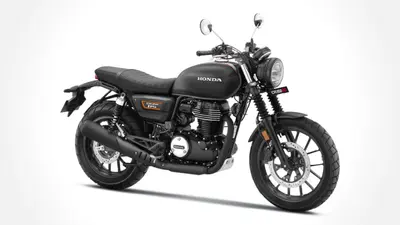
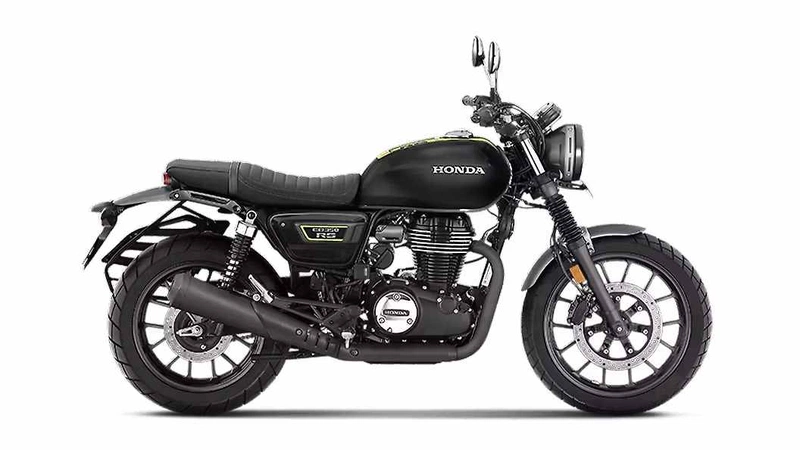
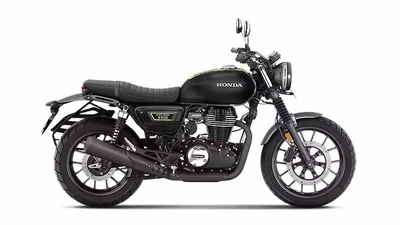
Honda has positioned the CB350RS as a sportier, scrambler-inspired alternative to the classic H'ness. This is evident in its design cues: a sleeker, tucked-in LED tail lamp, a single-piece "tuck-and-roll" seat, fork gaiters, an upswept blacked-out exhaust, and a skid plate. The overall fit-and-finish is of high quality, with premium paint and minimal panel gaps. The lighting is an all-LED affair, offering excellent illumination and visibility. The instrument cluster is a semi-digital unit with an analogue speedometer and a small LCD inset. While it provides essential information like a gear position indicator, real-time mileage, and trip meters, its compact size makes the data feel cluttered and difficult to read at a glance. Feature-wise, the bike is well-equipped for its segment.
It includes the Honda Smartphone Voice Control System (HSVCS) for Bluetooth-enabled turn-by-turn navigation prompts, call alerts, and music control, although this requires a separate helmet-mounted communication device. A USB-C charging port adds practicality for long rides. The inclusion of Honda Selectable Torque Control (traction control) and an Emergency Stop Signal (ESS) elevates its equipment list, providing tangible safety and convenience benefits in real-world Indian riding conditions.
safety
safety
Honda has equipped the CB350RS with a comprehensive safety package that sets a high standard for the segment. The foundational element is the dual-channel Anti-lock Braking System (ABS), which prevents wheel lock-up on both the front and rear wheels during emergency braking, maintaining steering control on slippery surfaces. This is a critical feature and a significant advantage over single-channel ABS systems found on some rivals.
The standout safety feature, however, is the Honda Selectable Torque Control (HSTC). This traction control system monitors front and rear wheel speeds and modulates engine torque to prevent the rear wheel from spinning under acceleration on low-grip surfaces like wet roads, gravel, or oil patches. This system, which can be switched off if desired, provides an invaluable safety net, particularly given unpredictable Indian road conditions. Furthermore, the Emergency Stop Signal (ESS) function automatically activates the hazard lights during sudden, hard braking to alert vehicles behind. Combined with the excellent visibility from the all-LED lighting setup and a standard side-stand engine cut-off switch, the CB350RS offers a level of electronic safety aids that is still rare in this price bracket.
competition
competition
The 350-400cc segment in India is fiercely contested, and the CB350RS faces several formidable rivals. Each offers a distinct proposition for potential buyers.
Royal Enfield Hunter 350:
The Hunter 350’s primary differentiator is accessibility. It is priced significantly lower than the CB350RS and features a lower 790mm seat height and smaller 17-inch wheels, making it exceptionally nimble and easy to manage for new riders and city commuting. Its J-series engine is smooth but focuses more on a relaxed, thumping character.
Triumph Speed 400:
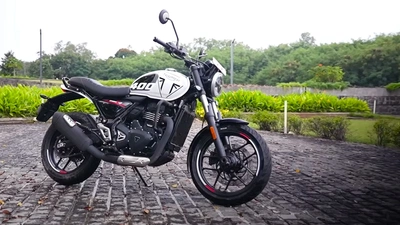
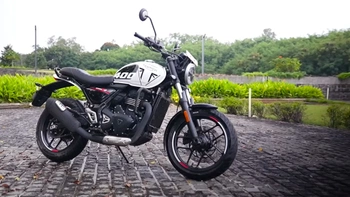
Positioned as a premium performance roadster, the Speed 400’s key advantage is its engine. The 398cc liquid-cooled motor produces nearly 40 PS, offering a level of performance the air-cooled Honda cannot match. It also boasts superior hardware like USD front forks and ride-by-wire throttle, justifying its higher price point for performance enthusiasts.
TVS Ronin:
The Ronin’s main differentiator is its unique, feature-rich package. It blends cruiser, scrambler, and roadster elements into a quirky design. It offers equipment like Showa USD forks, Glide Through Technology (GTT), and multiple riding modes. Its 225.9cc engine is smaller but provides a peppy, city-focused character for those seeking modern tech over classic displacement.
buying advice
buying advice
Who should buy it?
The ideal buyer is a mature rider who values engine refinement, premium build quality, and modern safety features like traction control. It is perfect for discerning commuters and weekend riders who prefer a polished, reliable, and stylish motorcycle over raw power or a bare-bones retro experience.
Who should skip it?
Those prioritising outright highway performance, pillion comfort for long journeys, or requiring access to a widespread service network outside major cities should look elsewhere. Riders on a tighter budget will find better value in competitors like the Royal Enfield Hunter 350.
Honda CB350RS Specifications & Features
Engine & Transmission
| Starting | Self Start Only |
| Engine Type | 4 Stroke, SI Engine |
| Displacement | 348.36 cc |
| Max Torque | 30 Nm @ 3000 rpm |
| Number of Cylinders | 1 |
| Cooling System | Air Cooled |
| Fuel Supply | Fuel Injection |
| Gear Box | 5 Speed |
| Bore | 70 mm |
| Stroke | 90.5 mm |
| Compression Ratio | 9.5:1 |
| Emission Type | BS6.2 |
| Clutch | Multiplate Wet Clutch |
| Valve Per Cylinder | 2 |
| gear shifting pattern | 1 Down 4 Up |
| spark plugs per cylinder | 1 Per Cylinder |
Motor & Battery
| Drive Type | Chain Drive |
| Transmission | Manual |
| Peak Power | 21.07 PS @ 5500 rpm |
Mileage & Performance
| Overall Mileage | 35 kmpl |
| Acceleration 0-80 Kmph | 7.3 s |
| Roll ons 30-70 Kmph | 6.13 s |
| Roll ons 40-80 Kmph | 8.58 s |
| Braking 60-0 Kmph | 17.55 s |
| Braking 80-0 Kmph | 31 s |
| Braking 100-0 Kmph | 50.19 s |
| Quarter Mile | 18.04 |
| zero to 100 kmph | 11.99 s |
Performance
| Top Speed | 150 kmph |
| Acceleration 0-100 Kmph | 11.99 s |
Chassis & Suspension
| Body Type | Roadster Bikes |
Tyres & Brakes
| Front Brake Diameter | 310 mm |
| Rear Brake Diameter | 240 mm |
| Front Tyre Pressure Rider | 29 psi |
| Front Tyre Pressure Rider Pillion | 29 |
| Rear Tyre Pressure Rider | 29 psi |
| Rear Tyre Pressure Rider Pillion | 33 |
Dimensions & Capacity
| Width | 782 mm |
| Length | 2171 mm |
| Height | 1097 mm |
| Fuel Capacity | 15 L |
| Ground Clearance | 168 mm |
| Wheelbase | 1441 mm |
| Kerb Weight | 180 Kg |
| Fuel Reserve | 3 L |
| Seat Height | 800 mm |
| pillion grab rail | |
| pillion seat |
Electricals
| Headlight | LED |
| Taillight | LED |
| Turn Signal Lamp | LED |
| Low Battery Indicator | |
| Low Oil Indicator | |
| Low Fuel Indicator |
Features & Safety
| Additional Features |
|
| Fuel Gauge | Digital |
| Traction Control | |
| Engine Kill Switch | |
| Real Time Mileage Indicator | |
| Service Due Indicator | |
| Engine Immobilizer | |
| hazard warning indicator | |
| high beam indicator | |
| malfunction indicator | |
| no of tripmeters | 1 |
| saree guard | |
| stand alarm |
Features
| Instrument Console | Analogue and Digital |
| Speedometer | Analogue |
| Tripmeter | Digital |
| Seat Type | Single |
| Clock | |
| Passenger Footrest | |
| Navigation | |
| Odometer | Digital |
| Call SMS Alerts | |
| Average Fuel Economy Indicator | |
| Distance To Empty Indicator | |
| brightness control | |
| gear indicator | |
| voice assist |
App Features
| Low Battery Alert | |
| Navigation Assist | |
| Calls & Messaging |
Underpinnings
| Suspension Front | Telescopic |
| Suspension Rear | Twin Hydraulic |
| Brakes Front | Disc |
| Brakes Rear | Disc |
| Tyre Size | Front :-100/90-19, Rear :-150/70-17 |
| Wheel Size | Front :-482.6 mm,Rear 431.8 mm |
| Wheels Type | Alloy |
| Tubeless Tyre | 1 |
| ABS | Dual Channel |
| Frame | Half Duplex Cradle |
| first service | 1000 Kms/30 Days |
| second service | 6000 Kms/180 Days |
| third service | 12000 Kms/365 Days |
| caliper front piston | 2 |
| caliper rear piston | 1 |
| Tyre Type | Tubeless |
Warranty
| Vehicle Warranty | 3 Years or 42,000 Km |
Honda CB350RS Price in Cities
₹ 2.33 Lakh - 2.36 Lakh
₹ 2.29 Lakh - 2.32 Lakh
₹ 2.30 Lakh - 2.32 Lakh
₹ 2.32 Lakh - 2.35 Lakh
₹ 2.22 Lakh - 2.25 Lakh
₹ 2.29 Lakh - 2.32 Lakh
₹ 2.40 Lakh - 2.43 Lakh
₹ 2.22 Lakh - 2.29 Lakh
₹ 2.33 Lakh - 2.36 Lakh
₹ 2.53 Lakh - 2.56 Lakh
Popular Honda Bikes
Popular Brands




Honda CB350RS Comparisons
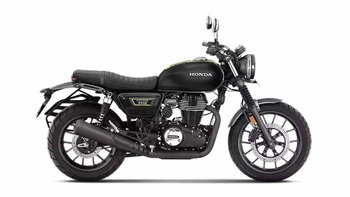
Honda CB350RS
₹1.98 - 2 Lakh
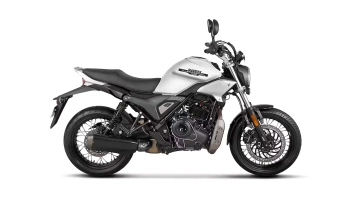
Hero Mavrick 440
₹2.13 - 2.40 Lakh
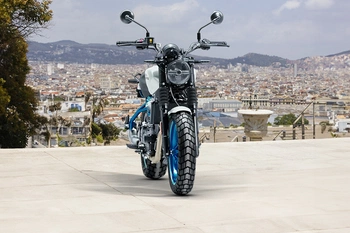
Honda CB350RS
₹1.98 - 2 Lakh
Royal Enfield Guerrilla 450
₹2.49 - 2.72 Lakh
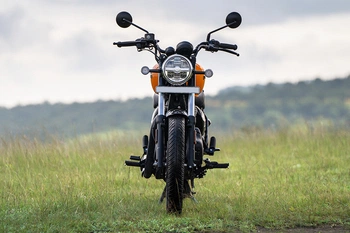
Honda CB350RS
₹1.98 - 2 Lakh
Royal Enfield Meteor 350
₹1.99 - 2.20 Lakh
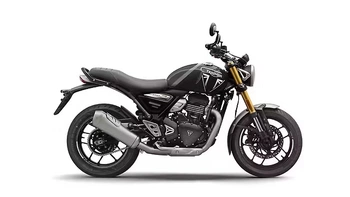
Honda CB350RS
₹1.98 - 2 Lakh
Triumph Speed 400
₹2.34 Lakh
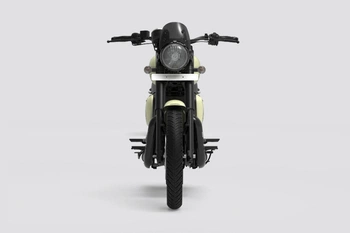
Honda CB350RS
₹1.98 - 2 Lakh
Jawa 42
₹1.83 - 1.85 Lakh
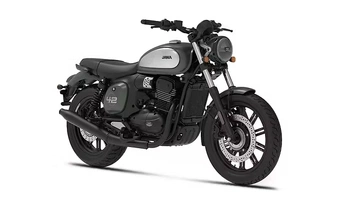
Honda CB350RS
₹1.98 - 2 Lakh
Jawa 42 FJ
₹1.94 - 2.05 Lakh
Honda CB350RS
₹1.98 - 2 Lakh
Triumph Speed T4
₹1.99 Lakh
Honda CB350RS
₹1.98 - 2 Lakh
Jawa 350
₹1.83 - 2.20 Lakh
Honda CB350RS
₹1.98 - 2 Lakh
Jawa 42
₹1.83 - 1.85 Lakh
Honda CB350RS
₹1.98 - 2 Lakh
Jawa 42 FJ
₹1.94 - 2.05 Lakh