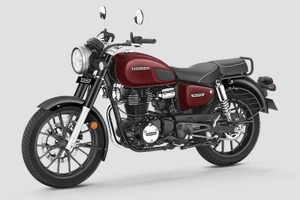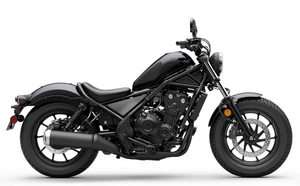

Honda CB300R Key Specifications
Honda CB300R Variants & Prices
| Variant Details | Ex. Showroom Price | |
|---|---|---|
CB300R STD160 kmph | 30 kmpl | 286.01 cc | ₹ 2.19 Lakh* |
CB300R STD
Pros & Cons of Honda CB300R
Things We Like
- Exceptionally lightweight chassis results in incredibly agile and responsive handling.
- Premium Showa suspension offers excellent stability and feedback during cornering.
Things We Don't Like
- Lacks modern features like a TFT display and Bluetooth connectivity.
- Small 9.7-litre fuel tank severely limits touring range and practicality.
Honda CB300R Overview

Engine, Performance and Mileage
Engine, Performance and Mileage
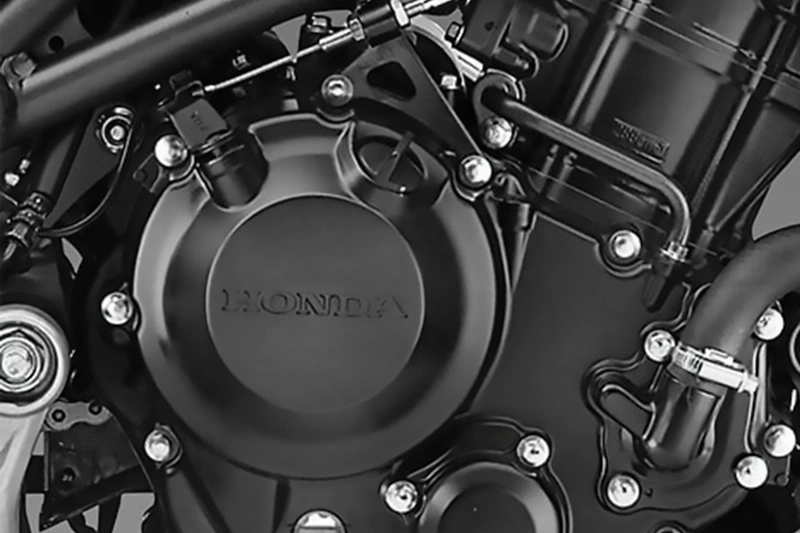
The heart of the Honda CB300R is a 286.01cc, DOHC, 4-valve, liquid-cooled single-cylinder engine. In its BS6 Phase 2 iteration, this motor is tuned to produce a peak power of 31.1 PS at 9,000 rpm and a maximum torque of 27.5 Nm at 7,500 rpm. This powertrain is mated to a 6-speed transmission equipped with a slip-and-assist clutch. In real-world conditions, the engine delivers a fuel efficiency figure between 30-32 kmpl, which is competitive for the segment. The performance characteristic is distinctly rev-happy; the engine feels most alive past 6,000 rpm, pulling cleanly to its redline.
In city traffic, the tractable low-end torque is adequate, and the light action of the slip-assist clutch significantly reduces rider fatigue during stop-and-go commutes. However, its true character emerges on open roads where its free-revving nature can be exploited. Highway cruising at 100-110 kmph is sustainable without undue stress on the engine. Compared to the torquey, low-revving nature of the Triumph Speed 400, the CB300R demands more active gearshifts to remain in its powerband, catering to a rider who enjoys an engaging, high-rpm riding style. Honda's hallmark refinement is evident, with vibrations being well-controlled throughout the rev range.
posture comfort
posture comfort
The ergonomics of the Honda CB300R strike a calculated balance between an upright commuter stance and a sporty, slightly committed posture. The rider sits with a mild forward lean to reach the flat, wide handlebar, while the footpegs are positioned neutrally. The 801mm seat height is accessible to riders of average Indian height. However, the seat itself is firm and narrow, which can lead to discomfort over long-duration rides exceeding two hours. For the pillion, the experience is significantly compromised. The rear seat is small, firm, and the minimalist grab rails offer little in terms of security, relegating it to short, intra-city journeys only.
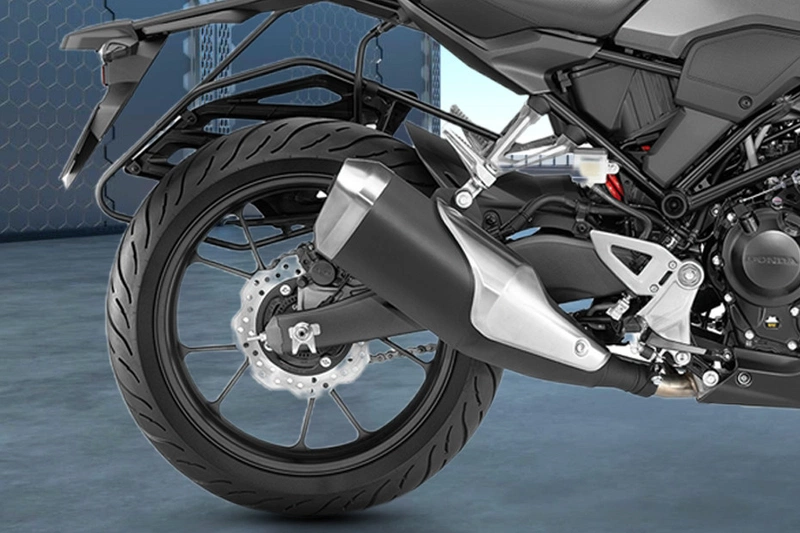
The most significant practical limitation is the small 9.7-litre fuel tank. Paired with a real-world mileage of around 30-32 kmpl, the effective range is limited to approximately 280-300 km, necessitating frequent fuel stops on longer tours. Heat management from the liquid-cooled engine is well-controlled in city traffic, with the radiator fan not directing excessive hot air onto the rider's legs. Luggage mounting options are limited due to the minimalist tail section, further underscoring its role as a city bike and weekend canyon carver rather than a tourer.
handling ride quality
handling ride quality
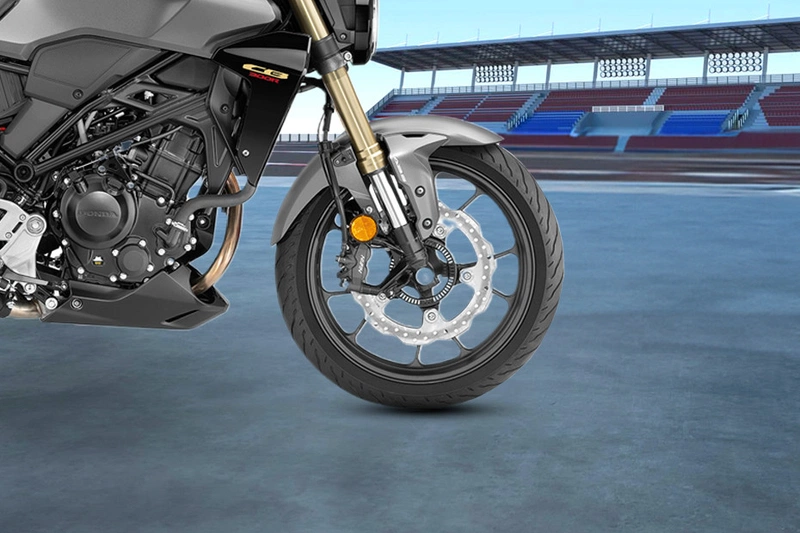
The CB300R's chassis and suspension package is arguably its most significant differentiator. The motorcycle’s standout specification is its 146 kg kerb weight, making it one of the lightest motorcycles in its class. This low mass, combined with a diamond-type frame, results in exceptionally nimble and responsive handling. Directional changes are immediate, making it a formidable tool for navigating dense urban traffic. The suspension hardware is premium, featuring 41mm Showa SFF-BP (Separate Function Fork-Big Piston) upside-down forks at the front and a 7-step preload-adjustable monoshock at the rear. The setup is calibrated on the firmer side, prioritising handling precision over outright comfort. While this allows for sharp cornering and high-speed stability, road imperfections are communicated clearly to the rider.
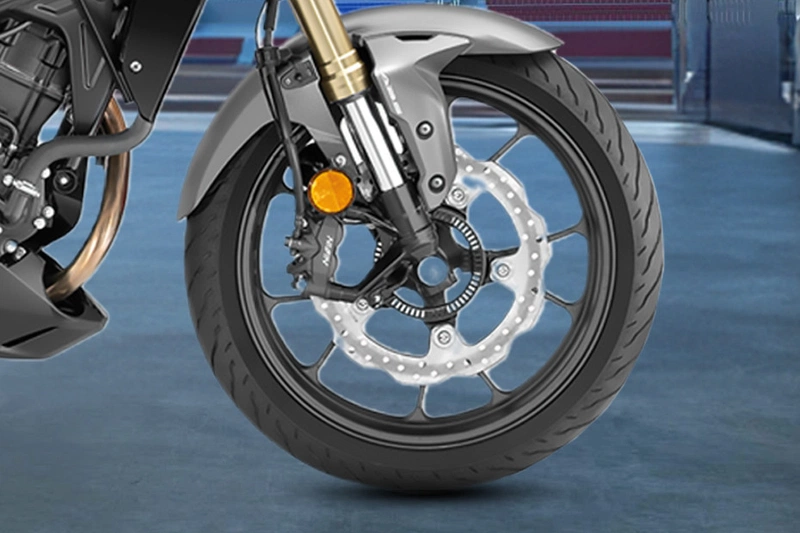
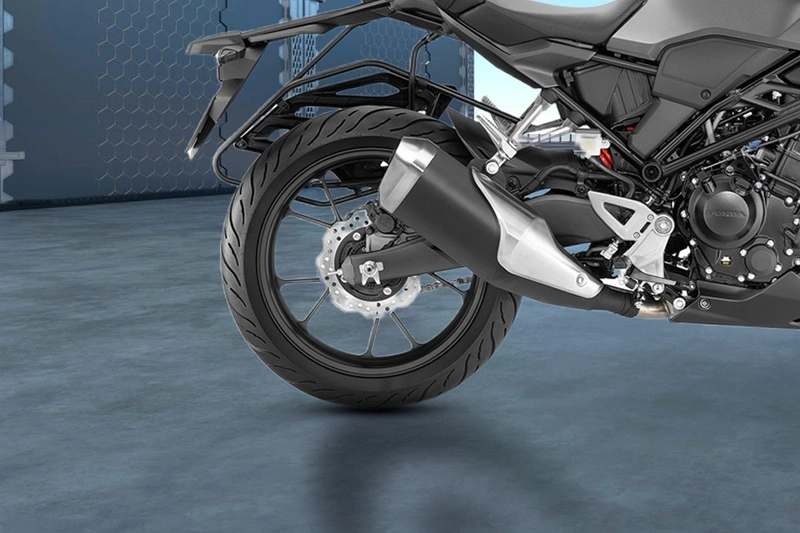
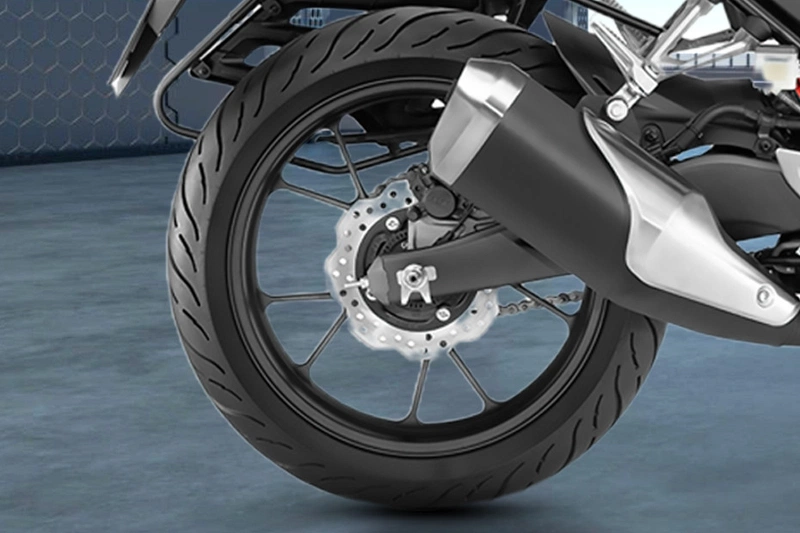
The braking system is another highlight, comprising a 296mm floating front disc with a radially mounted Nissin caliper and a 220mm rear disc. This setup provides strong, progressive stopping power with excellent feedback at the lever. The inclusion of an Inertial Measurement Unit (IMU) linked to the dual-channel ABS provides a superior safety net by mitigating rear-wheel lift under aggressive braking, a feature not commonly found in this price bracket.
design
design
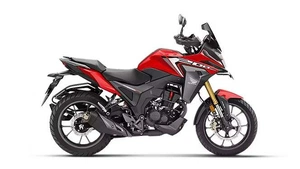
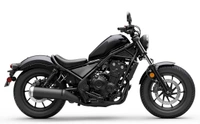
Honda has employed its 'Neo-Sports Café' design language for the CB300R, which blends modern engineering with retro styling cues. The signature element is the round, full-LED headlamp, complemented by a muscular, chiselled fuel tank and a minimalist tail section. The overall aesthetic is compact and athletic, giving it a unique visual identity that stands apart from the aggressive streetfighter designs of its rivals. In terms of equipment, the CB300R adopts a focused, almost spartan approach. The entire lighting system, including indicators, is LED. The instrument cluster is a negative LCD unit that displays essential information such as a gear position indicator, tachometer, speedometer, fuel gauge, and trip meters.
However, the motorcycle is notably devoid of contemporary features that are becoming commonplace in the segment. There is no TFT display, Bluetooth connectivity for smartphone integration, turn-by-turn navigation, or selectable riding modes. While a USB charging port is absent as standard, the core components like switchgear quality and fit-and-finish are executed to a high standard, reflecting its premium positioning. This motorcycle is clearly engineered for the purist who prioritises the mechanical riding experience over digital integration.
safety
safety
Honda has equipped the CB300R with a robust safety package that surpasses the segment standard in one key area. The mandatory dual-channel Anti-lock Braking System (ABS) is present, governing both the front and rear wheels to prevent lock-ups during panic braking. The standout feature, however, is that this ABS system is linked to an Inertial Measurement Unit (IMU). The IMU constantly measures the motorcycle's pitch, allowing the ABS to intelligently distribute braking force between the front and rear wheels. This system's primary function is to mitigate rear-wheel lift during hard deceleration, providing a level of stability and control typically reserved for higher-capacity superbikes.
This is a tangible safety advantage, especially in unpredictable Indian road conditions. Standard safety equipment also includes a side-stand engine cut-off sensor. Visibility is another strong point, with the full-LED headlamp offering excellent spread and illumination for night riding, enhancing the rider's ability to see and be seen. The predictable handling and strong, communicative brakes further contribute to overall rider confidence, making the CB300R a reassuringly safe motorcycle to pilot.
competition
competition
The Honda CB300R competes in a fiercely contested segment with highly capable rivals, each offering a distinct proposition.
Triumph Speed 400:
Priced similarly, the Speed 400 offers a completely different character. Its 398cc engine produces significantly more torque (37.5 Nm) lower in the rev range, making it more tractable and relaxed in the city. Its key differentiator is the combination of superior low-end performance and a premium, modern-classic aesthetic with impeccable build quality.
KTM 390 Duke:
The undisputed performance benchmark of the category. The latest generation 390 Duke boasts a larger 399cc engine with class-leading power (~46 PS), an aggressive chassis, and an extensive electronics suite including a TFT display, riding modes, and a quickshifter. Its clear differentiator is its uncompromised, track-focused performance and technology package.
TVS Apache RTR 310:
This motorcycle champions a value-for-money proposition by offering an exhaustive list of features. It comes with cruise control, a climate-controlled seat, a large TFT display with extensive connectivity, and cornering electronics on the top variant. Its differentiator is its segment-first feature list at a highly competitive price point.
buying advice
buying advice
Who should buy it?
The ideal CB300R buyer is a rider who prioritises lightweight agility and handling precision above all else. They appreciate refined Japanese engineering and a minimalist design, and prefer an engaging, high-revving engine for city riding and spirited weekend blasts over a feature-heavy or touring-focused machine.
Who should skip it?
Prospective buyers who prioritise long-distance touring (due to the small fuel tank), require modern tech features like Bluetooth connectivity and navigation, or desire the most powerful engine in the segment should look at alternatives like the Triumph Speed 400 or KTM 390 Duke respectively.
Honda CB300R Specifications & Features
Engine & Transmission
| Starting | Self Start Only |
| Engine Type | Liquid Cooled, 4 Stroke, SI, BS-VI Engine |
| Displacement | 286.01 cc |
| Max Torque | 27.5 Nm @ 7500 rpm |
| Number of Cylinders | 1 |
| Cooling System | Liquid Cooled |
| Fuel Supply | Fuel Injection |
| Gear Box | 6 Speed |
| Bore | 76 mm |
| Stroke | 63.043 mm |
| Compression Ratio | 10.7:1 |
| Emission Type | bs6-2.0 |
| Clutch | Multiplate Wet Clutch |
| Valve Per Cylinder | 4 |
| Paddle |
Motor & Battery
| Drive Type | Chain Drive |
| Reverse Assist | |
| Transmission | Manual |
| Peak Power | 31.13 PS @ 9000 rpm |
| Swappable Battery |
Mileage & Performance
| Overall Mileage | 30 kmpl |
| Acceleration 0-80 Kmph | 4.79 s |
| Roll ons 30-70 Kmph | 4.21 s |
| Roll ons 40-80 Kmph | 5.15 s |
| Braking 60-0 Kmph | 17.86 s |
| Braking 80-0 Kmph | 31.72 s |
| Braking 100-0 Kmph | 51.07 s |
| Quarter Mile | 15.57 sec @ 132.21 kmph |
| zero to 100 kmph | 7.35 s |
Performance
| Top Speed | 160 kmph |
| Acceleration 0-100 Kmph | 7.35 s |
| average speed |
Chassis & Suspension
| Body Type | Sports Bikes |
Tyres & Brakes
| Front Brake Diameter | 296 mm |
| Rear Brake Diameter | 220 mm |
| Radial Tyre | |
| Front Tyre Pressure Rider | 29 psi psi |
| Front Tyre Pressure Rider Pillion | 29 psi |
| Rear Tyre Pressure Rider | 33 psi psi |
| Rear Tyre Pressure Rider Pillion | 33 psi |
Dimensions & Capacity
| Width | 802 mm |
| Length | 2017 mm |
| Height | 1047 mm |
| Fuel Capacity | 9.7 L |
| Saddle Height | 801 |
| Ground Clearance | 157 mm |
| Wheelbase | 1352 mm |
| Kerb Weight | 146 Kg |
| Fuel Reserve | 1.9 L |
| pillion grab rail | |
| pillion seat |
Electricals
| Headlight | LED |
| Taillight | LED |
| Turn Signal Lamp | LED |
| Low Battery Indicator | |
| Projector Headlights | |
| Low Oil Indicator | |
| Low Fuel Indicator | |
| Pilot Lamps | |
| Drls |
Features & Safety
| Pass Switch | 1 |
| Additional Features |
|
| Display | |
| Traction Control | |
| Power Modes | |
| Launch Control | |
| Quick Shifter | |
| Adjustable Windscreen | |
| Engine Kill Switch | |
| Central Locking | |
| Real Time Mileage Indicator | |
| Service Due Indicator | |
| Switchable ABS | |
| Engine Immobilizer | |
| EBS | |
| Shutter Lock | |
| Internet Connectivity | |
| Airbag | |
| Fast Charging | |
| External Fuel Filling | |
| Seat Opening Switch | |
| I3S Technology | |
| Telematics | |
| Artificial Intelligence | |
| exhaust heat shield | |
| hazard warning indicator | |
| hazard warning lights | |
| high beam indicator | |
| malfunction indicator | |
| no of tripmeters | 2 |
| saree guard | |
| shift light | |
| stand alarm | |
| vehicle location tracking |
Underpinnings
| Suspension Front | 41 mm, Upside Down |
| Suspension Rear | 7 Step adjustable monoshock |
| Brakes Front | Disc |
| Brakes Rear | Disc |
| Tyre Size | Front :-110/70-17, Rear :-150/60-17 |
| Wheel Size | Front :-431.8 mm,Rear :-431.8 mm |
| Tubeless Tyre | Tubeless |
| ABS | Dual Channel |
| Frame | Diamond Type |
| caliper front piston | 2 |
| caliper rear piston | 1 |
| Tyre Type | Tubeless |
Warranty
| Mobile Application | |
| Vehicle Warranty | 3 Years or 42,000 Km |
| Roadside Assistance |