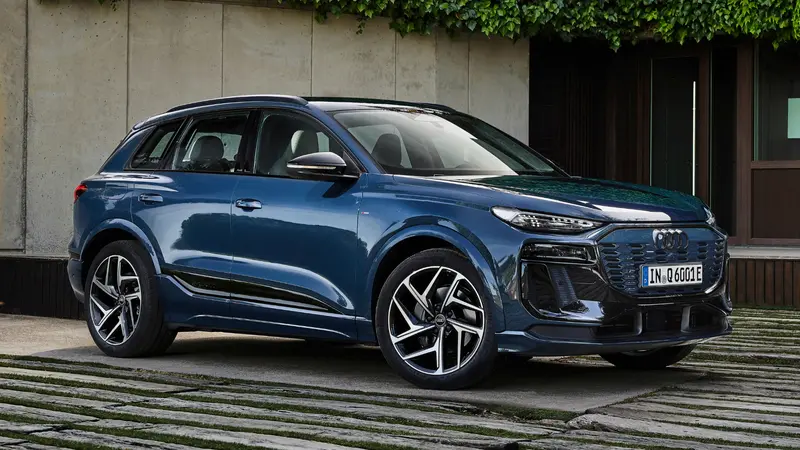
Audi Q6 e-tron
Overall Rating

Audi Q6 e-tron
Overall Rating
Audi Q6 e-tron Key Specifications
Audi Q6 e-tron Overview

The Audi Q6 e-tron is an all-electric mid-size SUV built on the PPE (Premium Platform Electric), the same architecture used by the Porsche Macan EV. It is the first product from Audi on this platform in India and is expected to be locally assembled at the Skoda-VW plant in Aurangabad via the CKD route.
As of now, Audi India's 2026 launch of the Q6 e-tron has seen delays, with a possible year-end 2026 launch alongside the A6 e-tron. Nothing official has been confirmed.
Battery and Motor
Battery and Motor
The Audi Q6 e-tron is powered by a large 100 kWh lithium-ion battery pack, with a usable capacity of 94.9 kWh. This battery consists of 12 modules and 180 cells, optimized for high energy density. Thanks to the 800-volt electrical architecture, the Q6 e-tron supports DC fast charging at speeds of up to 270 kW. This allows the battery to add approximately 255 km of range in just 10 minutes when using a compatible high-speed charger. In terms of performance, the dual-motor Quattro variant produces a combined output of approximately 380 hp to 460 hp, depending on the specific trim level. This enables a 0 to 100 kmph acceleration time of roughly 5.9 seconds, while the more powerful SQ6 e-tron can achieve the same in 4.3 seconds. For the Indian market, Audi is expected to offer the Q6 e-tron 55 Quattro, which provides a WLTP-certified range of up to 625 km. Real-world Indian driving conditions are likely to yield a range of 500 to 550 km. The vehicle also features advanced regenerative braking that can handle up to 95 percent of all everyday braking maneuvers, significantly extending the life of the mechanical brakes and recovering energy back into the battery.
interior
interior
The interior of the Audi Q6 e-tron is centered around what Audi calls the "Digital Stage." This setup consists of a slim, free-standing curved display that combines an 11.9-inch Audi virtual cockpit and a 14.5-inch MMI touch display. Both screens use OLED technology for high contrast and clarity. Additionally, there is a dedicated 10.9-inch display for the front passenger, which features a privacy mode to prevent the driver from being distracted while the passenger watches videos. The dashboard design is driver-oriented, using premium and sustainable materials like recycled microfibers and high-quality leather. The removal of the transmission tunnel due to the electric platform results in a spacious cabin with ample storage in the center console. Practicality is a key focus, with a boot space of 526 liters that can be expanded to 1,529 liters by folding the rear seats. The car also features a front trunk, or "frunk," providing an additional 64 liters of storage for charging cables and small bags. Other interior highlights include an augmented reality head-up display, a Bang & Olufsen premium sound system with 22 speakers, and a multi-zone climate control system with air purification tailored for Indian city environments.
exterior
exterior
The exterior design of the Audi Q6 e-tron follows the brand’s modern electric design language, characterized by a closed-off Singleframe grille and a high waistline. The SUV features a split headlight design, which is a first for Audi. The upper section contains the daytime running lights (DRLs), while the lower section houses the main Matrix LED units. A standout feature is the active digital light signature, which allows owners to choose from eight different patterns for the DRLs and the OLED rear lights. The rear lighting system uses 360-segment digital OLED panels that can communicate with other road users by displaying warning symbols during emergencies or sudden braking. In terms of profile, the Q6 e-tron gets prominent blisters over the wheel arches, housing alloy wheel sizes ranging from 19 to 21 inches. The aerodynamics are optimized for range, featuring air curtains in the front bumper and a clean underbody to reduce drag. The Sportback version, which may also be launched, features a more sloping roofline for a coupe-like appearance. The vehicle includes flush-fitting door handles and a charging port located on the rear flank for easier access at public charging stations.
competition
competition
The Audi Q6 e-tron enters a highly competitive luxury electric SUV segment in India. Its most direct rival is the BMW iX3, which offers a similar size profile but is built on a shared platform with the X3. Another major competitor is the Mercedes-Benz EQE SUV, which emphasizes interior luxury and high-tech MMI screens but sits at a slightly higher price point. The Q6 e-tron also faces internal competition from its platform sibling, the Porsche Macan EV, though the Porsche is tuned for higher performance and carries a steeper price tag. Compared to the Volvo XC40 Recharge and C40 Recharge, the Audi Q6 e-tron is larger and offers a significantly higher range and faster charging speeds. In the 1-crore price bracket, it also competes with the Jaguar I-Pace, which, despite being older, remains a stylish alternative. The Audi’s advantage lies in its dedicated PPE platform, which provides superior charging efficiency and a more modern interior layout compared to rivals using older internal combustion engine-derived platforms.
Audi Q6 e-tron FAQs
When will Audi Q6 e-tron launch in India?
−The Q6 E-Tron could launch by the end of 2026, nothing is offcial yet.