New Toyota Innova HyCross Vs Old Model: Key Differences Explained
By Anmol Kumar
Published November 27, 2026
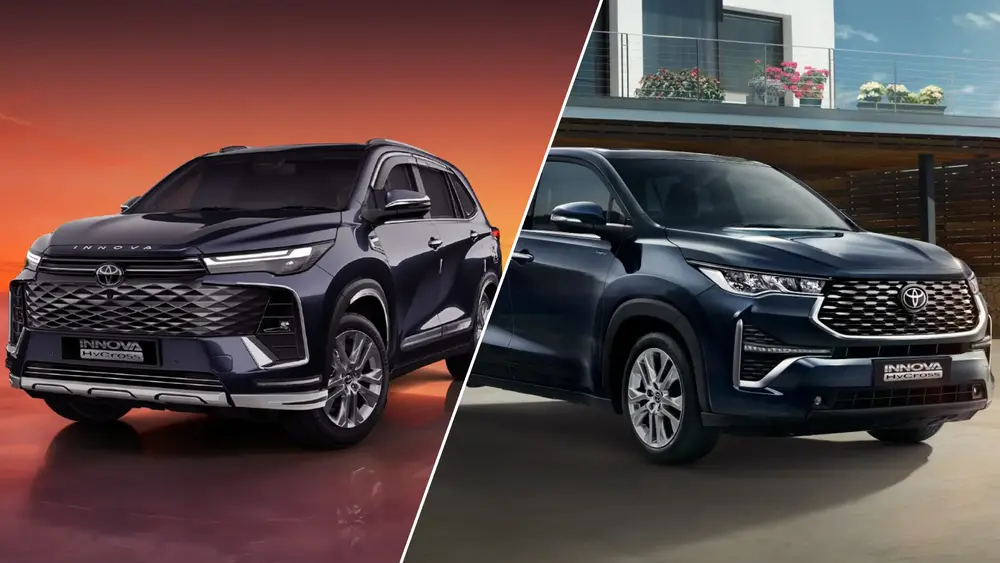
Toyota has given the Innova HyCross its first major update since its introduction in 2022. While the overall silhouette and cabin layout remain familiar, the 2026 facelift brings revised styling, larger displays, additional equipment and, most importantly, a new flex-fuel strong-hybrid powertrain.
Here's how the new model compares with the outgoing Innova HyCross.
Exterior Design Gets A More Prominent Update
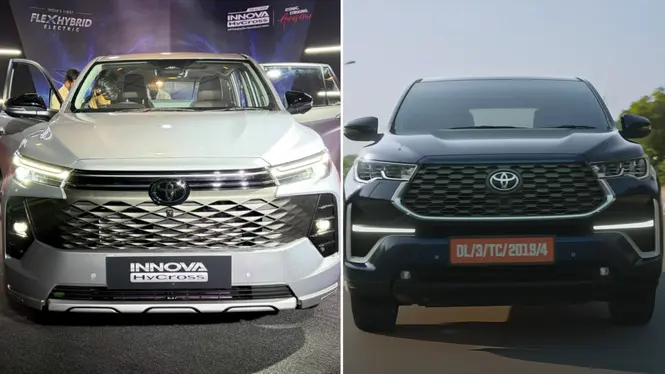
The facelifted HyCross gets a redesigned front fascia with a larger, diamond-pattern grille, revised projector LED headlamps and double-stacked LED DRLs. The fog lamp housings and front bumper have also been redesigned.
The side profile remains largely unchanged, although the ORVMs now get a black finish. At the rear, it gets revised LED tail-lamp detailing and a gloss-black tailgate garnish.
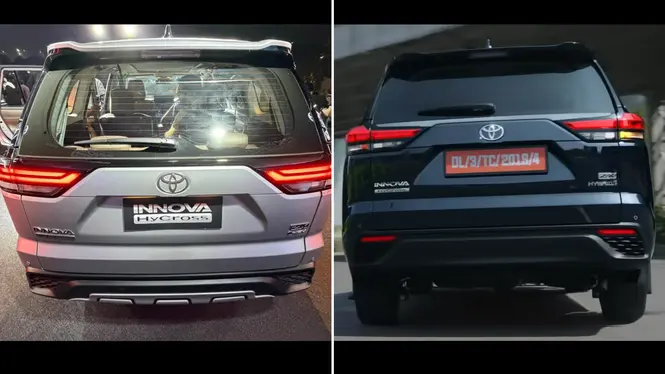
Silver Metallic also replaces the outgoing model's Avant-garde Bronze Metallic colour.
One important distinction is that the petrol-only GX retains the older exterior design, while the updated front styling is offered on the hybrid variants.
Also Read - Upcoming Car Launches in December 2026
Larger Screens And More Cabin Features
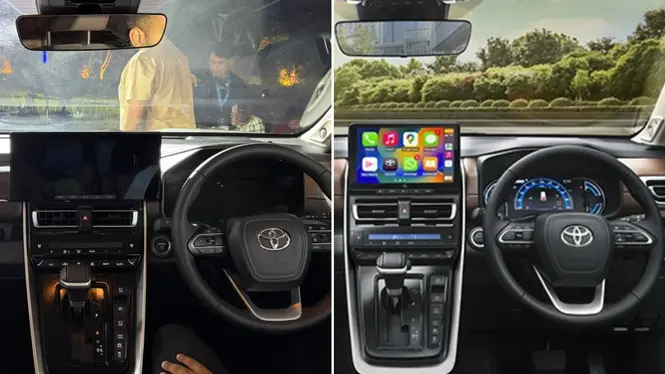
The cabin layout remains familiar, but the facelift introduces larger displays on the higher variants. The touchscreen has increased from 10.1 inches to 12.3 inches, while the driver's instrument cluster moves from a 7-inch MID to a 12.3-inch fully digital display.
Other additions include wireless Apple CarPlay and Android Auto, updated cabin finishes and additional soft-touch surfaces. The higher variants also get quilted Dark Chestnut art-leather upholstery.
The existing panoramic sunroof, powered ottoman seats, ventilated front seats and JBL audio system continue.
New E85-Compatible Flex-Fuel Hybrid Powertrain
This is arguably the biggest mechanical development. The facelift introduces a flex-fuel version of Toyota's 2.0-litre strong-hybrid powertrain, allowing it to run on petrol-ethanol blends ranging from E20 to E85.
The hybrid system now produces a combined 197hp, up from 184hp previously. Toyota has also replaced the older 168-cell Ni-MH battery with a 56-cell lithium-ion unit. Claimed fuel efficiency has improved from 22.16km/l to 22.58km/l on E20 fuel.
The regular petrol engine continues with its 2.0-litre configuration and CVT gearbox, producing 173hp. However, its torque output has increased slightly from 204Nm to 206Nm.
Revised Variant Line-up And Hybrid Availability
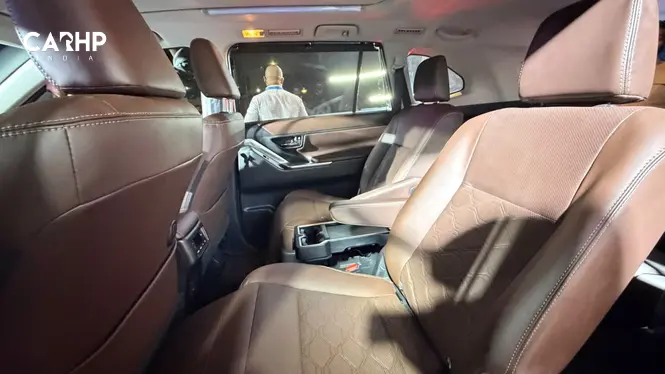
Toyota has expanded the strong-hybrid range by introducing new G Hybrid and GX Hybrid variants. Previously, the hybrid powertrain was restricted to higher trims, making it considerably more expensive to access.
The new GX Hybrid brings down the entry price of the strong-hybrid range from Rs 26.76 lakh to Rs 23.99 lakh, a reduction of Rs 2.77 lakh. This makes the hybrid powertrain accessible to a wider range of buyers.
The standard petrol engine remains available with the GX grade, while the petrol-only HyCross GX continues alongside the updated model.
Also Read - Toyota Innova Hycross Flex-Fuel Explained: How Its E20-E85 Strong Hybrid Technology Works
What Remains Unchanged?
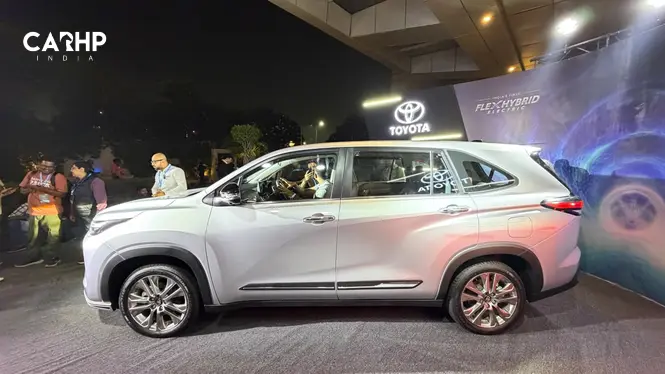
Despite the updates, the HyCross retains its overall dimensions, 2,850mm wheelbase, suspension setup and front-wheel-drive configuration. The seven- and eight-seat configurations also continue, depending on the variant.
The six-airbag safety package, Toyota Safety Sense functionality, three-row cabin layout and general practicality remain familiar.
The facelift is therefore more of an equipment and powertrain upgrade than a complete mechanical overhaul.
Toyota Innova HyCross Facelift Vs Old Model: Key Differences At A Glance
| Particulars | Old Innova HyCross | Facelifted Innova HyCross |
|---|---|---|
| Front design | Original grille and headlamps | Revised grille, bumper, headlamps and DRLs |
| Rear design | Original LED tail lamps and chrome garnish | Revised tail-lamp detailing and black garnish |
| Infotainment | Up to 10.1-inch touchscreen | 12.3-inch touchscreen on higher variants |
| Instrument cluster | 7-inch semi-digital display on hybrid | 12.3-inch fully digital display on higher variants |
| Hybrid battery | 168-cell Ni-MH | 56-cell Li-ion |
| Hybrid power | 184hp combined | 197hp combined |
| Hybrid fuel compatibility | Up to E20 | E20 to E85 |
| Hybrid variants | Higher trims | New G and GX Hybrid options |
| Colour options | Included Avant-garde Bronze Metallic | Silver Metallic replaces Bronze Metallic |
Image Source: Carhp.in (self taken), Toyota Bharat
Table of Contents
- Exterior Design Gets A More Prominent Update
- Larger Screens And More Cabin Features
- New E85-Compatible Flex-Fuel Hybrid Powertrain
- Revised Variant Line-up And Hybrid Availability
- What Remains Unchanged?
- Toyota Innova HyCross Facelift Vs Old Model: Key Differences At A Glance
Join the Conversation
Trending
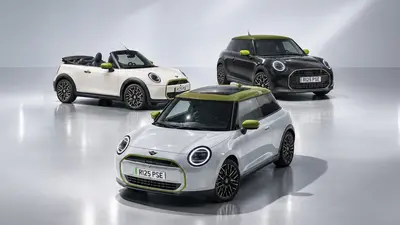
Mini Cooper S Paul Smith Edition Launched in India at Rs 55.75 Lakh
Mini India has launched the Cooper S Paul Smith Edition at Rs 55.75 lakh, featuring exclusive exterior and interior styling, while retaining the standard model's 201 bhp turbo-petrol engine. The carmaker has also launched the Cooper Convertible's Paul Smith Edition at Rs 61.50 lakh.
Arjun Nair
November 27, 2026
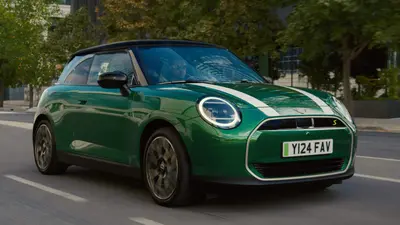
MINI Cooper SE Launched In India At Rs 53.90 Lakh, Offers 402km Range
The new MINI Cooper SE has arrived in India with a 54.2kWh battery, a claimed 402km range and standard and Paul Smith Edition options.
Anmol Kumar
November 27, 2026
Upcoming Car Launches in December 2026
December 2026 could see the launch or unveiling of five new cars in India, including the Honda ALPHA, JSW Combat, Mahindra XEV 9e Sporteq and Volkswagen Virtus facelift.
Anmol Kumar
November 27, 2026

Featured
Citroen C3 Review: Who Should Consider This Car?
A few days ago, I took the Citroen C3X out for a spin in the city and on the highways. I travelled long distances and checked its fuel efficiency, features, comfort, and other factors. Today, I’ll briefly share my overall experience with the C3X and will tell you whether you should consider it or not and which is the most value-for-money variant of the lot.
Vatsal Agrawal
November 25, 2026
Tesla Finally In India Officially. Why Now And What Does It Mean For EVs?
The much-anticipated 2025 Tesla Model Y has officially arrived in India, marking a pivotal moment for the nation's burgeoning electric vehicle market. Launched on July 15, 2025, the Model Y Juniper facelift offers cutting-edge technology, impressive range, and signature Tesla performance. Positioned as a premium electric SUV, its entry will intensify competition and reshape consumer expectations for EVs across the subcontinent.
Author
July 17, 2025
Here Are 10 Things The Harrier.EV Offers That The Mahindra XEV 9E Doesn't
The Harrier.EV is an incredible new offer from Tata. Its most popular competitor would be the Mahindra XEV 9E, priced similarly. With these two incredible offerings from home grown brands available, here is a list of everything the Harrier.EV offers that the XEV 9E doesn't.
Author
June 13, 2025
Write a comment
Comments
No comments yet. Be the first to comment!