
EMI Loading
Kawasaki Eliminator Key Specifications
Kawasaki Eliminator Variants & Prices
| Variant Details | Ex. Showroom Price | |
|---|---|---|
Eliminator STD160 kmph | 30 kmpl | 451 cc | ₹ 6.16 Lakh* |
Eliminator STD
Pros & Cons of Kawasaki Eliminator
Things We Like
- Refined, high-revving parallel-twin engine offers engaging performance.
- Exceptionally lightweight at 176 kg, ensuring agile handling.
Things We Don't Like
- Premium pricing due to being a CBU (Completely Built-up Unit).
- Lacks the low-end torque characteristic of a traditional cruiser.
Kawasaki Eliminator Overview

Engine, Performance and Mileage
Engine, Performance and Mileage
The heart of the Kawasaki Eliminator is its 451cc, liquid-cooled, parallel-twin engine, a derivative of the proven 399cc unit from the Ninja 400. This BS6 Phase 2 compliant motor produces 45 PS at a high 9,000 rpm and 42.6 Nm of torque at 6,000 rpm, mated to a 6-speed gearbox with a slip-and-assist clutch. These figures immediately signal a departure from cruiser norms. Unlike the low-end torque focus of its key rival, the Royal Enfield Super Meteor 650 (47 PS @ 7,250 rpm, 52.3 Nm @ 5,650 rpm), the Eliminator delivers its peak power much higher in the rev range. In urban environments, the engine is remarkably tractable and refined, with a light clutch action making crawling through traffic manageable.
However, its true character emerges on open roads. The engine encourages being revved, providing a linear and urgent power delivery that feels more akin to a naked roadster than a laid-back cruiser. Overtakes are executed swiftly, and the motorcycle can comfortably sustain triple-digit speeds without stress. Fuel efficiency is expected to be in the 22–25 kmpl range under mixed riding conditions, which is acceptable for a twin-cylinder motorcycle of this displacement and performance level.
posture comfort
posture comfort
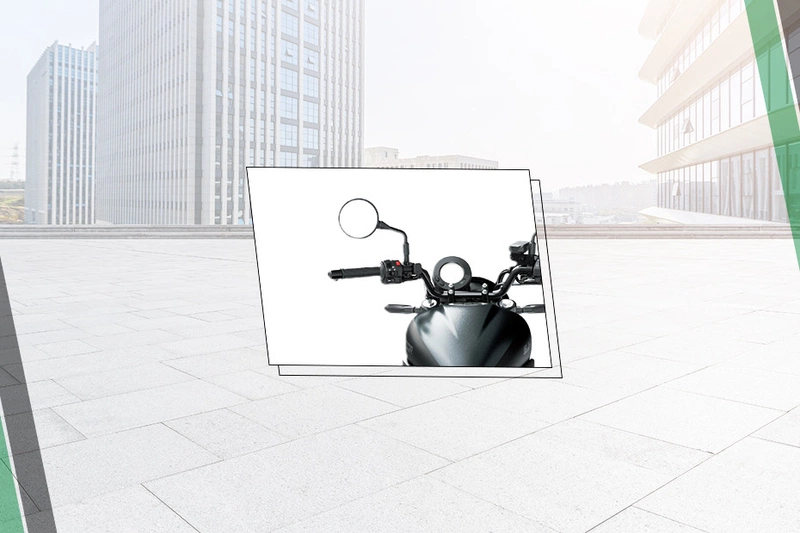
The Eliminator is designed with accessibility at its core. The standout feature is its 735 mm seat height, one of the lowest in its class, which allows riders of varying heights to plant both feet firmly on the ground. The riding posture is relaxed, with forward-set footpegs and a swept-back handlebar creating a comfortable rider triangle for both city commutes and moderate-distance touring. The rider's seat is well-cushioned and sufficiently wide for good support. However, the pillion accommodation is a significant compromise. The rear seat is small and thinly padded, making it suitable only for short urban journeys. Long-distance two-up touring would be a challenge without aftermarket modifications.
Heat management from the liquid-cooled engine is effective, directing hot air away from the rider’s legs in slow-moving traffic—a notable advantage over larger air-cooled engines. Practicality for touring is limited in its stock form; there are no standard grab rails or luggage mounting points, necessitating investment in the brand’s official or aftermarket accessory ecosystem for carrying luggage. This positions the Eliminator more as a solo cruiser or a stylish commuter rather than a dedicated long-distance tourer.
handling ride quality
handling ride quality
The Eliminator is built on a high-tensile steel trellis frame, a chassis architecture that prioritises rigidity and low weight. This, combined with a kerb weight of just 176 kg, is its most significant dynamic advantage. For context, the Super Meteor 650 weighs a substantial 241 kg. This weight difference profoundly impacts the Eliminator's handling. In city traffic, it feels agile and easy to manoeuvre, with a low centre of gravity and an accessible 735 mm seat height inspiring confidence. The suspension setup consists of 41mm telescopic front forks and twin rear shock absorbers. The ride quality is compliant enough for most urban imperfections, though it leans towards firmness, favouring stable handling over plush absorption.
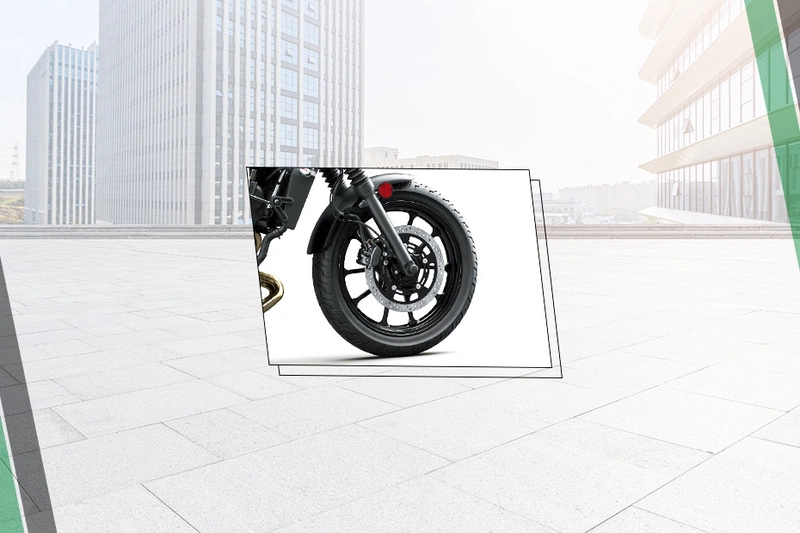
At highway speeds, the motorcycle feels planted and stable. It is a willing participant in corners, turning in with a neutrality uncharacteristic of the segment. The braking hardware comprises a single 310mm disc at the front and a 240mm disc at the rear, governed by a dual-channel ABS. While a twin-disc setup at the front might have been preferable from a specification standpoint, the single disc provides adequate, progressive stopping power for the motorcycle's weight and performance envelope, offering sufficient feedback and confidence under hard braking.
design
design
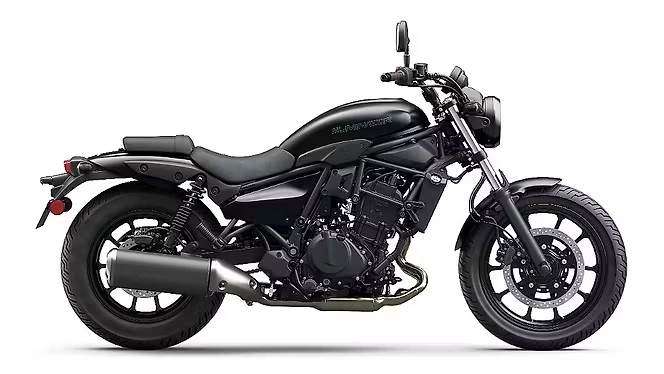
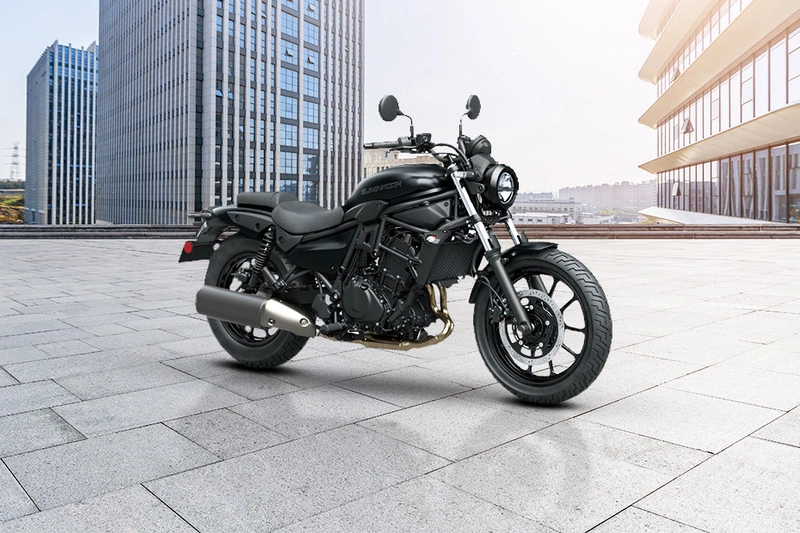
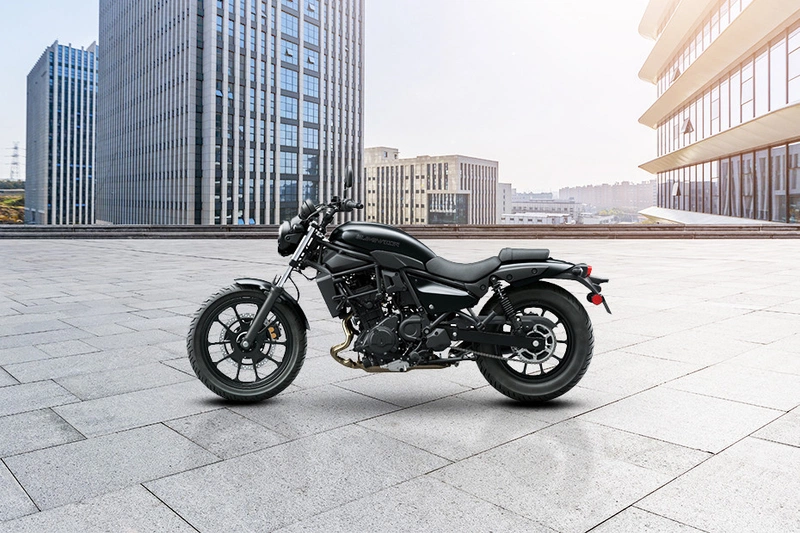
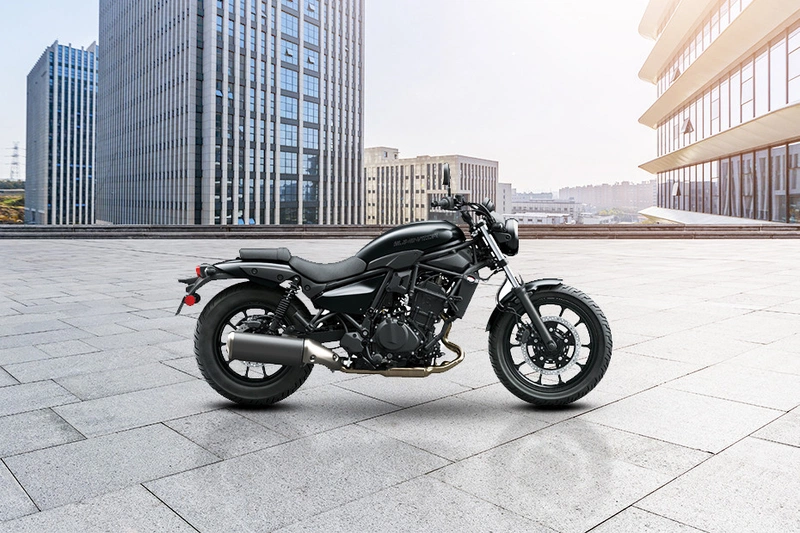
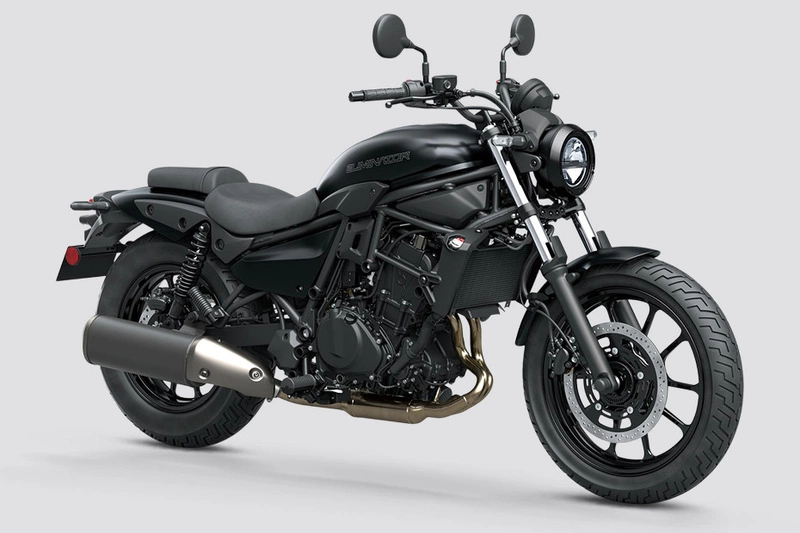
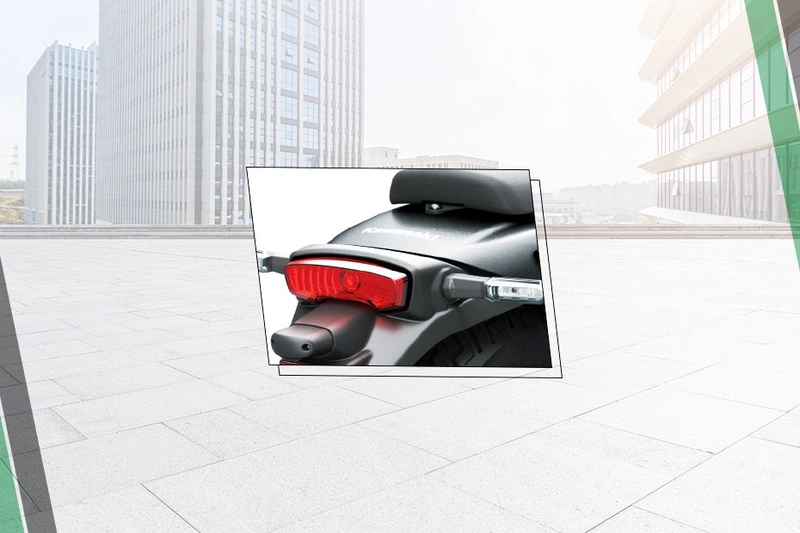
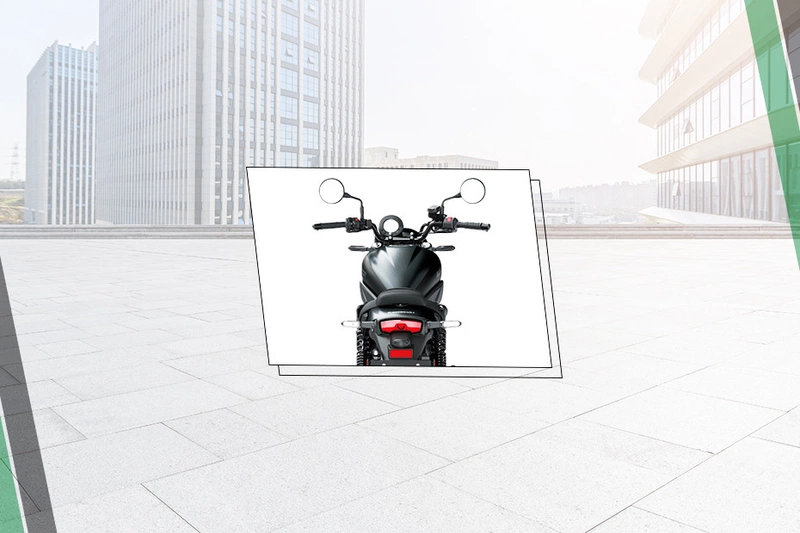
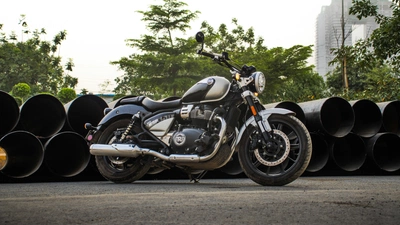
Kawasaki has opted for a neo-retro design language that is clean and understated. The Eliminator adheres to the classic cruiser silhouette with its long, low stance, teardrop-shaped fuel tank, and round headlamp, but integrates modern elements throughout. The entire lighting system is LED, from the headlamp and tail lamp to the indicators, ensuring excellent visibility and a contemporary look. The rider's interface is a fully digital, circular LCD instrument cluster. While clear and legible, displaying a speedometer, tachometer, gear position indicator, fuel gauge, and trip meters, it lacks the full-colour TFT displays seen on some competitors.
A key feature is the integration of Kawasaki’s Rideology application via Bluetooth. This allows the rider to connect their smartphone for call and message notifications directly on the console, as well as log rides and view vehicle information. A USB-C charging socket is a practical addition, catering to the modern rider's need for on-the-go device charging. The overall package is functionally competent, but the design might be perceived as too subtle by buyers seeking the overt chrome and road presence common in the cruiser category. The fit and finish, however, are executed to a high standard typical of Kawasaki.
safety
safety
Safety on the Kawasaki Eliminator is anchored by a standard dual-channel Anti-lock Braking System (ABS). This system works independently on the front and rear wheels, preventing wheel lock-up during emergency braking on both dry and wet surfaces, a crucial feature for Indian road conditions. The braking system, while utilising a single front disc, is calibrated to offer predictable and effective stopping power without being overly aggressive, which is suitable for the motorcycle's intended use. A side-stand engine cut-off function is also standard, preventing the rider from accidentally moving off with the stand deployed.
A key contributor to active safety is the motorcycle’s visibility. The all-LED lighting system, particularly the bright LED headlamp, not only provides superior illumination of the road ahead at night but also makes the motorcycle more conspicuous to other road users during the day. While the Eliminator covers the essential safety bases for its segment, it does not offer advanced electronic aids like traction control, a feature that is gradually appearing on motorcycles in this price bracket. However, given the linear power delivery of its 45 PS engine, the absence of traction control is not a critical omission.
competition
competition
The Kawasaki Eliminator faces a challenging market with well-entrenched rivals. Each offers a different interpretation of the middleweight cruiser concept.
Royal Enfield Super Meteor 650 (Starts at ₹3.64 lakh):
The undisputed segment leader, the Super Meteor 650 offers an authentic, heavy-metal cruiser experience. Its 648cc parallel-twin engine is tuned for strong low-end and mid-range torque, providing a relaxed, loping character. Its primary differentiator is its commanding road presence, build quality, and brand equity.
Benelli 502C (₹5.25 lakh):
Positioned as a power cruiser, the Benelli 502C has a more aggressive and muscular design. It is powered by a 500cc parallel-twin producing 47.5 PS and 46 Nm. Its key differentiator is its bold, Ducati Diavel-inspired styling, which appeals to buyers looking for a visually imposing motorcycle.
Royal Enfield Shotgun 650 (Starts at ₹3.59 lakh):
While sharing its platform with the Super Meteor, the Shotgun 650 targets a different buyer with its factory custom bobber aesthetic. It features a different riding posture, mid-set footpegs, and a modular design that allows for easy conversion from a single-seater to a dual-seater. Its differentiator is its unique, customisable bobber styling.
buying advice
buying advice
Who should buy it?
The ideal buyer is a rider upgrading from a 200–300cc motorcycle who desires cruiser ergonomics but with the responsive, high-revving performance of a modern roadster. It suits those who prioritise refined engineering, low weight, and agile handling over traditional cruiser character.
Who should skip it?
Traditional cruiser enthusiasts seeking V-twin character, muscular road presence, or a relaxed, torque-heavy ride should look elsewhere. Riders who prioritise pillion comfort or a lower purchase price will find better value in rivals like the Royal Enfield Super Meteor 650.
Kawasaki Eliminator Specifications & Features
Engine & Transmission
| Starting | Self Start Only |
| Engine Type | Liquid-cooled 4 Stroke Parallel Twin, DOHC |
| Displacement | 451 cc |
| Max Torque | 42.6 Nm @ 7500 rpm |
| Number of Cylinders | 2 |
| Cooling System | Liquid Cooled |
| Fuel Supply | Fuel Injection |
| Ignition | Battery & Coil |
| Gear Box | 6 Speed |
| Bore | 70 mm |
| Stroke | 58.6 mm |
| Compression Ratio | 11.3:1 |
| Emission Type | BS6.2 |
| Clutch | Wet Multi Disc |
| Valve Per Cylinder | 4 |
| gear shifting pattern | 1 Down 5 Up |
| spark plugs per cylinder | 1 Per Cylinder |
Motor & Battery
| Drive Type | Chain Drive |
| Transmission | Manual |
| Peak Power | 45 PS @ 9000 rpm |
Mileage & Performance
| Overall Mileage | 30 kmpl |
Performance
| Top Speed | 160 kmph |
Chassis & Suspension
| Body Type | Cruiser Bikes |
Tyres & Brakes
| Front Brake Diameter | 310 mm |
| Rear Brake Diameter | 240 mm |
| Front Tyre Pressure Rider | 29 psi |
| Front Tyre Pressure Rider Pillion | 29 |
| Rear Tyre Pressure Rider | 32 psi |
| Rear Tyre Pressure Rider Pillion | 32 |
Dimensions & Capacity
| Width | 785 mm |
| Length | 2250 mm |
| Height | 1100 mm |
| Fuel Capacity | 13 L |
| Ground Clearance | 150 mm |
| Wheelbase | 1520 mm |
| Kerb Weight | 176 Kg |
| Fuel Reserve | 2.6 L |
| Seat Height | 735 mm |
| pillion grab rail | |
| pillion seat |
Electricals
| Headlight | LED |
| Taillight | LED |
| Turn Signal Lamp | LED |
| Low Battery Indicator | |
| Low Oil Indicator | |
| Low Fuel Indicator | |
| Drls |
Features & Safety
| Pass Switch | |
| Fuel Gauge | Digital |
| Real Time Mileage Indicator | |
| Service Due Indicator | |
| hazard warning indicator | |
| hazard warning lights | |
| high beam indicator | |
| malfunction indicator | |
| no of tripmeters | 2 |
| shift light | |
| stand alarm |
Features
| Instrument Console | Digital |
| Speedometer | Digital |
| Tripmeter | Digital |
| Seat Type | Single |
| Passenger Footrest | |
| Navigation | |
| Odometer | Digital |
| Call SMS Alerts | |
| Average Fuel Economy Indicator | |
| Distance To Empty Indicator | |
| digital display type | LCD |
| engine temperature indicator | |
| gear indicator |
App Features
| Low Battery Alert | |
| Navigation Assist | |
| Calls & Messaging |
Underpinnings
| Suspension Front | Telescopic Fork Travel - 120 mm |
| Suspension Rear | Swingarm Travel - 90 mm |
| Brakes Front | Disc |
| Brakes Rear | Disc |
| Tyre Size | Front :-130/70-18, Rear :- 150/80-16 |
| Wheel Size | Front :-457.2 mm,Rear :-406.4 mm |
| Wheels Type | Alloy |
| Tubeless Tyre | 1 |
| ABS | Dual Channel |
| Frame | Trellis High Tensile Steel |
| caliper front piston | 2 |
| caliper rear piston | 2 |
| Tyre Type | Tubeless |
Warranty
| Vehicle Warranty | 3 Years or 36,000 Km |
Kawasaki Eliminator Price in Cities
₹ 8.17 Lakh - 8.17 Lakh
₹ 7.36 Lakh - 7.36 Lakh
₹ 7.15 Lakh - 7.15 Lakh
₹ 7.04 Lakh - 7.04 Lakh
₹ 7.38 Lakh - 7.38 Lakh
₹ 7.48 Lakh - 7.48 Lakh
₹ 7.34 Lakh - 7.34 Lakh
₹ 6.92 Lakh - 6.92 Lakh
₹ 7.17 Lakh - 7.17 Lakh
₹ 7.67 Lakh - 7.67 Lakh
Popular Brands





Kawasaki Eliminator News
India Two-Wheeler Sales July 2026: Honda Overtakes Hero for the First Time This Year as the Market Slips 1.7 Percent
Honda Motorcycle and Scooter India overtook Hero MotoCorp in July 2026 for the first time this year, registering 4,40,221 units against Hero's 4,14,890. The overall two-wheeler market slipped 1.7 percent to 17,01,584 units. Here is the full breakdown across mass market, electric, and premium segments.
Anmol Kumar
August 1, 2026