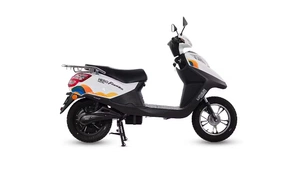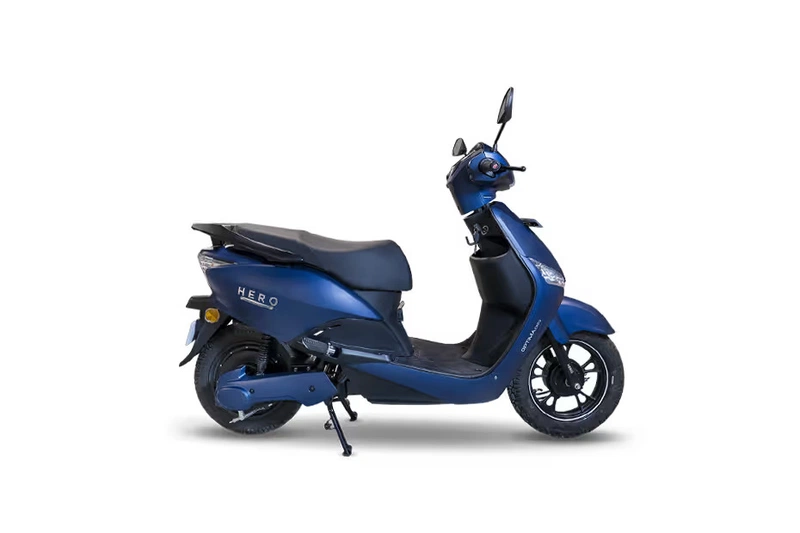

Hero Electric Optima
Hero Electric Optima Key Specifications
Hero Electric Optima Variants & Prices
| Variant Details | Ex. Showroom Price | |
|---|---|---|
Optima CX 2.0 Base Model | ₹ 83,300* | |
Optima CX 5.0 Top Model | ₹ 1.04 Lakh* |
Optima CX 2.0
Optima CX 5.0
Hero Electric Optima Comparison with similar Bikes
Pros & Cons of Hero Electric Optima
Things We Like
- Removable battery system offers exceptional charging convenience for apartment dwellers.
- Flat floorboard provides excellent utility for carrying goods and luggage.
Things We Don't Like
- Dated design looks uninspired next to modern electric scooter rivals.
- Performance is strictly limited to low-speed city use only.
Hero Electric Optima Overview

Battery and Motor
Battery and Motor
The Hero Electric Optima CX 5.0 is powered by a 550W (1.2 kW peak) Brushless Direct Current (BLDC) hub motor, paired with a dual 51.2V, 30Ah Lithium-Ion battery setup, yielding a total capacity of approximately 3 kWh. On paper, Hero Electric claims a range of 135 km per charge. However, real-world testing under typical city conditions with mixed traffic and throttle inputs suggests a more realistic figure of 100–110 km, which is still adequate for several days of urban commuting. The scooter's performance is strictly calibrated for city use, with a certified top speed of 55 km/h.
Throttle response is gentle and linear, designed to be accessible for new riders rather than providing brisk acceleration. This scooter is not intended for highway use; attempting overtakes on faster-moving traffic would be ill-advised. Its primary strength is silent, efficient, and predictable propulsion within congested urban environments. The single-battery CX 2.0 variant offers a lower certified range of 89 km and a top speed of 45 km/h, positioning it as an entry-level, hyper-local mobility solution. Charging time for the dual-battery setup is a claimed 4-5 hours, a standard figure for this segment.
posture comfort
posture comfort
The Optima’s core strength is its user-centric practicality. The riding posture is upright and neutral, with a well-cushioned, wide single-piece seat that offers good support for both the rider and pillion on short city rides. The seat height is accessible for a wide range of riders. A key advantage in the Indian context is the completely flat floorboard, which provides ample legroom and allows the rider to carry groceries or a small bag between their feet. Underseat storage is modest and will accommodate a half-face helmet but is unlikely to fit a full-face unit.
The most significant practical feature, exclusive to the CX variants, is the removable battery system. This allows users living in apartments or without dedicated parking with charging points to take the batteries indoors for convenient charging. This single feature can be a decisive factor for a large segment of potential buyers who face charging infrastructure challenges. Heat management is a non-issue given the low-stress nature of the motor and controller, ensuring consistent performance without overheating in traffic.
handling ride quality
handling ride quality
The Optima is built on a conventional underbone chassis, suspended by a telescopic front fork and dual hydraulic shock absorbers at the rear. This setup is tuned for comfort over dynamic ability. In city environments, it absorbs minor road imperfections and potholes reasonably well, preventing harsh jolts from being transferred to the rider. Its lightweight construction and compact dimensions make it highly agile, allowing for easy navigation through dense traffic and tight parking spots. However, the scooter’s handling characteristics do not inspire confidence at its top speed of 55 km/h, where it can feel flighty over undulations. It is best ridden at a sedate pace of 40-45 km/h.
The braking system comprises drum brakes on both the 12-inch front and rear wheels, governed by a Combined Braking System (CBS). While CBS is a mandatory safety feature that helps prevent wheel lock-up by distributing brake force, the overall braking performance is merely adequate. The lack of a disc brake option, even at the front, is a noticeable omission, as competitors like the Ola S1 X and TVS iQube offer superior braking hardware that provides better feel, feedback, and shorter stopping distances.
design
design
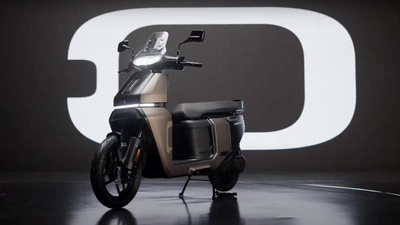
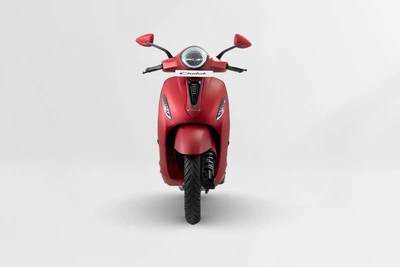
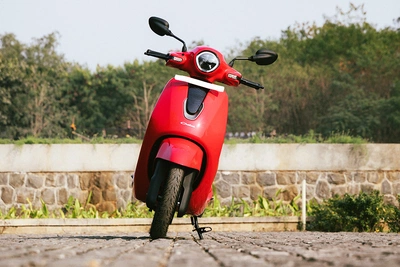
The Hero Electric Optima adheres to a conservative and functional design language that has remained largely unchanged for several years. It prioritises familiarity over modern aesthetics, which may appeal to a more traditional buyer demographic but appears dated next to its rivals. The equipment list reflects this philosophy of simplicity. Illumination is handled by an LED headlamp, which offers better visibility and lower energy consumption than a halogen unit, and a bulb-based tail lamp. The instrument cluster is a basic digital unit that displays essential information like speed, state of charge, and an odometer, but lacks the rich graphics or advanced data of its competitors.
Practical features include a USB charging port located near the front apron, which is convenient for charging a smartphone on the go. The scooter also comes with a reverse mode for easier parking and an alloy grab rail. However, it misses out entirely on modern connected technology. There is no Bluetooth connectivity, no dedicated smartphone app for telematics, and no onboard navigation, features that are becoming increasingly standard in the electric scooter market, even at this price point.
safety
safety
The safety suite on the Hero Electric Optima is fundamental, meeting the minimum regulatory standards for its class without offering any advanced systems. The primary safety net is the Combined Braking System (CBS), which automatically applies a portion of the front brake when the rear brake is engaged. This helps maintain stability during braking, especially for novice riders, and is effective for the scooter's limited performance envelope. The drum brakes, while adequate for city speeds, do not provide the sharp, confidence-inspiring bite of the disc brakes found on many competitors, and their performance can fade slightly under heavy or prolonged use. Visibility is addressed by the LED headlamp, which provides a clear and wide beam for night riding.
The scooter is also equipped with a side-stand engine cut-off feature, preventing the motor from engaging while the stand is down. However, it lacks more advanced safety features like an Anti-lock Braking System (ABS), traction control, or sophisticated hazard warning systems, which are absent in this budget-focused segment but highlight the basic nature of its safety credentials.
competition
competition
The Hero Electric Optima competes in a crowded and rapidly evolving market segment. Its primary rivals bring different value propositions to the table.
Ola S1 X:
The Ola S1 X, particularly in its 3kWh variant, poses a significant threat. It offers a far more contemporary design, a higher top speed of 90 km/h, and a superior feature set including a 5-inch segmented display and app connectivity. Its key differentiator is offering a much higher performance and technology package at a comparable price point, appealing to a younger, tech-savvy audience.
TVS iQube:
The TVS iQube (base variant) is a formidable competitor from a legacy manufacturer. It boasts superior build quality, more refined ride and handling characteristics, and a larger underseat storage space. Its primary differentiator is the overall polish and reliability associated with the TVS brand, alongside a more robust service network, making it a safer choice for risk-averse buyers.
Ampere Magnus EX:
The Ampere Magnus EX operates on a similar philosophy to the Optima, focusing on practicality and family use. It offers a comparable range and also features a removable battery. Its key differentiator is often a highly competitive on-road price and a slightly larger seat, positioning it as a direct, value-for-money alternative for buyers prioritising a no-frills, functional electric scooter.
buying advice
buying advice
Who should buy it?
The ideal buyer is a city-dweller living in an apartment building who prioritises the convenience of a removable battery above all else. They seek a simple, no-frills electric scooter for short, predictable commutes and are not concerned with high performance or modern technology.
Who should skip it?
Riders who desire modern features like app connectivity, better performance for keeping up with faster traffic, superior braking confidence from disc brakes, or a more contemporary design should look towards competitors like the Ola S1 X or TVS iQube.
Hero Electric Optima Specifications & Features
Engine & Transmission
| Motor Power | 1.2 kW |
| Starting | Push Button Start |
| Number of Batteries | |
| Valve Per Cylinder | |
| Paddle |
Motor & Battery
| Drive Type | Hub Motor |
| Reverse Assist | |
| Transmission | Automatic |
| Motor Type | BLDC |
| Battery Warranty | 4 Years |
| Continuous Power | 1900 W |
| Swappable Battery |
Performance
| Top Speed | 48 kmph |
| average speed |
Chassis & Suspension
| Body Type | Electric Scooters |
Dimensions & Capacity
| Ground Clearance | 165 mm |
| Kerb Weight | 93 Kg |
| pillion grab rail | |
| pillion seat |
Features & Safety
| Additional Features |
|
| Traction Control | |
| Power Modes | |
| Launch Control | |
| Quick Shifter | |
| Adjustable Windscreen | |
| Engine Kill Switch | |
| Central Locking | |
| Real Time Mileage Indicator | |
| Service Due Indicator | |
| Switchable ABS | |
| Engine Immobilizer | |
| Gradeability | 7 Degrees |
| EBS | |
| Braking Type | Combi Brake System |
| Shutter Lock | |
| Internet Connectivity | |
| Airbag | |
| Fast Charging | |
| External Fuel Filling | |
| Seat Opening Switch | |
| I3S Technology | |
| Telematics | |
| Artificial Intelligence | |
| exhaust heat shield | |
| hazard warning indicator | |
| hazard warning lights | |
| high beam indicator | |
| malfunction indicator | |
| no of tripmeters | - |
| saree guard | |
| shift light | |
| stand alarm | |
| vehicle location tracking |
Underpinnings
| Suspension Front | Telescopic Suspension |
| Brakes Front | Drum |
| Brakes Rear | Drum |
| Tyre Size | Front :-90/90-12, Rear :-90/90-12 |
| Wheel Size | Front :-304.8 mm,Rear :-304.8 mm |