
Hero Electric Flash
Hero Electric Flash Key Specifications
Hero Electric Flash Variants & Prices
| Variant Details | Ex. Showroom Price | |
|---|---|---|
Flash LX25 km/Hr | 85 km/charge | 4-5 Hr | ₹ 59,640* |
Flash LX
Pros & Cons of Hero Electric Flash
Things We Like
- Extremely low running cost compared to any petrol-powered two-wheeler.
- No license, registration, or road tax required, simplifying ownership.
Things We Don't Like
- Top speed of 25 km/h is dangerously slow for many roads.
- Limited underseat storage, especially in the lead-acid battery variant.
Hero Electric Flash Overview

Engine, Performance and Mileage
Engine, Performance and Mileage
The Hero Electric Flash is propelled by a 250-watt BLDC hub motor, a standard specification for low-speed electric two-wheelers in India, designed to legally cap its top speed at 25 km/h. This performance parameter dictates the scooter’s entire use case. In dense, start-stop city traffic, the initial throttle response is gentle and manageable, designed for riders who may be new to electric vehicles or two-wheelers in general. There is no surge of torque; acceleration is linear and gradual up to its speed limit. On open city roads with traffic flowing at 40-50 km/h, the Flash feels significantly underpowered and can be an impediment, requiring the rider to maintain strict lane discipline on the extreme left. It is not suitable for arterial roads or highways.
The choice of battery is the primary differentiator between its variants. The base LX model uses a 48V/28Ah lead-acid battery pack, offering a claimed range of 50 km. The higher variant employs a 48V/28Ah lithium-ion battery, extending the claimed range to a more practical 85 km. The latter is the more logical choice for most users, as its 4-5 hour charging time is half that of the 8-10 hours required for the lead-acid battery. Furthermore, the Li-ion battery is portable, allowing for convenient off-vehicle charging—a critical feature for apartment dwellers. Real-world range will likely be 15-20% lower than claimed figures, contingent on rider weight and terrain.
posture comfort
posture comfort
Ergonomically, the Hero Electric Flash is designed for short-distance urban commuting. The riding posture is upright and neutral, with a flat and spacious floorboard that provides ample legroom for the average Indian rider. The single-piece seat is reasonably wide and well-cushioned for solo rides. At a seat height of 774mm, it is accessible to a wide range of riders, making it easy for shorter individuals to plant their feet firmly on the ground. For a pillion, however, the experience is compromised. The seat length is limited, and the space can feel cramped for two adults, making it suitable only for very short trips. A functional grab rail is provided for the pillion’s security.
As an electric scooter, there is no engine heat to manage, which is a significant comfort advantage in hot Indian climates. Practicality is centered around its storage solutions. The underseat storage is modest and its usability is heavily dependent on the variant. In the lithium-ion model, the space is sufficient for a small half-face helmet or groceries, thanks to the compact, removable battery. In the lead-acid variant, the bulky, fixed battery pack consumes a significant portion of this space, rendering it almost unusable for anything other than small items. The absence of an external charging port on the scooter itself means the portable Li-ion battery must always be removed for charging, which could be an inconvenience for some users. The floorboard remains the most practical storage area for larger bags.
handling ride quality
handling ride quality
The Flash is built on a conventional underbone frame, supported by a telescopic fork at the front and a swingarm with dual shock absorbers at the rear. This suspension setup is calibrated for compliance at low speeds. Over undulations and poorly paved city lanes, the ride quality is acceptable, absorbing minor imperfections without unsettling the rider. However, sharp-edged potholes or larger speed breakers can overwhelm the basic suspension, sending a noticeable jolt through the chassis. Its lightweight construction, with a kerb weight of just 69 kg for the Li-ion variant, makes it exceptionally agile and easy to maneuver in congested urban environments. U-turns and parking in tight spots are effortless.
High-speed stability is a non-applicable metric given its 25 km/h top speed. Within its operational envelope, the scooter remains planted and predictable. The handling is neutral, with a light front end that responds quickly to steering inputs. Braking duties are handled by 130mm drum brakes on both the front and rear wheels. While this hardware seems rudimentary, it is adequate for the scooter’s limited velocity. The system is augmented by a Combi-Braking System (CBS), which mechanically links the front and rear brakes when the rear brake lever is applied. This enhances stability during braking by distributing force, reducing the chance of a skid, particularly for novice riders. Under hard braking from its top speed, the scooter comes to a halt without undue drama or wheel lock-up.
design
design
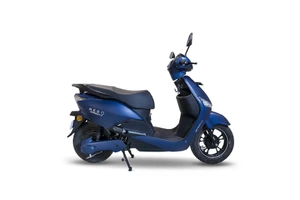
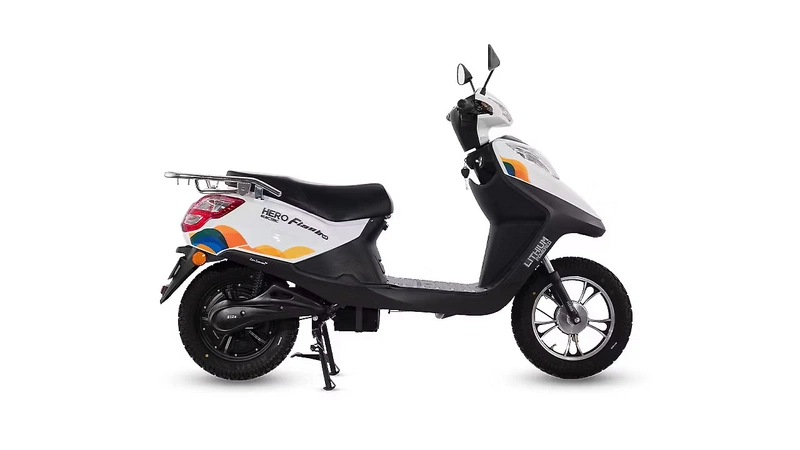
The design of the Hero Electric Flash is functional and unpretentious, prioritizing practicality over aesthetic flair. The body panels are lean, and the overall silhouette is compact. A prominent headlamp is integrated into the front apron, flanked by turn indicators, while a basic LED Daytime Running Light (DRL) adds a touch of modernism and improves visibility. The styling is unlikely to turn heads, but it is inoffensive and serves its purpose. The build quality and finish levels are commensurate with its entry-level price point; panel gaps are noticeable but consistent for the segment.
From a features perspective, the Flash is spartan. The instrument cluster is a simple digital unit that displays essential information: a speedometer, an odometer, and a battery charge indicator. It lacks the advanced connectivity features seen in more expensive EVs, such as Bluetooth integration, turn-by-turn navigation, or a dedicated smartphone app. Practical equipment includes a small luggage hook on the front apron and alloy wheels, which are more durable than the steel wheels found on some competitors. The Li-ion variant’s key feature is its portable battery pack, a significant real-world advantage for users without dedicated ground-floor parking or charging access. A USB charging port is also provided, allowing riders to charge their mobile devices on the move. These features, while basic, are thoughtfully included for the target user.
safety
safety
The safety provisions on the Hero Electric Flash are aligned with the mandatory requirements for its vehicle class. Given its top speed is capped at 25 km/h, it is exempt from the mandatory Anti-lock Braking System (ABS) regulation applicable to higher-performance two-wheelers. The primary active safety feature is the Combi-Braking System (CBS), which is crucial for this segment. By linking the front and rear drum brakes, CBS helps maintain chassis balance during deceleration, reducing the risk of skidding, especially on loose or wet surfaces. The braking confidence inspired by this system is adequate for its intended speed range; the scooter stops predictably in both dry and wet conditions without significant drama.
Visibility is another key aspect of safety. The scooter is equipped with a halogen headlamp, which provides acceptable illumination for low-speed city riding at night, but it lacks the brightness and spread of the full LED setups found on more premium models. The inclusion of an LED DRL, however, enhances the scooter’s daytime visibility to other road users. Passive safety features are minimal but include a sturdy grab rail for the pillion and standard reflective decals. It does not feature advanced electronic aids like traction control or riding modes, which are unnecessary at this performance level. The overall safety package is basic but sufficient for the low-risk, low-speed environment the Flash is designed to operate in.
competition
competition
The Hero Electric Flash operates in a competitive low-speed EV segment where price and practicality are the primary differentiators.
Okinawa R30:
The R30 is a direct competitor, also featuring a 250W BLDC motor and a 25 km/h top speed. Its key differentiator is its 1.34 kWh detachable lithium-ion battery, which offers a slightly lower claimed range of 60 km. It often competes on design, with a more contemporary aesthetic that may appeal to younger buyers.
Ampere Reo Li Plus:
This model from Greaves Electric Mobility (Ampere) presents a strong value proposition. It is powered by a similar 250W motor and offers a claimed range of around 70 km from its 1.3 kWh lithium-ion battery. Its differentiator is often a robust build quality and a slightly more comfortable ride due to its suspension tuning.
BGauss A2:
The BGauss A2 positions itself as a slightly more premium offering within the low-speed category. It comes with a 1.29 kWh removable battery and a claimed range of 75 km. Its main differentiator is the level of fit and finish and features like anti-theft alarms and remote find-my-scooter functions, which are often absent on its more budget-focused rivals.
buying advice
buying advice
Who should buy it?
This scooter is ideal for individuals seeking a no-frills, ultra-low-cost vehicle for short, fixed-route commutes (under 15-20 km daily), such as travelling to a local market, college, or office. It suits users in apartment complexes (Li-ion variant) and those who do not hold a driver's license.
Who should skip it?
Riders who need to travel on main roads with flowing traffic, require a pillion-capable vehicle for regular use, or desire a range exceeding 50-60 km in real-world conditions should look at higher-speed electric scooters or conventional petrol-powered alternatives for better performance and practicality.
Hero Electric Flash Specifications & Features
Engine & Transmission
| Motor Power | 0.25 kW |
| Starting | Push Button Start |
| Valve Per Cylinder | |
| Paddle |
Motor & Battery
| Drive Type | Hub Motor |
| Battery Type | Li-ion |
| Reverse Assist | |
| Transmission | Automatic |
| Motor Type | BLDC |
| Battery Warranty | 3 Years |
| Swappable Battery |
Performance
| Top Speed | 25 kmph |
| average speed |
Chassis & Suspension
| Body Type | Electric Scooters |
Electricals
| Headlight | Bulb |
| Taillight | Bulb |
| Turn Signal Lamp | Bulb |
| Low Battery Indicator | |
| Projector Headlights | |
| Low Oil Indicator | |
| Low Fuel Indicator | |
| Pilot Lamps | |
| Drls |
Features & Safety
| Charging Point | 1 |
| Pass Switch | 1 |
| Traction Control | |
| Power Modes | |
| Launch Control | |
| Quick Shifter | |
| Adjustable Windscreen | |
| Engine Kill Switch | |
| Central Locking | |
| Real Time Mileage Indicator | |
| Service Due Indicator | |
| Switchable ABS | |
| Engine Immobilizer | |
| EBS | |
| Braking Type | Combi Brake System |
| Shutter Lock | |
| Internet Connectivity | |
| Airbag | |
| Fast Charging | |
| External Fuel Filling | |
| Seat Opening Switch | |
| I3S Technology | |
| Telematics | |
| Artificial Intelligence | |
| exhaust heat shield | |
| hazard warning indicator | |
| hazard warning lights | |
| high beam indicator | |
| malfunction indicator | |
| no of tripmeters | - |
| saree guard | |
| shift light | |
| stand alarm | |
| vehicle location tracking |
App Features
| Low Battery Alert | |
| Navigation Assist | |
| Calls & Messaging | |
| Geo Fencing | |
| Charging Station Locater |
Underpinnings
| Suspension Front | Telescopic |
| Brakes Front | Drum |
| Brakes Rear | Drum |
| Wheel Size | Front :-304.8 mm,Rear :-304.8 mm |
| Tubeless Tyre | Tube |
| Tyre Type | Tube |
Warranty
| Mobile Application | |
| Vehicle Warranty | 3 Years |
| Roadside Assistance |