5 Core Principals Of Bharat NCAP 2.0 Explained
By Salil Kumar
Updated November 25, 2025
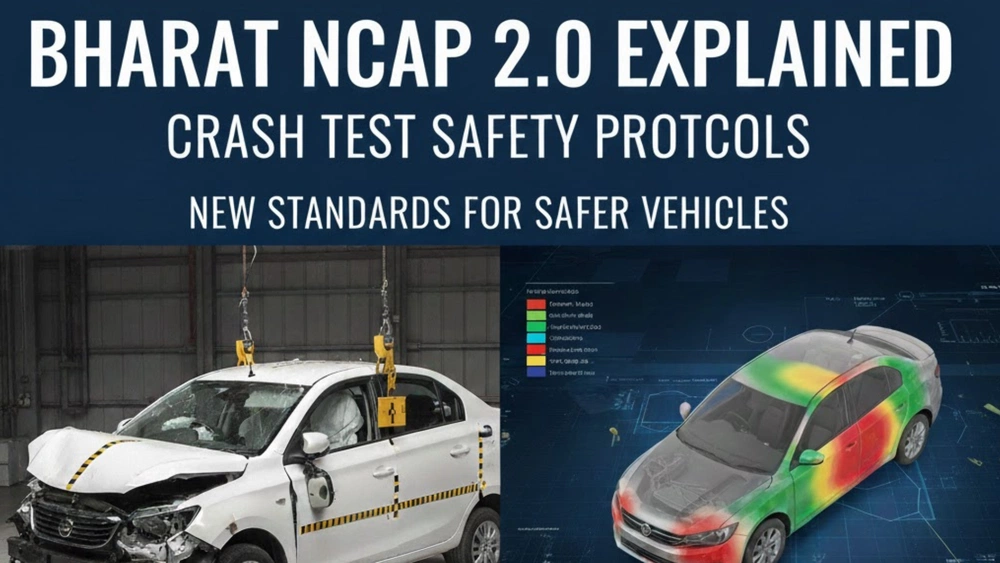
India has reached a turning point in how it views road safety. The need to lower traffic deaths and bring domestic cars closer to global standards pushed the government to propose Bharat NCAP 2.0, a much stronger and more holistic version of the existing car safety assessment program. T
The draft released by the Ministry of Road Transport and Highways lays out a new scoring system built on five major pillars. Each pillar reflects a real world understanding of how accidents happen, how they can be avoided, and how cars can protect not only the people inside but also the ones around them.
The revised framework replaces the earlier AOP, COP and SAT structure with a broader set of five assessment areas, and the final score is now calculated out of 100 points. The bar for a five star rating has risen from 70 to 80 points, and features like Electronic Stability Control and curtain airbags are now compulsory for cars aiming for the top score. The update also excludes vehicles with side facing seats from receiving any safety rating, strengthening the overall focus on occupant protection.
New crash tests
64 kmph frontal impact with a deformable barrier
50 kmph side impact with a mobile deformable barrier
32 kmph oblique side impact with a rigid pole
50 kmph full width frontal impact with a rigid barrier
50 kmph rear impact with a mobile rigid barrier
Also Read- Every Car Tested By Bharat NCA
Revised safety rating structure
Safe Driving (10 percent)
Accident Avoidance (10 percent)
Crash Protection (55 percent)
Vulnerable Road User Protection (20 percent)
Post Crash Safety (5 percent)
1. Crash Protection
Crash protection forms the largest part of the assessment and carries more than half of the total score. It deals with how well a car protects adults and children during different types of accidents. The proposal introduces five crash tests instead of the older three. These include an offset frontal crash at sixty four kilometers an hour, a full width frontal crash at fifty, a lateral mobile barrier side impact at fifty, an oblique side pole impact at thirty two, and a rigid rear impact at fifty.
These tests match real world collision patterns more closely. They also use more advanced crash dummies representing men, women, children, and different body sizes.
The idea is simple. Cars sold in India should be strong from every direction, and safety should not be limited to the front impact zone. This pillar tells manufacturers that structural integrity, proper restraint systems, and strong cabin designs can no longer be optional if they want higher ratings.
2. Vulnerable Road User Protection
The second pillar focuses on pedestrians and two wheeler riders. Vulnerable road users account for a massive share of road fatalities in India. This pillar contributes twenty percent of the total rating and examines how the front of a car behaves when it hits a human body. Tests include leg impact on the bumper and head impact on the hood and windshield area for both adults and children.
Bharat NCAP 2.0 also encourages the use of ADAS features like autonomous emergency braking that can detect pedestrians and motorcyclists. While this system is not mandatory, it adds scoring weight, which gently pushes manufacturers to adopt it. This pillar matters because Indian roads are shared by cars, bikes, cycles, and walkers who are often unprotected. A safer bonnet design or a softer bumper can make the difference between life and death in a collision.
3. Safe Driving
The third pillar highlights features that support the driver and reduce the chances of human error. It accounts for ten percent of the score. The proposal lists several features such as seat belt reminders with occupant detection, driver drowsiness alerts, forward collision warnings, lane departure warnings, blind spot detection, rear cross traffic alerts, hill hold assist, and traffic sign recognition.
However, the rating only considers a limited number of these features for scoring. The goal is not to reward software overload but to encourage the presence of practical systems that truly help the driver stay aware. Modern cars are increasingly filled with technology, but this pillar ensures that the technology serves safety first.
4. Accident Avoidance
This pillar is closely related to safe driving but focuses on active systems that prevent a crash rather than supporting the driver during normal driving. It makes up another ten percent of the score. The most important requirement here is electronic stability control. Any car that wants a star rating must have ESC. This single feature prevents loss of control in emergency maneuvers and reduces rollover risk, especially in taller vehicles.
Autonomous emergency braking is once again encouraged. It is not compulsory, but its inclusion gives a higher score. This pillar makes accident prevention a core part of the safety conversation, which aligns Bharat NCAP with global thinking.
5. Post Crash Safety
The fifth pillar looks at what happens after an accident. It makes up five percent of the total rating. Tests evaluate how well the car manages the risk of fire or electrical shock and how easily rescuers can free the occupants. Optional systems such as SOS call functions, multi collision braking, and clearly presented rescue sheets contribute additional marks.
This pillar accepts a reality that is often ignored. Surviving the crash is only the first half. Many lives can still be saved or lost depending on how the car behaves afterward and how quickly help arrives.
Why These Norms Are Being Introduced
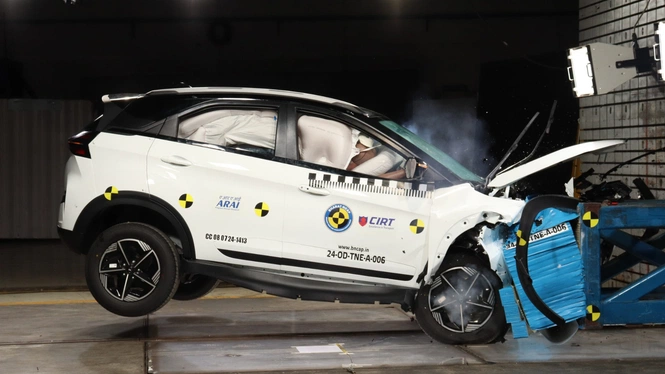
India has long struggled with one of the highest road fatality numbers in the world. A large part of this comes from a mix of weak car structures, limited active safety technology, crowded roads, and a high number of pedestrians and two wheeler riders. The five pillar approach reflects a modern and international view of safety. Instead of focusing only on the impact itself, it looks at awareness, avoidance, external protection, and rescue.
The government wants to give consumers clearer information and push manufacturers to design genuinely safer cars rather than marketing driven safety claims.
When Will Bharat NCAP 2.0 Be Implemented
As per the draft, the updated norms are expected to come into effect in October 2027. The current program will continue until September of the same year. Until then the draft remains open to feedback from automakers and safety bodies.
Are These Norms Equal to Global NCAP
They are inspired by global NCAP programs but not identical. India has different vehicle categories, traffic patterns, and usage conditions. Bharat NCAP 2.0 brings Indian testing much closer to global standards, but the scoring, test combinations, and weightings remain tailored to local needs. So the ratings become more comparable than before but not fully interchangeable.
How Bharat NCAP 2.0 Improves on the Original Bharat NCAP 1.0
Bharat NCAP 2.0 marks a clear evolution from the first generation program by expanding its vision beyond basic crash performance and moving toward a more holistic approach to occupant safety. The earlier 1.0 version focused mainly on frontal and side impact tests and then assigned a star rating based on how well the structure held up and how protected the occupants were.
It was a major milestone because it finally gave Indian buyers a reliable local safety benchmark, but it still lagged behind the global direction of safety evaluation.
The newer 2.0 framework builds on that foundation and introduces a deeper assessment that looks at real world safety factors instead of depending on a limited set of crash scenarios. It brings in active safety checks to see how well a vehicle can prevent a crash, driver behaviour monitoring, post crash readiness, and digital safety layers that did not exist in the original system.
It also moves from a single star rating system to a five pillar structure that reflects how modern cars interact with technology, infrastructure, and human behaviour. In simple terms, Bharat NCAP 1.0 told you how a car behaved during a crash while Bharat NCAP 2.0 shows how a car prepares for a crash, avoids a crash, reacts after a crash, and protects its occupants across multiple real world situations
Table of Contents
- Vulnerable Road User Protection
- Safe Driving
- Accident Avoidance
- Post Crash Safety
- Why These Norms Are Being Introduced
- When Will Bharat NCAP 2.0 Be Implemented
Join the Conversation
Trending

Hyundai Bayon Confirmed for India as Its Upcoming Intelligent SUV
Hyundai Motor India has officially named its next SUV the BAYON. Positioned between the Venue and Creta, it is expected to arrive with a 1.2-litre turbo-petrol, factory-fitted CNG, and a feature-heavy cabin before end of 2026.
Anmol Kumar
September 14, 2026
Maruti Suzuki Offering Up to Rs. 1.35 Lakh Benefits in September 2026
Maruti Suzuki's September 2026 Arena offers cover seven models, with the Victoris strong hybrid getting the highest benefits at Rs. 1.35 lakh. Here is the full breakdown, including fuel-type differences on the Wagon R, Alto K10, Swift, and Eeco.
Anmol Kumar
September 11, 2026

Tata Punch EV Now Costs Up to Rs 20,000 More in September 2026
Tata has raised Punch EV prices by Rs. 10,000 on 30kWh variants and Rs. 20,000 on all 40kWh variants from September 2026, with new prices now ranging from Rs. 9.79 lakh to Rs. 12.99 lakh ex-showroom.
Anmol Kumar
September 11, 2026

Mahindra Cars Available With Benefits of Up to Rs. 2.5 Lakh This September
Mahindra's September 2026 offers cover seven models, with the XUV400 EV getting up to Rs. 2.50 lakh in benefits and the pre-facelift Scorpio N at Rs. 1.50 lakh. The current Scorpio N facelift and XUV 7XO carry no offers.
Aman Kumar
September 11, 2026

Kia Opens Pre-Bookings for Carens CNG, Carens Clavis CNG, and Carnival Limousine Hybrid
Kia has opened pre-bookings for the Carens CNG, Carens Clavis CNG, and Carnival Limousine Hybrid in India. Both CNG models get factory-fitted 60-litre tanks, while the Carnival gets a 1.6-litre turbo-petrol strong-hybrid system. Prices not announced yet.
Anmol Kumar
September 11, 2026
Featured
Citroen C3 Review: Who Should Consider This Car?
A few days ago, I took the Citroen C3X out for a spin in the city and on the highways. I travelled long distances and checked its fuel efficiency, features, comfort, and other factors. Today, I’ll briefly share my overall experience with the C3X and will tell you whether you should consider it or not and which is the most value-for-money variant of the lot.
Vatsal Agrawal
May 19, 2026
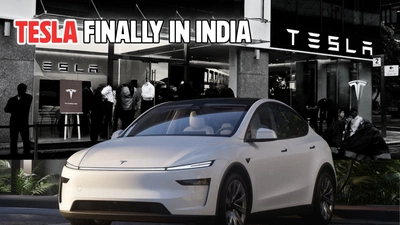
Tesla Finally In India Officially. Why Now And What Does It Mean For EVs?
The much-anticipated 2025 Tesla Model Y has officially arrived in India, marking a pivotal moment for the nation's burgeoning electric vehicle market. Launched on July 15, 2025, the Model Y Juniper facelift offers cutting-edge technology, impressive range, and signature Tesla performance. Positioned as a premium electric SUV, its entry will intensify competition and reshape consumer expectations for EVs across the subcontinent.
Charan Narain
July 17, 2025
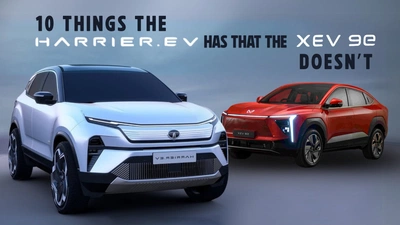
Here Are 10 Things The Harrier.EV Offers That The Mahindra XEV 9E Doesn't
The Harrier.EV is an incredible new offer from Tata. Its most popular competitor would be the Mahindra XEV 9E, priced similarly. With these two incredible offerings from home grown brands available, here is a list of everything the Harrier.EV offers that the XEV 9E doesn't.
Charan Narain
June 13, 2025

Write a comment
Comments
No comments yet. Be the first to comment!